
The Egg-Headed Athlete with a Vulnerable Interior
The Bull Terrier is instantly recognisable — that distinctive egg-shaped head and muscular, low-slung body are unlike any other breed. Originally developed for bull-baiting and later for show, today's Bull Terrier is a clownish, affectionate companion with formidable energy. But the breed's closed gene pool and historical selection pressures have concentrated certain genetic vulnerabilities. Three conditions in particular — Polycystic Kidney Disease, Mitral Valve Disease, and hereditary deafness — represent the most significant health challenges facing Bull Terriers today.
Polycystic Kidney Disease: A Silent Threat to the Kidneys
Polycystic Kidney Disease (PKD) in Bull Terriers is an inherited condition in which multiple fluid-filled cysts develop within the kidney tissue over time. As the cysts grow and multiply, they progressively replace functional kidney tissue, eventually leading to chronic kidney disease and, in severe cases, kidney failure. The condition is caused by an autosomal dominant mutation, meaning that only one copy of the faulty gene is required for a dog to be affected.
When Signs Appear
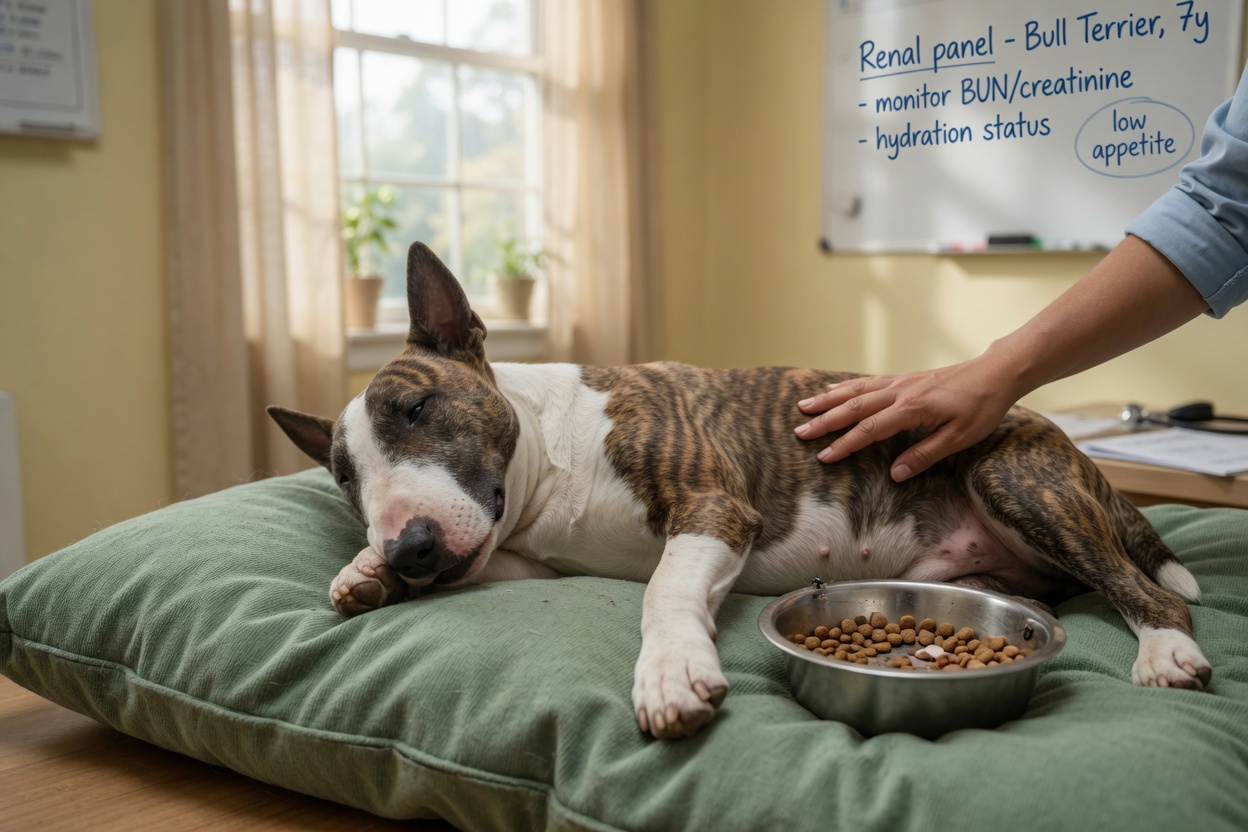
PKD is insidious in its early stages. Many affected dogs show no outward signs for years while cysts silently expand. Clinical signs typically emerge in middle age and include increased thirst and urination, reduced appetite, weight loss, vomiting, and lethargy. By the time these symptoms become apparent, kidney function may already be significantly compromised. This makes early detection through screening — rather than waiting for clinical signs — critically important.
Screening and Monitoring
Renal ultrasonography is the primary diagnostic tool for PKD and can detect cysts before clinical signs develop. A DNA test is also available, allowing definitive identification of carriers and affected dogs. Screening is recommended for all Bull Terriers, particularly those intended for breeding. Affected dogs should not be bred. For dogs already diagnosed with PKD, management focuses on slowing the progression of chronic kidney disease through dietary modification — typically a phosphorus-restricted, moderate-protein diet — alongside blood pressure control and regular monitoring of kidney function. Veterinary-prescribed renal diets should be used rather than home-formulated alternatives.
Mitral Valve Disease: Protecting the Bull Terrier Heart
Mitral Valve Disease (MVD) refers to progressive degeneration of the mitral valve, which separates the left atrium and left ventricle of the heart. As the valve degenerates, it no longer closes properly, allowing blood to leak backwards with each heartbeat. Over time this places increasing strain on the heart muscle and can lead to congestive heart failure.
Detecting Heart Disease Early
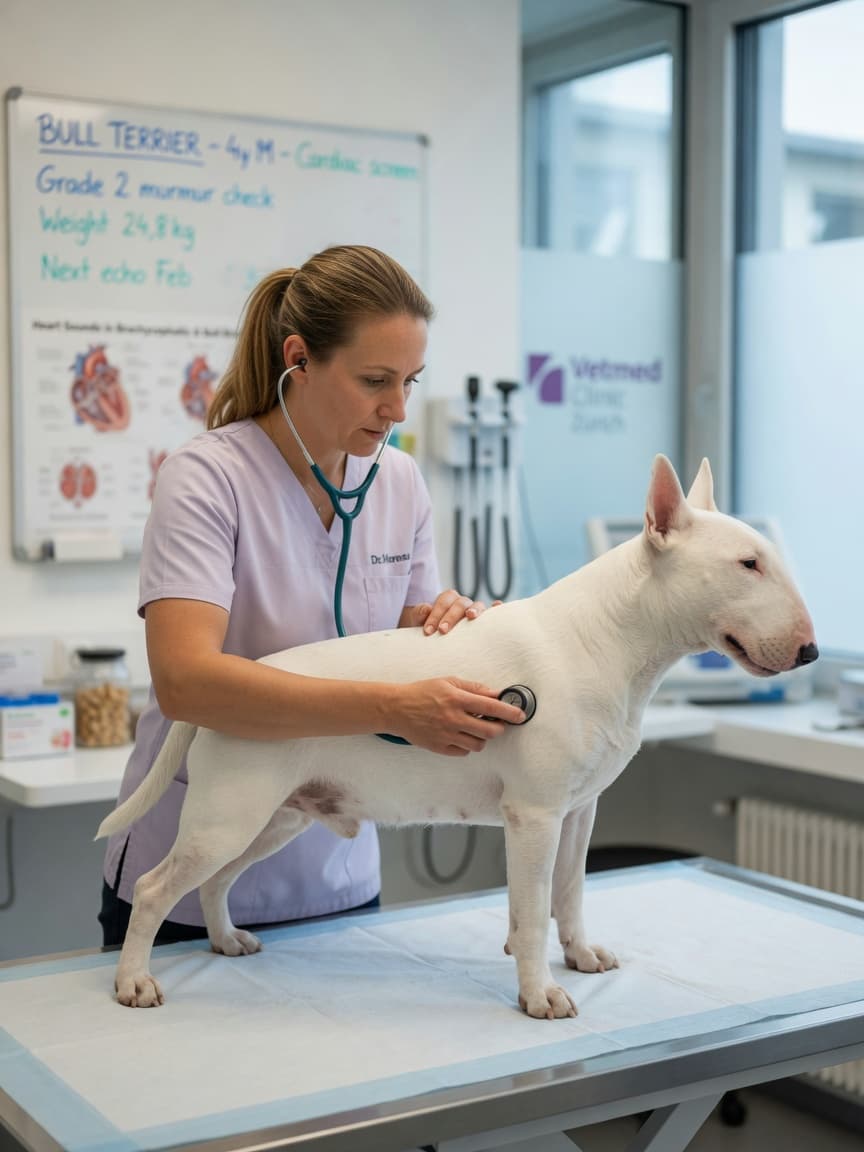
The earliest detectable sign of MVD is a heart murmur, which a vet can hear through a stethoscope during a routine examination. Murmurs are graded on a scale of one to six based on intensity. Many dogs live for years with a low-grade murmur before progressing to heart failure. When the heart begins to fail, owners may notice exercise intolerance, coughing — particularly at night or after rest — laboured breathing, reduced appetite, and general lethargy.
Medical Management
Advances in veterinary cardiology have significantly improved outcomes for dogs with MVD. Cardiac medication, specifically drugs that reduce the workload on the heart and manage fluid accumulation, has been shown in clinical trials to delay the onset of heart failure and extend life when started at the appropriate stage of disease. Regular echocardiographic monitoring by a veterinary cardiologist allows the treating team to time the introduction of medication optimally. Owners of Bull Terriers should request a cardiac auscultation at every annual health check and pursue further investigation if a murmur is detected.
Hereditary Deafness: Understanding the White Coat Connection

Congenital sensorineural deafness is a well-documented problem in Bull Terriers, particularly in white-coated individuals and those with a high proportion of white in their coat. The condition is linked to the genes responsible for coat pigmentation. Melanocytes — pigment-producing cells — are required not only for coat colour but also for normal development of the inner ear. When these cells are absent from the cochlea due to pigmentation genetics, deafness results.
Unilateral and Bilateral Deafness
Deafness in Bull Terriers may be unilateral (affecting one ear) or bilateral (affecting both). Bilaterally deaf puppies are noticeably unresponsive to sound from an early age and the condition is usually identified quickly. Unilateral deafness is far more difficult to detect through casual observation, as the dog compensates effectively with the hearing ear. The only reliable method for detecting both unilateral and bilateral deafness is the Brainstem Auditory Evoked Response (BAER) test, which measures electrical activity in the auditory pathway.
Living with a Deaf Bull Terrier
Unilaterally deaf dogs can live a full and normal life with minor management adjustments. Bilaterally deaf dogs require a committed owner prepared to invest in alternative communication strategies, primarily hand signals and vibration-based cues. Deaf dogs should never be allowed off-lead in unsecured areas, as they cannot hear approaching traffic or recall commands. BAER testing is strongly recommended for all Bull Terrier puppies before rehoming, and bilaterally deaf dogs should not be bred.
Keeping Your Bull Terrier Healthy: Key Actions
- Arrange renal ultrasound screening for your Bull Terrier from two years of age, and repeat every one to two years.
- Request a DNA test for PKD from your breeder, or test your own dog before breeding.
- Ensure your vet performs cardiac auscultation at every annual examination and act promptly on any murmur detected.
- Ask for a referral to a veterinary cardiologist if a murmur of grade three or above is identified.
- BAER-test all puppies before they leave the breeder; request results as a prospective buyer.
- Avoid high-phosphorus diets in dogs with known kidney disease; use veterinary-prescribed renal diets only.
- Maintain a healthy body weight — obesity compounds both cardiac and renal strain significantly.
Bull Terriers are entertaining, loyal, and enormously rewarding dogs for experienced owners. The conditions outlined in this guide are serious, but with proactive screening, regular veterinary monitoring, and informed management, affected dogs can enjoy a good quality of life for many years. Always consult a qualified veterinary surgeon before making decisions about your dog's health care.