
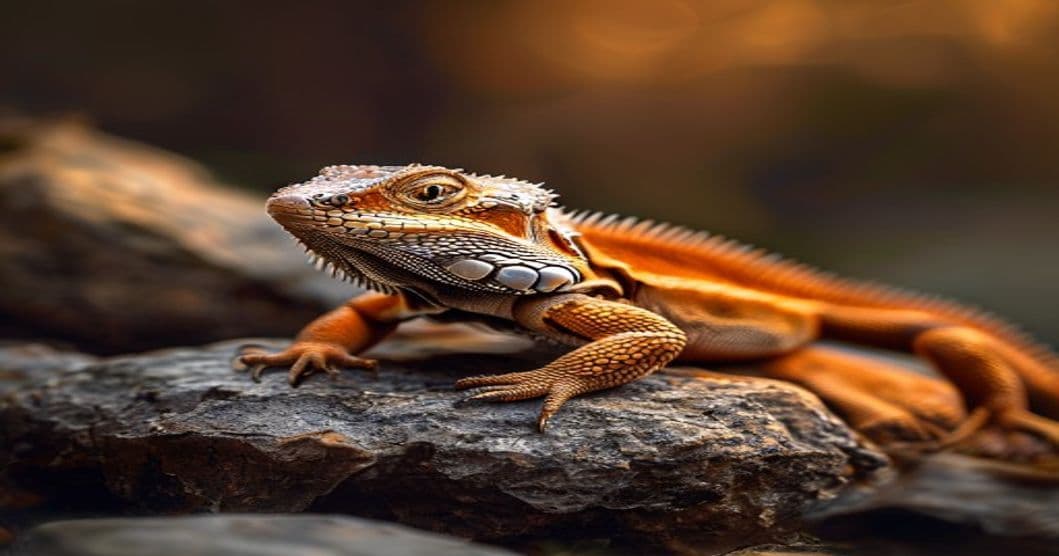
Calcium Deficiency in Reptiles: Metabolic Bone Disease Explained
Metabolic bone disease is one of the most common — and most preventable — conditions seen in captive reptiles. It affects bearded dragons, leopard geckos, chameleons, iguanas, tortoises, and many other species. Despite being widespread, it is still frequently misunderstood by new keepers, often mistaken for injury or genetic bad luck. The reality is that in the vast majority of cases, metabolic bone disease is a direct consequence of husbandry failures that can be corrected, or better still, prevented entirely.
What Is Metabolic Bone Disease?
Metabolic bone disease, commonly abbreviated to MBD, is not a single condition but an umbrella term for a group of disorders that affect skeletal integrity. The most common form in reptiles is nutritional secondary hyperparathyroidism. When circulating calcium levels fall too low, the parathyroid glands respond by releasing hormones that draw calcium out of the bones to maintain blood calcium within a functional range. The bones weaken progressively as a result, and the consequences range from subtle to catastrophic.
The Three-Way Relationship Between Calcium, Phosphorus, and Vitamin D3
Understanding MBD requires understanding this triangle, because each element affects the others.
Calcium and Phosphorus
Both minerals are essential, but their ratio matters enormously. Most reptile nutritionists recommend a dietary calcium-to-phosphorus ratio of roughly 2:1. Many feeder insects — particularly mealworms and waxworms — are naturally high in phosphorus and low in calcium. A diet based heavily on these insects without supplementation will gradually shift the balance in the wrong direction, impairing calcium absorption even when some calcium is present in the diet.
Vitamin D3 and UVB
Calcium cannot be properly absorbed from the gut without adequate vitamin D3. Diurnal reptiles — those active during the day, such as bearded dragons and chameleons — synthesise vitamin D3 through their skin when exposed to UVB radiation. Without appropriate UVB lighting, this synthesis cannot occur, regardless of how much calcium is in the food. Nocturnal species such as leopard geckos can obtain D3 through dietary supplementation more reliably, but UVB still appears to offer benefits even for these animals.
Signs of Metabolic Bone Disease
Early signs are easy to miss. A reptile may seem slightly lethargic or less coordinated than usual. As the condition progresses, more obvious signs emerge:
- Soft, flexible jaw or skull bones — the jaw may appear rubbery when gently palpated
- Limb deformities or abnormal gait, including trembling or an inability to lift the body off the ground
- Spinal kinks or a curved backbone
- Muscle twitching or involuntary spasms, a sign of low blood calcium affecting neuromuscular function
- Pathological fractures — bones that break under minimal stress or even normal movement
- Swollen or misshapen limbs
By the time visible deformities are apparent, the disease is already well advanced. This is why preventive husbandry matters far more than reactive treatment.
Which Reptiles Are Most at Risk?
Rapidly growing juveniles are particularly vulnerable, as their demand for calcium during bone development is high. Gravid females — those carrying eggs — are also at significant risk, because egg production draws heavily on calcium reserves. Species with high UVB requirements that are kept without adequate lighting are at elevated risk regardless of life stage.
Correct Husbandry to Prevent MBD
UVB Lighting
For diurnal species, a high-output UVB bulb appropriate to the species' UV index requirements is essential. Ferguson zones — a classification system developed by herpetologists — provide a useful guide to the UVB intensity different species need in the wild. Bearded dragons, for example, are zone 3 to 4 animals requiring high UVB output. Bulbs should be positioned at the correct distance from the basking area as specified by the manufacturer, replaced every six to twelve months even if still emitting visible light (UVB output degrades before visible light does), and never placed behind glass, which filters UVB out almost entirely.
Calcium Supplementation
Feeder insects should be gut-loaded — fed nutritious foods for at least 24 hours before being offered to your reptile — and dusted with calcium powder immediately before feeding. For most insectivorous species, pure calcium carbonate (without added D3) is used at most feedings, with a multivitamin supplement containing D3 added less frequently — typically once or twice a week. The precise protocol varies by species, so species-specific guidance from an experienced reptile vet or reputable husbandry resource is advisable.
Dietary Variety
An insectivorous reptile fed exclusively on crickets or mealworms is receiving an incomplete diet. Offering a variety of feeder insects — black soldier fly larvae are particularly calcium-rich — alongside appropriate plant matter for omnivorous species improves overall nutritional balance considerably.
Treatment
If MBD is suspected, veterinary assessment is urgent. Treatment typically involves oral or injectable calcium supplementation, correction of husbandry deficiencies, and in severe cases, supportive care including fluid therapy. Early-stage MBD can be reversed with proper intervention. Advanced cases involving significant skeletal deformity may be manageable but not fully reversible. The bones simply cannot return to their original architecture once structural damage has occurred.
The good news is that with correct lighting, appropriate supplementation, and a varied diet, metabolic bone disease is almost entirely avoidable. For the keeper willing to invest a little time in understanding their animal's needs, it need never become a reality.