
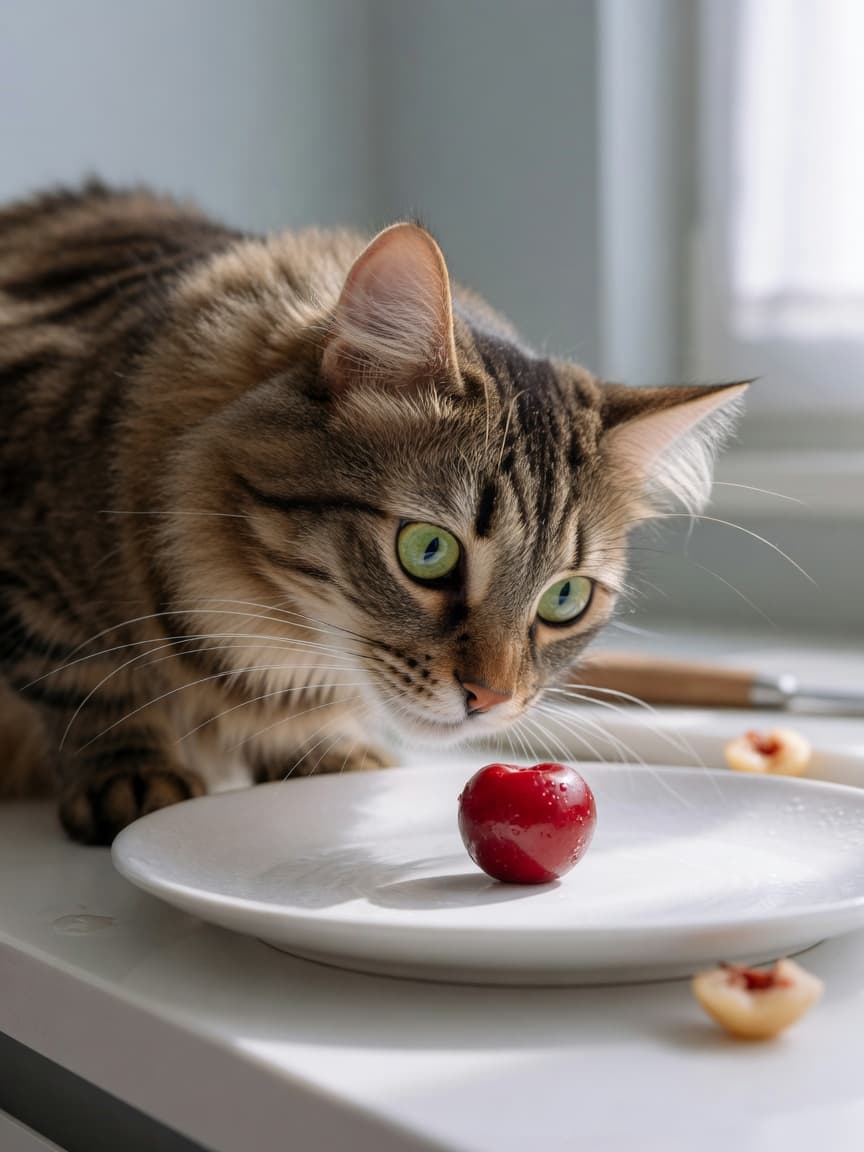
Can Cats Eat Cherries?
The short answer is: yes, but with significant caution. Whilst cherries aren't completely off-limits for cats, they require careful handling and should only be offered in very small amounts under specific conditions. Most cats are simply not interested in fruit, and cherries are best avoided altogether unless you have a particular reason to offer one—and understand the risks involved.
Why Cherries Need Caution
The main concern with cherries is their **pit**, which contains cyanogenic compounds that can be toxic to cats. When the pit is chewed or crushed, these compounds are released and can cause poisoning. Even a single pit poses a genuine risk, particularly to smaller cats or kittens. This is the most serious hazard and the primary reason veterinarians advise caution.
Beyond the pit, fresh cherry flesh itself is relatively low in toxins, but there are secondary concerns. Cherries are high in natural sugars, which cats don't need and shouldn't regularly consume. Cats are obligate carnivores, meaning their digestive systems are designed to process meat, not fruit. Their bodies don't require the vitamins and minerals found in cherries, and the sugar content can contribute to digestive upset, obesity, and dental problems over time.
The **stems and leaves** of cherry plants also contain cyanogenic compounds and should never be offered to your cat.
Safe Preparation and Amount
If you choose to offer cherry to your cat despite these warnings, preparation is absolutely critical:
- **Remove the pit completely**—this is non-negotiable. The pit must be entirely removed and disposed of safely where your cat cannot access it.
- **Remove the stem and leaves** entirely.
- **Offer only the flesh** in the tiniest amount—we're talking about a small piece, perhaps the size of a pea or smaller.
- **Only occasionally**, and ideally not at all if your cat shows any interest in swallowing it whole.
Realistically, most cats will have no interest in eating cherry flesh anyway. If your cat isn't naturally drawn to it, there is no benefit to introducing it. Stick to species-appropriate treats instead.
Which Cats Should Avoid Cherries Entirely
Certain cats should never be offered cherries:
- **Kittens** under one year old (smaller body size means higher risk from toxins)
- **Senior cats** or those with kidney or liver disease
- **Cats with diabetes** or obesity (due to sugar content)
- **Any cat prone to vomiting or diarrhoea**
- **Cats with a history of swallowing food whole** without proper chewing
If your cat has any underlying health conditions, consult your vet before offering any new food, including cherries.
Signs of Cherry Toxicity
If your cat has accidentally eaten a cherry pit or a significant amount of cherry, watch for these warning signs and contact your veterinary surgeon immediately if you notice any:
- Difficulty breathing or rapid breathing
- Lethargy or unusual tiredness
- Weakness or loss of coordination
- Vomiting or diarrhoea
- Dilated pupils
- Seizures
- Red gums or pale mucous membranes
Cyanide poisoning is a medical emergency. Do not wait to see if symptoms develop—contact your vet or emergency veterinary clinic immediately if your cat has swallowed a pit.
Better Alternatives
Rather than introducing the complexity and risk of cherries, offer your cat treats that are genuinely safe and species-appropriate:
- Small pieces of cooked chicken or turkey
- A tiny amount of cooked salmon (occasional treat only)
- Commercial cat treats designed for feline nutrition
- Catnip or silvervine (if your cat enjoys them)
These alternatives align with your cat's natural diet and pose no toxicity risk when offered appropriately.
The Bottom Line
Whilst a tiny piece of pit-free cherry flesh is unlikely to cause serious harm, the risks—particularly from the pit—outweigh any potential benefit. Cherries offer no nutritional advantage to your cat and are unnecessary to their diet. If your cat accidentally eats a cherry pit or shows any symptoms of illness, contact your veterinary surgeon immediately.