
Can Cats Eat Honey?
Honey occupies an interesting position in the world of natural foods. It is often associated with health benefits for humans — antimicrobial properties, soothing effects on sore throats, and antioxidant content among them. It is not surprising that cat owners sometimes consider whether a small amount might do their pet some good. However, honey and cats are a genuinely poor match, and understanding why requires looking at feline biology in some detail.
Cats Cannot Taste Sweetness
One of the most striking facts about cats is that they lack the ability to detect sweet flavours. Taste perception depends on specialised receptor proteins, and research has confirmed that cats are missing a functional version of one of the two protein subunits needed to form the sweet taste receptor. This is a genetic difference that applies to all members of the cat family — both domestic cats and their wild relatives.
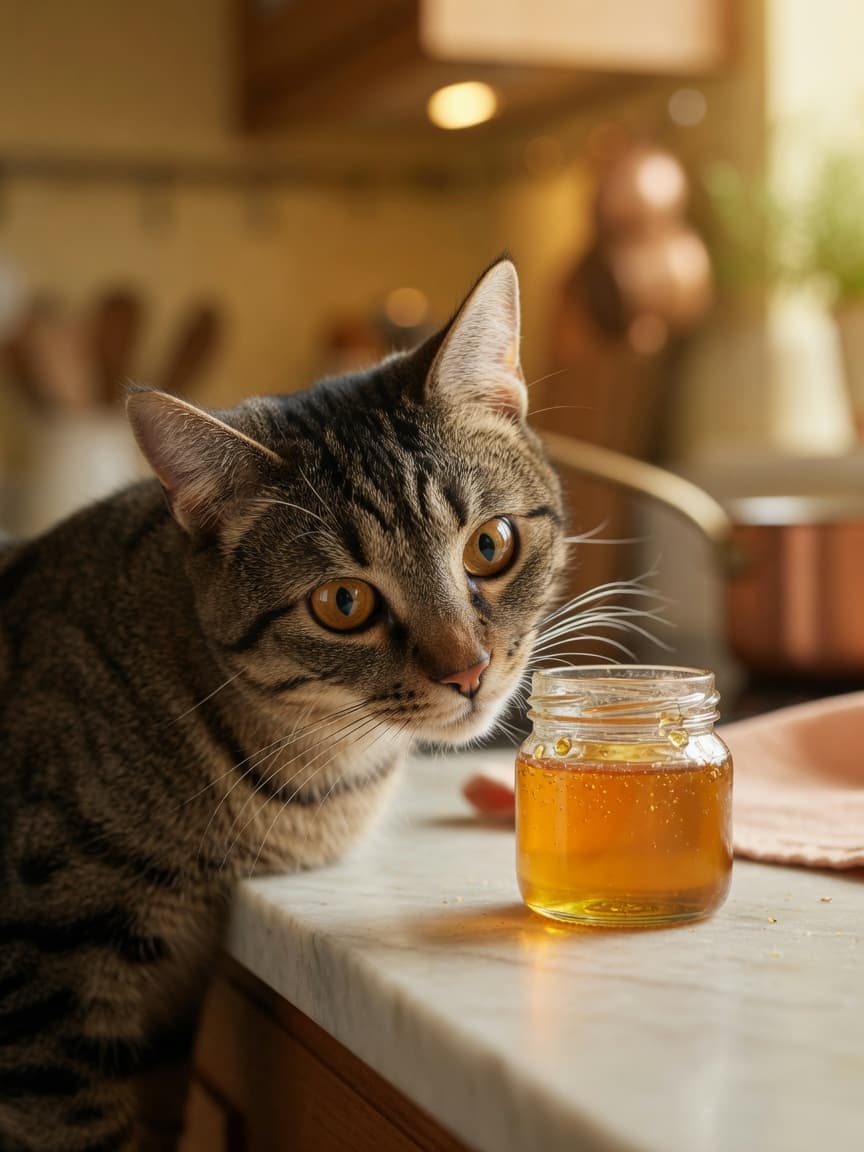
The practical implication is that honey holds no sensory appeal for a cat. If a cat shows interest in honey, it is almost certainly because of its strong scent or the texture, not because they can taste the sweetness that makes it attractive to humans. There is no pleasurable experience driving the interest, and there is certainly no instinctive craving for sugary foods in feline biology.
This is not a trivial point. Many of the foods humans find healthy or enjoyable are designed — either by nature or by manufacturers — to appeal to sweet taste receptors. For cats, this entire dimension of taste is simply absent. It means honey offers nothing that could be described as satisfying or rewarding from the cat's perspective.
No Nutritional Benefit for an Obligate Carnivore
Beyond taste, there is the question of whether honey offers any nutritional value to a cat. Cats are obligate carnivores, which means their bodies are specifically adapted to derive all essential nutrients from animal tissue. Their digestive systems, their metabolic pathways, and their organ function are all oriented around processing protein and fat from meat sources.
Honey is composed primarily of simple sugars — fructose and glucose — along with small amounts of water, trace minerals, and various enzymes and antioxidants. The health benefits attributed to honey in humans stem largely from these antioxidant and antimicrobial compounds, but cats do not require dietary carbohydrates in the way that omnivores do. Their livers are not well equipped to handle surges of simple sugars, and the trace nutrients in honey are either not bioavailable to cats or are present in quantities too small to matter.
In short, honey provides nothing a cat needs, and their digestive system is not designed to process it efficiently.
The Risk of Diabetes and Obesity
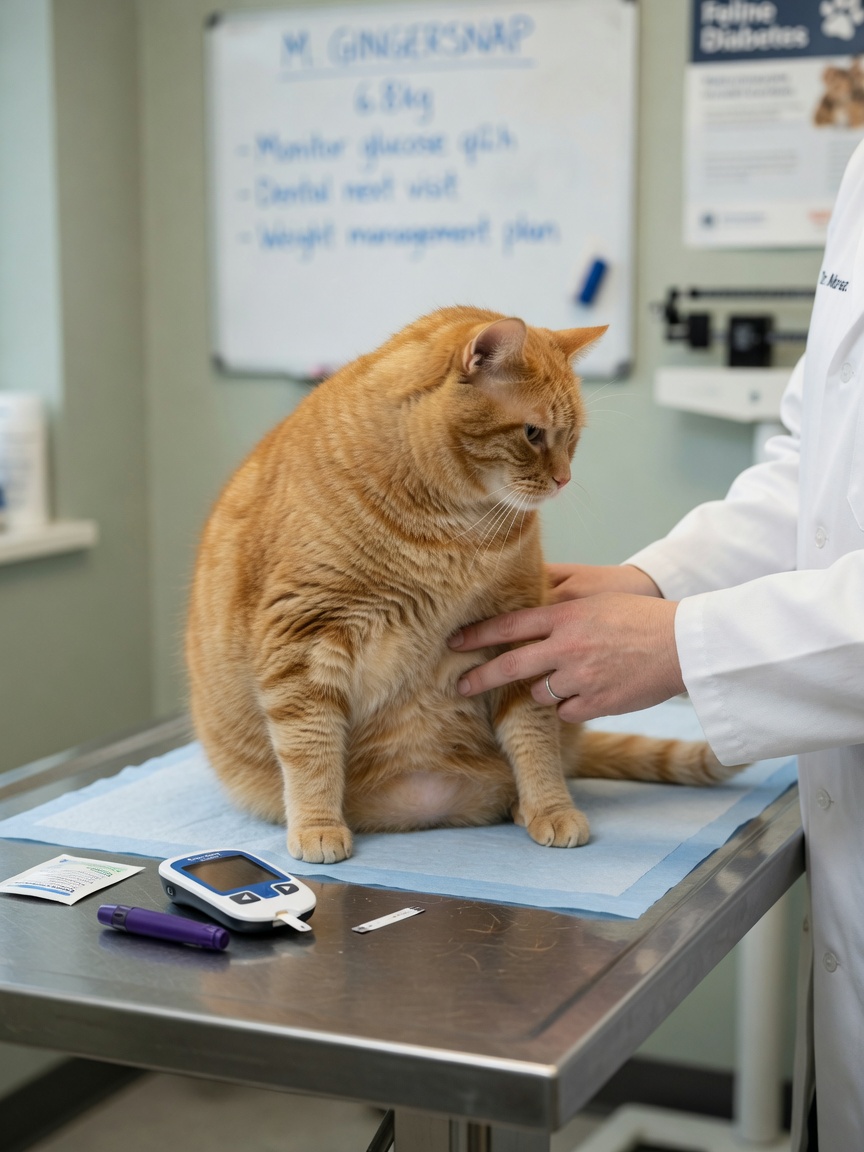
Even when a food is not toxic, it can still cause harm through its metabolic effects. Honey is high in sugar, and for cats, regular consumption of sugary foods carries a meaningful risk of both obesity and diabetes mellitus.
Feline diabetes is a growing concern, and excess dietary sugar — along with overfeeding more generally — is one of the contributing factors. When a cat consumes sugar, it enters the bloodstream and triggers a response from the pancreas to produce insulin. Over time, if the pancreas is repeatedly required to manage sugar intake beyond what is normal for a carnivorous diet, insulin sensitivity can be disrupted. This can develop into type 2 diabetes, which requires lifelong management and can significantly affect a cat's quality of life.
Obesity is a related concern. Honey is calorie-dense, and any calories consumed as a treat must be accounted for within a cat's total daily intake. A cat that is already prone to weight gain or that is less active — for instance, a neutered indoor cat — is particularly at risk. Weight gain increases the likelihood of diabetes, joint problems, and a range of other health issues.
Raw Honey and the Risk of Clostridium in Kittens
Raw honey carries an additional and specific risk that is not present in processed, pasteurised honey: it may contain spores of Clostridium botulinum, the bacterium responsible for botulism. In adult animals, the immune and digestive systems are generally equipped to prevent these spores from becoming a problem. However, in kittens whose immune systems and gut flora are still developing, Clostridium spores can germinate and produce botulinum toxin — a dangerous neurotoxin.
Botulism in young animals can cause muscle weakness, difficulty breathing, paralysis, and in severe cases, death. The same concern applies in human infants, which is why raw honey is universally advised against for babies under twelve months. For kittens, the same precaution applies, and raw honey should never be offered to a young cat under any circumstances.
Even for adult cats, raw honey offers no benefit that would justify the risk, however small that risk might be in a healthy adult animal.
What About Manuka Honey for Wound Care?
Manuka honey is a variety produced from the nectar of the manuka tree, and it has attracted attention for its strong antimicrobial properties. Medical-grade manuka honey is used in some wound dressings for humans, and there is some evidence supporting its use in veterinary wound care as well.
However, this is strictly a topical application — applied directly to a wound under veterinary supervision — and is entirely separate from the question of feeding honey to a cat. Any use of honey on a cat's wound should only take place under the guidance of a vet, using an appropriate medical-grade product, and with proper wound management. It is not something to attempt at home based on anecdotal information.
The antimicrobial properties of manuka honey, where relevant, are a result of direct contact with the wound surface, not of internal consumption. Feeding manuka honey to a cat will not deliver any antimicrobial benefit internally and carries all the risks described above.
Signs to Watch For If Your Cat Has Eaten Honey
If your cat has consumed a small amount of honey and appears well, they are likely fine on a one-off basis. However, if they have eaten a significant quantity, or if they are a kitten, watch for:
- Vomiting or diarrhoea
- Lethargy or unusual weakness
- Difficulty swallowing or breathing (particularly in kittens)
- Signs of abdominal discomfort such as hunching or restlessness
If any of these symptoms appear, contact your vet promptly.
The Bottom Line
Honey is not acutely toxic to healthy adult cats in very small amounts, but it offers them nothing of value. They cannot taste it, their bodies are not designed to process its sugars, and regular consumption raises the risk of obesity and diabetes. Raw honey should never be given to kittens due to the risk of botulism. Manuka honey has a legitimate role in topical wound care under veterinary supervision, but that is the extent of its legitimate use in feline health. When choosing treats for your cat, the best options are those that reflect their nature as obligate carnivores — not foods associated with human wellness trends.