

Can Dogs Eat Figs? Ficin Irritation Risk
Key Takeaways
- Fresh figs contain ficin, a proteolytic enzyme that acts as an irritant to a dog's mouth, skin, and gastrointestinal tract.
- Fig leaves are toxic to dogs — they contain higher concentrations of ficin and psoralen, a phototoxic compound.
- Dried figs have concentrated sugar and should be avoided for the same reasons as dates.
- If offered at all, only very small pieces of ripe fresh fig flesh — and monitor closely for any reaction.
- Many dogs will react to even small amounts; individual sensitivity varies considerably.
Are Figs Safe for Dogs?
Figs sit firmly on the "proceed with significant caution" end of the fruit spectrum for dogs. Unlike clearly toxic foods (grapes, raisins, onions), figs are not categorised as acutely poisonous by most veterinary toxicology authorities. The ASPCA does flag fig plants — particularly the leaves — as toxic to dogs, cats, and horses. The ripe fruit flesh exists in a more ambiguous zone: not aggressively toxic in very small amounts for many dogs, but irritating enough to many others that it is difficult to recommend as a routine treat.
The culprit is ficin — a proteolytic enzyme found throughout the fig plant, with concentrations highest in the milky latex sap, the leaves, and the unripe fruit. Ripe fig flesh contains lower concentrations, but even these can provoke reactions in sensitive individuals.
What Is Ficin and Why Is It Problematic?
Ficin is a cysteine protease — an enzyme that breaks down proteins. In the plant, it serves as a defence mechanism against insects and herbivores. When dogs contact or consume ficin, the enzyme can begin digesting mucosal proteins in the mouth, gastrointestinal tract, and skin, causing localised irritation that ranges from mild to quite uncomfortable.
Clinical signs of ficin irritation in dogs include:
- Excessive drooling (hypersalivation) shortly after contact or ingestion
- Pawing at the mouth or face
- Redness and swelling of the gums, lips, or tongue
- Vomiting, sometimes within minutes of ingestion
- Diarrhoea or loose stools
- Skin rash or redness if the plant's sap contacts the skin
These symptoms are similar to those caused by other latex-containing plants and typically resolve within a few hours if exposure is minimal. However, in dogs that consume larger quantities — or in dogs with pre-existing gastrointestinal sensitivity — symptoms can be more severe and prolonged.
Fig Leaves: Genuinely Toxic
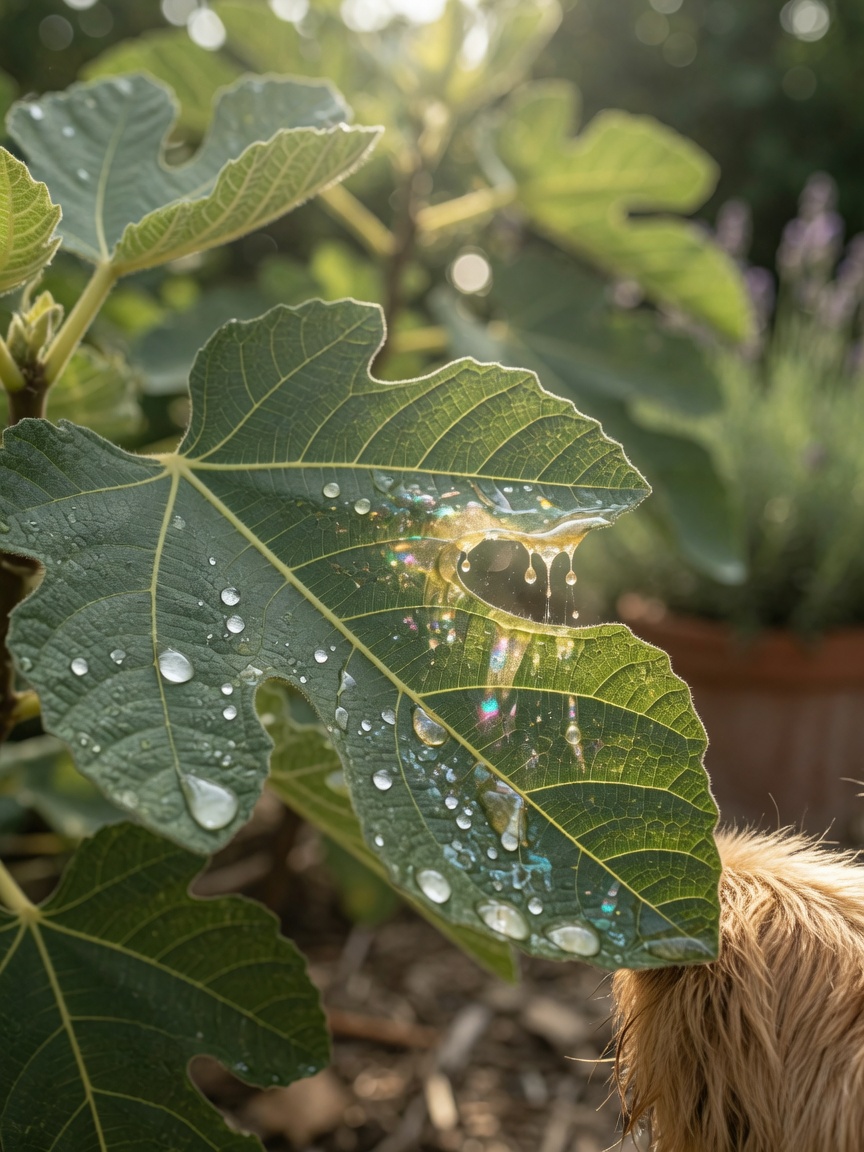
If the fresh fruit itself is borderline, the fig plant's leaves are in a different category entirely. Fig leaves contain significantly higher concentrations of ficin along with psoralen, a furanocoumarin compound with phototoxic properties. Psoralen exposure — through skin contact or ingestion — can cause:
- Photosensitivity and severe skin burns when exposed to ultraviolet light
- Gastrointestinal ulceration if ingested in meaningful quantities
- Hepatotoxic effects at high doses
Dogs that have access to a fig tree in the garden should be monitored carefully. Ensure they cannot chew on leaves, branches, or the sap-exuding stems. If your dog chews on fig leaves and develops any of the symptoms above, contact your vet promptly.
What About Dried Figs?
Dried figs are essentially concentrated fresh figs — which means they are concentrated in everything, including sugar and ficin. A single dried fig can contain 5–8 g of sugar in a tiny, chewy package that is easy for a dog to eat quickly before you notice. The dehydration process does not neutralise ficin. Dried figs should be kept away from dogs entirely.
Additionally, commercial dried figs may contain added sugars, sulphites (used as preservatives), or be packaged with other dried fruits (such as raisins) that are acutely toxic to dogs. The risk profile is simply too high for the minimal nutritional benefit.
If You Choose to Offer Fresh Fig
If you are determined to let your dog try fresh fig, follow strict precautions:
- Use only fully ripe, fresh fig flesh — avoid any milky sap or greenish parts.
- Offer a piece no larger than a thumbnail — literally a tiny taste.
- Remove all skin, which has higher ficin concentration than the inner flesh.
- Watch your dog closely for 30–60 minutes for any sign of drooling, vomiting, or discomfort.
- Do not offer figs again if any reaction occurs, however mild.
- Never offer figs more than once or twice per month even if well-tolerated.
Many dog nutrition professionals — myself included — simply advise skipping figs entirely and choosing a safer fruit. blueberries" title="Can Dogs Eat blueberries" title="Can Dogs Eat Science-Backed Answer">blueberries" title="Can Dogs Eat Blueberries? The Science-Backed Answer">blueberries" title="Can Cats Eat Blueberries? What You Need to Know">Blueberries? The Science-Backed Answer">Blueberries? The Science-Backed Answer">Blueberries, watermelon, and apple slices all provide comparable or superior nutritional benefit without the irritation risk.
Treat your dog to something genuinely safe and delicious. HolistaPet's plant-based dog treats are crafted without irritants, fillers, or artificial additives — just wholesome ingredients your dog will love.
Nutritional Content of Figs (For Context)
Fresh figs do contain some noteworthy nutrients: they are a good source of dietary fibre, potassium, calcium, copper, and vitamin B6. However, these nutrients are readily available from safer foods. There is no unique nutritional contribution that figs make to a dog's diet that would justify accepting the ficin irritation risk.
When to Call the Vet
Contact your veterinarian if your dog has consumed fig leaves, large amounts of fresh fig, or any dried fig and is showing persistent vomiting, signs of abdominal pain, excessive drooling that does not resolve within an hour, or any neurological symptoms. Also seek veterinary advice if your dog has skin contact with fig sap and will be exposed to sunlight, due to the psoralen-mediated phototoxicity risk.
Scientific References
- Tousson E, Abd El-Hamid H, El-Atrash A. Ficin: a natural plant extract showing anticancer activity with minimal toxicity in rats. Toxicology and Industrial Health. 2014;30(8):709–717. PMID: 23132892
- Egmond HP van, Jonker MA. Worldwide regulations for mycotoxins in food and feeds in 2003. FAO Food and Nutrition Paper. 2004;81. PMID: 16454127