
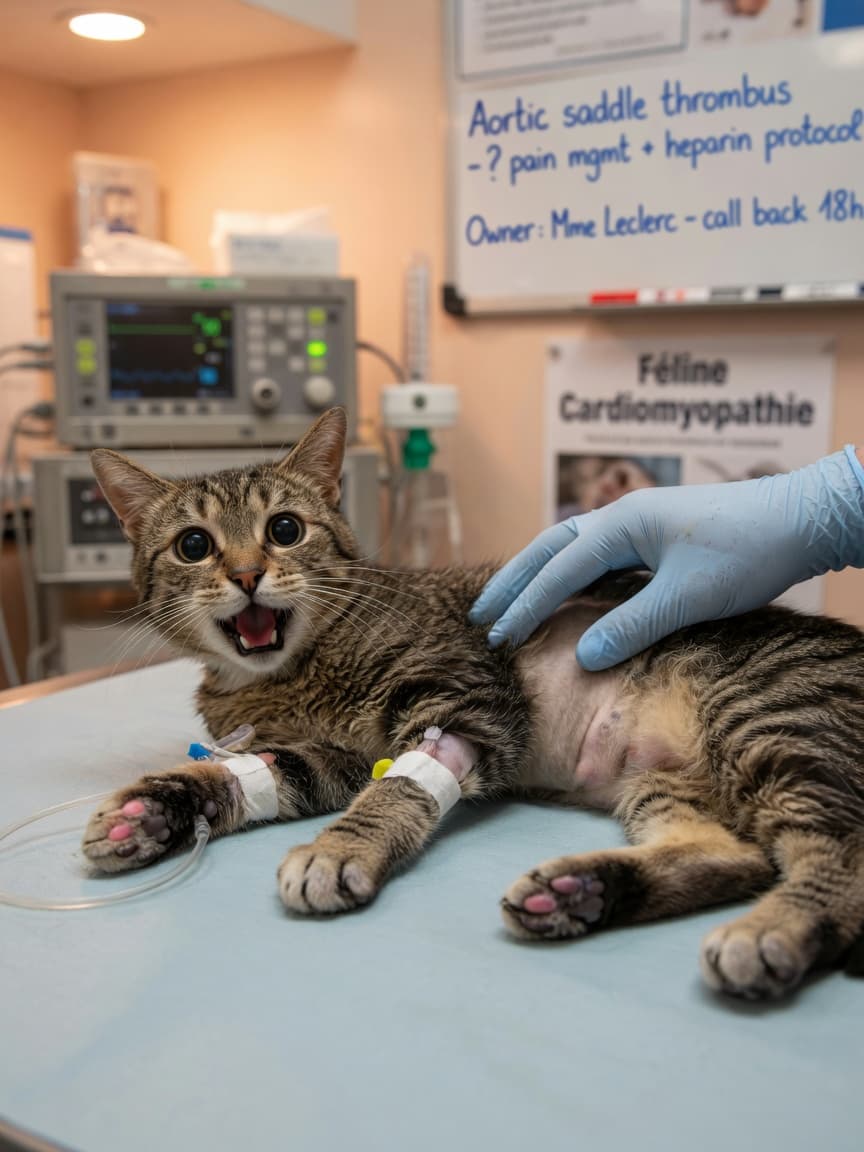
This Is an Emergency — Go to a Vet Immediately
If your cat has suddenly lost the use of its back legs, is crying out in pain, and has cold or discoloured paws, do not wait. This presentation is a recognised veterinary emergency called feline aortic thromboembolism, sometimes referred to as a saddle thrombus or ATE. Every minute matters. Call your vet or the nearest emergency clinic now and begin travelling while you are on the phone.
What Is Feline Aortic Thromboembolism?
Feline aortic thromboembolism occurs when a blood clot forms within the heart and is then carried by the bloodstream until it becomes lodged at the aortic bifurcation — the point where the main artery of the body, the aorta, splits into two branches that supply blood to the hind legs. When the clot lodges at this junction (hence the name saddle thrombus, because the clot sits across the fork like a saddle), blood supply to both hind limbs is abruptly cut off.
The result is a sudden, catastrophic loss of circulation to the rear of the body. The hind limbs become paralysed, cold, and painful — painful because the muscles and nerves are deprived of oxygen and because the clot itself triggers a severe inflammatory response that amplifies pain signals.
What Causes a Saddle Thrombus in Cats?
In the vast majority of cases, feline aortic thromboembolism is a consequence of underlying heart disease — most commonly hypertrophic cardiomyopathy, or HCM. HCM is a condition in which the muscular walls of the heart become abnormally thickened, reducing the heart's ability to pump blood effectively. When blood moves sluggishly through the enlarged chambers of a cat with HCM, clots are more likely to form — particularly in the left atrium. These clots can then break free and travel through the circulation until they reach the aortic bifurcation.
Other forms of cardiac disease can also lead to ATE, including dilated cardiomyopathy and restrictive cardiomyopathy, though these are less common in cats than HCM. In some cases, cardiac disease may not have been previously diagnosed — ATE can be the first sign that anything is wrong with the heart.
Recognising the Signs of Feline ATE
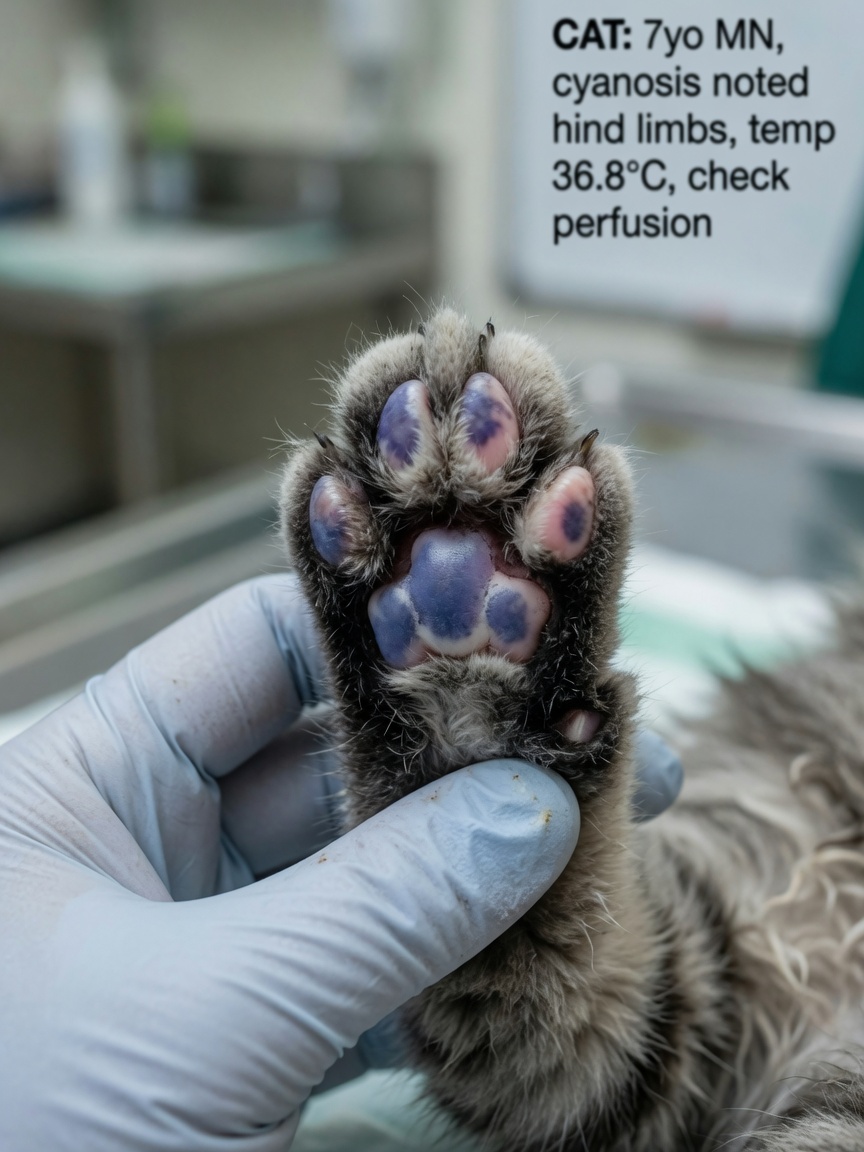
The presentation of a saddle thrombus is often dramatic and highly distressing for owners to witness. The classic signs are:
- Sudden onset of hind limb paralysis or severe weakness — the cat may appear to drag itself with its front legs
- Intense vocalisation — crying, screaming, or groaning due to severe pain
- Cold hind paws and lower limbs compared to the rest of the body
- Blue, purple, or very pale paw pads — normal paw pads should be pink
- Absent or very weak femoral pulse in the hind legs — your vet will check for this but it is often noted even by owners familiar with their cat
- Rapid, laboured breathing, which may reflect both pain and underlying cardiac decompensation
- Dilated pupils and signs of extreme distress
Owners frequently mistake the initial presentation for an injury, a fall, or a neurological episode. The key distinguishing features are the combination of cold limbs, discoloured paw pads, and extreme pain. A cat with a spinal injury, for instance, would not typically have the dramatic colour change and temperature difference in the affected limbs.
Treatment for Aortic Thromboembolism in Cats
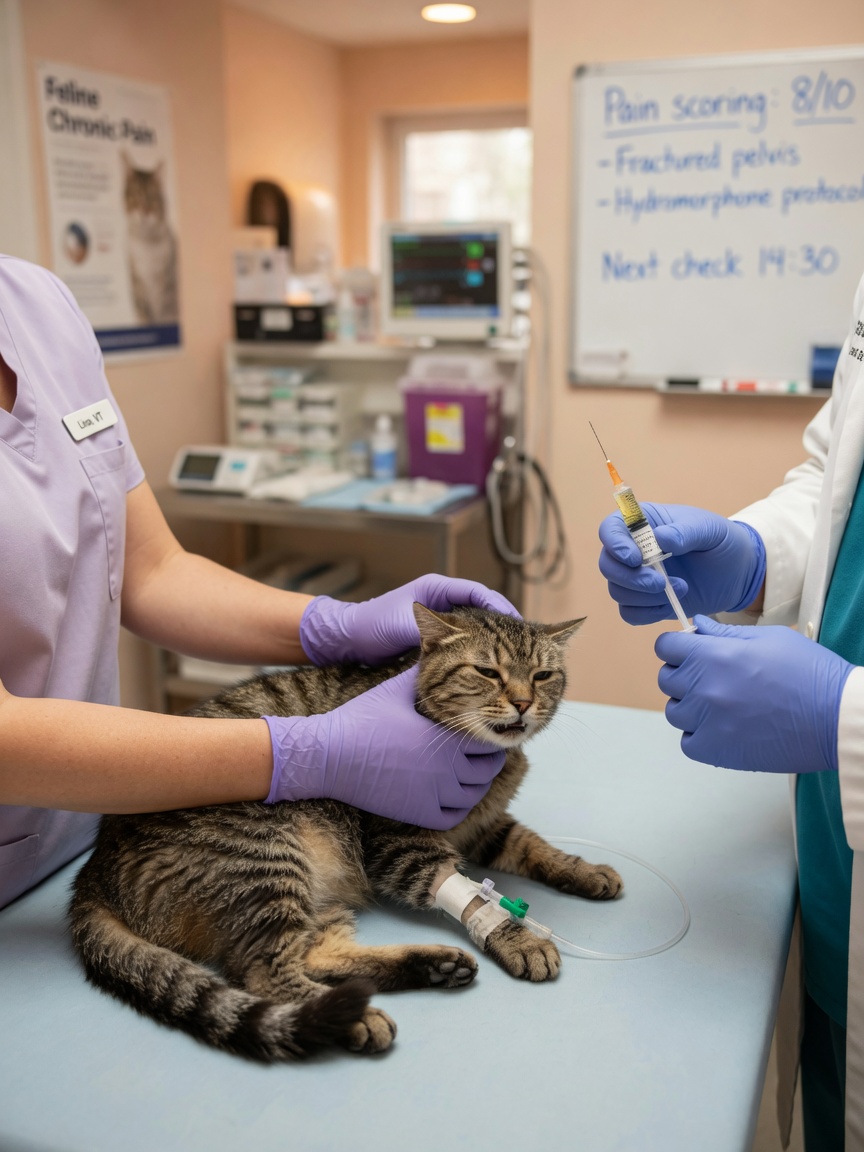
The first priority on arrival at the clinic is pain management. Feline ATE is one of the most painful conditions encountered in small animal practice, and relieving pain is both a welfare necessity and a medical one — severe pain worsens cardiovascular compromise and accelerates decline. Opioid analgesia is typically administered promptly.
Once the cat is more comfortable, treatment focuses on stabilising the underlying cardiac condition and addressing the clot. Options include:
- Anticoagulant therapy — heparin is commonly used in the acute phase to prevent extension of the existing clot and reduce the risk of further clots forming
- Antiplatelet therapy — clopidogrel (commonly known by the brand name Plavix) reduces platelet aggregation and is typically prescribed for long-term management
- Thrombolytic agents — drugs that attempt to dissolve the clot directly. These carry significant risks including reperfusion injury (where the sudden return of blood to oxygen-starved tissues causes further damage) and are not universally used
- Supportive care — warmth, fluids, management of heart failure, oxygen supplementation
Surgical intervention to remove the clot is rarely performed in cats and is not considered standard treatment. The anaesthetic risk in a cat with decompensated heart disease is very high.
What Not to Do While Awaiting Veterinary Care
One important and counterintuitive point: do not attempt to warm the affected hind limbs with a heat lamp, hot water bottle, or heated pad. The tissues in the affected limbs are ischaemic — they have been deprived of oxygen. Applying heat to ischaemic tissue increases its metabolic demand at a time when it has no blood supply to meet that demand. This worsens cellular injury. Additionally, because sensation in the limbs may be reduced, the cat cannot respond normally to heat, making burns a real risk. Keep the cat warm overall, but do not apply direct heat to the paralysed limbs.
Prognosis and Quality of Life Discussion
The prognosis for feline ATE is guarded, and an honest conversation with your vet is essential. With aggressive and rapid treatment, approximately 30 to 40 percent of cats survive the initial episode. Many cats that survive do regain some or full function in the hind limbs over days to weeks, as circulation is re-established and nerve damage partially resolves.
However, recurrence is a significant risk. Without preventive treatment, many cats experience a second episode. The underlying heart disease does not go away, and management of HCM is an ongoing commitment. Some cats live for months or years after a first ATE episode with good quality of life. Others deteriorate rapidly.
In cats that are in severe pain, have extensive tissue necrosis, or have severely decompensated heart disease, your vet may raise the question of euthanasia on humane grounds. This is not defeatism — it is a compassionate recognition that not all cats can be saved, and that prolonging suffering is not in the animal's best interest. Discussing quality of life openly with your vet will help you make the right decision for your individual cat.
Prevention and Screening in At-Risk Breeds
Certain breeds have a significantly higher genetic predisposition to HCM and therefore to ATE. These include the Maine Coon, Ragdoll, British Shorthair, Persian, and Sphynx. Regular cardiac screening — typically an echocardiogram (ultrasound of the heart) performed by a veterinary cardiologist — is recommended for these breeds, ideally from around two years of age and repeated every one to two years.
In cats diagnosed with HCM that have not yet experienced ATE but are considered high risk based on the degree of cardiac changes, clopidogrel antiplatelet therapy is frequently prescribed as a preventive measure. There is reasonable clinical evidence that it reduces the risk of first thromboembolic events in affected cats.
If your cat has already experienced one episode of ATE and survived, long-term antiplatelet therapy is strongly recommended, alongside regular monitoring of cardiac function and ongoing management of underlying heart disease.