
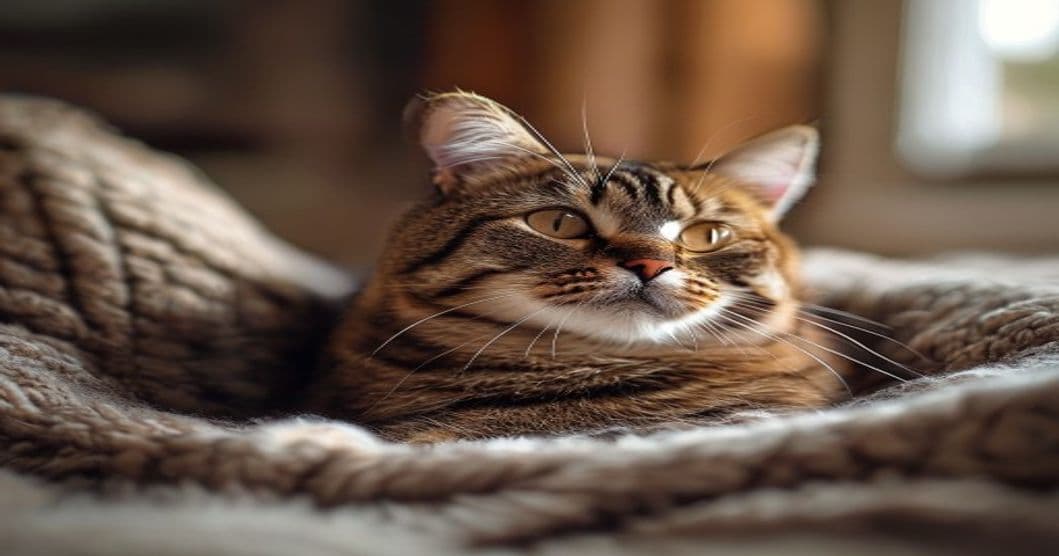
Cat Grief: Signs Your Cat Is Mourning & How to Help
By Sarah Bennett, Certified Animal Nutritionist
Cats have a reputation for independence, for cool detachment, for needing no one. Anyone who has lived with a bonded pair of cats knows this reputation is at best incomplete. When one cat in a household dies, the surviving cat frequently shows behavioral changes so profound that owners describe their pet as fundamentally altered — quieter, sadder, searching for something they cannot name. This is cat grief, and it is real.
Understanding the Why Does My Dog Bark at Night? Causes & Solutions">Why Does My Dog Stare at Me? The Why Does My Dog Bark at Night? Causes & Solutions">Why Does My Dog Follow Me Everywhere? Shadow Dog Explained">Why Does My Dog Howl? Communication, Pain & Separation">Why Does My Dog Follow Me Everywhere? Shadow Dog Explained">Why Does My Cat Bring Me Dead Animals? The Gift Explained">Why Does My Dog Lick Me So Much? Science Behind It">Science Behind the Gaze">Why Does My Cat Stare at Nothing? Science Explains">Why Does My Cat Stare at Nothing? Science Explains">Why Does My Dog Lick Me So Much? Science Behind It">science behind feline grief, learning to recognize its signs, and knowing how to support your cat through loss can make a meaningful difference in how quickly and fully your pet recovers.
Do Cats Actually Grieve? What Research Tells Us
For years, skepticism about feline emotional complexity kept the topic of cat grief at the margins of serious veterinary discussion. That has changed. Research published in peer-reviewed journals and large-scale behavioral surveys now provide solid evidence that cats experience genuine grief responses after the loss of a companion.
A study published in PLOS ONE examined the behavior of cats in multi-cat households following the death of a companion. A significant proportion of surviving cats showed marked changes in behavior — increased vocalization, altered sleep patterns, loss of appetite, and increased proximity-seeking with human owners. These behavioral shifts were time-limited and directionally consistent with recovery, mirroring the arc of grief rather than the persistence of illness.
The American Society for the Prevention of Cruelty to Animals (ASPCA) conducted one of the most widely cited surveys on companion animal grief, finding that cats in multi-pet households displayed behavioral changes after the death of an animal companion in a substantial majority of cases. Many cats were observed sniffing and investigating the area where the deceased companion had spent time, an exploratory behavior interpreted as searching.
Cats are not the solitary creatures their popular image suggests. Domestic cats form social bonds — sometimes strong ones — with other household animals. The neurological architecture of those bonds means that their rupture produces a measurable emotional and behavioral response. That response is grief.
How Cat Grief Differs from Dog Grief
While dogs and cats both grieve, they tend to express it differently, and understanding those differences helps owners respond appropriately.
Dogs often become overtly clingy and expressive when grieving — they seek contact, vocalize, and make their distress visible. Cats are more likely to withdraw. A grieving cat may disappear into a closet or under a bed, becoming less social rather than more. This withdrawal can be misread as the cat being "fine" when in fact they are processing loss in a quieter, more internal way.
Cats are also more sensitive to changes in their physical environment. A surviving cat may obsessively revisit the spaces where the deceased companion spent time — their favorite window perch, their sleeping spot, the corner where they ate. This spatial searching is one of the most consistent behavioral markers of feline grief.
Signs Your Cat May Be Grieving
Vocalizing more or differently: Some cats that are normally quiet become vocal after the loss of a companion — meowing more frequently, sometimes in a drawn-out, mournful tone. Others that were previously vocal may go silent. Any significant change in your cat's vocalization pattern following a companion's death is worth noting.
Searching behavior: A cat that repeatedly visits the deceased companion's favorite locations, sniffs their belongings, or seems to be looking around the house for something is displaying classic grief-related searching. This behavior typically decreases over time as the cat adjusts to the new reality of the household.
Appetite changes: Reduced appetite is one of the most commonly reported signs of feline grief. Some cats skip meals; others show a dramatic reduction in how much they eat at each sitting. As noted above, this becomes medically urgent if it persists beyond 48 hours.
Withdrawal and hiding: Increased time spent hiding or in isolation is a hallmark of feline stress and grief. A cat that previously slept in common areas may retreat to a quiet, enclosed space and spend most of the day there.
Behavior changes toward humans: Interestingly, some cats become more affectionate with their human owners after losing an animal companion — as though redirecting their social bonding toward the humans in the household. Others become more aloof. Both responses reflect the disruption of the cat's social equilibrium.
Overgrooming or undergrooming: Stress-related changes in grooming behavior are common in cats. A grieving cat may groom excessively (sometimes to the point of creating bald patches) or may neglect grooming altogether, resulting in a dull or matted coat.
How to Help a Grieving Cat
Protect routine above all else: Cats are creatures of routine to an even greater degree than dogs. Feeding times, play sessions, and sleep schedules should remain as consistent as possible. Routine is the most stabilizing force in a cat's life and provides crucial continuity during a period of loss.
Increase interactive play: Gentle, low-pressure play sessions using a wand toy or feather can help engage a grieving cat without forcing interaction. Play promotes physical activity, mental engagement, and — when the cat is ready — reconnects them with pleasure and curiosity. Keep sessions short and follow the cat's lead.
Provide enrichment: Puzzle feeders, new perches, window access for bird-watching, and rotating toys help prevent the listless underengagement that can deepen into depression.
Be patient with physical affection: Some grieving cats want more touch; others less. Offer your presence without imposing. Let the cat initiate contact and respond warmly when they do.
Consider natural calming support: For cats experiencing pronounced anxiety alongside their grief, some owners turn to calming supplements as gentle support. CBD products formulated specifically for cats are one option that has gained attention. Look for products with clear dosing guidance and verified third-party lab testing.
If you're looking for a gentle calming supplement for your grieving cat, HolistaPet's CBD for Cats is a widely used option with transparent ingredient sourcing and lab verification.
Introducing a New Companion: Timing and Method
The question of whether to get another cat is one of the most delicate decisions a grieving cat owner faces. The impulse to fill the void — for the surviving cat as much as for yourself — is understandable. But timing matters enormously.
Introducing a new cat too soon can increase the surviving cat's stress rather than ease it. Most animal behaviorists recommend waiting until the surviving cat has returned to baseline behavior — normal appetite, normal activity levels, normal social engagement — before introducing a new companion. This typically means waiting at least two to three months.
When the time is right, introduction should be slow and structured: separate spaces first, then scent swapping, then visual contact through a barrier, and finally supervised face-to-face meetings. Rushing the introduction risks establishing a hostile relationship that could last for years.
When to See a Vet
Contact your veterinarian if your cat has refused food for more than 48 hours, is showing signs of significant weight loss, has stopped grooming entirely, or shows no improvement in behavior after four to six weeks. Your vet can rule out underlying medical causes for behavioral changes, recommend nutritional support for a cat that is not eating, and discuss options for anxiety management if the grief has progressed to a clinical level. Short-term anti-anxiety medications are sometimes appropriate and can significantly improve a cat's quality of life during the most acute phase of loss.
- Research confirms that cats grieve after the loss of a companion animal — behavioral changes are well-documented and time-limited.
- Cat grief often looks like withdrawal, searching, appetite loss, and vocalization changes — distinct from the overt clinginess more common in dogs.
- Appetite loss is the most medically urgent sign: seek veterinary care if your cat refuses food for more than 48 hours.
- Routine, gentle play, and patient companionship are the most effective forms of support.
- Wait until the surviving cat has fully stabilized before introducing a new companion, and introduce slowly.
- Consult a vet if grief symptoms persist beyond four to six weeks without improvement.
References
- Shreve KRV, Udell MAR. "What's inside your cat's head? A review of cat (Felis silvestris catus) cognition research past, present and future." Animal Cognition. 2015;18(6):1195–1206. PMID: 26154131.
- Barcelos AM, McPeake K, Affenzeller N, Mills DS. "Common risk factors for urinary house soiling (periuria) in cats and its differentiation: the sensitivity and specificity of common diagnostic signs." Frontiers in Veterinary Science. 2018;5:108. PMID: 29868608.