
What Are the Zoomies?
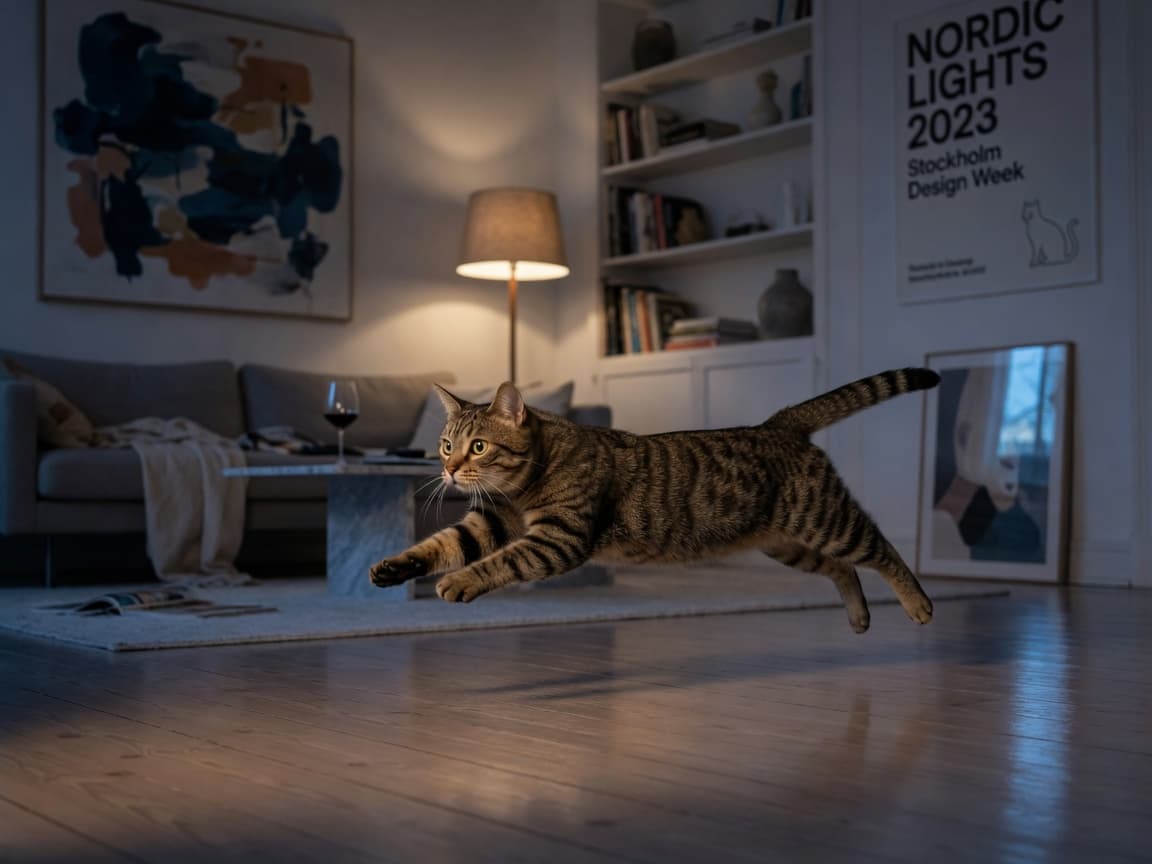
You have just fallen asleep when the thunder begins. Not outside — it is your cat, sprinting from one end of the flat to the other, bouncing off the sofa, attacking an imaginary enemy at full speed, and then sitting perfectly still as though nothing happened. Cat owners call this the zoomies, and while it is harmless, at 2am it is distinctly unwelcome.
The technical term is Frenetic Random Activity Period, or FRAP. These sudden bursts of high-energy activity are not random at all — they follow a biological rhythm, and once you understand that rhythm, you have a real chance of redirecting it to a more civilised hour.
Cats Are Crepuscular, Not Nocturnal
Many people assume cats are nocturnal, but this is not quite accurate. Cats are crepuscular, meaning their natural peak activity periods occur at dusk and dawn — the low-light hours when their exceptional night vision gives them an advantage over prey. In the wild, these are prime hunting windows. Your domestic cat carries this same internal clock, regardless of how many years of evolution separate it from its wild ancestors.
In a household where humans follow a typical sleep pattern, the cat's crepuscular schedule collides badly with the 10pm to 6am sleep window most people need. The cat's energy peaks just as you are winding down, and again just before you want to wake up. This is not a personality flaw or a deliberate act of sabotage — it is simply biology expressing itself.
The Hunting Cycle and Why It Matters at Night
Understanding the feline hunting cycle helps explain why play timing and feeding timing are so powerful as management tools. In the wild, a cat's day is structured around repeated cycles of: hunt — catch — eat — groom — sleep. Each stage of the cycle has a physiological function. The hunt phase burns energy and builds arousal. The catch and eat phases bring satisfaction and trigger a hormonal shift toward calm. Grooming follows as a winding-down behaviour. Sleep closes the loop.
A cat that has not completed a full hunting cycle before bedtime — one that has excess energy with nowhere to direct it — will attempt to complete the cycle at whatever hour its internal clock dictates. In practical terms, this means a cat that has been sedentary all evening and has eaten from a constantly replenished bowl is primed for a 2am explosion of activity.
The solution is to engineer a complete hunting cycle in the early evening, so that when you go to bed, your cat is in the sleep phase of its cycle rather than the hunt phase.
Interactive Play Before Bed
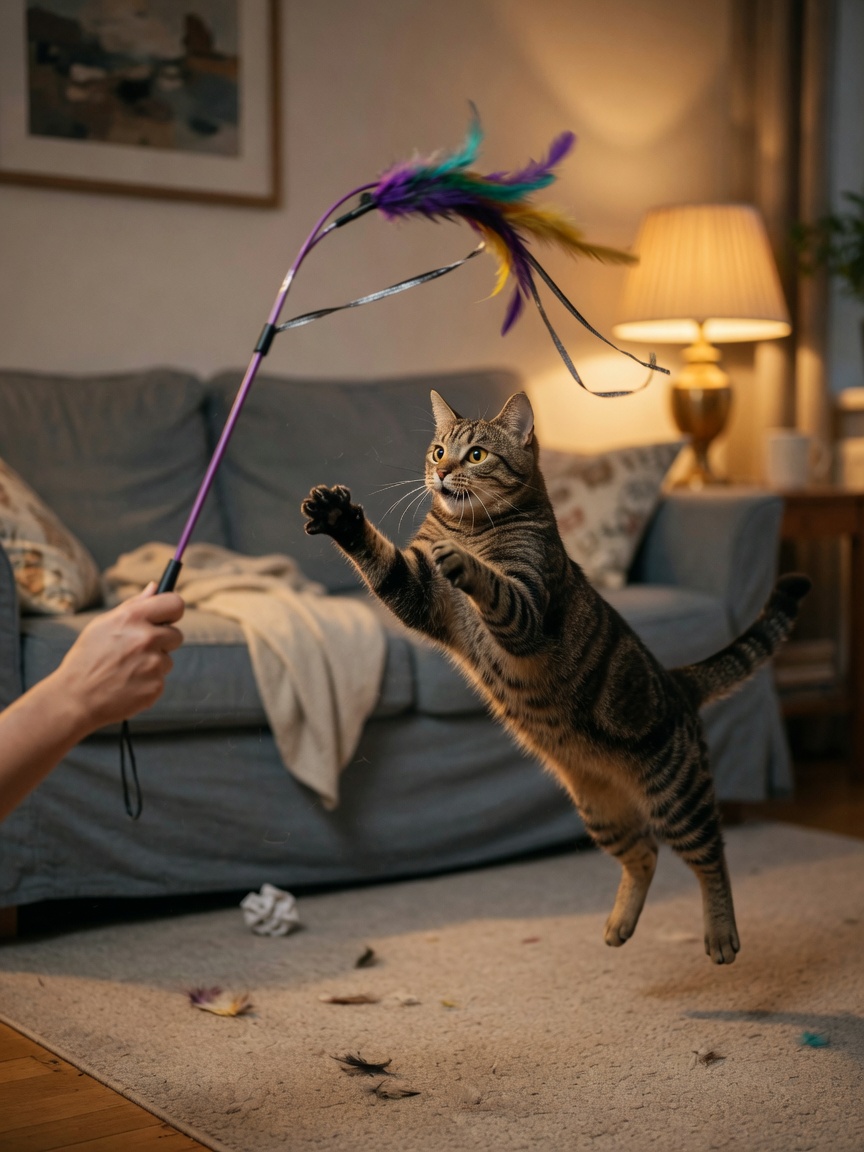
A structured interactive play session in the hour before you go to bed is the single most effective intervention for midnight zoomies. This does not mean leaving a toy on the floor and hoping the cat plays with it — self-directed play rarely reaches the intensity needed to exhaust the hunting drive. You need to be involved.
Wand toys with feather or ribbon attachments are particularly effective because they allow you to mimic the unpredictable movement of real prey. Move the toy in short, erratic bursts. Let the cat catch it occasionally — a hunting cycle that never ends in a catch is frustrating rather than satisfying, and a frustrated cat is not a calm cat. Aim for a session of ten to fifteen minutes, ending with the cat breathing more quickly than normal and beginning to disengage from the toy.
Immediately after play, offer a small meal. This replicates the eat phase of the hunting cycle and triggers the hormonal shift toward calm. Many cats will groom briefly after eating and then fall asleep — exactly the outcome you want.
Rethinking How You Feed Your Cat
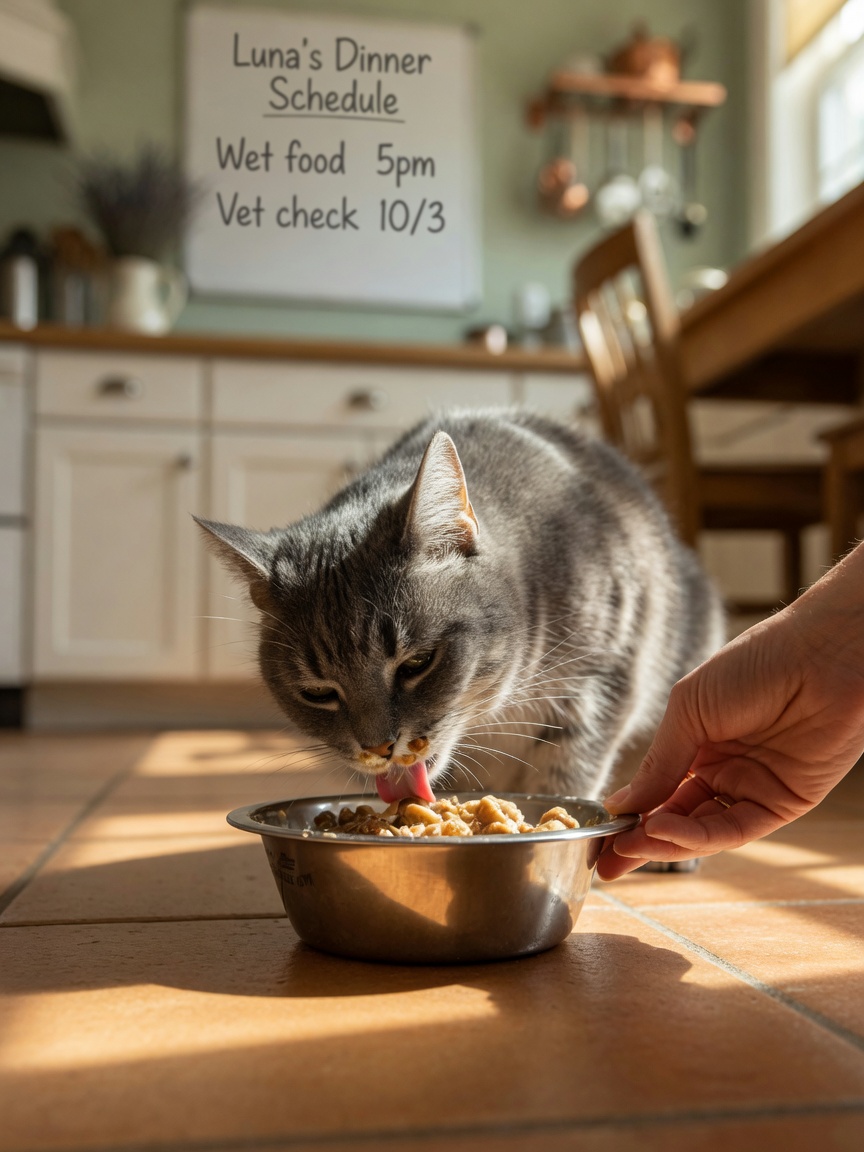
Free-choice feeding — leaving a full bowl of dry food available at all times — is one of the most common contributors to midnight zoomies. When food is always available, there is no natural end point to the eating phase of the hunting cycle, and more importantly, there is no anticipation or reward structure attached to food. The cat's feeding behaviour becomes decoupled from its activity cycle.
Switching to timed meals, ideally two to three per day, reintroduces a rhythm that aligns with the hunting cycle. The last meal of the day should come immediately after your evening play session. This one change — play, then eat, then sleep — can produce a noticeable reduction in overnight activity within a week or two of consistent application.
Puzzle Feeders and Environmental Enrichment
Puzzle feeders are containers or devices that require a cat to work for its food — batting at holes to release kibble, pulling pieces from compartments, or navigating a maze-like tray. They serve two purposes: they extend the time a cat spends engaged with its food (slowing fast eaters and reducing post-meal vomiting), and they satisfy some of the cognitive and physical effort that would otherwise go into hunting.
Used as part of the evening routine, a puzzle feeder can provide an additional layer of tiring mental stimulation before bed. Some owners use them in place of or alongside a play session, particularly on evenings when they do not have fifteen minutes for interactive wand-toy play. The key is to ensure the feeder is challenging enough to require genuine effort but not so difficult that the cat gives up in frustration.
Other Factors That Can Trigger Zoomies
- A new cat, person, or pet in the household can disrupt a previously stable sleep routine and trigger anxious energy at night.
- Pain or discomfort — particularly in older cats — can cause restlessness that resembles zoomies but has a medical origin. If your middle-aged or senior cat suddenly develops overnight activity after years of calm nights, a vet check is worthwhile.
- Insufficient daytime stimulation. A cat that sleeps all day due to a completely unstimulating environment has a large energy surplus by evening. Window perches, bird feeders placed where the cat can watch them, and daytime puzzle feeders can all reduce this surplus.
- Parasites such as fleas can cause sudden bouts of frantic activity at any hour, as the cat reacts to irritation. If the zoomies seem to coincide with scratching or grooming, rule out a parasite burden with your vet.
What Not to Do
Shutting the cat out of the bedroom is a reasonable short-term measure if you need unbroken sleep, but it does not address the underlying energy surplus. Some cats will scratch at doors or vocalise if excluded, which creates a different problem. Punishment — shouting, spraying water — is ineffective and damages trust without changing the biological drive causing the behaviour.
Consistency is the most important variable. A routine that works for five days and then collapses at the weekend, when you stay up later and forget the play session, will take longer to take effect than a routine applied every day without exception.
With patience and a structured evening routine built around the feline hunting cycle, most owners see a significant improvement in overnight behaviour within two to four weeks.