
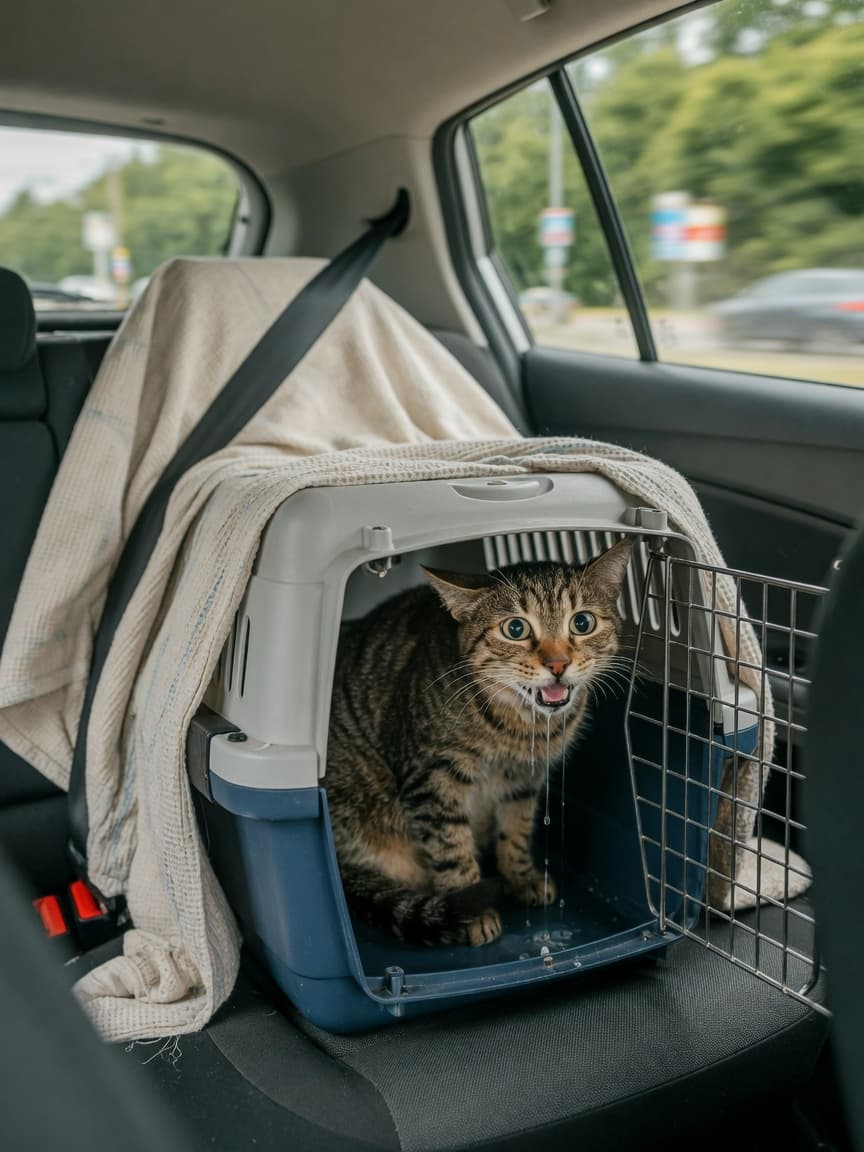
Does Your Cat Suffer from Motion Sickness?
Many cat owners dread car journeys — not because of the drive itself, but because of the distress their cat displays from the moment the carrier comes out. Motion sickness in cats is a genuinely common problem, and it can make even short trips to the vet an ordeal for both pet and owner. The good news is that with some preparation and the right approach, most cats can learn to tolerate — and sometimes even accept — car travel.
Signs of Motion Sickness in Cats
Cats cannot tell you they feel unwell, so it is important to recognise the physical and behavioural signs of motion sickness. These may begin before the car even moves, particularly if your cat associates the carrier with an unpleasant journey:
- Excessive drooling — often one of the first signs
- Vomiting or retching
- Excessive vocalisation — loud, persistent crying or yowling
- Restlessness and inability to settle in the carrier
- Lethargy or unusual stillness
- Lip licking or repeated swallowing
- Defecating or urinating in the carrier
- Panting (uncommon in cats, and a sign of significant stress)
If your cat regularly displays these signs during or after travel, speak to your vet. There may be an underlying cause, and effective treatments are available.
What Causes Motion Sickness in Cats?
Motion sickness in cats has two main components: a physical cause and a psychological one.
The Vestibular System
The inner ear contains the vestibular system, which is responsible for maintaining balance and spatial orientation. During a car journey, the movement of the vehicle sends signals to the vestibular system that conflict with what the eyes are seeing. This sensory mismatch triggers nausea. In cats, the vestibular system is highly sensitive, making them particularly susceptible.
The Anxiety Component
For many cats, motion sickness is compounded — or even primarily driven — by anxiety. Cats are creatures of habit and territory. Being confined in a carrier, removed from their environment, and subjected to unfamiliar sounds, smells, and movement is genuinely frightening. Anxiety alone can trigger nausea and vomiting through the nervous system, even before the car has left the driveway. This is why carrier training and gradual desensitisation are so important.
Carrier Acclimatisation: The Foundation of Stress-Free Travel
One of the most effective things you can do is make the carrier a familiar, positive part of your home environment — not something that only appears when a stressful journey is imminent.
- Leave the carrier out permanently with the door open, lined with soft bedding your cat already uses
- Place treats and toys inside to encourage your cat to explore it voluntarily
- Feed your cat near — and eventually inside — the carrier
- Spray the inside of the carrier with Feliway Classic Spray 15 to 30 minutes before travel. Feliway mimics the natural feline facial pheromone, which cats use to mark familiar, safe objects. It can significantly reduce travel anxiety. Feliway products are available from Zooplus and from your vet.
The goal is for your cat to see the carrier as a safe den, not a trap. This takes time — begin several weeks before any planned journey.
Practical Tips for Car Travel
Build Tolerance with Short Trips
If your cat only travels when going to the vet, they will always associate the car with a stressful destination. Begin with very short journeys — even just sitting in a stationary car, then driving around the block — and gradually increase the duration over days and weeks. Pair each trip with a positive outcome, such as returning home to a favourite meal.
Positioning in the Car
Secure the carrier on the back seat using a seatbelt through the carrier handle, or place it in the footwell wedged firmly so it cannot slide. Facing forward tends to reduce the sensory conflict that triggers nausea. Cover the carrier with a light blanket to reduce visual stimulation from moving scenery, but ensure adequate ventilation.
Withhold Food Before Travel
Avoid feeding your cat for two to three hours before a journey. An empty stomach significantly reduces the likelihood and severity of vomiting. Ensure water is available after you arrive at your destination.
Keep the Car Cool and Ventilated
A warm car worsens nausea. Keep the temperature cool and ensure a flow of fresh air. Avoid strong air fresheners or other strong scents, which can increase sensory overload.
When to Seek Veterinary Advice
If your cat vomits on every journey, becomes severely distressed, or if you have an unavoidable long-distance trip planned, consult your vet well in advance. Your vet may prescribe anti-nausea medication such as maropitant (sold under the brand name Cerenia), which is licensed for use in cats and is highly effective at preventing vomiting caused by motion sickness. Anti-anxiety medication may also be appropriate for cats with a significant anxiety component to their travel distress.
Do not give your cat any human anti-nausea medication — many common drugs, including antihistamines, are either ineffective or toxic to cats. Always seek veterinary advice before administering any medication.
Choosing the Right Carrier
A well-designed carrier makes a significant difference. Look for a carrier that is:
- Large enough for your cat to turn around and lie down comfortably
- Top-opening as well as front-opening, so your cat can be lifted out gently rather than tipped out
- Made of solid, well-ventilated material rather than soft-sided fabric, which provides more security
Zooplus stocks a wide range of cat carriers and Feliway products suitable for travel. Investing in a quality carrier that your cat is comfortable with is one of the most worthwhile purchases you can make as a cat owner.
With patience and the right preparation, most cats can learn to travel with significantly less distress. Start early, go slowly, and do not hesitate to involve your vet if your cat's motion sickness is severe.