
The UK Context: Most Cats Go Outside
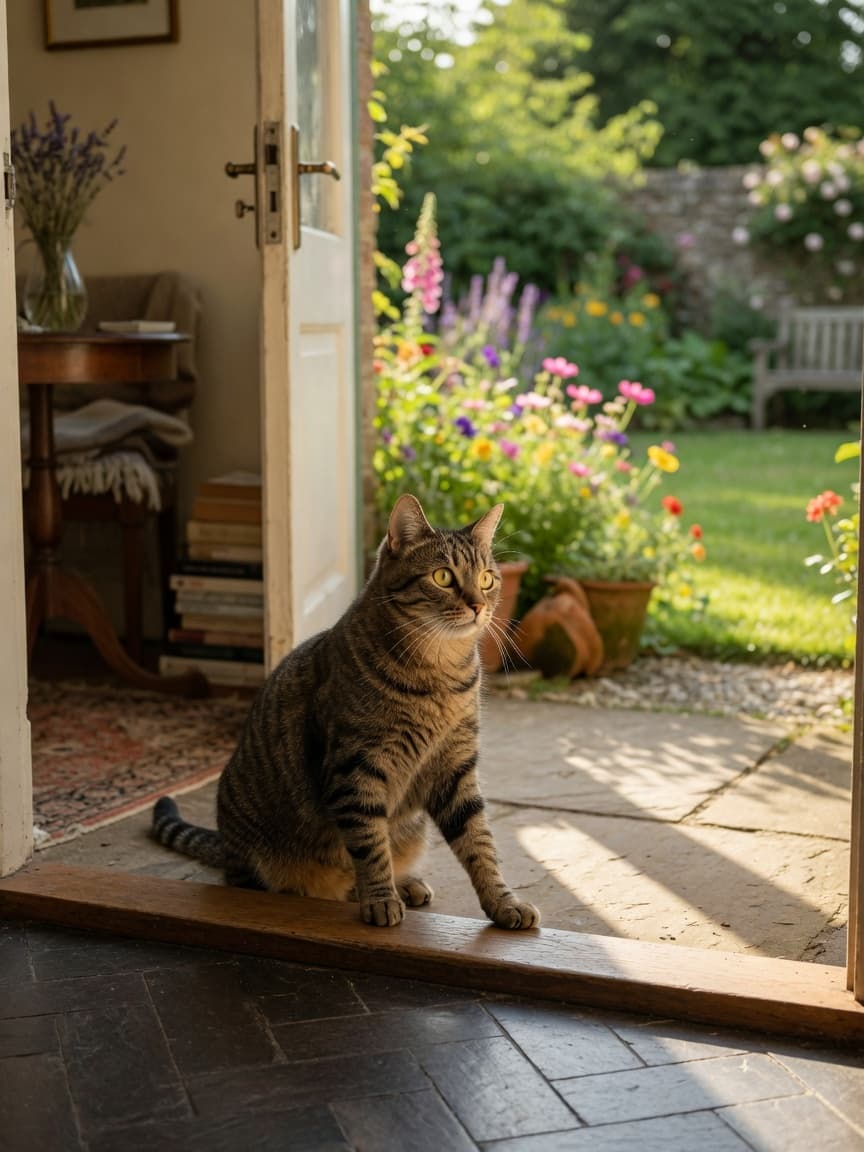
The United Kingdom has one of the highest rates of outdoor cat access in the world. Surveys suggest that the majority of UK cat owners allow their cats outside at least some of the time, and this reflects a cultural norm rooted in a belief that cats need freedom to roam. However, veterinary and welfare organisations have increasingly drawn attention to the risks associated with unrestricted outdoor access, prompting many owners to reconsider — or at least to modify — how and when their cats go out. This guide does not argue for a single correct approach. Instead, it sets out the evidence on both sides and explores the growing range of compromise solutions available to UK owners.
The Risks of Outdoor Access
Road Traffic Accidents
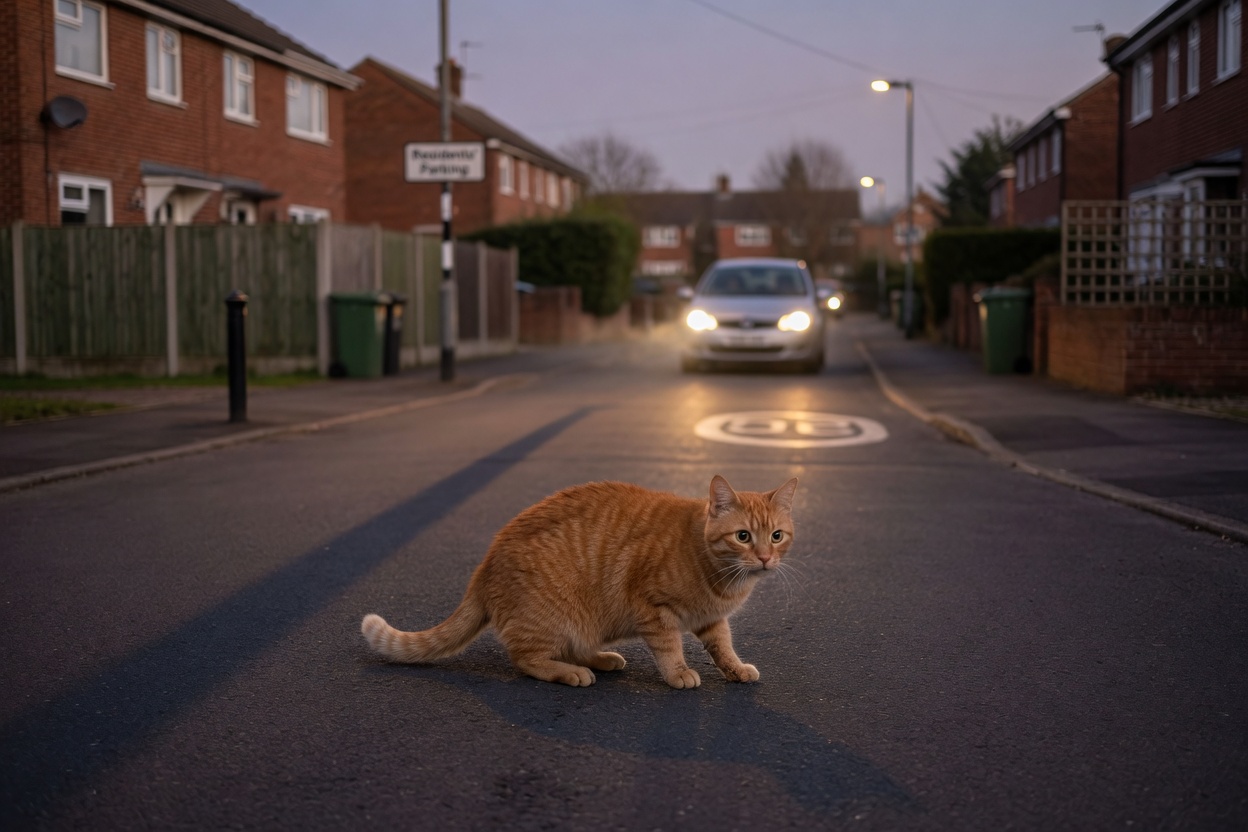
Road traffic accidents (RTAs) are the single most common cause of death in young cats in the UK. Studies conducted by the Royal Veterinary College have found that cats under five years of age face the highest risk, with peak accident times occurring at dawn and dusk when cats are most active and visibility for drivers is reduced. Black cats are at particularly elevated risk due to poor visibility at night. If you live on or near a busy road, this risk must be weighed seriously. Cats cannot be reliably trained to avoid roads, and even cats that have lived near traffic safely for years can be involved in accidents.
Infectious Disease Exposure
Outdoor cats have contact with other cats, wildlife, and shared environmental spaces, all of which carry infection risk. Feline immunodeficiency virus (FIV) and feline leukaemia virus (FeLV) are both spread primarily through bites — common during territorial cat fights. Feline infectious peritonitis (FIP) and cat flu pathogens can also be transmitted through shared outdoor spaces. Ensuring your cat is fully vaccinated and neutered before outdoor access is essential. Neutering significantly reduces roaming behaviour and territorial fighting, which in turn reduces the risk of bite-wound infections and disease transmission.
Toxin Exposure
The outdoor environment contains numerous toxins that can cause serious harm. Garden plants including lilies, foxglove, yew, and autumn crocus are highly toxic to cats. Slug pellets containing metaldehyde, rodenticides placed by neighbours, antifreeze leaking from vehicles, and herbicides on lawns are all genuine hazards. Permethrin — found in some spot-on flea treatments formulated for dogs — is lethal to cats and can be encountered when a treated dog passes through an outdoor space. Awareness of these risks does not mean outdoor access should be eliminated, but owners should be familiar with local hazards and watch for signs of poisoning including drooling, seizures, and sudden collapse.
Predation of Wildlife
UK cats are estimated to kill tens of millions of birds and small mammals each year. This is an important consideration for owners who value local wildlife conservation. Fitting a well-designed, quick-release safety collar with a bell reduces hunting success significantly. Brightly coloured collar covers — sometimes called bib-style devices — are even more effective and have been shown in studies to reduce bird predation by up to ninety per cent.
The Benefits of Outdoor Access
Enrichment and Mental Stimulation
The outdoor world offers a complexity of sensory experience that is genuinely difficult to replicate indoors. Changing scents, varied terrain, the presence of prey animals, seasonal shifts in light and temperature, and the social information left by other cats in the neighbourhood provide continuous, non-repetitive stimulation. For cats with high prey drive and abundant energy — particularly younger cats and those of active breeds — this stimulation is important for psychological wellbeing.
Exercise
Obesity is one of the most common preventable health conditions in domestic cats, and outdoor cats tend to have lower body weights than their exclusively indoor counterparts. Running, climbing, jumping, and the moderate calorie expenditure of territorial patrolling all contribute to better weight management. Indoor cats can achieve good activity levels through enrichment and play, but this requires consistent owner input, whereas outdoor cats exercise more spontaneously.
Stress Reduction
For cats that have always had outdoor access, confinement can cause significant chronic stress. Stress in cats is expressed differently from stress in dogs — it often manifests as over-grooming, house soiling, reduced appetite, or hiding rather than overt distress. Cats that are accustomed to outdoor territory may experience its removal as a profound loss. This is particularly relevant when owners move house, during extended periods of illness, or following changes to the home environment.
Compromise Options
Catios
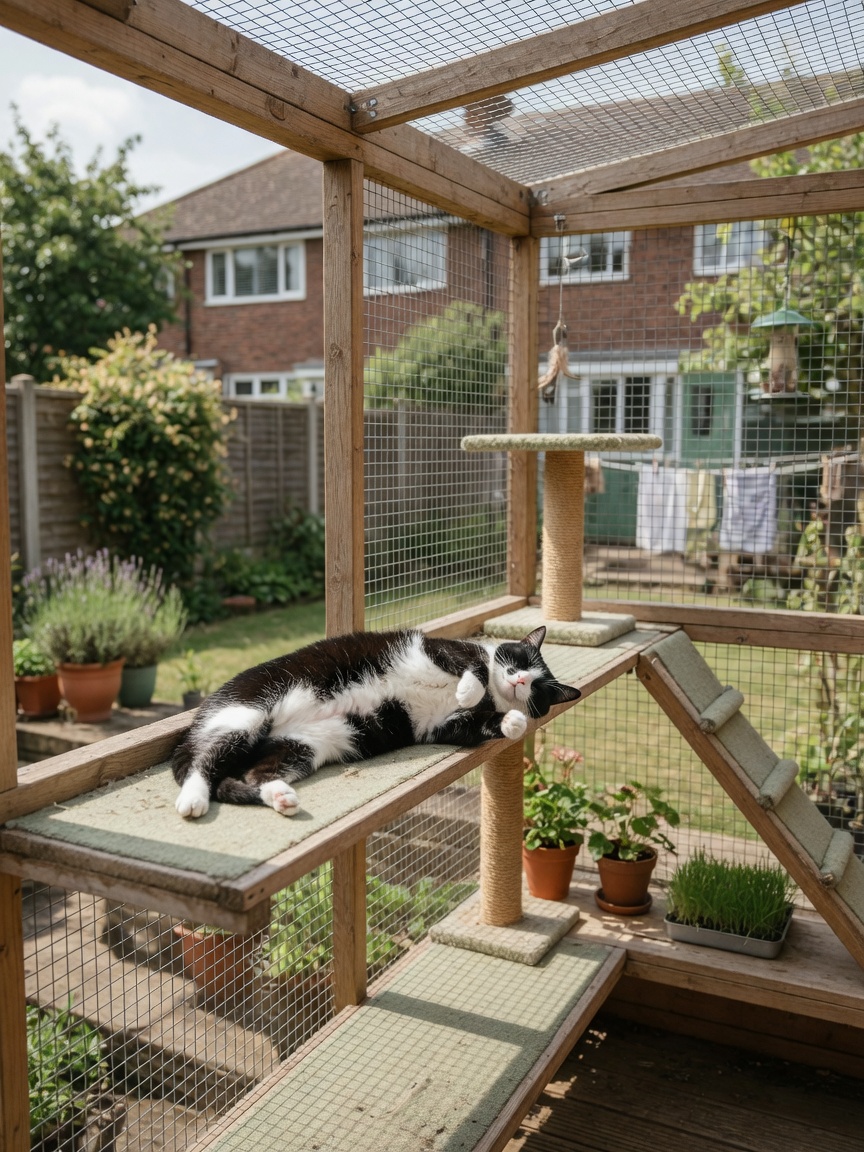
A catio is an enclosed outdoor space — typically a wire mesh or polycarbonate structure — attached to a cat flap or window. Catios can range from a small box window extension to a substantial structure covering an entire patio or garden. They allow cats to experience outdoor air, sounds, and sights while remaining completely safe from traffic, other cats, and toxins. Many UK suppliers now offer modular catio systems that can be installed without planning permission if they meet certain size requirements, though it is worth checking local authority guidelines before construction.
Harness Training
Some cats adapt well to walking on a harness and lead, particularly when training begins in kittenhood. Harness walking should never replicate a dog walk — the cat leads, explores at its own pace, and is never pulled or directed. A well-fitted H-style or figure-eight harness is more secure than collar-style designs. Introduce the harness indoors over several weeks before venturing outside, and always ensure the cat is in a calm, confident state before proceeding. Not all cats will accept harness walking, and it should never be forced.
Enclosed Garden Systems
Specialist products such as roller-top fencing or inclined mesh systems can be fitted to existing garden fences to prevent cats from climbing out. These systems are unobtrusive and allow a cat to enjoy an entire garden freely while remaining contained. They are a popular solution in suburban areas where road proximity makes free roaming dangerous but space allows for meaningful outdoor territory.
Breed Considerations
Breed plays a significant role in how well individual cats adapt to indoor or outdoor living. Highly active breeds such as the Bengal, Abyssinian, Siamese, and Burmese have particularly strong prey drives and exploratory instincts, and may find indoor-only life frustrating without substantial enrichment. Conversely, flat-faced breeds such as the Persian and Exotic Shorthair are often less athletic, more sedentary, and adapt more readily to indoor environments. They are also at higher risk of breathing difficulties in extreme outdoor conditions. When considering a cat's lifestyle needs, consult breed-specific guidance and speak with a breeder or rescue organisation about the individual animal's temperament before making decisions about outdoor access.
Making the Right Decision for Your Cat
There is no universal answer to the indoor versus outdoor question. A cat living in a rural setting with low traffic and no immediate road access faces very different risks from a cat in an urban flat above a busy street. Age, health status, temperament, and previous experience all matter. Whatever you decide, the priority is to ensure your cat's physical safety and psychological needs are both addressed — and the two are not mutually exclusive.