
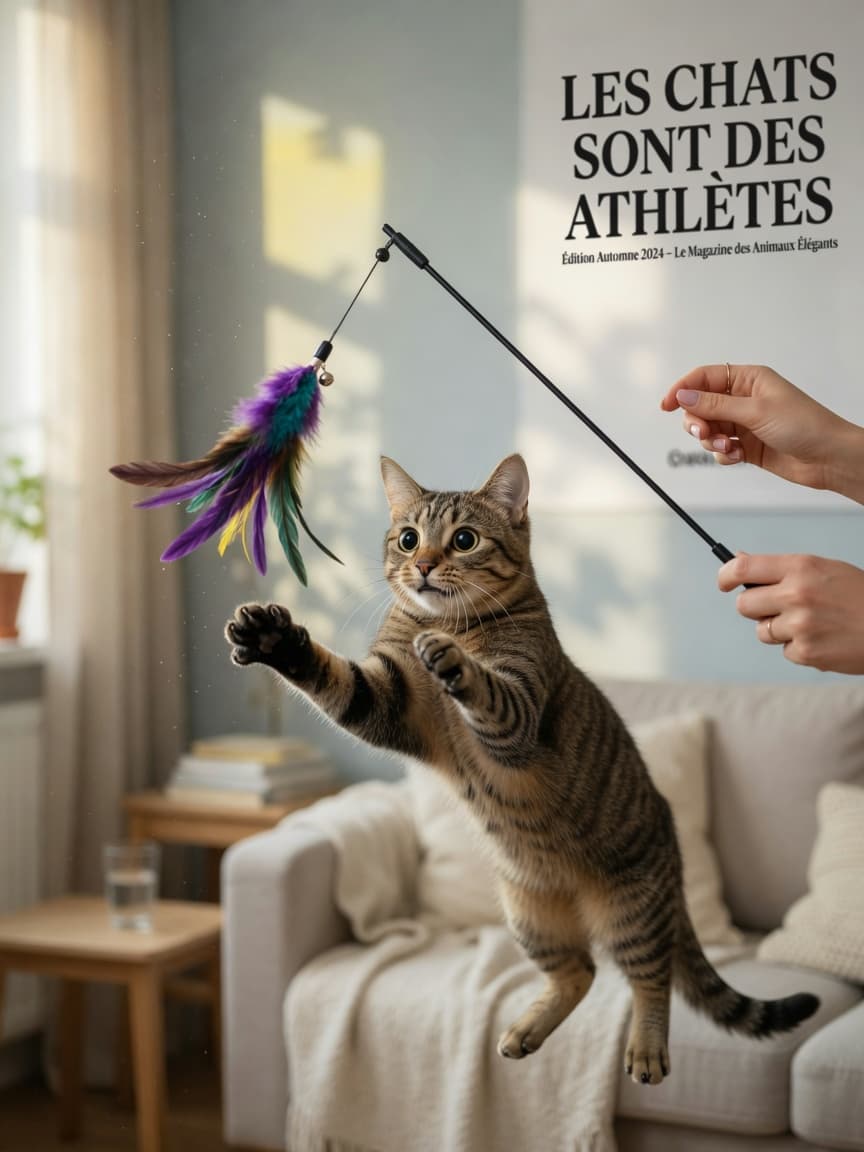
Why Play Matters for Indoor Cats
Indoor cats live comfortable, safe lives — but that safety comes at a cost. Without access to the outdoors, they lose the outlet that evolution built them for: hunting. A cat that cannot express its predatory instincts is a cat at risk. Boredom, obesity, anxiety, and destructive behaviour are all common consequences of under-stimulated indoor cats.
Play is not a luxury for indoor cats. It is a core welfare need. Structured daily play sessions address physical fitness, mental health, and emotional wellbeing in one go. Understanding how to play with your cat correctly makes the difference between a session your cat finds satisfying and one that leaves them frustrated or overstimulated.
The Hunting Sequence: The Foundation of Good Play
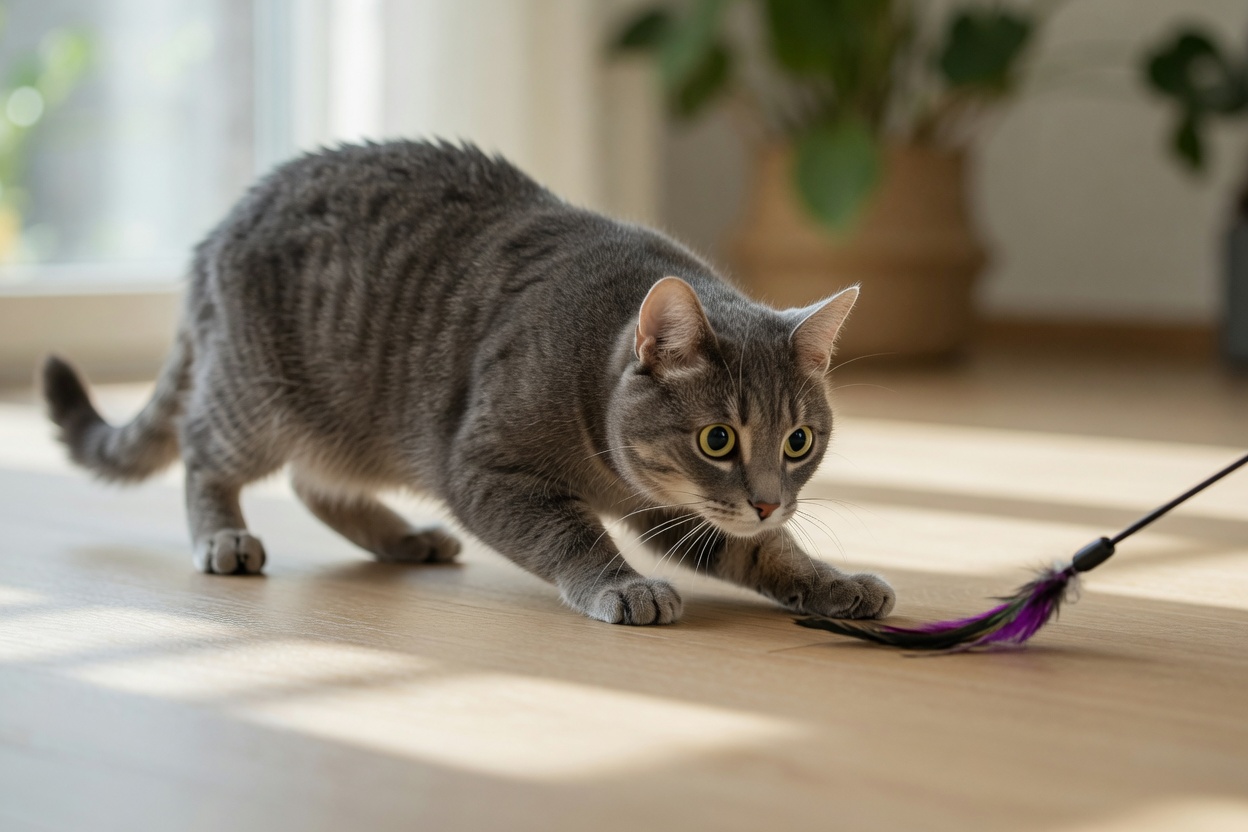
Cats do not simply chase things at random. Their predatory behaviour follows a fixed sequence that is hardwired into them regardless of breed or background: stalk, chase, pounce, grab, kill. A truly satisfying play session mirrors this sequence from beginning to end.
When you wave a wand toy, your cat will typically freeze and watch first — this is the stalk phase. Then comes a cautious creep, followed by an explosive chase and pounce. The grab-and-kick behaviour you see when your cat seizes the toy represents the kill stage. Understanding this sequence helps you pace your play correctly. Move the toy slowly at first to trigger stalking, then speed it up, let it escape, hide it briefly behind furniture, and bring it back. This variety keeps the session engaging and authentic.
Crucially, every play session should end with a successful catch. Cats that are never allowed to complete the hunting sequence can become frustrated and anxious over time. Let your cat pin the toy and give them a moment to savour the catch before quietly ending the session.
Ending Sessions with a Physical Reward
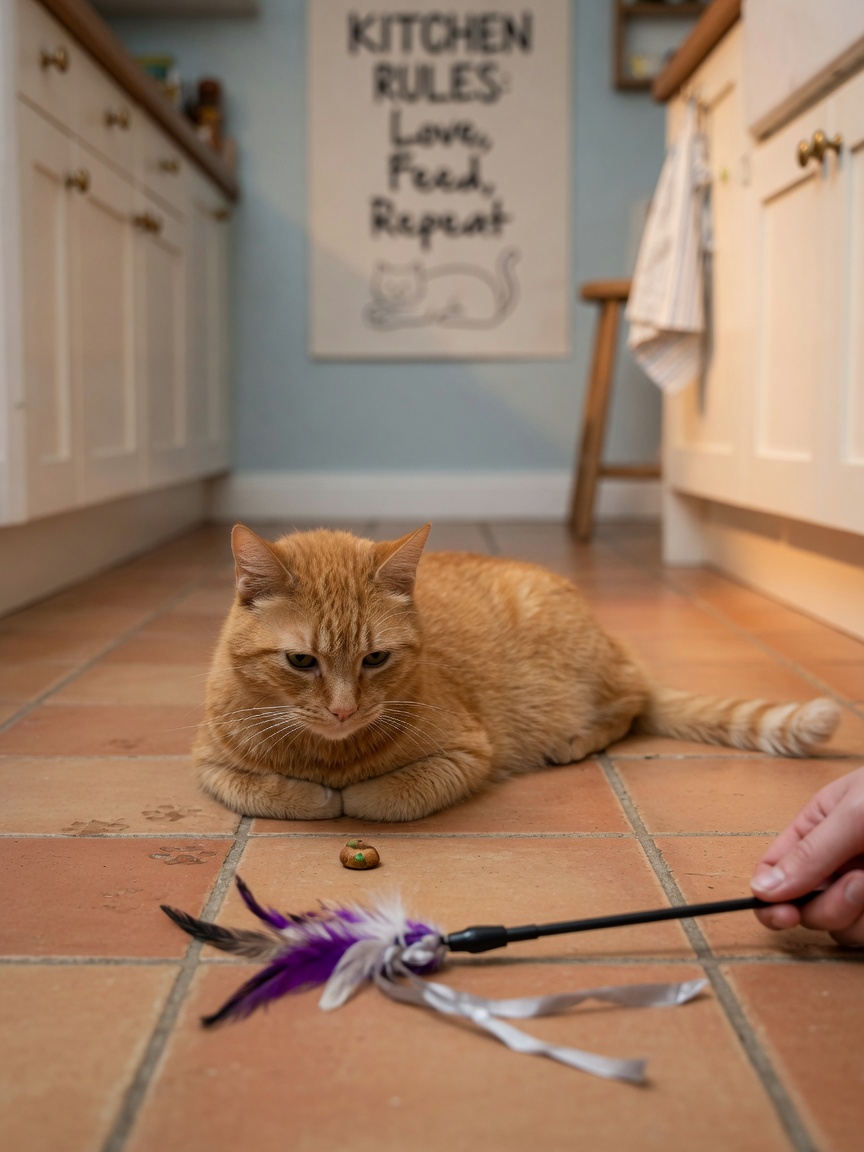
Because the kill phase of hunting is naturally followed by eating in the wild, it is worth giving your cat a small treat or a portion of their meal immediately after play. This completes the biological loop — hunt, catch, eat — and leaves your cat feeling deeply satisfied rather than wound up. Many cat behaviourists recommend feeding cats their main meals straight after play sessions for this reason.
If you use a laser pointer, this rule is especially important. Laser pointers are excellent for triggering the chase phase, but the cat can never catch the dot. Always end any laser pointer session by redirecting the beam onto a physical toy that your cat can actually grab and bite. Without this step, laser play can cause chronic frustration and lead to compulsive behaviours.
How Long and How Often to Play
Most adult cats benefit from two to three active play sessions per day, each lasting five to ten minutes. This mirrors the rough frequency of a cat's natural hunting attempts in the wild. Shorter, more frequent sessions are generally more effective than one long session, which can lead to overstimulation or boredom.
Watch your cat for signs that a session is going well: pupils dilated, tail low and twitching, weight shifted forward onto the front paws. Signs that a session has gone on too long or become too intense include tail lashing, flattened ears, skin rippling along the back, or redirected aggression. If you see any of these, slow the toy down and bring the session to a calm close.
The Best Toys for Cat Play
Wand toys — also called fishing rod toys or interactive wands — are the single most effective tool for interactive play. They allow you to replicate the movement of real prey accurately, keep your hands safely away from claws and teeth, and give you full control over the pacing of the session.
Look for wands with feather, fabric, or fur attachments that move unpredictably. Vary the motion: drag the toy along the floor like a mouse, lift it in short arcs like a bird, make it dart behind a cushion and reappear. Unpredictability is the key — if your cat can predict exactly where the toy will go, they will quickly lose interest.
Other useful toys include small soft mice for solo batting, crinkle balls, and puzzle feeders that combine play with food reward. Rotate toys regularly to maintain novelty. A toy that has been put away for a week feels brand new to a cat.
Never Use Your Hands as Toys
This is one of the most important rules in cat play and one of the most frequently broken. Wiggling your fingers under a blanket, letting a kitten bite your hand, or rough-housing bare-handed might seem harmless when your cat is small. It teaches your cat directly that human skin is an acceptable target for biting and scratching.
This habit is very difficult to reverse once established. The cat that bites your ankles as it darts past, or that draws blood when over-excited, has almost always been taught that hands and feet are prey. Always use a toy as an intermediary. If your cat begins to target you directly during play, freeze completely and end the session calmly. Never shout or push the cat away — any physical response is stimulating and reinforces the behaviour.
Age-Appropriate Play
Kittens are almost always self-motivating when it comes to play, but they tire quickly. Keep sessions short — two to five minutes — and expect high energy bursts followed by sudden sleep. Their coordination is still developing, so keep toy movements close to the ground and avoid anything that could lead to falls from height.
Adult cats vary enormously in their play drive depending on personality, breed, and history. Some will engage enthusiastically for a full ten minutes; others will manage three minutes and then wander off. Follow your individual cat's lead rather than forcing a session to continue.
Senior cats may have reduced mobility due to arthritis or other age-related conditions, but they still benefit from gentle, low-impact play. Use slower movements, keep the toy at floor level, and watch carefully for signs of discomfort. Even five minutes of calm interactive play each day provides meaningful mental stimulation for an older cat.
Play as Enrichment
Play and environmental enrichment overlap significantly. A well-enriched home — with window perches, climbing structures, hiding spots, and rotating toys — means your cat arrives at each interactive play session already somewhat mentally engaged rather than desperate for stimulation. Think of interactive play as the centrepiece of a broader enrichment strategy, not the only tool in your kit.
Some cats also enjoy solo enrichment toys such as battery-operated mice or automatic feather wands. These can supplement interactive play but should not replace it entirely. The bond built during a human-led play session, where you read your cat's responses and adjust in real time, has welfare value beyond the physical exercise alone.
Committing to two to three short play sessions each day is one of the most impactful things you can do for an indoor cat's quality of life. Done correctly — following the hunting sequence, using the right toys, ending on a successful catch — play fulfils a deep biological need and keeps your cat calmer, healthier, and more content across the board.