
Why Cat Skin Problems Are So Easily Missed
Cats are famously private creatures. Unlike dogs, who may scratch loudly or rub themselves against furniture in obvious distress, cats tend to groom quietly and hide signs of discomfort from their owners. This means that skin problems in cats can go unnoticed for weeks or even months before they become severe enough to catch your attention.
A cat with a mild itch may simply groom a little more than usual. Over time, however, persistent skin issues can lead to hair loss, open sores, secondary infections, and significant discomfort. Learning to recognise the early signs of feline skin problems — and understanding what they might mean — is one of the most valuable things you can do as a cat owner.
Common Cat Skin Problems
Feline Miliary Dermatitis
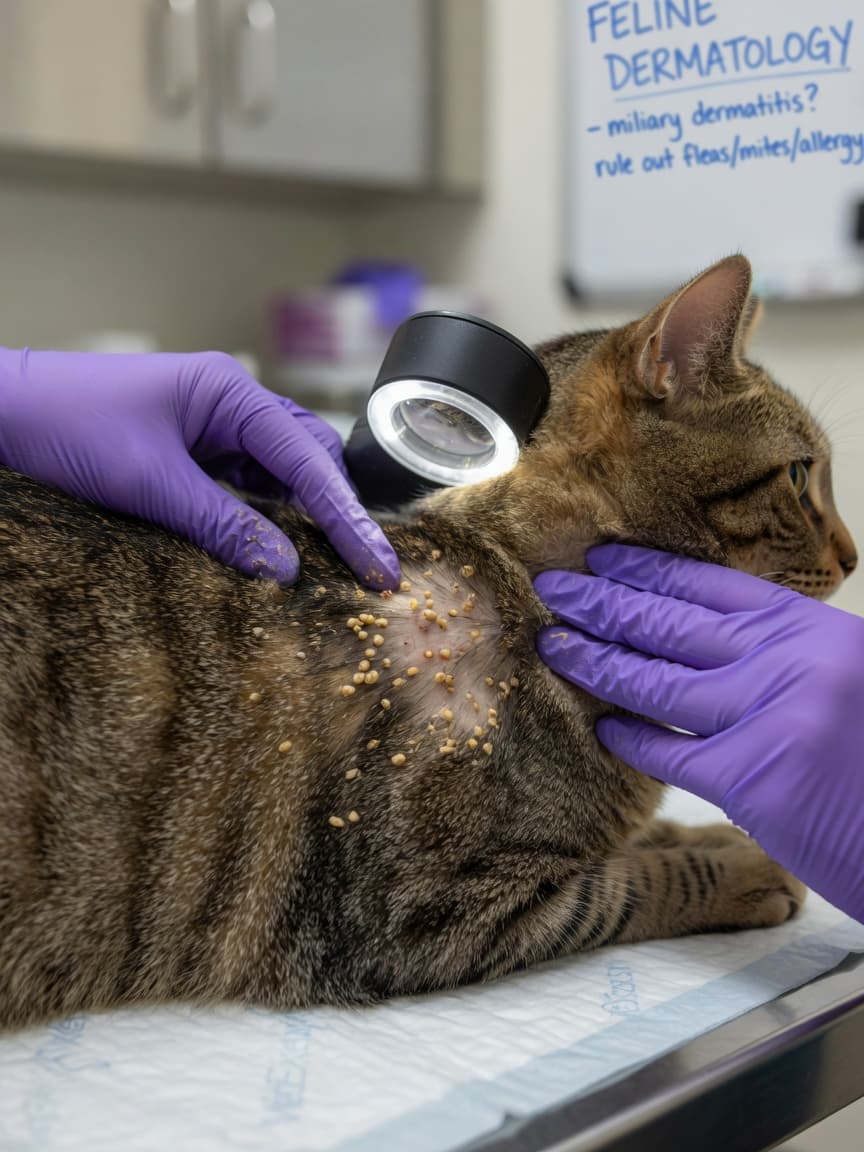
Miliary dermatitis is not a single disease but rather a pattern of skin reaction. The name comes from the Latin word for millet seed, because the tiny raised crusts scattered across the skin resemble millet grains. You are most likely to find these lesions along the back, around the neck, and at the base of the tail, though they can appear anywhere on the body.
The condition is almost always a response to an underlying trigger: flea allergy dermatitis is the most common cause, but food hypersensitivity, environmental allergies, mites, and fungal infections can all produce the same pattern. Treating the symptom without identifying the cause will only ever bring temporary relief.
Over-Grooming and Psychogenic Alopecia
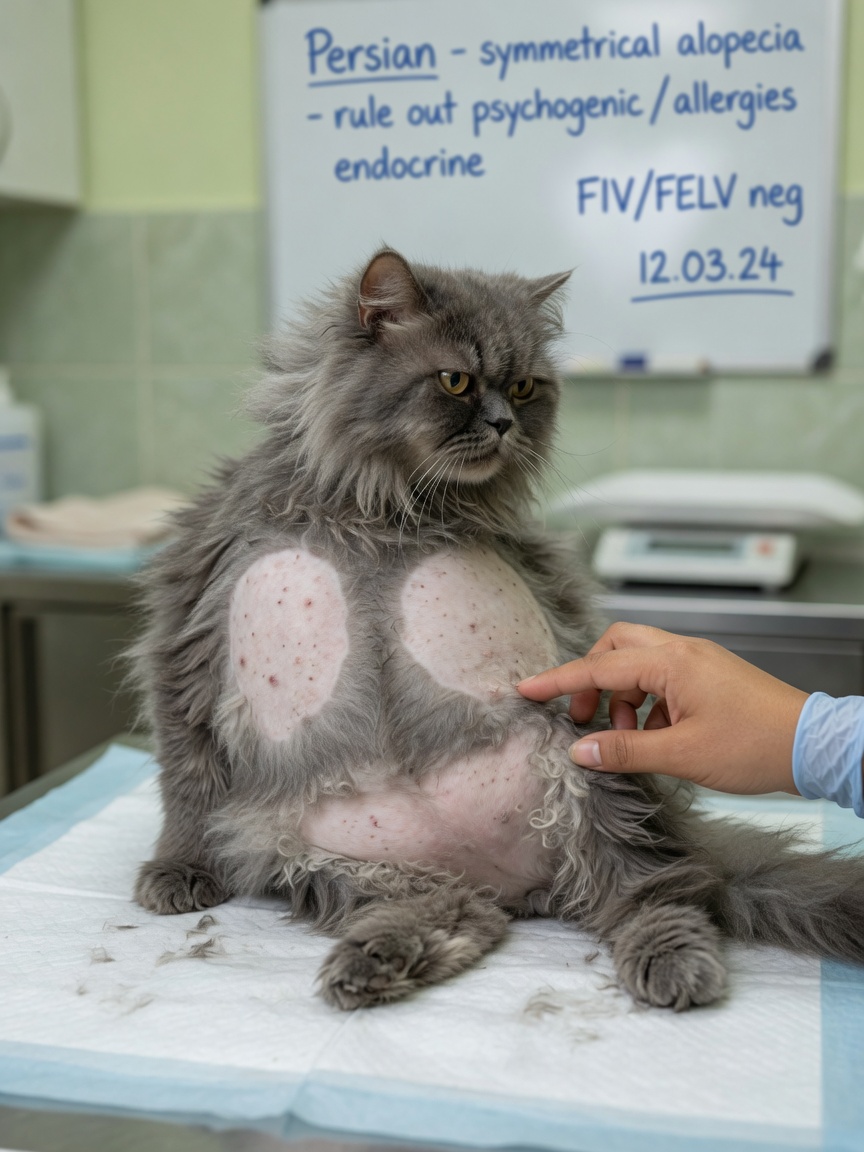
Some cats develop compulsive grooming habits that result in symmetrical hair loss, typically along the belly, inner thighs, or flanks. This can be caused by two very different problems: an allergic or parasitic itch driving the cat to groom constantly, or a psychological response to stress known as psychogenic alopecia.
Distinguishing between the two requires a thorough veterinary assessment. Allergic causes are actually far more common than psychogenic ones, and it is important that vets rule out physical triggers before concluding that a cat's over-grooming is behavioural in origin. Environmental stressors such as the introduction of a new pet, building work, or a change in routine can contribute to psychogenic alopecia, but this diagnosis should only be made once other causes have been excluded.
Ringworm
Despite its name, ringworm is caused not by a worm but by a fungal infection — most commonly Microsporum canis in cats. It presents as circular or irregular patches of hair loss, often with a scaly, reddened border. The lesions may appear on the face, ears, and paws initially, but can spread across the body if left untreated.
Ringworm is zoonotic, meaning it can be transmitted from cats to humans, and vice versa. This makes prompt diagnosis and treatment particularly important in households with children, elderly individuals, or immunocompromised people. ESCCAP (the European Scientific Counsel Companion Animal Parasites) provides guidance on managing dermatophytosis in companion animals, and recommends environmental decontamination alongside treatment of the affected animal.
Allergies: Food, Environmental, and Flea Allergy Dermatitis
Allergic skin disease is among the most frequently diagnosed conditions in feline dermatology. There are three main categories: food hypersensitivity, environmental (atopic) allergy, and flea allergy dermatitis (FAD). The clinical signs can overlap considerably, which is why systematic diagnosis is so important.
Flea allergy dermatitis is triggered by a hypersensitivity reaction to flea saliva. Even a single flea bite can provoke an intense reaction in a sensitised cat, so the absence of visible fleas does not rule out FAD. Food hypersensitivity can develop even to proteins a cat has eaten without problems for years. Environmental allergens such as pollen, dust mites, and mould spores can trigger atopic dermatitis, which often worsens seasonally.
Signs to Watch For at Home
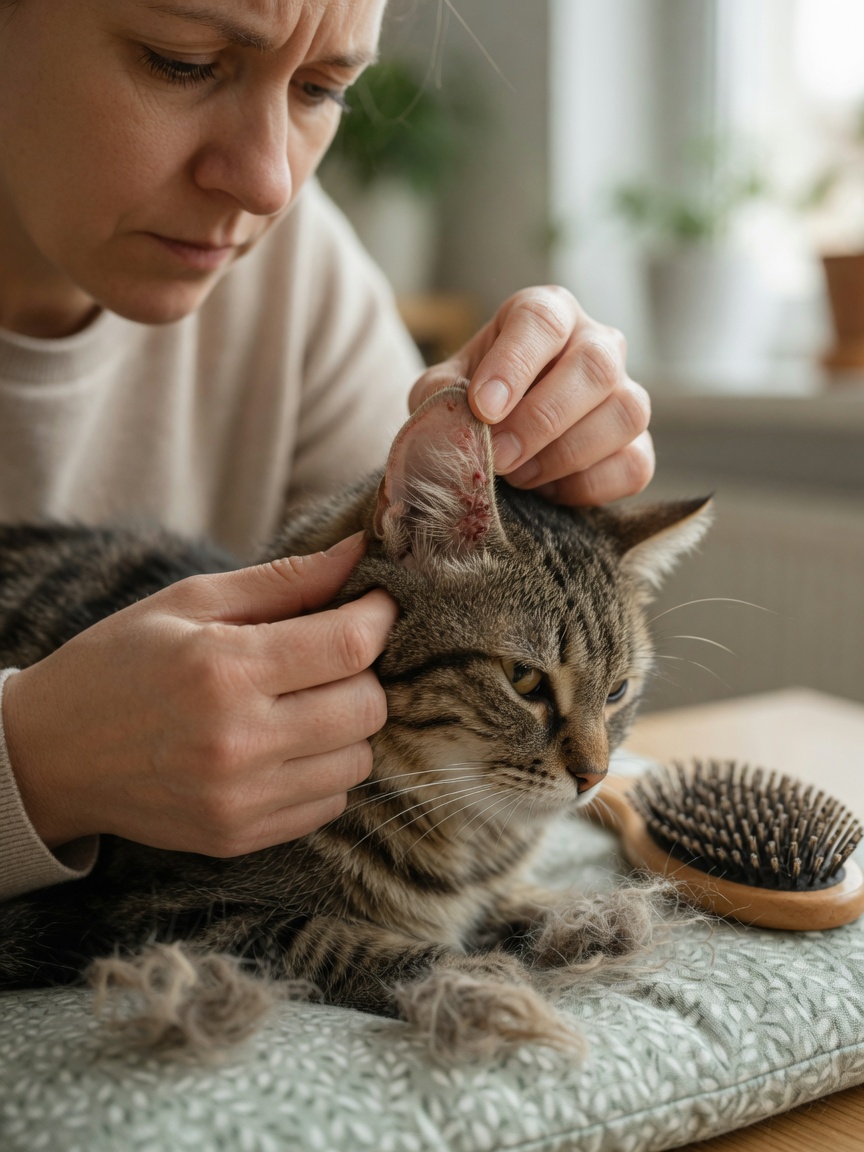
Because cats conceal discomfort so well, it helps to know what you are looking for during routine handling and grooming sessions. The following signs warrant closer attention:
- Excessive or frantic grooming, especially focused on one area
- Patches of thinning fur or complete hair loss
- Small crusty bumps or scabs, particularly along the back and neck
- Reddened, inflamed, or thickened skin
- Dandruff or greasy, flaky coat
- Persistent head shaking or scratching at the ears
- Changes in behaviour, such as increased irritability or withdrawal
- Wounds or raw patches from self-trauma
Any of these signs that persist for more than a few days, or that appear suddenly and severely, should prompt a veterinary consultation.
How Vets Diagnose Skin Problems in Cats
A thorough diagnosis begins with a detailed history. Your vet will ask about the onset and progression of symptoms, your cat's diet, parasite control regimen, living environment, and any recent changes at home. WSAVA (the World Small Animal Veterinary Association) and FECAVA (the Federation of European Companion Animal Veterinary Associations) both emphasise the importance of a systematic, stepwise approach to dermatological cases.
Diagnostic tools your vet may use include:
- Skin scrapes to check for mites such as Notoedres cati or Demodex cati
- Wood's lamp examination, which causes certain strains of Microsporum canis to fluoresce a yellow-green colour under ultraviolet light, supporting a ringworm diagnosis
- Fungal culture, which is more reliable than the Wood's lamp alone and is considered the gold standard for confirming dermatophytosis
- Cytology, examining cells from the skin surface or ear canal under a microscope to identify bacteria or yeast
- Elimination diet trials lasting a minimum of eight to twelve weeks, using a novel protein or hydrolysed diet to investigate food hypersensitivity
- Intradermal allergy testing or serum allergen-specific IgE testing, used when environmental allergy is suspected
Ruling Out Fleas First
ESCCAP guidance makes it clear that parasitic causes should always be excluded before pursuing more complex or costly investigations. In practice, this means ensuring your cat is on a reliable, up-to-date flea control programme before assuming a skin problem is allergic or behavioural in origin. Many cases of miliary dermatitis, over-grooming, and generalised itchiness resolve completely once flea control is properly implemented for all pets in the household.
When selecting flea treatments, look for veterinary-recommended products and pay attention to their spectrum of activity. Some owners find it useful to order treatments in bulk through reputable suppliers such as Zooplus, which stocks a wide range of prescription-style and over-the-counter parasite control products for cats.
Treatment Options
Treatment depends entirely on the underlying cause identified through diagnosis. Common approaches include:
- Antifungal medications (topical or oral) for ringworm, alongside thorough environmental cleaning
- Corticosteroids to reduce inflammation and itching during flare-ups, used at the lowest effective dose for the shortest necessary duration
- Antihistamines, though their effect in cats is less predictable than in dogs or humans
- Dietary change to a hydrolysed or novel protein food if food hypersensitivity is confirmed
- Parasite control as the cornerstone of managing flea allergy dermatitis
- Newer targeted therapies such as modified ciclosporin or monoclonal antibody treatments for cats with chronic allergic skin disease
When to Seek Urgent Veterinary Help
Some situations require prompt attention rather than a routine appointment. Contact your vet as soon as possible if your cat has open, bleeding, or weeping wounds from self-trauma; if skin lesions appear to be spreading rapidly; if your cat has stopped eating or is visibly distressed; or if you notice lesions on yourself or other family members that could indicate ringworm transmission. Early intervention almost always leads to a better outcome, and there is no benefit in waiting to see whether things improve on their own when a cat is clearly uncomfortable.
Understanding your cat's normal appearance and grooming habits makes it far easier to spot when something has changed. Regular gentle handling, especially around the neck, base of the tail, and belly, will help you catch skin problems at their earliest and most treatable stage.