
Why the Distinction Matters
Watching your cat bring up food is unpleasant and worrying, but not all episodes of "being sick" are the same. Vomiting and regurgitation are distinct physiological processes, caused by different conditions and requiring different investigations. When you call your vet or arrive at the clinic, the ability to describe which one you observed can save significant time in reaching a diagnosis. The key lies in what you see — and what happened just before the food came back up.
What Is Vomiting?
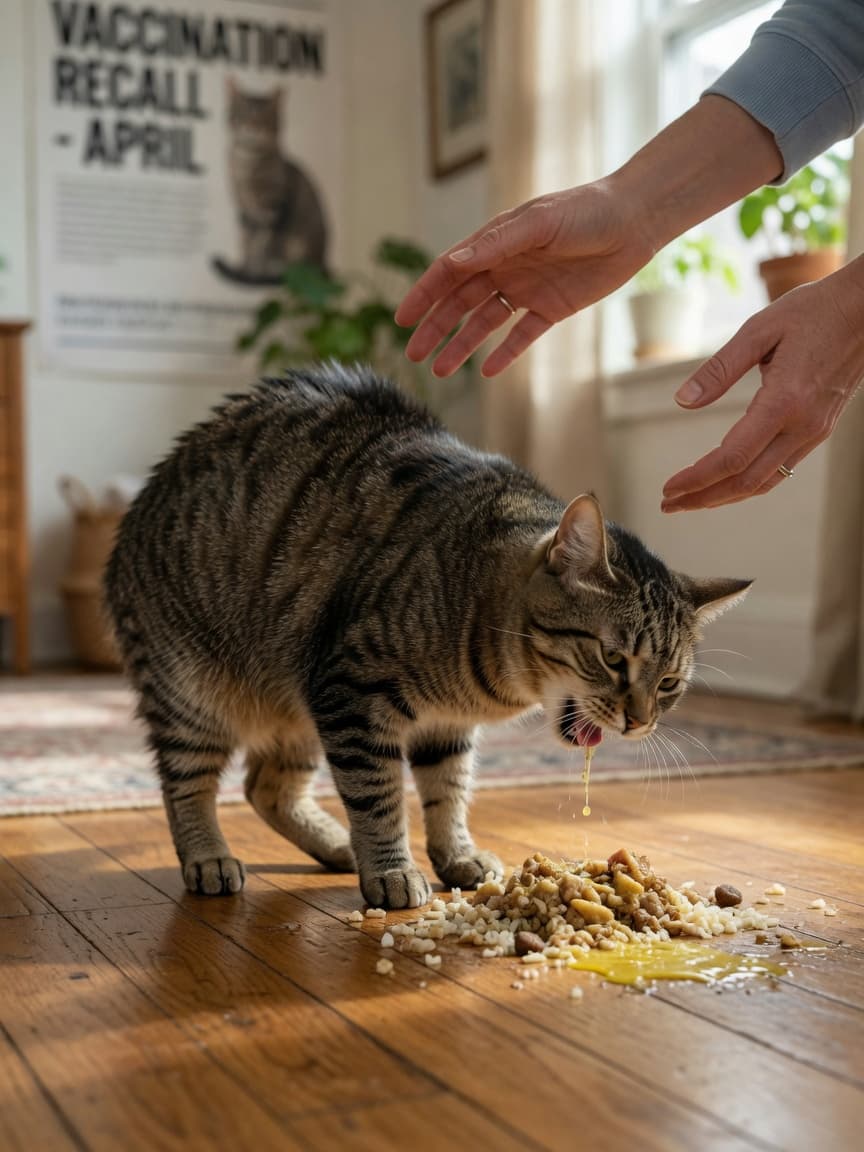
Vomiting is an active process. It involves coordinated muscular contractions of the abdomen and diaphragm — what most people recognise as retching — followed by forceful expulsion of stomach contents through the mouth. You will usually see your cat hunching its body, heaving repeatedly, and looking uncomfortable before anything comes up. The vomited material may include partially digested food mixed with yellow or greenish bile, frothy fluid, or mucus. The presence of bile is a particularly useful clue, as it indicates the material has been in or near the stomach for some time.
Vomiting originates from the stomach or small intestine and is triggered by a wide range of conditions, including dietary indiscretion (eating something unsuitable), hairballs, gastroenteritis, pancreatitis, inflammatory bowel disease, kidney disease, liver disease, hyperthyroidism, intestinal obstruction, and certain toxins or medications.
What Is Regurgitation?
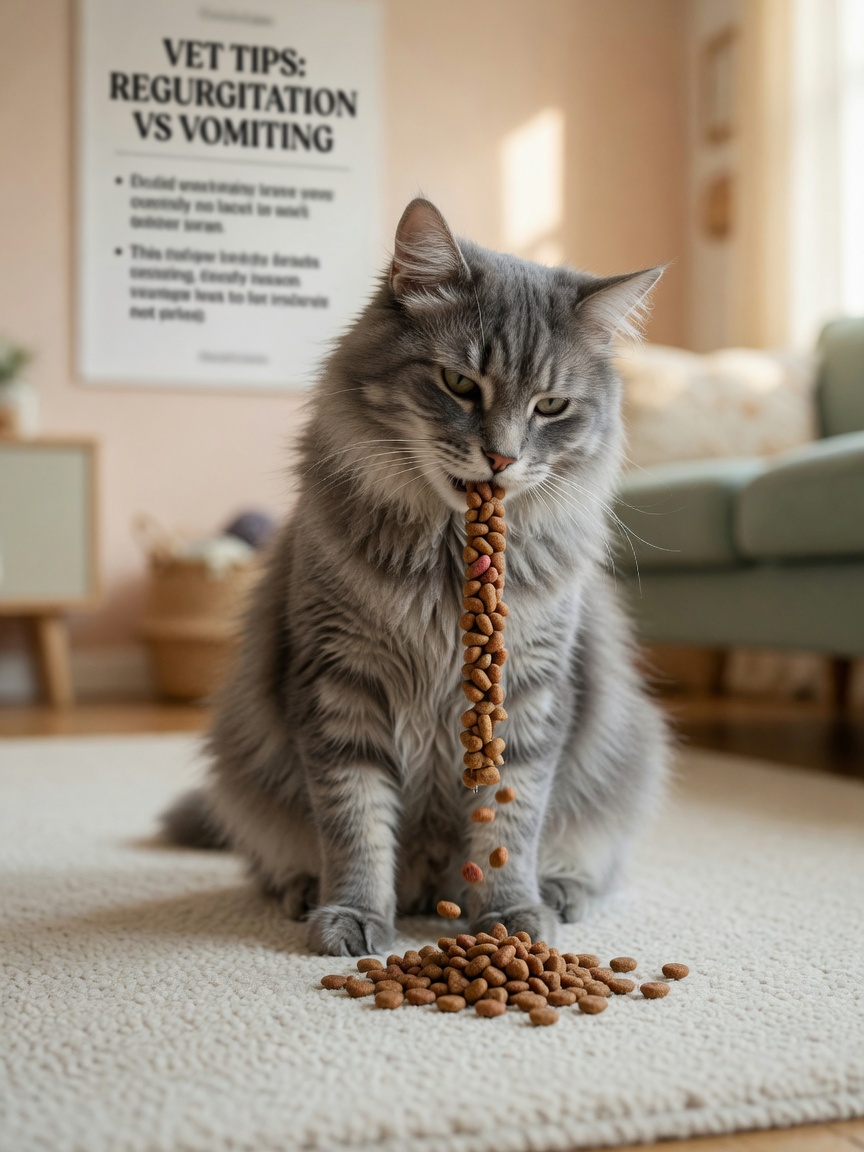
Regurgitation is a passive process — there is no retching, no abdominal heaving, and often very little warning. The cat simply lowers its head and food slides back out of the oesophagus, seemingly effortlessly. The material is typically undigested — it looks much like the food did going in — and it often comes up in a tubular or sausage-like shape, reflecting the contours of the oesophagus. There will be no bile, as the food never reached the stomach. The cat may appear surprised or immediately try to eat the regurgitated material again.
Regurgitation is caused by problems in the oesophagus, not the stomach. Common causes include megaoesophagus (a generalised dilation and loss of motility in the oesophagus), oesophageal strictures (narrowing caused by scar tissue, often following a previous injury or oesophageal foreign body), vascular ring anomalies in young kittens, and sometimes oesophageal foreign bodies themselves.
Acute vs Chronic Vomiting
When cats vomit, it is also useful to consider how long the problem has been going on. Acute vomiting — starting suddenly and lasting less than 48 to 72 hours — is more commonly linked to dietary causes, mild gastroenteritis, or hairballs. Many cats recover on their own with supportive care and a short period of dietary rest, provided they remain otherwise well and are not showing any alarming signs.
Chronic vomiting — defined as occurring regularly over three weeks or more — requires thorough investigation regardless of how well the cat appears between episodes. Conditions such as inflammatory bowel disease, intestinal lymphoma, hyperthyroidism, and chronic pancreatitis often present with chronic vomiting as one of the primary signs. These conditions will not resolve on their own and can worsen significantly without treatment.
Common Causes of Vomiting in Cats
- Hairballs — particularly in long-haired cats or those that over-groom
- Dietary change or dietary indiscretion
- Gastritis or gastroenteritis
- Inflammatory bowel disease
- Intestinal lymphoma (often presents similarly to IBD)
- Chronic kidney disease
- Hyperthyroidism — especially in cats over ten years of age
- Pancreatitis — frequently concurrent with IBD and cholangiohepatitis in cats
- Foreign body ingestion
- Toxin ingestion
Common Causes of Regurgitation in Cats
- Megaoesophagus — primary or secondary to an underlying neuromuscular disease
- Oesophageal stricture — commonly caused by oesophageal damage from a foreign body or acid reflux during anaesthesia
- Oesophagitis — inflammation of the oesophagus
- Vascular ring anomaly — a developmental abnormality that traps the oesophagus, usually seen in young animals
- Oesophageal foreign body — a piece of bone or other material lodged in the oesophagus
How to Observe and Report the Episode
If your cat has an episode, try to note the following before you contact your vet:
- Did you see abdominal effort or retching before the food came up, or was it passive?
- What did the material look like — was it digested, partially digested, or completely undigested? Was there bile?
- What shape was the material — was it formed in a tube-like shape consistent with the oesophagus, or more formless?
- How long after eating did the episode occur?
- How often is this happening — is this a one-off or a recurring pattern?
If you can safely photograph or video the episode, this can be genuinely useful for your vet. Many owners find it difficult to describe these events accurately under pressure at the consultation, and visual evidence removes the guesswork.
When to Seek Veterinary Help
Not every episode of vomiting requires an emergency appointment, but certain signs should prompt you to contact your vet promptly:
- Vomiting lasting more than 24 hours
- Blood in the vomit — either fresh red blood or dark material resembling coffee grounds
- Lethargy or significant changes in behaviour accompanying the vomiting
- Signs of dehydration — dry, tacky gums, skin that does not spring back when gently pinched
- Abdominal pain or bloating
- Weight loss occurring alongside vomiting
- Vomiting in a cat that may have ingested a toxin, plant, or foreign object
- Vomiting in a kitten or a senior cat with known health conditions
For regurgitation, any consistent or worsening pattern warrants veterinary investigation. Megaoesophagus in particular carries a risk of aspiration pneumonia — where food or fluid inhaled into the lungs causes a serious respiratory infection. Cats with megaoesophagus often need specific feeding adaptations, such as being fed in an upright position and kept elevated for a period after eating.
What Your Vet Will Do
After taking a full history — which is why your observations matter so much — your vet will perform a physical examination. Depending on their findings, they may recommend blood and urine tests, imaging such as X-rays or ultrasound, and in some cases endoscopy or biopsy. The diagnostic path for a cat that is vomiting looks quite different to one that is regurgitating, which is exactly why helping your vet understand which process you observed is such a valuable first step.