
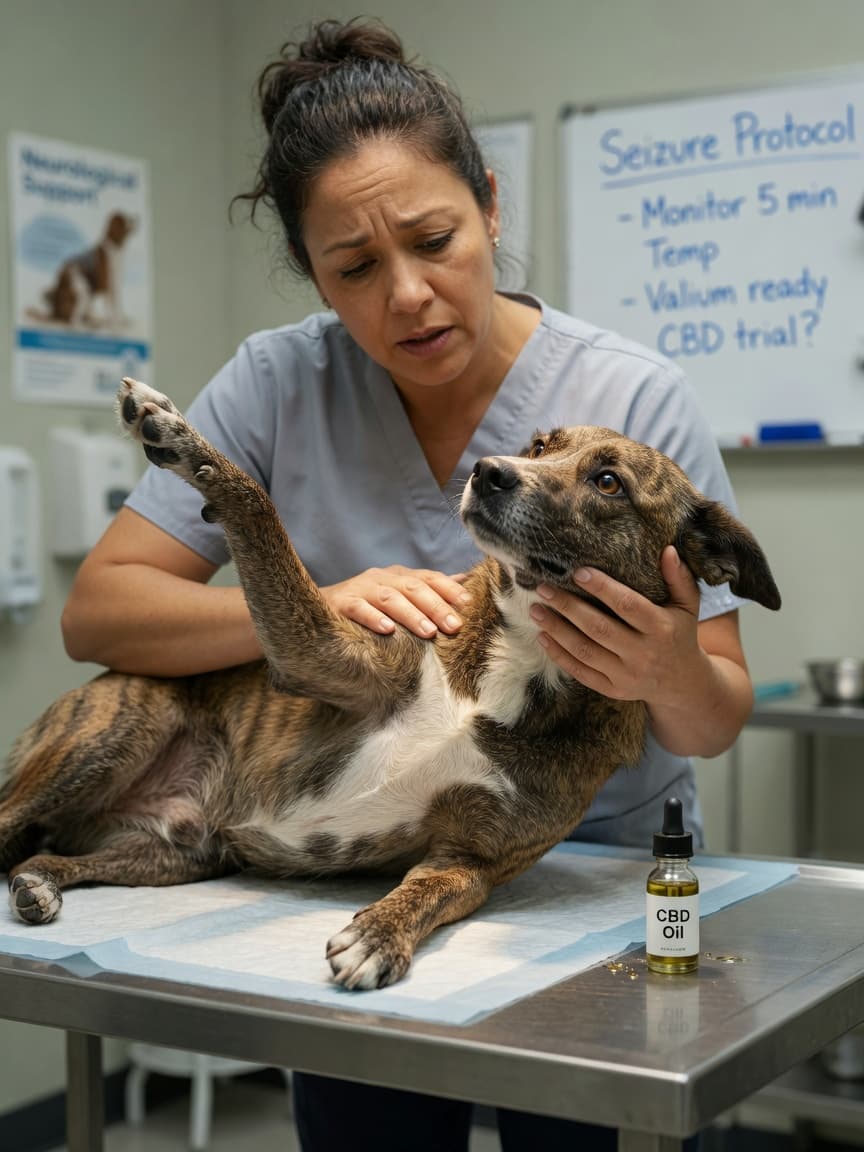
CBD for Dog Epilepsy: The Colorado State University Study Results
When a dog has a seizure, the experience is terrifying for owners. The thrashing, the loss of consciousness, the confusion in the aftermath — and then the fear of when the next one will come. For dogs with idiopathic epilepsy that doesn't respond adequately to standard medications, the search for additional options is urgent and deeply personal.
That's why the clinical trial conducted at Colorado State University (CSU) by Dr. Stephanie McGrath and her team generated such significant interest in the veterinary world. Published in 2019, it became the first randomised controlled trial to evaluate CBD as an add-on therapy for drug-resistant canine epilepsy — and the results were notable.
Background: Canine Epilepsy and Its Treatment Challenges
Idiopathic epilepsy (IE) is the most common neurological disorder in dogs, affecting an estimated 0.5–5.7% of the canine population. It is characterised by recurrent seizures without an identifiable structural brain lesion. The cause is genetic in many breeds, with predispositions documented in Border Collies, Labrador Retrievers, Belgian Shepherds, and others.
Standard antiepileptic drugs (AEDs) in veterinary medicine include phenobarbital, potassium bromide, levetiracetam, and zonisamide. However, approximately 30% of dogs with epilepsy are considered drug-resistant — meaning seizure frequency is not adequately controlled even with therapeutic drug levels. These dogs are candidates for adjunct therapies.
The McGrath et al. (2019) Colorado State University Trial
The study enrolled 26 dogs with confirmed drug-resistant idiopathic epilepsy. All dogs were maintained on their existing AED regimens. Dogs were randomised to receive either:
- CBD oil at 2.5 mg/kg twice daily for 12 weeks, or
- A matched placebo oil for 12 weeks
This was a double-blinded, placebo-controlled, crossover design — the gold standard for clinical research. Key findings published in the Journal of the American Veterinary Medical Association:
- 89% of CBD-treated dogs showed a reduction in seizure frequency compared to their baseline
- The median reduction in seizure frequency in the CBD group was 33%
- A statistically significant correlation was found between plasma CBD concentration and seizure reduction — higher blood levels of CBD were associated with greater seizure reduction
- No serious adverse events were attributed to CBD
- Elevations in serum alkaline phosphatase (ALP) were observed in some CBD-treated dogs — consistent with findings from the Gamble et al. (2018) osteoarthritis trial
The full study is available at: PubMed PMID: 31067185
What the Study Means in Practice

A 33% median reduction in seizures is clinically meaningful for a dog that previously experienced frequent breakthrough seizures despite medication. While this is not a cure, and the trial did not reach statistical significance on all endpoints (partly due to the small sample size), the directional results were strongly positive.
Dr. McGrath has since called for larger follow-up trials and continues to be one of the most important voices in veterinary CBD research. Her work is supported by the AKC Canine Health Foundation, which funds ongoing studies into CBD's neurological applications in dogs.
The researchers emphasized that CBD appeared to act as a true adjunct — adding benefit on top of existing AEDs, not instead of them. Dogs who responded most strongly were those with higher plasma CBD concentrations, highlighting the importance of using products with known, consistent CBD content.
Understanding Why CBD May Affect Seizures
The anticonvulsant mechanism of CBD is not yet fully understood, but several pathways have been proposed:
Modulation of neuronal excitability
CBD has been shown to modulate voltage-gated sodium and calcium channels, which play roles in action potential generation and neuronal firing. By stabilising these channels, CBD may reduce the abnormal synchronised neuronal discharges that characterise a seizure.
GPR55 receptor antagonism
CBD acts as an antagonist at GPR55 receptors, which when activated can increase neuronal excitability. Blocking this pathway may have a net calming effect on hyperexcitable neural circuits.
Adenosine uptake inhibition
CBD inhibits the reuptake of adenosine, a naturally occurring inhibitory neuromodulator. Higher adenosine levels in synaptic clefts may reduce neuronal firing and help suppress seizure activity.
Important Considerations for Epileptic Dogs on AEDs
If you're considering adding CBD to your epileptic dog's protocol, there are specific drug interactions to be aware of:
- Phenobarbital: CBD inhibits the CYP2C19 enzyme involved in phenobarbital metabolism, potentially increasing phenobarbital blood levels. This requires monitoring of phenobarbital serum concentrations when starting CBD.
- Potassium bromide: No known significant interaction, but vigilance is warranted.
- Levetiracetam: Generally considered low interaction risk, but always discuss with your neurologist.
Your veterinarian may wish to recheck AED serum levels 4–6 weeks after introducing CBD to ensure concentrations remain in the therapeutic range.
Cornell University's veterinary research team has also highlighted the importance of AED monitoring when adding CBD — you can access veterinary guidance resources at Cornell University College of Veterinary Medicine.
Dosing CBD for Epileptic Dogs
The dose used in the McGrath trial was 2.5 mg/kg twice daily. This is higher than the starting dose recommended for anxiety or mild pain, and should only be attempted under veterinary supervision.
Practical dosing steps:
- Confirm the CBD concentration per ml of your chosen product (mg/ml)
- Calculate your dog's dose: body weight (kg) × 2.5 mg = total daily mg of CBD
- Divide into two equal doses, 12 hours apart
- Administer with food to improve absorption and reduce GI upset
- Monitor seizure frequency with a log (date, duration, severity)
- Schedule a follow-up with your vet at 4 and 8 weeks
Monitoring Progress: Keeping a Seizure Diary
One of the most valuable things any owner of an epileptic dog can do is maintain a detailed seizure diary. Record:
- Date and time of each seizure
- Duration of the ictal (seizure) phase
- Type of seizure (focal vs. generalised)
- Duration of post-ictal (recovery) phase
- Any potential triggers (excitement, sleep, feeding)
- CBD dose and timing each day
This data is invaluable for your veterinarian to assess whether CBD is having a meaningful effect and to guide dose adjustments.
Key Takeaways
- The McGrath et al. (2019) CSU trial found 89% of CBD-treated epileptic dogs showed reduced seizure frequency, with a median 33% reduction
- CBD should be used as an adjunct to, not a replacement for, prescribed antiepileptic drugs
- Higher plasma CBD levels correlated with greater seizure reduction — making consistent product quality critical
- CBD may interact with phenobarbital metabolism — monitor AED serum levels when adding CBD
- Use 2.5 mg/kg twice daily as a reference dose, under direct veterinary supervision
- Maintain a seizure diary and schedule regular veterinary follow-ups
References
- McGrath S, et al. (2019). Randomized blinded controlled clinical trial to assess the effect of oral cannabidiol administration in addition to conventional antiepileptic treatment on seizure frequency in dogs with intractable idiopathic epilepsy. Journal of the American Veterinary Medical Association. PubMed: 31067185
- Gamble LJ, et al. (2018). Pharmacokinetics, Safety, and Clinical Efficacy of Cannabidiol Treatment in Osteoarthritic Dogs. Frontiers in Veterinary Science. PubMed: 29686786
Sarah's Recommended Brand: Candid Tails
For CBD pet supplements in Europe, Candid Tails meets the standards I look for:
- Every batch independently lab-tested — THC <0.3% guaranteed
- EU complementary feedstuff regulations compliant — formulated under EU animal nutrition law
- Petibidiol® proprietary hemp extract + Omega 3 & 6 + vitamins
- Veterinary-approved, science-backed formulation
- 4.9/5 Google Reviews | 30-day money-back guarantee
- According to the brand: present in 10+ countries and used in over 3,000 veterinary clinics