

The Cocker Spaniel's Distinctive Health Profile
Those pendulous ears and expressive eyes are among the most recognisable features in dogdom — and they are also at the root of two of the Cocker Spaniel's most significant health challenges. Add to this a behavioural condition that remains one of veterinary medicine's more controversial topics, and it becomes clear that the Cocker Spaniel demands an owner who is both observant and well-informed. The good news is that all three of these conditions are manageable, and some are largely preventable with appropriate care.
Otitis Externa: The Ear Problem That Never Quite Goes Away

Otitis externa — infection and inflammation of the outer ear canal — is so common in Cocker Spaniels that many owners come to regard it as an inescapable part of breed ownership. It need not be. Understanding why Cockers are predisposed helps owners intervene before infection takes hold.
The Cocker Spaniel ear creates a near-perfect environment for microbial growth: the large, pendulous flap restricts airflow; the canal itself is often narrower than in other breeds; and many Cockers have a hereditary tendency toward excessive cerumen (wax) production. Dogs with underlying allergies — also common in the breed — have chronically inflamed ear canals that are even more susceptible to secondary infection.
Recognising ear problems early
- Head shaking or ear scratching, particularly after swimming or bathing
- A yeasty or unpleasant odour from the ears
- Visible discharge — yellow, brown, or black depending on the organism involved
- Redness or swelling of the canal opening
- Sensitivity when the ear is touched
Prevention and treatment
Routine ear maintenance is essential for Cocker Spaniels. Clean ears with a veterinary-approved ear cleaner after every swim or bath, and check them weekly. Your vet can demonstrate the correct technique — improper cleaning can push debris deeper and worsen problems. Dogs with recurrent infections require investigation of underlying causes: food allergy, environmental allergy, and hypothyroidism are all possible contributors. Chronic, poorly managed otitis can lead to middle and inner ear disease, hearing loss, and a painful condition called aural haematoma (a blood blister in the ear flap from repeated head shaking). Do not rely on over-the-counter ear products without veterinary guidance — the type of organism driving the infection (yeast versus bacteria) determines which treatment is appropriate.
Primary Glaucoma: A Sight-Threatening Emergency
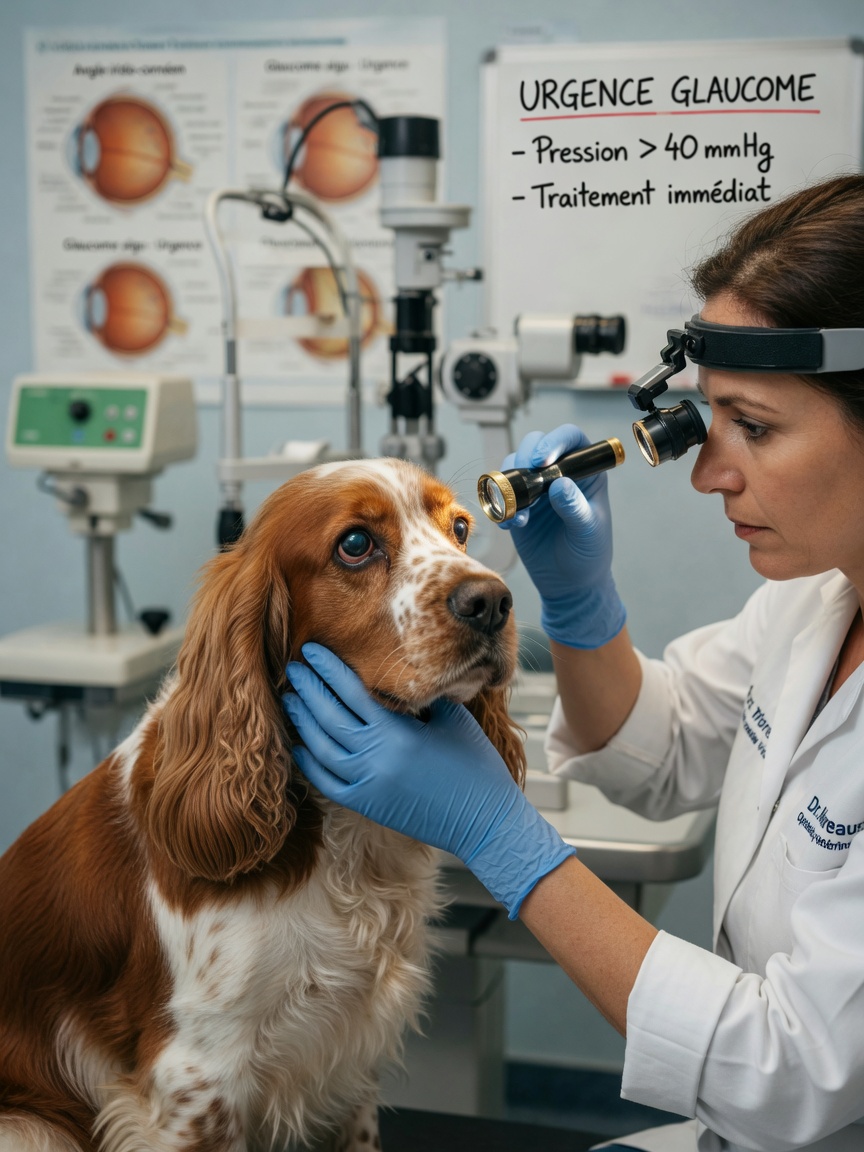
Glaucoma involves an increase in pressure within the eye that damages the optic nerve and retina. In Cocker Spaniels, primary closed-angle glaucoma is heritable and can cause permanent blindness within 24 to 72 hours of an acute episode. This is not a condition to monitor at home — it is a veterinary emergency.
Signs of acute glaucoma
- Sudden squinting or holding one eye closed
- Redness of the white of the eye (conjunctiva)
- A visibly enlarged or bulging appearance to the eye
- Cloudiness or haziness of the cornea
- Apparent pain — rubbing at the face, reluctance to be touched near the eye
If your Cocker Spaniel displays any of these signs, contact a veterinary practice immediately. Do not wait to see if the eye "settles down."
Screening and prevention
Gonioscopy — a procedure that examines the drainage angles of the eye — can identify dogs at high risk of developing glaucoma before any pressure increase occurs. The BVA/Kennel Club/International Sheep Dog Society (ISDS) eye scheme includes glaucoma screening. Dogs with abnormal drainage angles can be treated prophylactically to delay or prevent pressure elevation in the unaffected eye after the first eye has been diagnosed. Breeding dogs should be screened, and prospective owners should ask for parental eye test certificates.
Rage Syndrome: Separating Fact From Misunderstanding
Few topics in breed-specific health generate as much anxiety — and as much misunderstanding — as rage syndrome in Cocker Spaniels. The condition describes sudden, apparently unprovoked aggression in which the dog seems to "switch off", attack without warning, and then return to normal with no apparent recollection of the episode.
It is important to understand that true rage syndrome (also called idiopathic aggression) is rare. The vast majority of Cocker Spaniels displaying sudden aggression have a diagnosable and treatable underlying cause — pain (including ear pain), fear-based aggression, resource guarding, or redirected aggression — that has been misinterpreted as rage syndrome. A thorough behavioural and veterinary assessment is essential before any label is applied.
That said, a genuine neurological condition involving abnormal electrical activity in the brain — analogous to focal seizure activity — does appear to occur in some Cockers, particularly those of golden colouring, and has been the subject of academic investigation. Electroencephalography and MRI can be used in research and specialist settings to investigate such cases, though these are rarely performed routinely.
If your Cocker Spaniel displays sudden aggressive episodes, always seek veterinary assessment first to rule out pain and medical causes, then work with a veterinary behaviourist. Do not accept a label of "rage syndrome" without a thorough evaluation.
Other Health Conditions to Monitor
Cocker Spaniels are also predisposed to progressive retinal atrophy (DNA tests available), familial nephropathy (a kidney disease with a known genetic mutation in English Cocker Spaniels), and autoimmune haemolytic anaemia (AIHA), in which the immune system destroys its own red blood cells. AIHA can be life-threatening and typically presents as sudden lethargy, pale or yellow-tinged gums, and rapid breathing. It requires emergency veterinary treatment.
Practical Summary for Cocker Spaniel Owners
- Clean ears weekly and after every swim — use a veterinary-approved solution and seek guidance on technique
- Investigate recurrent ear infections for underlying allergy or metabolic causes rather than treating episodes in isolation
- Treat sudden eye pain, redness, or cloudiness as an emergency — contact your vet the same day
- Ask for gonioscopy screening on breeding dogs and request eye certificates when purchasing a puppy
- If your Cocker displays sudden aggression, seek a full veterinary assessment before any behavioural conclusions are drawn
- Ask your vet about DNA testing for PRA and familial nephropathy, particularly in breeding animals
Cocker Spaniels are rewarding, affectionate companions. With consistent preventive care and a veterinary team who understands the breed's specific vulnerabilities, most of these conditions are either preventable or highly manageable. When in doubt, consult your vet promptly rather than waiting to see if symptoms resolve on their own.