
When the Liver Cannot Shed a Common Mineral
Copper is an essential trace mineral — required for enzyme function, iron metabolism, and connective tissue integrity. But in dogs with inherited defects in copper metabolism, this necessary nutrient accumulates in the liver to toxic levels over months and years, causing progressive inflammation, fibrosis, and eventually cirrhosis. Copper storage disease is both underdiagnosed and, when caught early, manageable. Knowing which breeds are at risk is the first step.
The Genetics Behind the Disease
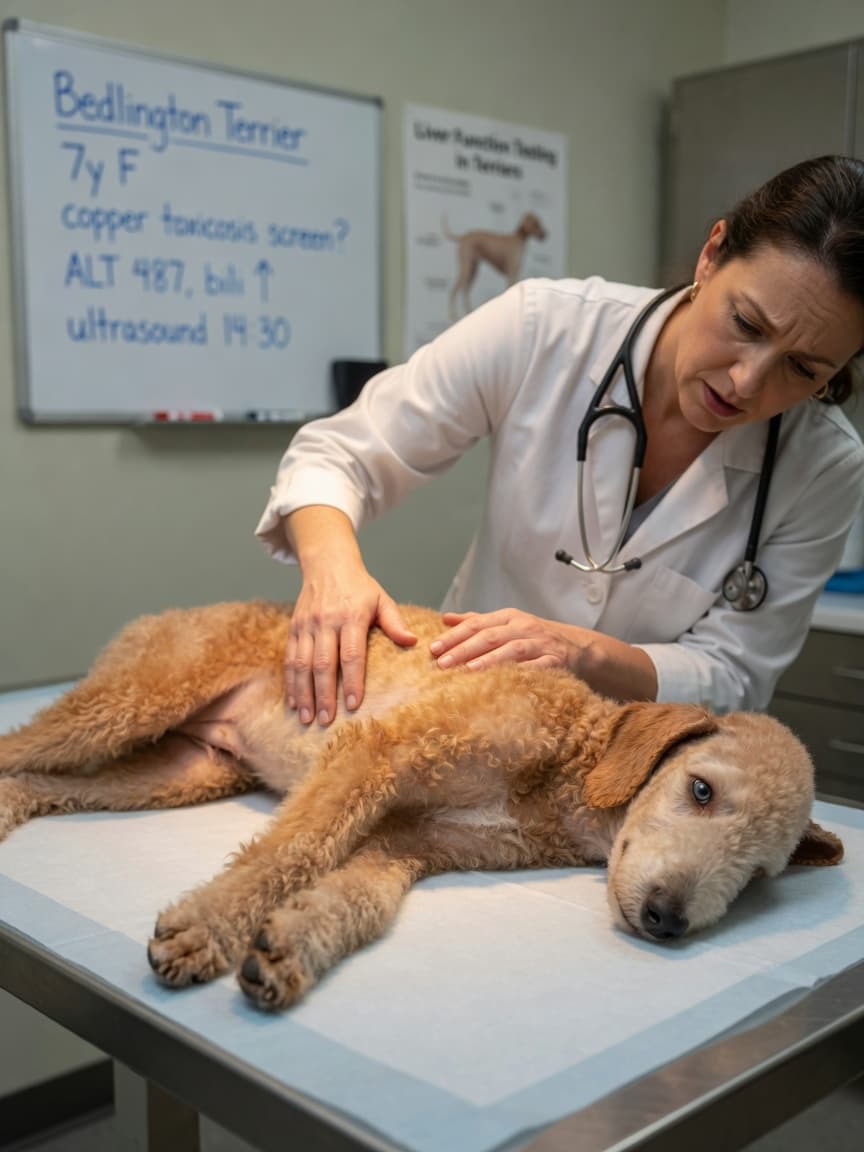
In Bedlington Terriers, copper storage disease was among the first inherited liver disorders mapped at the genetic level. The condition follows an autosomal recessive pattern; dogs inheriting two copies of the defective gene accumulate copper in hepatocytes without the ability to excrete it normally through bile. A DNA test is available for Bedlington Terriers and should be used routinely in breeding programmes to identify carriers and affected dogs.
In Labrador Retrievers, the situation is genetically distinct and more complex. Research has identified mutations in the ATP7B and other copper transport genes, but the inheritance pattern is not straightforwardly recessive — multiple genes likely contribute. Labradors with copper-associated hepatopathy are increasingly recognised, and the condition is thought to be among the more common causes of chronic hepatitis in the breed. West Highland White Terriers, Doberman Pinschers, and Dalmatians also carry elevated risk.
How Copper Accumulation Damages the Liver

Copper deposits primarily in hepatocytes, the main functional cells of the liver. At low levels, accumulation causes subtle oxidative stress and inflammation. As copper concentrations rise — measured in micrograms per gram of dry liver weight — inflammation becomes chronic, triggering fibrosis as the liver attempts to wall off damaged tissue. Eventually, fibrosis progresses to cirrhosis: irreversible architectural disruption that prevents normal liver function. At any stage, the accumulated copper can precipitate an acute haemolytic crisis, where copper released from dying liver cells destroys red blood cells, causing sudden severe anaemia.
Clinical Signs and When They Appear
In Bedlington Terriers, signs often emerge in young adulthood, though some dogs remain asymptomatic for years before acute decompensation. In Labradors, disease more commonly presents in middle-aged to older dogs, often appearing as chronic hepatitis on blood work before overt symptoms develop.
- Lethargy and reduced exercise tolerance
- Vomiting and inappetence
- Weight loss and muscle wasting
- Jaundice in moderate to severe disease
- Ascites (fluid in the abdomen) in advanced cirrhosis
- Acute haemolytic anaemia — pale gums, rapid breathing, collapse
Elevated liver enzymes on routine blood work — particularly ALT — in an at-risk breed should always prompt further investigation, even in the absence of symptoms.
Diagnosis: Liver Biopsy Remains the Gold Standard
Serum copper levels do not reliably reflect hepatic copper accumulation. Diagnosis requires a liver biopsy with quantitative copper measurement and histopathological assessment of distribution and inflammation. Copper staining (rhodanine or rubeanic acid) allows visualisation of copper deposits within hepatocytes under the microscope. Ultrasound may show changes in liver echogenicity but is not diagnostic for copper content. In Bedlington Terriers, genetic testing can confirm carrier or affected status, but liver biopsy is still needed to assess the degree of damage already present.
Treatment and Dietary Management
Copper Chelation Therapy
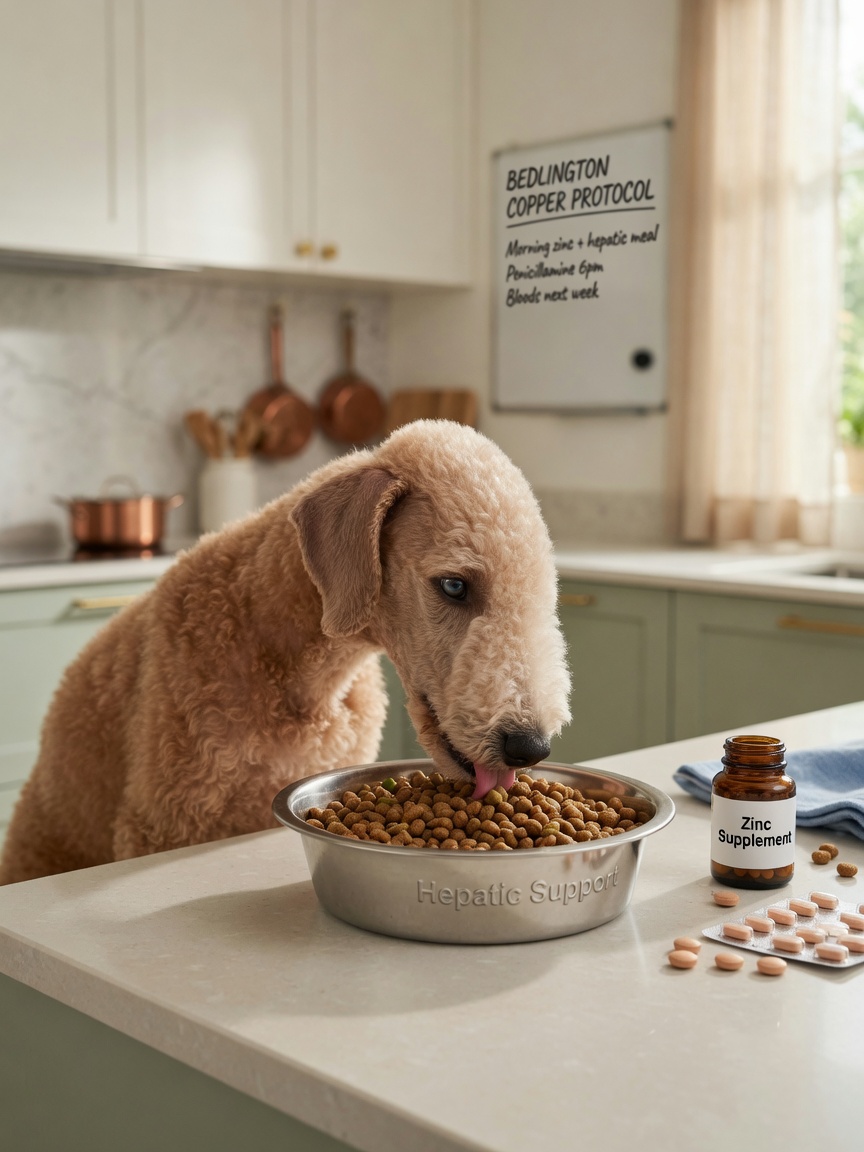
D-penicillamine is the most commonly used chelating agent. It binds copper in the liver and promotes its urinary excretion, gradually reducing hepatic copper content over months. Side effects include nausea; giving the medication with a small amount of food can help, though this marginally reduces absorption. Trientine is an alternative chelator with a different side-effect profile, used when D-penicillamine is not tolerated.
Zinc Supplementation
Zinc works by a different mechanism: it induces intestinal metallothionein, a protein that binds copper in gut cells and prevents its absorption. Zinc is often used as maintenance therapy once copper levels have been reduced by chelation, or as a preventive measure in genetically affected Bedlington Terriers before liver damage occurs. Zinc and copper chelators should not be given simultaneously as they can interfere with each other.
Dietary Adjustments
A low-copper diet reduces ongoing accumulation. Foods high in copper — organ meats, shellfish, and some legumes — should be limited. Commercial hepatic diets are formulated with reduced copper content and are appropriate for affected dogs. Avoid copper-containing vitamin supplements.
If you own a Bedlington Terrier, genetic testing and annual liver monitoring are strongly advised regardless of clinical signs. For Labrador owners with a dog showing persistently elevated liver enzymes, raise the possibility of copper hepatopathy with your vet — it is a treatable condition when identified before cirrhosis takes hold.