
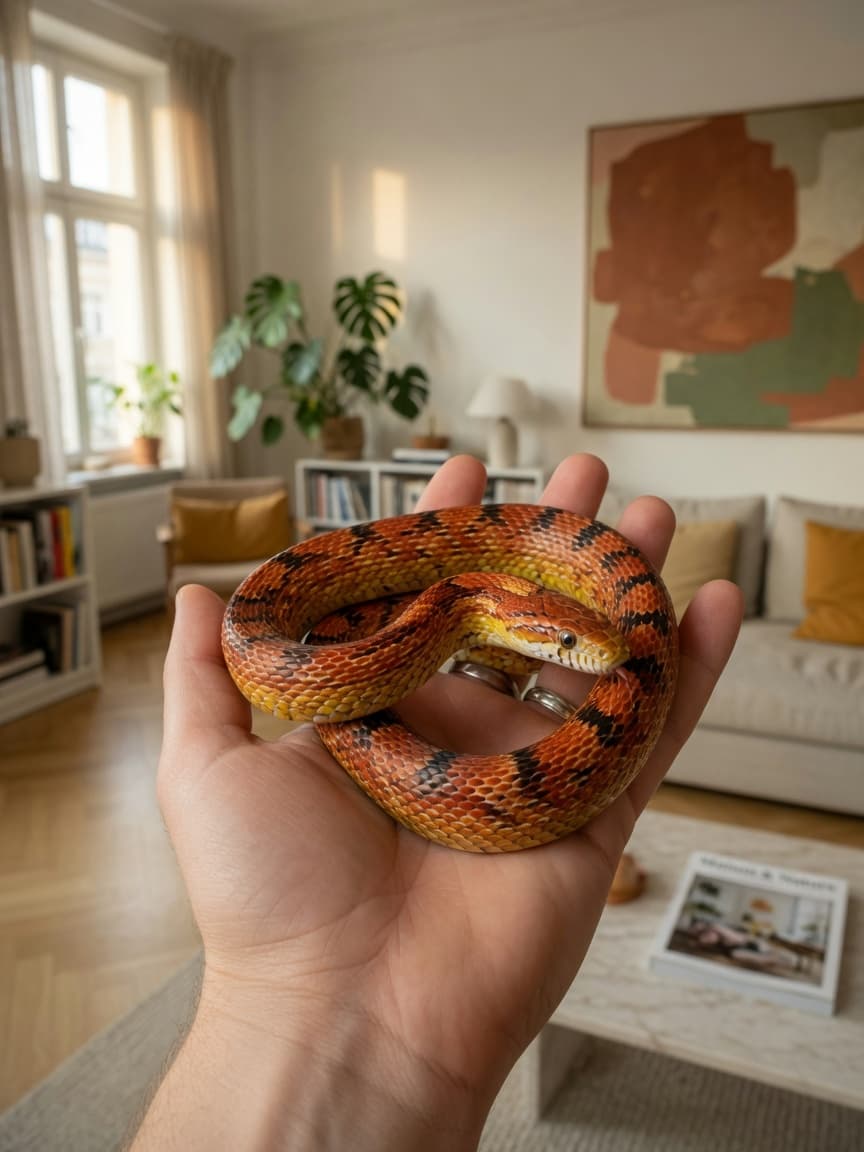
Corn Snake Care Guide for EU Keepers
The corn snake (Pantherophis guttatus, formerly classified as Elaphe guttata) is widely regarded as the ideal beginner reptile, and for good reason. Corn snakes are docile, handleable, hardy, and undemanding in their husbandry requirements relative to many other reptile species. They are captive-bred in large numbers throughout Europe, come in an extraordinary range of colour morphs, and can live for 15 to 20 years with proper care. If you are considering your first snake in the EU, the corn snake is an excellent starting point.
Legal Status in the EU: CITES and National Regulations
Corn snakes (Pantherophis guttatus) are not listed under any CITES appendix, which means they are not subject to international trade restrictions. No permits are required to keep, purchase, or sell captive-bred corn snakes within EU member states. They are legal throughout the European Union. Always purchase from reputable captive breeders or established reptile shops — captive-bred corn snakes are widely available and make far better pets than wild-caught animals, which are stressed, often parasitised, and may refuse to feed. Captive breeding within Europe means there is no ethical or legal reason to seek out imported wild-caught specimens.
EU animal welfare law and most national regulations prohibit the feeding of live vertebrate prey to reptiles. In practice, this means live mice must not be used as feeders. This is not a disadvantage — frozen-thawed or pre-killed prey is safer for your snake (live prey can bite and injure even an adult corn snake), free of parasite risk, easier to store, and readily available from reptile suppliers and Zooplus.
Vivarium Setup and Size
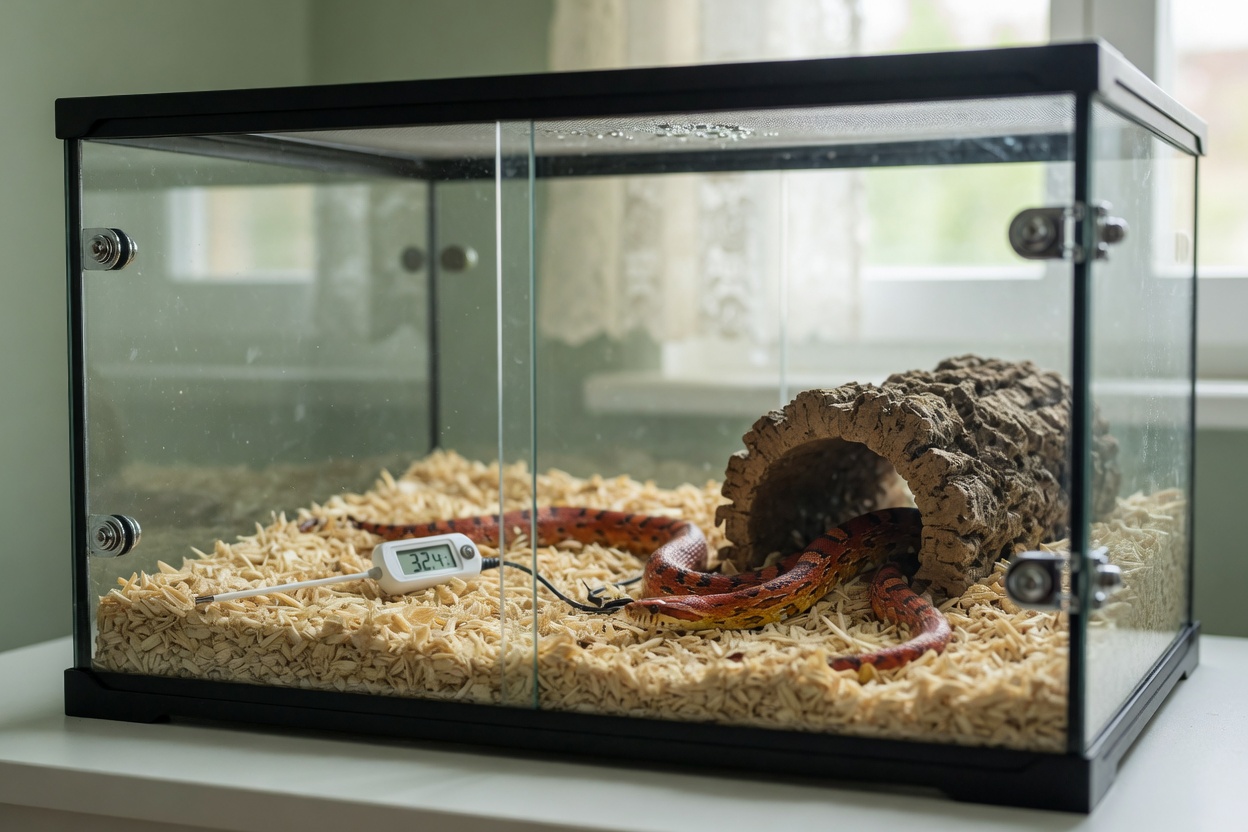
Corn snakes are escape artists. Any vivarium must have a secure, lockable lid or front-opening doors — a brief gap is enough for even a large corn snake to squeeze through. For adult corn snakes, the minimum vivarium size is 90 x 45 x 45 cm (length x depth x height). Juveniles can be housed in smaller enclosures of 60 x 30 x 30 cm and upgraded as they grow. Front-opening vivariums with sliding glass doors are practical and allow you to reach in without looming over the snake from above, which many snakes find stressful.
Temperature Gradient
Corn snakes are ectothermic and regulate their body temperature by moving between warmer and cooler areas of their vivarium. Providing a proper thermal gradient is essential for digestion, immune function, and general wellbeing. Target the following temperatures:
- Warm end: 28–30°C
- Cool end: 20–22°C
- Ambient room temperature: 22–25°C
Heat can be provided via a heat mat under one third of the vivarium floor, a ceramic heat emitter, or a deep heat projector. Whichever method you use, a thermostat is non-negotiable — unregulated heat sources can fatally overheat your snake. A pulse-proportional or on/off thermostat matched to your heat source is the minimum requirement. Verify temperatures at both ends of the vivarium using a digital thermometer with a probe, or an infrared temperature gun. Zooplus stocks a comprehensive range of reptile thermostats, heat mats, and temperature measurement tools suitable for corn snakes.
Substrate
Corn snakes are burrowers and benefit from a substrate that allows them to partially conceal themselves. Suitable options include:
- Aspen shavings: The most popular choice — low dust, safe if ingested in small quantities, easy to spot-clean, and holds burrows well
- Beech chips: Similar properties to aspen; widely available in the EU
- Coconut coir (coco fibre): Holds humidity slightly better than aspen; good for maintaining the 40–60% humidity range corn snakes require
Avoid pine and cedar shavings, which contain aromatic oils toxic to reptiles, and avoid sand or calcium sand substrates, which can cause impaction and do not suit corn snake natural habitat requirements.
Hides, Humidity, and Enrichment
Provide at least two hides — one at the warm end and one at the cool end. A hide is any enclosed, snug-fitting shelter such as a cork bark piece, a plastic reptile cave, or a coconut half-shell. A hide that fits the snake tightly (so its sides touch the walls) is preferred over a large open cave — corn snakes feel most secure when they cannot move around inside their hide. Maintain ambient humidity at 40–60% by lightly misting one end of the vivarium. During shedding (ecdysis), provide a moist hide — a plastic container with a damp sphagnum moss or paper towel inside — to facilitate complete skin removal.
Feeding Corn Snakes
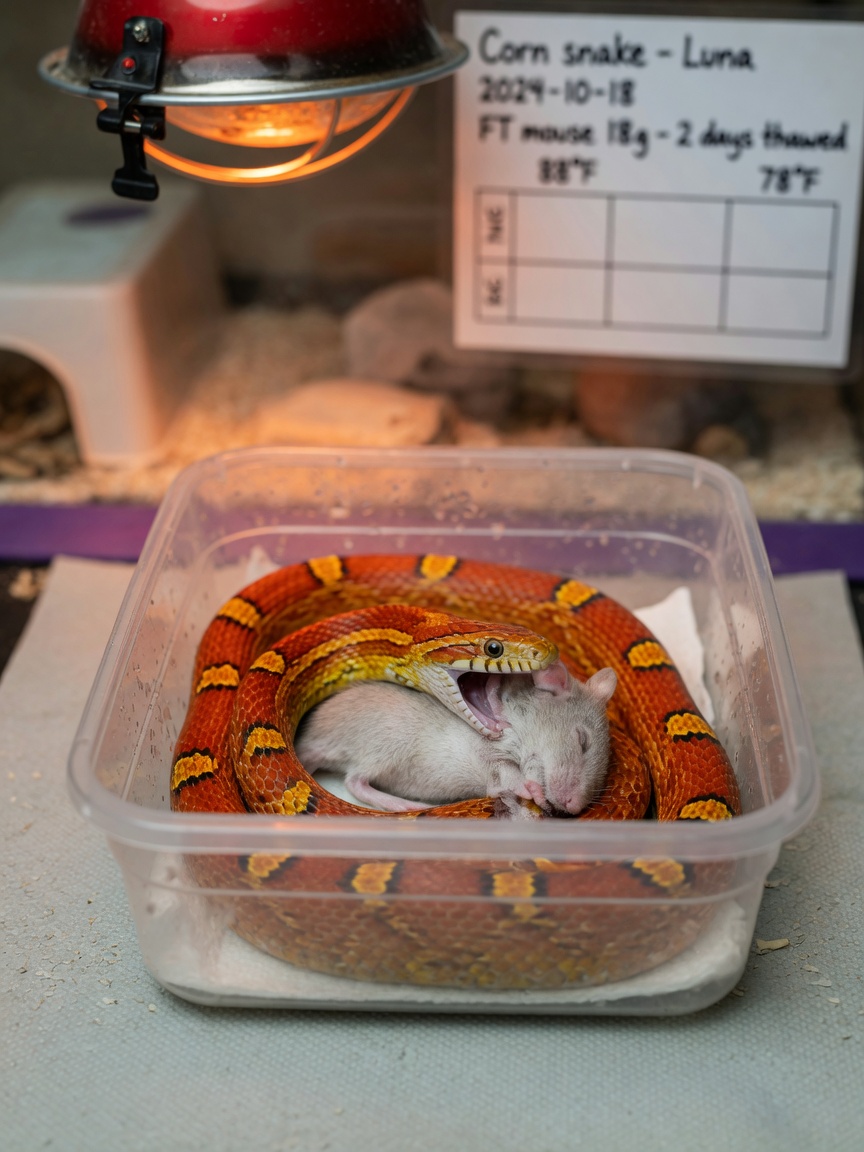
Corn snakes feed exclusively on rodents in the wild and are straightforward to feed in captivity. Always use pre-killed or frozen-thawed prey — this is both legally required in most EU countries and genuinely better for your snake. A feeding guide by life stage:
- Hatchlings and juveniles (under 6 months): Pinky mice (newborn mice) every 5–7 days
- Sub-adults (6–18 months): Fuzzy or hopper mice every 7 days
- Adults: Adult or large mice, or small rats, every 10–14 days
Prey items should be approximately the same width as the widest part of the snake's body — a slight bulge after swallowing is normal. Feed in the vivarium or a separate feeding tub. After feeding, do not handle your corn snake for 48–72 hours to allow digestion and prevent regurgitation.
Shedding: Ecdysis and Dysecdysis
Corn snakes shed their entire outer skin layer periodically as they grow — a process called ecdysis. You will notice pre-shed signs approximately 7–10 days before shedding: the eyes turn milky blue-grey (the "blue phase"), the body colour dulls, and your snake may refuse food and seek seclusion. During this period, provide the moist hide and avoid unnecessary handling. A healthy shed produces a single intact piece of skin, including the eye caps.
Incomplete shedding (dysecdysis) — where skin comes away in pieces, or eye caps are retained — is usually caused by insufficient humidity, dehydration, mites, or nutritional deficiency. If pieces of shed remain on the body, soak your snake in shallow lukewarm water for 20–30 minutes and gently assist removal. Retained eye caps require veterinary attention, as forcible removal risks damaging the eye.
Common Health Issues
- Respiratory infection: Wheezing, mucus from the mouth or nostrils, holding the head upright. Often caused by draughts, temperatures that are too cool, or bacterial infection. Requires veterinary antibiotic treatment.
- Snake mites (Ophionyssus natricis): Tiny black parasites visible around the eyes, under scales, and in the water dish. Require treatment with veterinary-approved miticides and thorough vivarium disinfection.
- Inclusion body disease (IBD): A serious viral disease of boid and colubrid snakes causing neurological signs including stargazing (holding the head twisted upward). No treatment is available; infected animals must be humanely euthanised to prevent spread.
For any health concern, seek advice from a veterinarian with ECZM certification or demonstrable reptile experience. Corn snakes rarely fall ill when kept correctly, but early veterinary intervention significantly improves outcomes when problems do arise.
Where to Source Corn Snakes and Equipment in the EU
Corn snakes are bred by hundreds of hobbyists and commercial breeders across Europe. National reptile societies in Germany, the Netherlands, France, the UK, and Spain are excellent resources for locating reputable breeders. Vivarium equipment — thermostats, heat mats, hides, substrate, and feeding tongs — can be sourced from Zooplus, specialist reptile retailers, and European reptile expos such as the Terraristika in Hamm, Germany. Buy your snake from a breeder who will show you the animal feeding before purchase and can provide hatching and feeding records.