
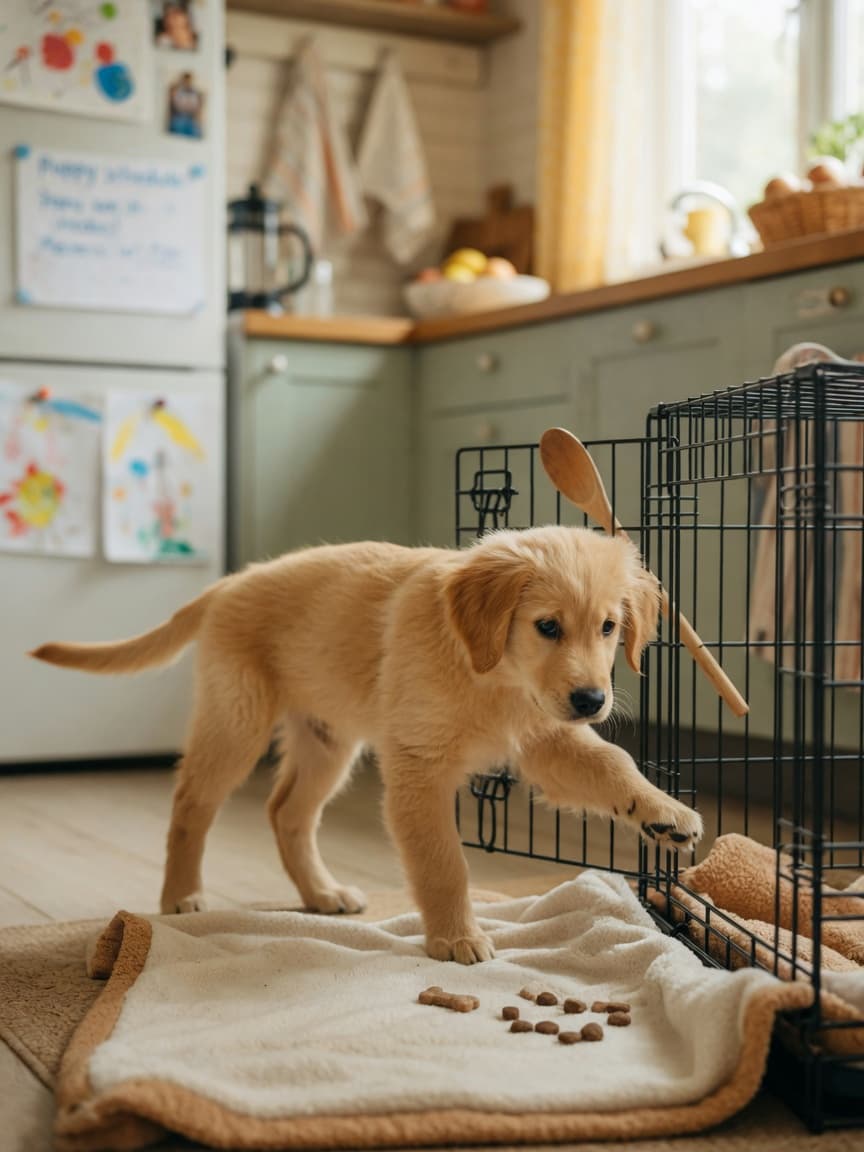
Why Crate Training Gets a Bad Reputation
The crate has become one of the most debated tools in modern dog ownership. Critics see it as a cage; advocates call it a den. The truth sits somewhere in the middle, and the difference between a crate being a comfort or a source of distress comes down almost entirely to how it is introduced. Done correctly, crate training gives a puppy a secure, predictable space. Done poorly, it creates anxiety that can take months to undo.
Understanding what a crate is — and what it is not — is the first step. It is a management tool and a resting space. It is not a punishment room, a babysitter, or a place to leave a puppy for eight hours while you are at work. Puppies have limited bladder control and unlimited energy. Expecting them to tolerate confinement beyond their developmental capacity is the leading cause of crate-related distress.
Choosing the Right Crate
Size matters more than most owners realise. A crate that is too large allows a puppy to toilet in one corner and sleep in another, undermining house training. A crate that is too small causes physical discomfort. The correct size allows your puppy to stand up, turn around, and lie flat with legs stretched. Nothing more is needed at the start.
Wire crates with removable divider panels are practical because you can expand the space as your puppy grows. Plastic travel crates offer a more enclosed, den-like feel that some puppies prefer. Fabric crates are generally not suitable for young dogs who may chew the walls or panic and collapse the structure.
Place the crate somewhere your family actually spends time — a corner of the kitchen or living room works well. Isolation makes the crate feel like exile. Proximity makes it feel like part of normal life.
The Introduction Phase
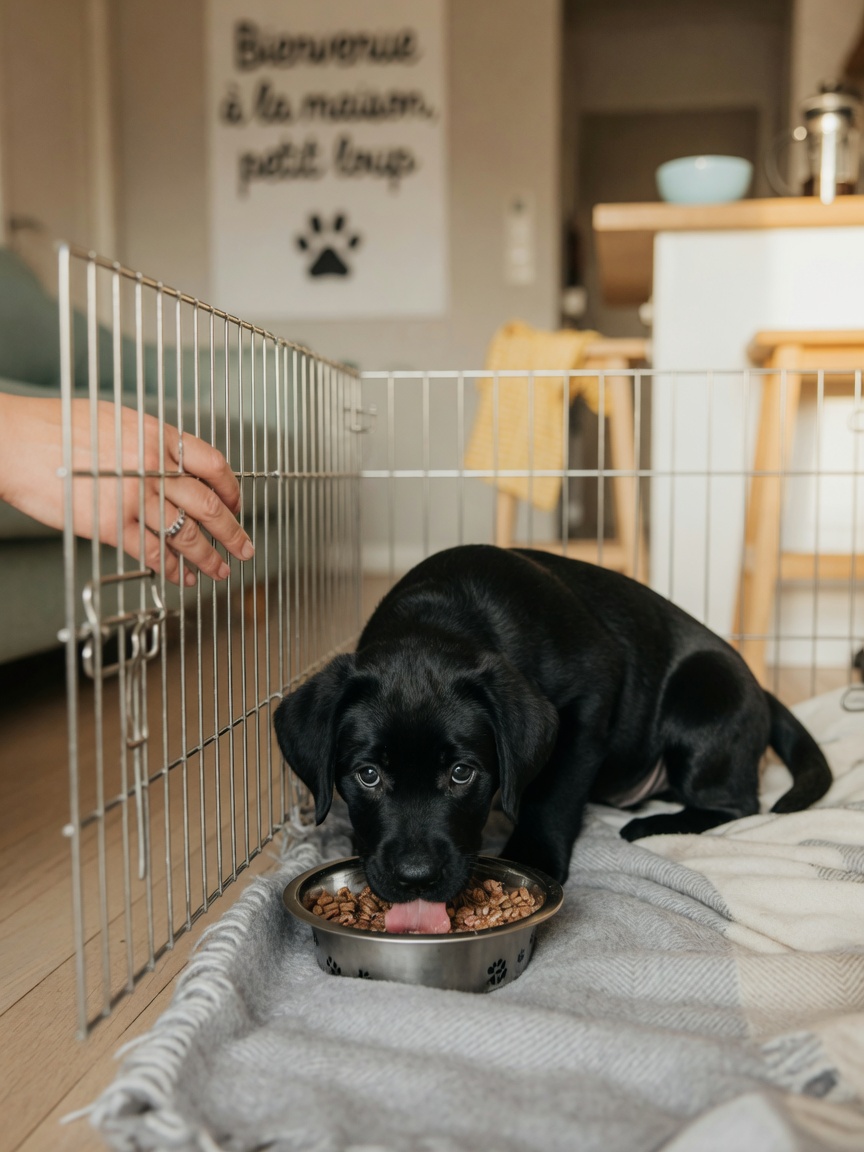
Rushing the introduction is the single most common mistake. Before you ever close the door, your puppy needs to associate the crate with good things. This takes days, not hours.
Start by leaving the crate open with the door off or secured open. Toss small treats or pieces of kibble just inside the entrance. Let your puppy investigate on their own terms. Never push or lure them all the way in during the first session — partial entry with no pressure is the goal. Repeat this several times over the first day.
Once your puppy is walking in and out freely, begin feeding meals inside the crate with the door open. The association between the crate and something genuinely valuable — food — is being built at a neurological level. After a few meals inside, you can gently close the door while they eat, then open it immediately when they finish. Extend the closed time by thirty seconds each session.
Building Duration Gradually
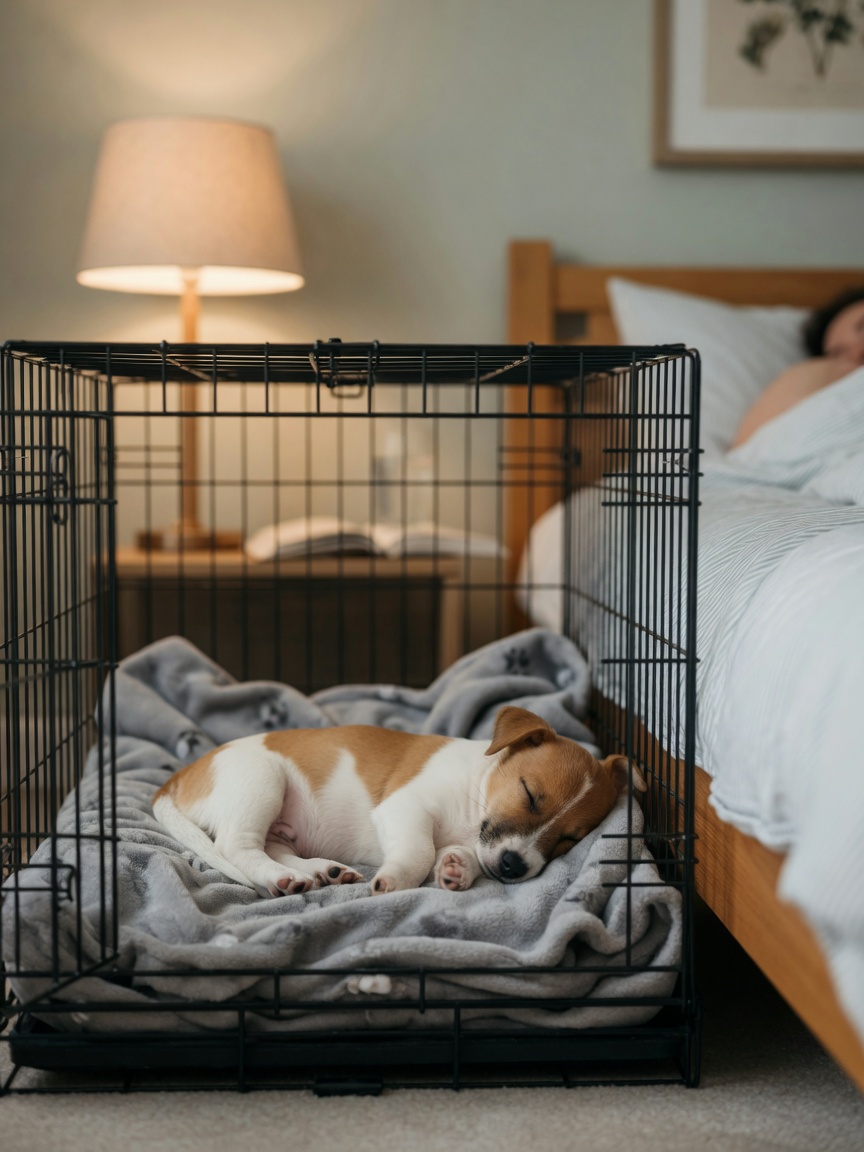
Once your puppy will stay calmly inside for a few minutes with you present, you can begin leaving the room briefly. Return before any distress occurs. The goal is always to come back before the puppy feels the need to protest. If your puppy is crying, you have moved too fast — not too slow.
A reasonable timeline for a healthy eight-week-old puppy might look like this:
- Days one to three: open crate exploration and meals near the crate
- Days four to six: meals inside the crate with the door briefly closed
- Week two: short naps inside with you in the room
- Week three onwards: increasing alone time in thirty-minute increments
Night-time is often where owners struggle most. Placing the crate beside your bed lets your puppy hear and smell you, which dramatically reduces distress. As weeks pass, you can move the crate progressively further away if you prefer the puppy to sleep elsewhere long term.
What to Do When Your Puppy Cries
There is a persistent belief that you should never respond to a crying puppy in a crate because you will reinforce the behaviour. This is a misapplication of learning theory. A puppy who is crying because they are genuinely frightened is not being manipulative — they are communicating distress. Leaving them to escalate creates negative associations with the crate and erodes trust in you as their caregiver.
The more nuanced approach is to assess why they are crying. If you have built up duration gradually and your puppy has toileted recently, a brief verbal reassurance without opening the door can help. If the crying is intense or sustained, you have almost certainly moved too fast and need to go back a stage. If your puppy falls silent and then starts again, they may need a toilet break.
How Long Can a Puppy Stay in a Crate
A rough guideline used by most veterinary behaviourists is that a puppy can hold their bladder for roughly one hour per month of age, plus one. So a ten-week-old puppy is managing roughly three and a half hours at absolute maximum, and that assumes they are not stressed or recently watered. During the day, two-hour stretches are more realistic and humane for very young puppies.
Overnight, most puppies can extend this significantly once they settle, because sleep reduces bladder activity. Many puppies from twelve weeks onwards can manage six to seven hours overnight with a late-night toilet trip built in.
When to Phase Out the Crate
The crate is a temporary tool for most dogs, not a permanent fixture. Once your puppy is reliably house trained, no longer destructive when unsupervised, and comfortable settling independently, you can begin giving them more freedom. This usually happens somewhere between nine and eighteen months depending on the individual dog. Some adult dogs continue to use their crate voluntarily as a rest spot — which is a sign the training went well.