
What Is Cushing's Disease?
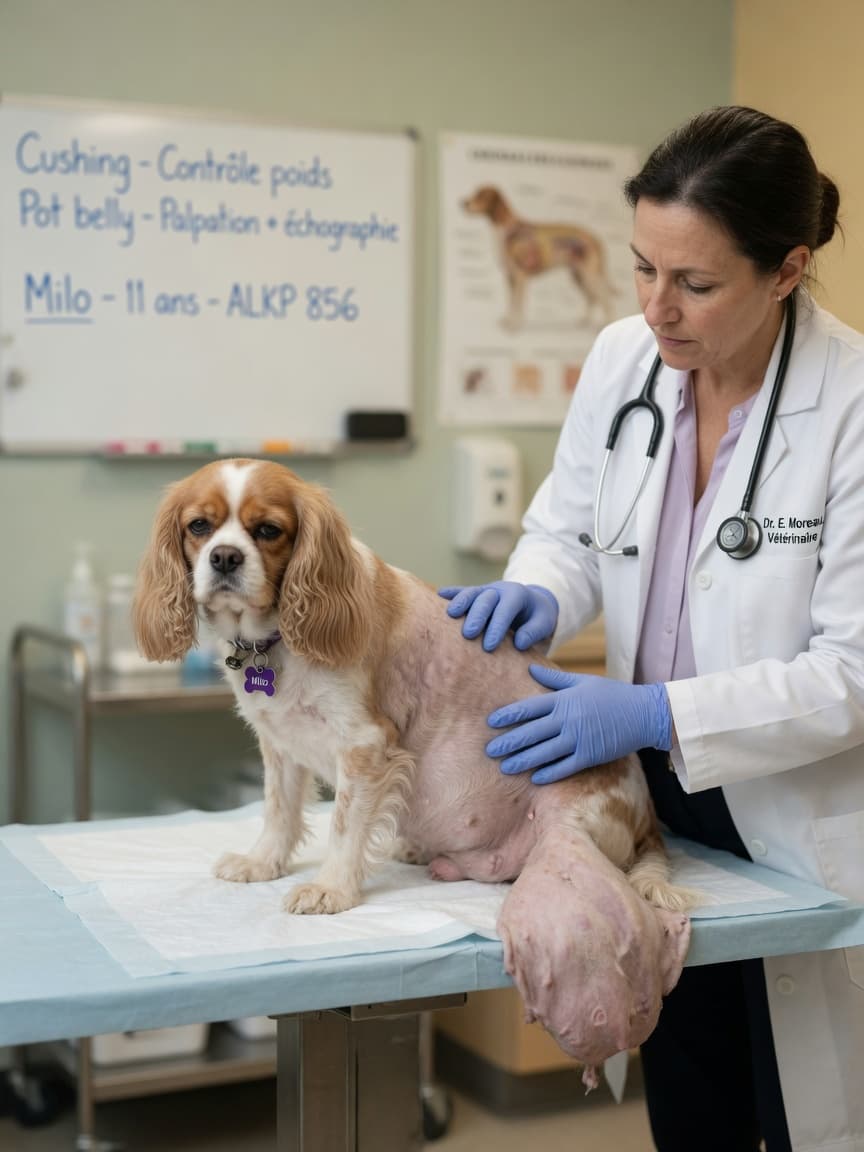
Cushing's disease, known medically as hyperadrenocorticism, occurs when a dog's body produces excessive amounts of cortisol — the primary stress hormone. Cortisol is vital in normal quantities, regulating immune function, metabolism, blood pressure, and the response to stress. When it is chronically overproduced, however, it damages virtually every system in the body.
The condition is most commonly seen in middle-aged to older dogs, typically from seven years of age upward. Certain breeds show a notable predisposition, including poodles, dachshunds, Cavalier King Charles spaniels, Staffordshire bull terriers, and boxers, although any dog can develop the condition.
Cushing's disease is considered a manageable chronic condition rather than an acute emergency in most cases, but it significantly impacts quality of life if left untreated and is associated with serious complications including hypertension, diabetes mellitus, blood clots, and increased susceptibility to infection.
The Two Main Forms
There are two primary causes of naturally occurring Cushing's disease in dogs. The most common form, accounting for around 85 per cent of cases, is pituitary-dependent hyperadrenocorticism (PDH). In this type, a small tumour on the pituitary gland at the base of the brain produces excess adrenocorticotrophic hormone (ACTH), which in turn overstimulates the adrenal glands to produce too much cortisol.
The remaining cases are caused by a tumour on one of the adrenal glands themselves, directly producing excess cortisol regardless of pituitary signalling. This adrenal-dependent form behaves differently and requires distinct treatment considerations.
There is also a third, iatrogenic form caused by prolonged or excessive use of corticosteroid medications. This form resolves when the medication is gradually withdrawn under veterinary supervision.
Recognising the Symptoms
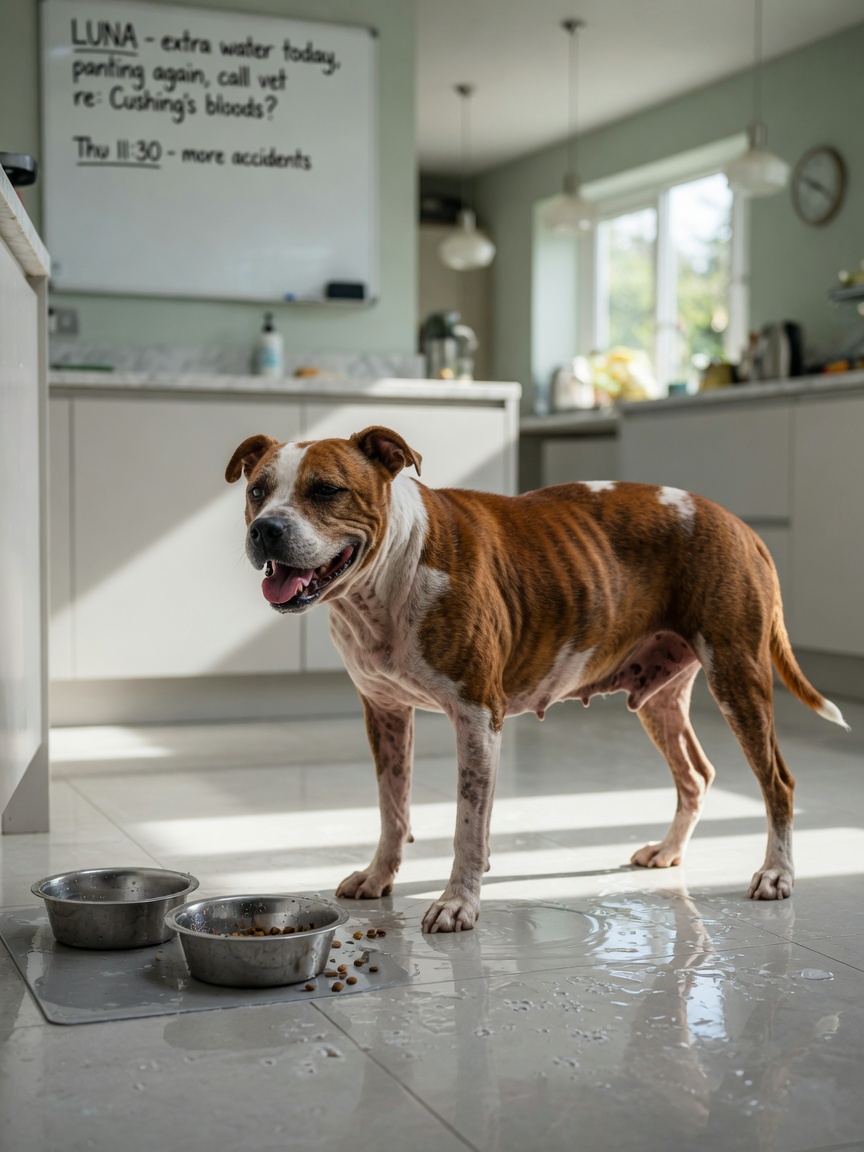
Cushing's disease develops slowly, and its symptoms are easily confused with normal ageing. This is one of the reasons it frequently goes undiagnosed for extended periods. The classic presentation includes:
- Increased thirst and urination, often significant enough to cause accidents indoors in previously house-trained dogs
- Increased appetite, sometimes dramatically so
- A pot-bellied appearance caused by muscle wasting and fat redistribution
- Hair loss, typically symmetrical and affecting the trunk rather than the head and limbs
- Skin thinning and the development of blackheads or calcium deposits under the skin
- Lethargy and reduced exercise tolerance
- Panting excessively, even at rest and in cool environments
- Recurring skin infections or urinary tract infections
Not every dog will display all of these signs, and the severity varies. A dog with several of these symptoms warrants testing, particularly if they are middle-aged or older.
How Diagnosis Is Made
Diagnosing Cushing's disease involves a combination of clinical assessment, routine blood and urine testing, and specific hormonal tests. Routine bloodwork often shows elevated liver enzymes, changes in white blood cell counts, and increased cholesterol. Urine may show a very dilute specific gravity.
The primary hormonal tests used are the low-dose dexamethasone suppression test (LDDST) and the ACTH stimulation test. Each has different strengths — the LDDST is more sensitive for detecting the presence of Cushing's disease overall, while the ACTH stimulation test is particularly useful for monitoring dogs already on treatment. Your vet will select the most appropriate test based on clinical presentation and prior history.
Once Cushing's disease is confirmed, imaging — typically abdominal ultrasound — is used to assess the adrenal glands and help distinguish between pituitary and adrenal forms. Enlarged adrenal glands on both sides suggest pituitary-dependent disease, while a mass on a single gland points toward the adrenal-dependent form.
Treatment Options
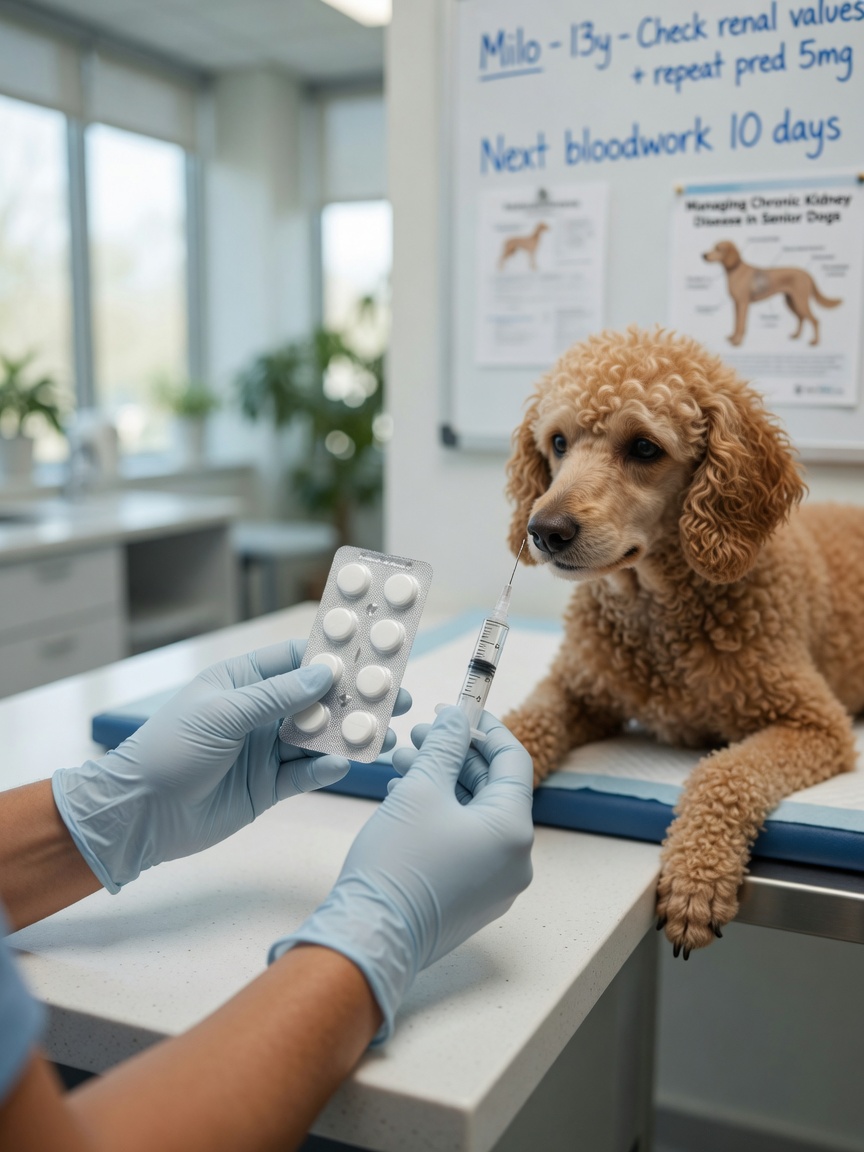
Treatment depends on the type of Cushing's disease and the individual dog's overall health status.
For pituitary-dependent disease, the most commonly used medical treatment in the United Kingdom is trilostane (sold under the brand name Vetoryl). Trilostane inhibits an enzyme involved in cortisol production, effectively reducing cortisol levels without destroying adrenal tissue. It requires careful dose monitoring and regular ACTH stimulation testing to ensure cortisol is suppressed to an appropriate level — over-suppression can cause an Addisonian crisis, which is a medical emergency.
Mitotane (o,p'-DDD) is an older alternative that destroys cortisol-producing tissue in the adrenal gland. It is less commonly used in current practice but remains an option in some circumstances.
For adrenal-dependent disease where the tumour is benign and has not spread, surgical removal of the affected adrenal gland offers the possibility of a cure. This is a complex surgery with significant perioperative risks and requires referral to a specialist centre. Where surgery is not appropriate, medical management with trilostane may still provide symptom control.
Living with a Dog with Cushing's Disease
Medical management of Cushing's disease requires genuine commitment from owners. Regular monitoring appointments, blood and urine tests every three months in stable dogs, and vigilance for signs of over- or under-suppression are all part of the ongoing process.
Signs of over-suppression — including profound lethargy, loss of appetite, vomiting, and diarrhoea — require urgent veterinary attention, as the dog may be entering adrenal insufficiency. Dogs on trilostane should ideally have an emergency plan in place, including steroid supplementation that can be given if these signs occur and the treating vet cannot be reached immediately.
With treatment, the majority of dogs with Cushing's disease experience meaningful improvement in quality of life. Coat regrowth, reduced thirst and urination, better energy levels, and resolution of skin problems are all commonly reported once cortisol levels are brought under control. Many dogs do well for years with appropriate management.