

Small Animal, Serious Nutritional Needs
The degu looks like a charming hybrid of a rat and a squirrel, and it behaves like one too — curious, social, and energetic. But degus carry a physiological quirk that makes them unique among common small pets: they are exquisitely sensitive to dietary sugar and are among the few non-primate mammals considered a natural model for type 2 diabetes. Get the diet wrong, and the consequences are swift and serious. Get it right, and degus are robust, long-lived, and entertaining companions.
Diabetes in Degus: A Genuine and Common Risk
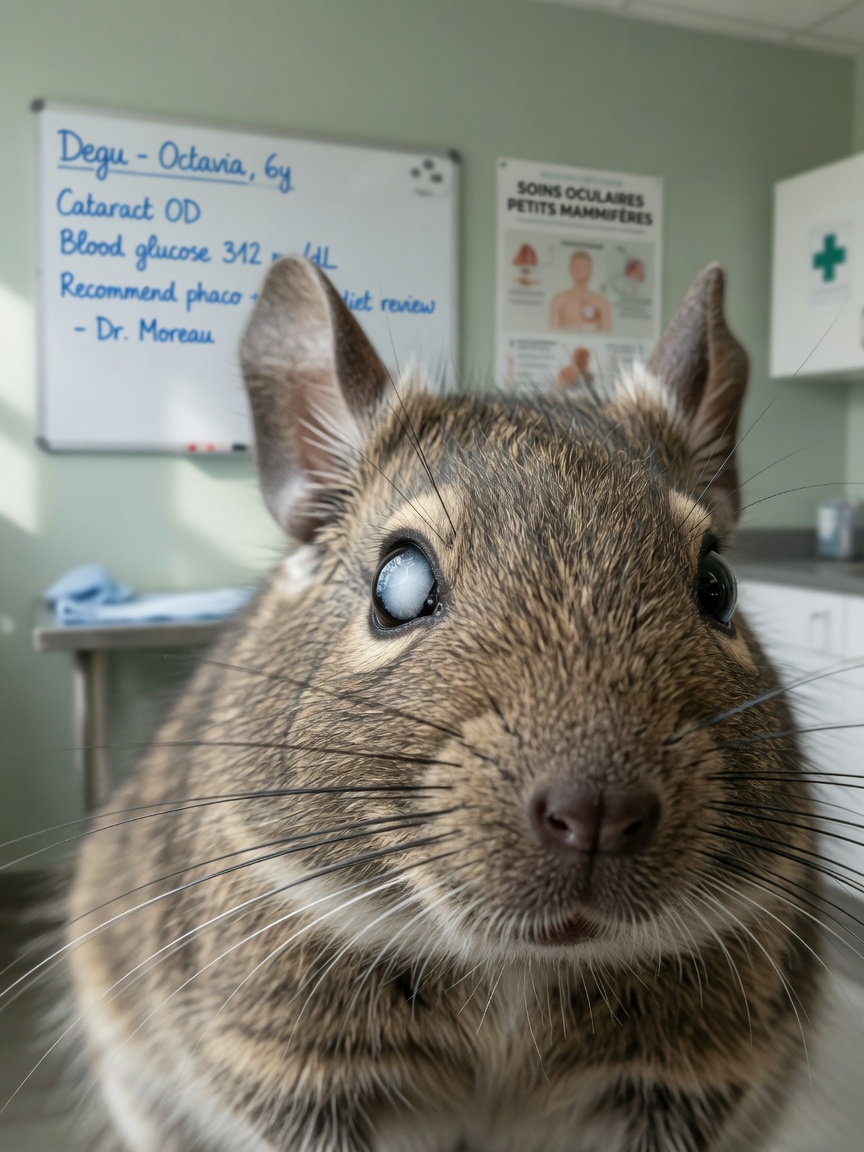
In the wild, degus inhabit semi-arid scrubland in Chile, where their diet consists of coarse grasses, plant fibres, and sparse vegetation with negligible sugar content. Their insulin response evolved accordingly — it is poorly equipped to handle the glucose loads that come from fruit, commercial rodent mixes with seeds, or treats marketed at small animals.
When a degu regularly consumes sugar, the pancreas works beyond its capacity. Insulin resistance develops, and diabetic changes follow: cataracts form (often the first visible sign), weight fluctuates, thirst and urination increase, and energy levels drop. Cataracts in degus are so closely linked to dietary sugar that their presence in a young animal is practically diagnostic of inappropriate feeding.
What an Appropriate Degu Diet Looks Like
- Unlimited access to plain grass hay (timothy, meadow, or oat hay)
- Plain chinchilla or degu pellets without added fruit, seeds, or honey coatings
- Small amounts of leafy greens such as dandelion, kale, or fresh herbs
- No fruit, no dried fruit, no yoghurt drops, no commercial treats containing sugar or molasses
- No root vegetables high in natural sugars, including carrots and beetroot
Reading ingredient labels critically is essential. Many products marketed at degus still contain sugar or high-starch ingredients. If in doubt, a vet experienced in exotic species or a registered animal nutritionist can advise on specific products available in your region.
Dental Disease: Equally Important, Often Overlooked
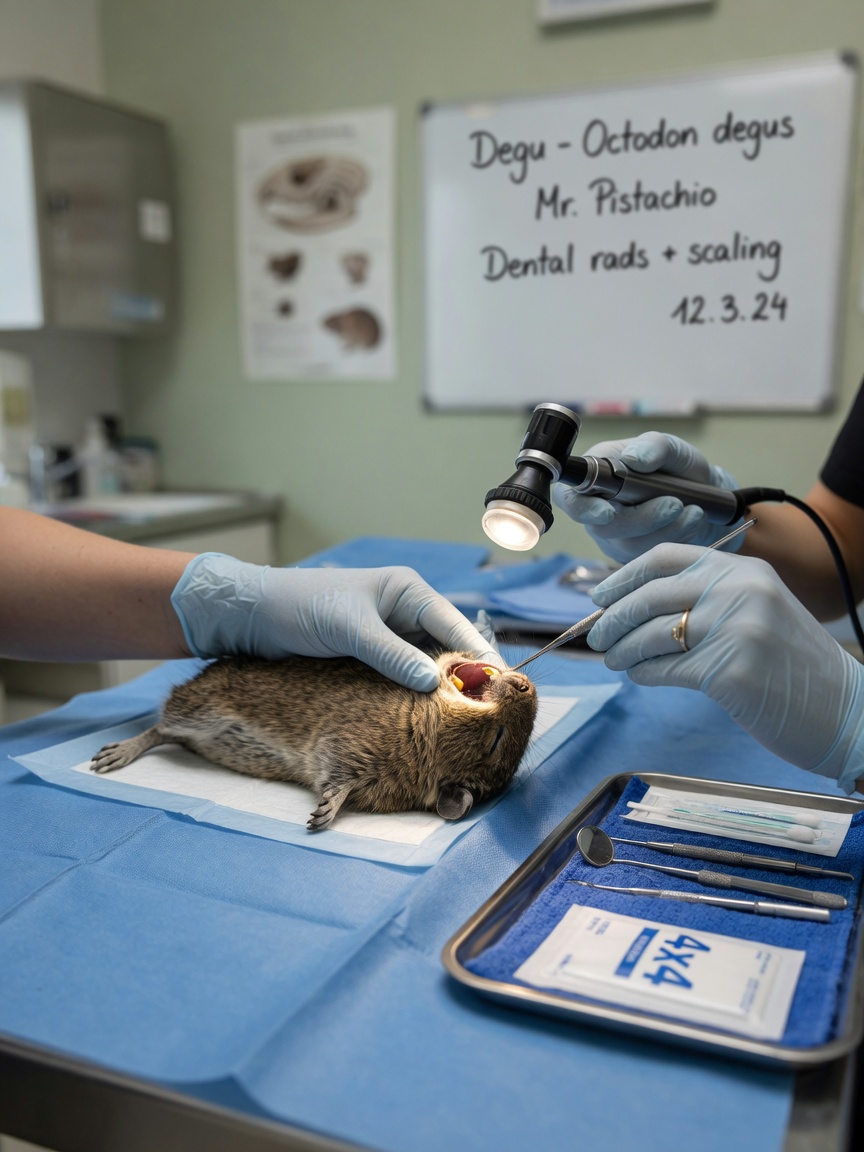
Like chinchillas, degus have continuously growing, open-rooted teeth. Dental disease follows the same pattern: insufficient hay consumption leads to uneven wear, molar spurs, tongue lacerations, and root elongation. The cheek teeth are the primary concern — problems there develop silently and are invisible without veterinary examination.
Signs of Dental Problems in Degus
- Weight loss while appearing to eat
- Food dropping from the mouth
- Reluctance to eat hay while accepting soft foods
- Wet or matted fur around the chin
- Excessive salivation
- Eye discharge (from elongated tooth roots compressing the tear duct)
These signs warrant an urgent veterinary appointment with a vet who can perform a dental examination under anaesthesia with radiographs. Surface examination alone will miss the majority of degu dental problems. Annual dental checks are advisable from around eighteen months of age.
The Overlap Between Diet and Dental Health
The connection between what degus eat and how their teeth wear is direct. Hay is not simply a nutritional supplement — it is the mechanical tool that keeps the entire dental arcade in correct alignment. A degu that fills up on pellets, seeds, or soft treats will eat less hay. Less hay means less grinding. Less grinding means dental overgrowth. The conditions are separate but deeply linked through the same root cause: inadequate fibre consumption.
This is why diet is not one aspect of degu care among many — it is the foundation on which every other aspect of health depends.
Other Health Considerations in Degus
Epilepsy
Degus have a relatively high incidence of seizure disorders, often inherited. Mild seizures — brief twitching or freezing episodes — may require no treatment beyond removing potential triggers such as stress and flashing light sources. Severe or frequent seizures should be assessed by a vet.
Respiratory Infections
Degus are susceptible to bacterial and viral respiratory infections, particularly in damp or poorly ventilated environments. Signs include nasal discharge, clicking sounds when breathing, and lethargy. Prompt veterinary treatment is important as these can progress quickly.
Bumblefoot
Wire-floored enclosures can cause pressure sores on the feet that become infected. Solid-floored housing with appropriate bedding significantly reduces this risk.
Practical Action List for Degu Owners
- Remove all sugary treats, fruit, and seed-heavy mixes from the diet immediately if currently feeding them
- Ensure hay is always available in large quantities and forms the majority of food intake
- Check pellet ingredients — reject anything with added sugar, honey, or dried fruit
- Monitor weight weekly with a kitchen scale; early weight loss is often the first sign of illness
- Book an annual dental check with an exotic-specialist vet from eighteen months of age
- If cataracts are visible in a young degu, consult a vet and review the diet as a priority
Degus are intelligent, social animals that thrive in pairs or small groups with the right environment and diet. The investment in getting their nutrition right from day one pays dividends across their entire lifespan.