
Why Annual Health Checks Matter for Dogs
A yearly veterinary health check is one of the most important investments you can make in your dog's long-term wellbeing. Dogs age significantly faster than humans — a year in a dog's life represents five to seven years of physiological change depending on the breed and size. Conditions such as heart disease, dental disease, joint deterioration, and early-stage kidney dysfunction can develop and progress significantly within a single year, often without visible symptoms until the disease is advanced. Annual checks establish a baseline of normal values for your individual dog, making it far easier to detect meaningful changes over time. In the UK, annual vet visits are also the standard occasion for reviewing and updating vaccinations required for activities such as boarding, grooming, and travel.
What Happens at a Typical Annual Health Check
A thorough annual check is a head-to-tail physical examination combined with a review of your dog's vaccination and preventive health status. Most appointments last between 20 and 40 minutes. Here is what your vet will typically assess.
Weight and Body Condition Score
Your vet will weigh your dog and assess their body condition score (BCS) on a standardised scale, usually 1 to 9. This is more informative than weight alone because it accounts for muscle mass and fat distribution. Obesity affects an estimated 40 to 50 per cent of dogs in the UK and significantly increases risk of joint disease, diabetes, heart conditions, and shortened lifespan. Your vet will advise on target weight and dietary adjustments if needed.
Heart and Lung Auscultation
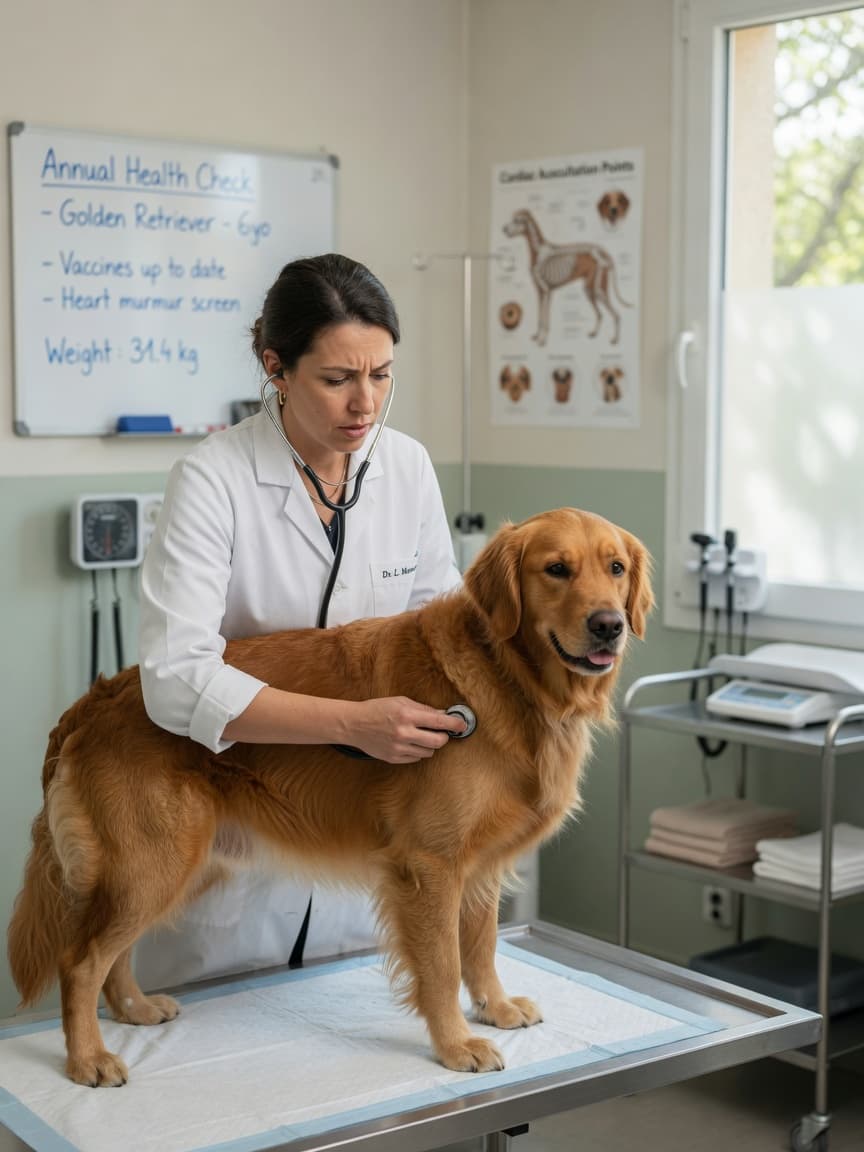
Using a stethoscope, your vet will listen carefully to your dog's heart for murmurs, abnormal rhythms, or other irregularities. Heart murmurs are graded on a scale of 1 to 6 and are particularly common in Cavalier King Charles Spaniels and other small breeds as they age. Lungs are assessed for abnormal breath sounds that may indicate fluid, infection, or airway disease. Early detection of a heart murmur allows for monitoring and treatment before heart failure develops.
Eyes and Ears
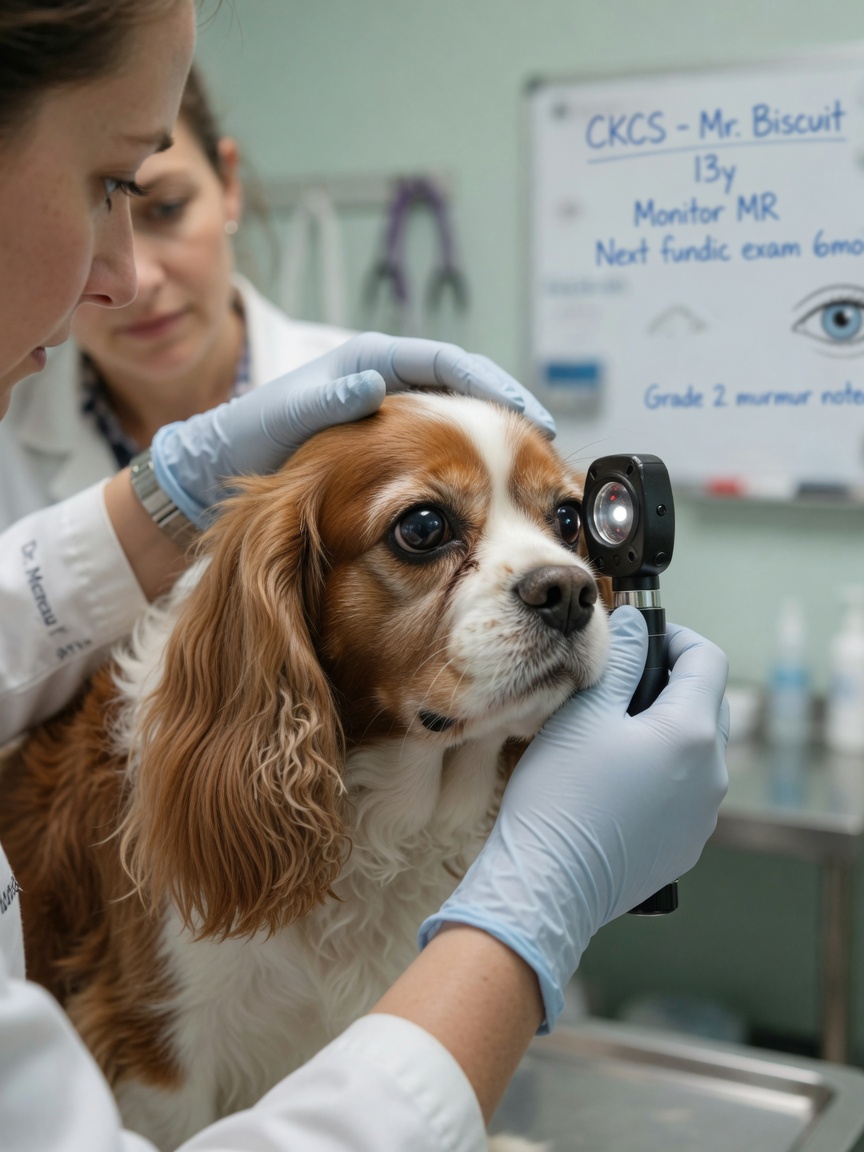
The eyes are examined for signs of cataracts, corneal disease, conjunctivitis, and pressure abnormalities that may indicate glaucoma. The ears are checked for signs of infection, inflammation, polyps, or excessive wax build-up — a common issue in breeds with floppy ears or heavy ear canal hair such as Cocker Spaniels and Poodles.
Dental Assessment
Dental disease affects an estimated 80 per cent of dogs over the age of three. Your vet will examine the teeth and gums for tartar build-up, gingivitis, tooth resorption, and signs of periodontal disease. Untreated dental disease is painful and allows bacteria to enter the bloodstream, potentially affecting the heart, kidneys, and liver. Your vet may recommend a professional dental clean under general anaesthetic if the level of disease warrants it.
Coat, Skin, and Lymph Nodes
The coat and skin are examined for signs of parasites, allergies, infections, and masses. Lymph nodes at the neck, armpits, groin, and behind the knees are palpated to detect enlargement, which can indicate infection or lymphoma. Any unusual lumps or bumps discovered during this part of the examination will be discussed with you and may be recommended for further investigation.
Joint and Mobility Assessment
Joints are flexed and extended to assess range of motion, crepitus (grinding), and pain responses. This is particularly important for large and giant breeds prone to hip dysplasia and elbow dysplasia, as well as older dogs who may be developing osteoarthritis. Your vet may ask you to walk or trot your dog in the car park to observe their gait.
Abdominal Palpation
Your vet will gently palpate your dog's abdomen to assess the size, position, and texture of internal organs including the liver, spleen, kidneys, and bladder. Abnormal findings such as organomegaly, masses, or pain on palpation guide decisions about whether further diagnostics such as ultrasound or blood tests are warranted.
Vaccinations Review
The annual health check is also the standard occasion for reviewing and administering vaccinations. Core vaccines for dogs in the UK protect against distemper, parvovirus, and infectious hepatitis (typically given as a combined DHPPi vaccine) and leptospirosis. Kennel cough (Bordetella bronchiseptica and parainfluenza) vaccination is usually required by boarding kennels and groomers and is administered annually. Your vet will check your dog's vaccination history and advise which boosters are due.
If you travel with your dog to EU countries, you will need a valid EU animal health certificate and a rabies vaccination administered at least 21 days before departure. Post-Brexit entry requirements differ from the previous PETS Travel Scheme — your vet can guide you through current requirements, which change periodically.
Senior Dogs: Enhanced Health Monitoring
Dogs are generally considered senior from around seven years of age, though larger breeds age faster — a Great Dane may be considered senior at five or six. The World Small Animal Veterinary Association (WSAVA) recommends bi-annual health checks for senior dogs, reflecting the faster rate at which age-related conditions develop and the value of detecting changes between annual intervals.
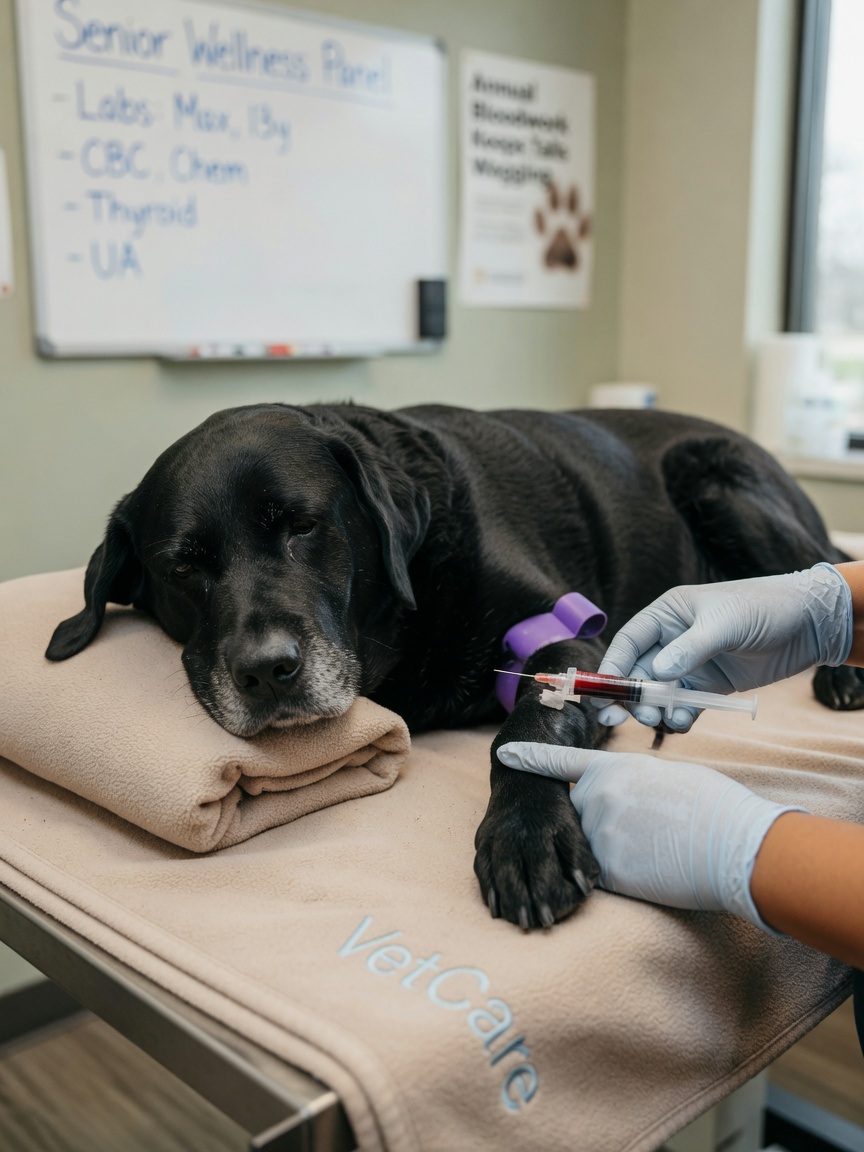
In addition to the standard physical examination, senior health checks typically include blood tests assessing kidney function (urea, creatinine, SDMA), liver enzymes, complete blood count, and thyroid hormone levels. Urine analysis helps detect early kidney disease, diabetes, and urinary tract infections. Blood pressure monitoring is also recommended for senior dogs, as hypertension is associated with kidney disease, Cushing's disease, and hypothyroidism in older dogs.
How to Prepare for Your Dog's Annual Check
- Note any changes in behaviour, appetite, thirst, or urination since the last visit — even subtle changes are worth mentioning
- Bring a fresh stool sample if your dog has had any digestive issues — your vet can screen for intestinal parasites
- Write down any questions you want to ask in advance so you do not forget them during the appointment
- Bring your dog's vaccination booklet if you have one, particularly if you have recently moved practice
- If your dog is anxious at the vet, speak to the practice in advance — many offer low-stress handling techniques or can prescribe pre-visit calming medication
Warning Signs That Need Prompt Veterinary Attention Between Visits
Annual checks are essential, but some signs should not wait for a scheduled appointment. Contact your vet promptly if your dog shows any of the following:
- Sudden or unexplained weight loss
- Excessive thirst or urination compared to their normal pattern
- Difficulty breathing, persistent coughing, or exercise intolerance
- Collapse, sudden weakness, or inability to stand
- Seizures of any duration
- Blood in urine, stools, or vomit
- Sudden changes in vision or apparent blindness
- Rapid abdominal distension — this can indicate bloat (GDV), which is a life-threatening emergency
Knowing your dog's normal patterns of eating, drinking, sleeping, and toileting makes it far easier to recognise when something is wrong. The annual health check is the moment to share that knowledge with your vet and build a complete picture of your dog's health over their lifetime.