
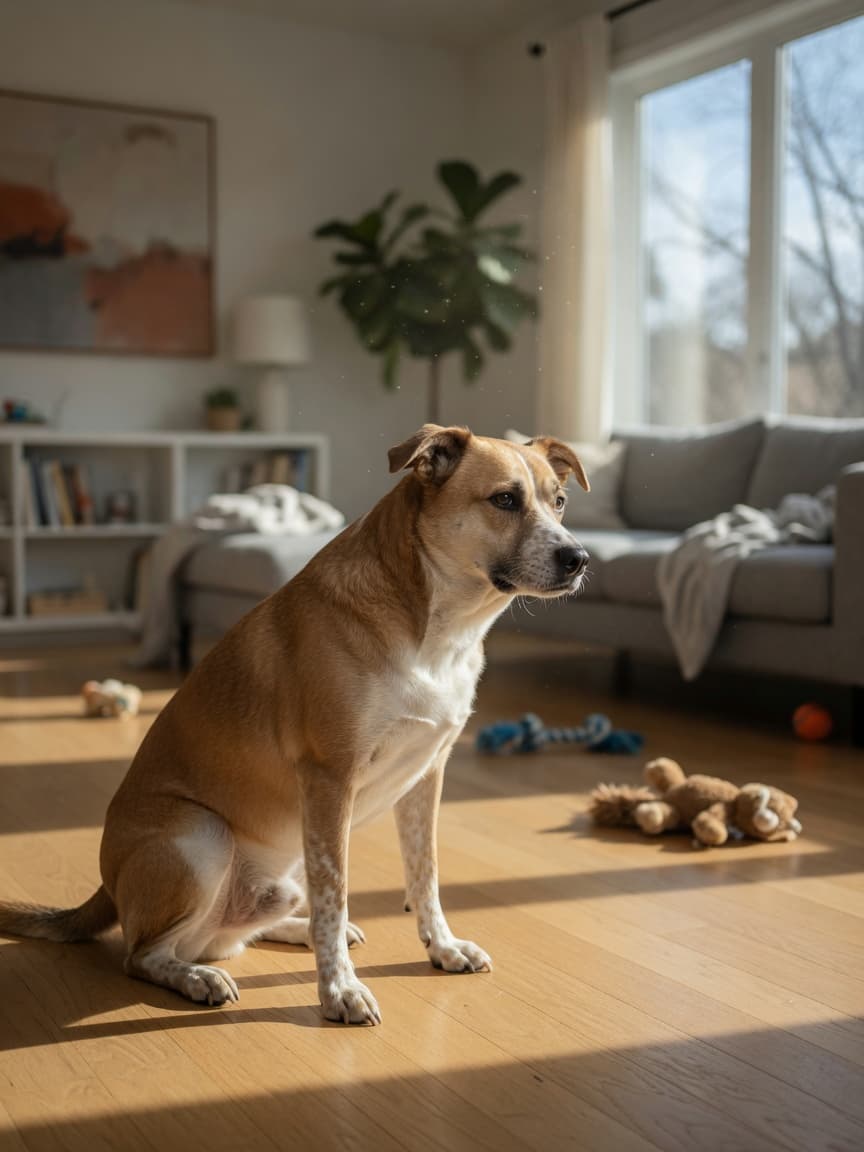
Is My Dog Bored? 10 Signs & 15 Solutions
Dogs evolved alongside humans as working animals. They herded livestock, tracked scents, pulled sleds, and guarded homesteads. Today most dogs spend the bulk of their day in a flat or house with little to do. When a species built for purpose is given none, the result is boredom — and boredom has consequences. Understanding the signs-cat-loves-you" title="12 Signs Your Cat Actually Loves You (Science-Backed)">signs early and knowing what to do about them can transform your dog's quality of life.
Why Mental Stimulation Is Non-Negotiable for Dogs
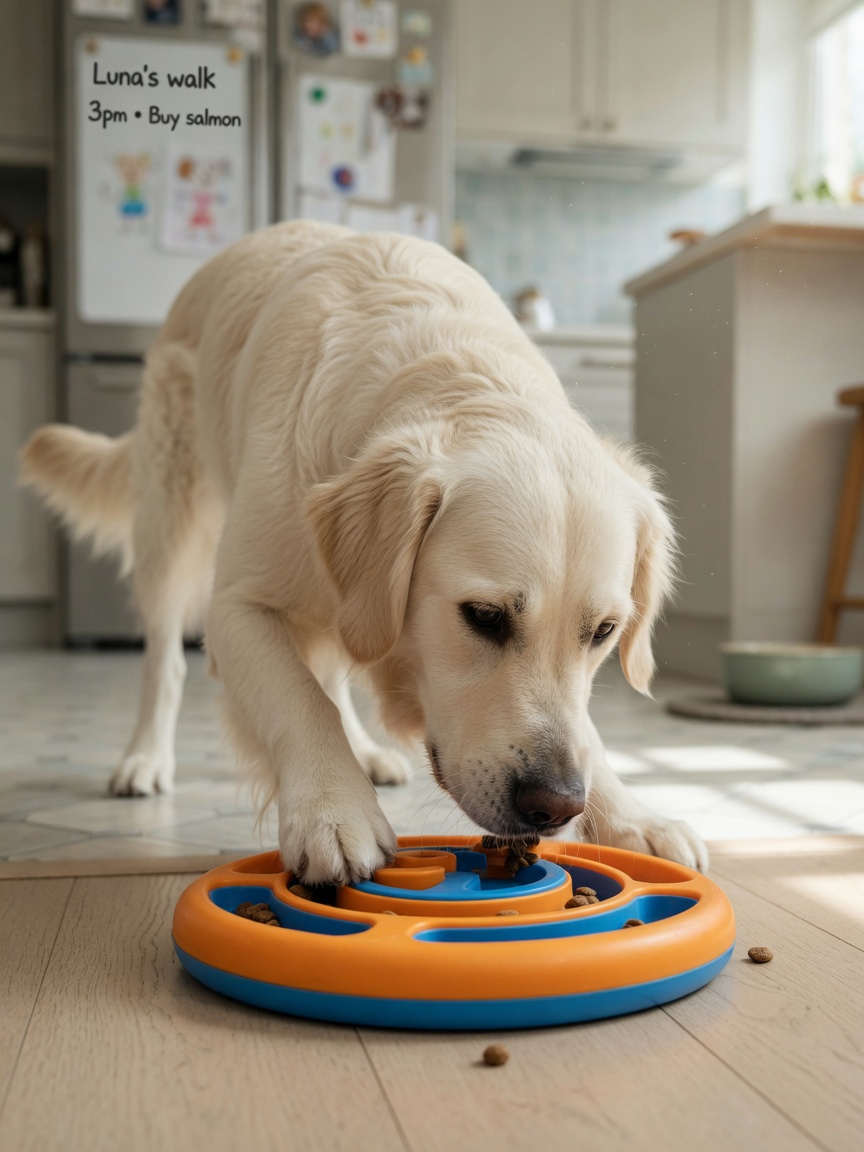
Physical exercise is well understood by most owners. Mental exercise is not. Research published in Applied Animal Behaviour Science consistently shows that cognitive engagement reduces anxiety, lowers cortisol, and decreases problem behaviours in domestic dogs. A dog that uses its nose on a sniff walk, solves a puzzle feeder, or learns a new trick is a calmer dog at rest. The brain, like a muscle, needs work — and a dog that gets none of it will find its own outlet, usually one you will not enjoy.
10 Clear Signs Your Dog Is Bored
1. Destructive Chewing
Chewing is a natural, self-soothing behaviour. When it migrates from chew toys to chair legs, shoes, and skirting boards, it is a reliable signal that your dog needs more to do. Puppies chew out of teething instinct, but adult dogs who chew destructively are usually seeking stimulation or relief from frustration.
2. Excessive Barking or Whining
A bored dog may bark at nothing in particular — at sounds outside, at the wall, or just into the air. This is different from alert barking (directed at a specific trigger) and demand barking (aimed at you). Repetitive, directionless vocalisation is often a boredom signal.
3. Digging
Dogs dig for many reasons: to escape, to chase something underground, to cool down. But digging that happens persistently in the garden with no obvious trigger — especially in breeds not traditionally associated with earth work — is often boredom-driven.
4. Shadowing the Owner
Some "velcro dog" behaviour is breed-typical (think Vizslas or Border Collies), but if your dog follows you from room to room, waits outside the bathroom, and cannot settle when you sit down, they may be under-stimulated and seeking engagement from you because nothing else is available.
5. Restlessness and Inability to Settle
A dog that circles, gets up and lies down repeatedly, moves from spot to spot, and seems unable to relax — even after a walk — is a dog whose brain is not switched off. Mental fatigue is essential to restful sleep. Without it, dogs stay in a low-level state of arousal.
6. Pestering for Attention
Nudging your hand, pawing at you, dropping toys incessantly, or jumping up mid-task are all ways a bored dog says "I need something to do." The behaviour is often inadvertently reinforced when owners respond — even with a scolding, which is still attention.
7. Over-Grooming or Self-Directed Repetitive Behaviours
Licking paws until they are raw, chasing the tail, or snapping at imaginary flies can have medical causes (allergies, neurological issues) but are also documented as stereotypies linked to under-stimulation. If your vet has ruled out physical causes, enrichment should be the next conversation.
8. Getting Into the Bin
Raiding the rubbish is partly olfactory reward — the bin is interesting and smells extraordinary. A dog that has enough nose-work and enrichment at their disposal is less likely to go freelance. Bin-raiding that suddenly appears in a previously well-mannered adult dog is a behaviour to investigate.
9. Escaping or Attempting to Escape
A dog that digs under fences, scales walls, or bolts through open doors at every opportunity is not being defiant — they are telling you the garden is not enough. Escape attempts frequently precede boredom-related accidents.
10. Hyperactivity Around Other Dogs or People
Dogs who are under-stimulated day-to-day often become wildly over-excited in the presence of other dogs or visitors. They have stored up energy with nowhere to put it. This looks like a socialisation problem but is often a stimulation problem.
15 Practical Solutions, Organised by Category
Toys & Enrichment Feeders
1. Puzzle feeders: Feed meals through a puzzle feeder rather than a bowl. Your dog works for every kibble, and feeding time becomes a 10–20 minute cognitive session instead of 90 seconds of eating.
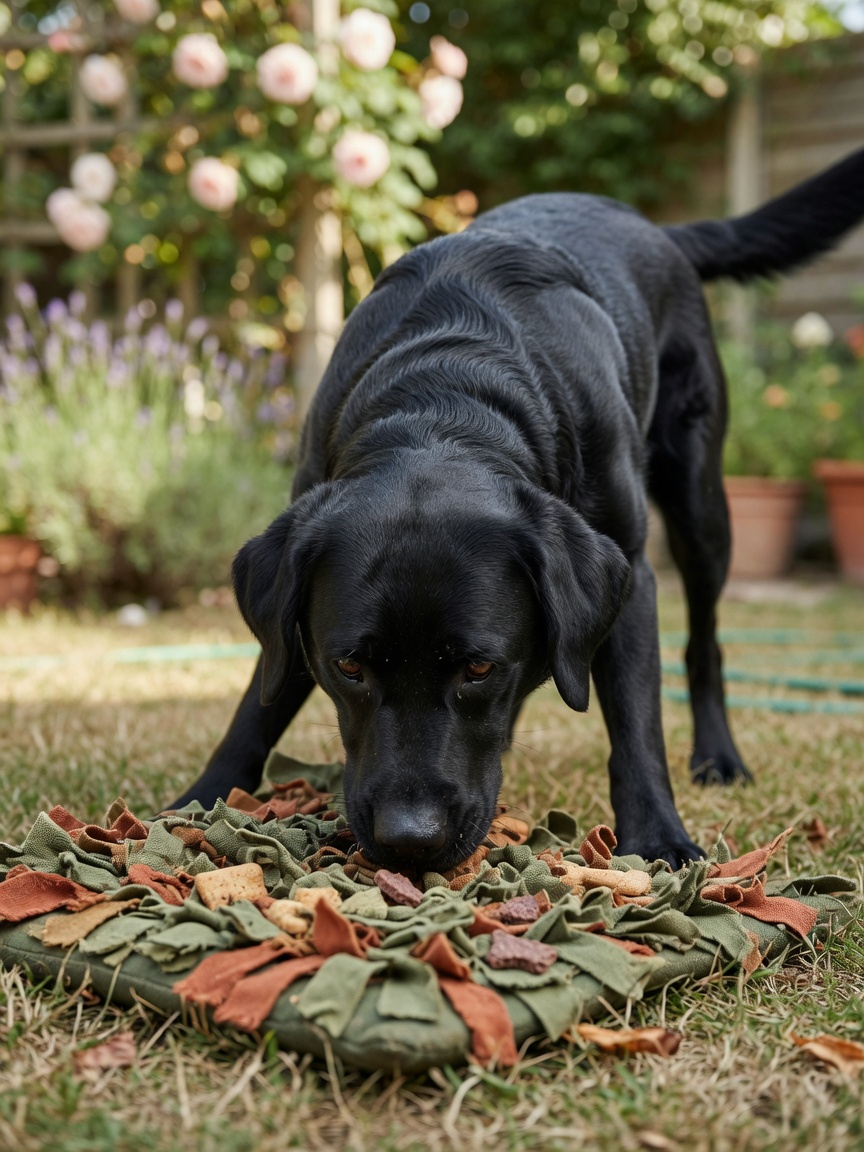
2. Snuffle mats: Hide dry kibble or treats in a snuffle mat. Nose work activates the olfactory cortex and produces genuine mental fatigue.
3. Kong-stuffing: Fill a rubber Kong with wet food or Peanut Butter?">Peanut Butter?">Peanut Butter?">Peanut Butter? Why Vets Say No">peanut butter (xylitol-free) and freeze it. This can occupy a dog for 20–30 minutes and is especially useful before you leave the house.
4. Rotating toy library: Keep 10–15 toys and rotate groups of three or four every two or three days. Dogs are novelty-seeking; a toy that disappeared for a week is exciting again.
5. Chew items: Antlers, raw meaty bones (appropriate to size), and dental chews provide long-duration occupation and jaw satisfaction.
For a curated selection of puzzle feeders, snuffle mats, and enrichment toys, browse Zooplus's dog enrichment toy range — one of Europe's most complete catalogues for canine mental stimulation.
Training
6. Teach new tricks: Five minutes of training, twice a day, is more tiring than a 30-minute walk for many dogs. Work through sit, stay, leave it, fetch, and then move on to complex behaviours like "go to place," object discrimination, or tidy-your-toys.
7. Nose-work & scent games: Hide treats around the house and release your dog to find them with the cue "find it." Gradually increase difficulty. Formal nose-work classes are available in most cities.
8. Trick training chains: Once your dog knows individual tricks, chain them together into sequences. This elevates cognitive load considerably.
Social & Human Interaction
9. Doggy day care or play dates: Social dogs benefit enormously from structured time with other dogs. Even one day per week of daycare changes the weekly rhythm and provides exhausting social play.
10. Training classes: Group training classes combine socialisation, novelty, learning, and your full attention in a single session.
Outdoor & Environmental
11. Sniff walks: Let your dog choose the pace and lead with their nose. A 20-minute slow sniff walk is neurologically more demanding than a 45-minute brisk walk at your speed.
12. New environments: Drive to a different park, walk a new route, explore a woodland. Novel smells and sights are their own enrichment.
13. Dog sports: Agility, flyball, canicross, and tracking sports channel breed drives productively. Many clubs have beginner sessions.
Enrichment on a Budget
14. DIY enrichment: A muffin tin covered with tennis balls hiding treats costs nothing. Cardboard boxes stuffed with crinkled paper and hidden kibble, toilet-roll tubes filled with treats and folded at both ends, towels rolled around food — none of these cost a penny.
15. The scatter feed: Throw your dog's entire meal portion into long grass or across a patch of garden and let them forage. This alone, done daily, can dramatically reduce boredom behaviours.
How Much Stimulation Is Enough?
There is no universal answer, because breed, age, and individual drive all differ. A Border Collie and a Basset Hound have very different needs. A useful rule of thumb is the "tired but content" baseline: a well-stimulated dog settles happily, sleeps soundly, and greets the world with calm curiosity rather than frantic energy. If your dog is not there, increase the enrichment incrementally and observe the change.
- Boredom in dogs manifests as destructive, repetitive, or attention-seeking behaviours — not laziness or defiance.
- Mental stimulation is as important as physical exercise; puzzle feeders and training sessions produce genuine cognitive fatigue.
- Rotate toys to maintain novelty; even free enrichment (scatter feeds, snuffle hunts, DIY games) is highly effective.
- Sniff walks at the dog's pace are neurologically demanding — allow them regularly.
- If boredom behaviours persist despite enrichment, consult a veterinary behaviourist to rule out anxiety or other conditions.
References
- Bhatt N, et al. "Behavioral and physiological effects of cognitive enrichment in domestic dogs (Canis lupus familiaris)." Applied Animal Behaviour Science. 2021;240:105346. PMID: 34092892.
- Tiira K, Lohi H. "Early life experiences and exercise associate with canine anxieties." PLOS ONE. 2015;10(11):e0141907. PMID: 26536600.
Written by Sarah Bennett, Certified Animal Nutritionist. Sarah specialises in companion animal behaviour and evidence-based enrichment strategies.