
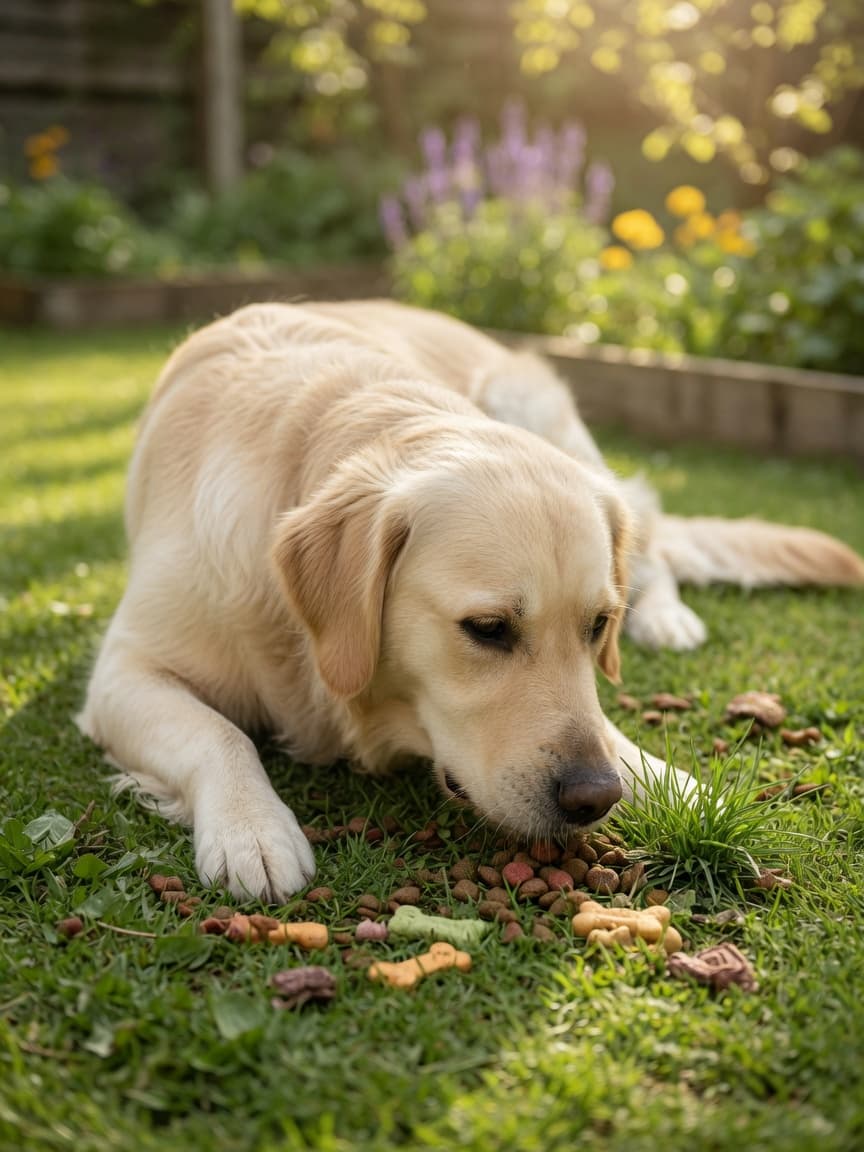
Why Enrichment Matters for Dogs
For a long time, dog owners were told that a tired dog is a good dog, and that physical exercise was the primary answer to problem behaviours. The science, however, tells a more nuanced story. Enrichment — activities that allow dogs to engage their natural behaviours and cognitive abilities — is just as important as physical exercise, and in many cases more effective at producing a calm, contented dog.
This matters especially for dogs that spend time alone. A dog left without mental stimulation for several hours is likely to find its own entertainment, which rarely aligns with what owners would prefer. Providing structured enrichment before and after periods of alone time can significantly reduce anxiety and destructive behaviour.
The Science of Sniffing
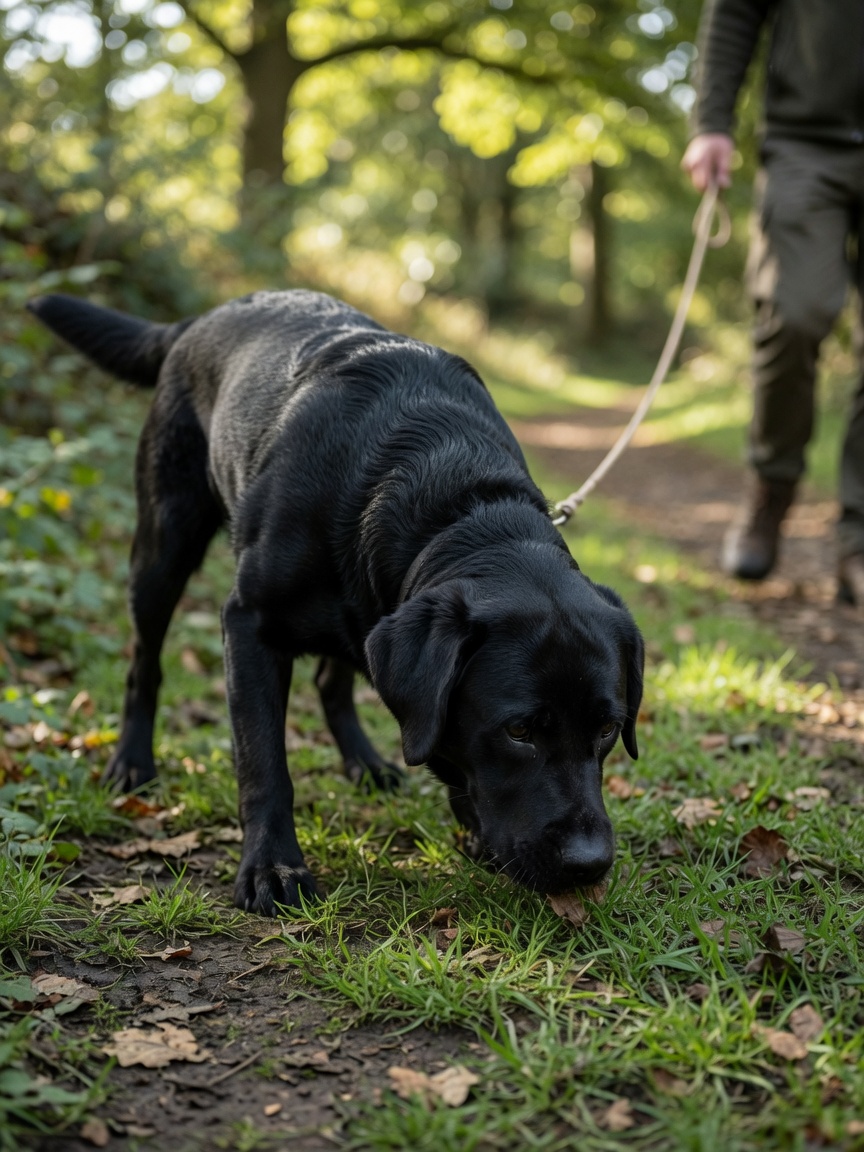
Dogs experience the world primarily through their nose. Research published in 2019 by Duranton and Horowitz found that dogs allowed to sniff freely during walks showed lower pulse rates and were more optimistic in subsequent behavioural tests compared to dogs walked on tight leads with limited sniffing opportunities. In other words, sniffing is not just pleasant for dogs — it is genuinely restorative.
A dog's olfactory system is estimated to be between ten thousand and one hundred thousand times more sensitive than a human's. Processing all that scent information is cognitively demanding work, which is why a twenty-minute sniff session can leave a dog as mentally satisfied as a much longer conventional walk.
Types of Enrichment
A well-rounded enrichment programme addresses several different categories of need:
- Sensory enrichment: activities that engage the senses, particularly smell, such as sniff walks, hiding treats, or introducing new scents from safe sources like herbs
- Cognitive enrichment: problem-solving activities including puzzle feeders, training sessions, and hiding games that require the dog to think
- Social enrichment: positive interaction with people, other dogs, or even other species, matched carefully to the individual dog's preferences and comfort level
- Physical enrichment: appropriate exercise that suits the dog's age, breed, and health status
- Environmental enrichment: changes to the dog's living space that increase interest and variety, such as rotating toys or providing new textures to explore
Decompression Walks
A decompression walk is not about covering distance or maintaining a heel. Instead, the dog is given as much freedom as safely possible — on a long line if necessary — to move at its own pace, choose its own direction, and sniff to its heart's content. These walks are particularly valuable for dogs that are anxious, recently rehomed, or recovering from stressful events.
Decompression walks are best done in quieter environments away from heavy foot traffic. Fields, woodland paths, and quiet parks are ideal. Allow the dog to pause on every interesting patch of grass without pulling it onwards. The human's role is simply to follow.
Food-Based Enrichment Tools
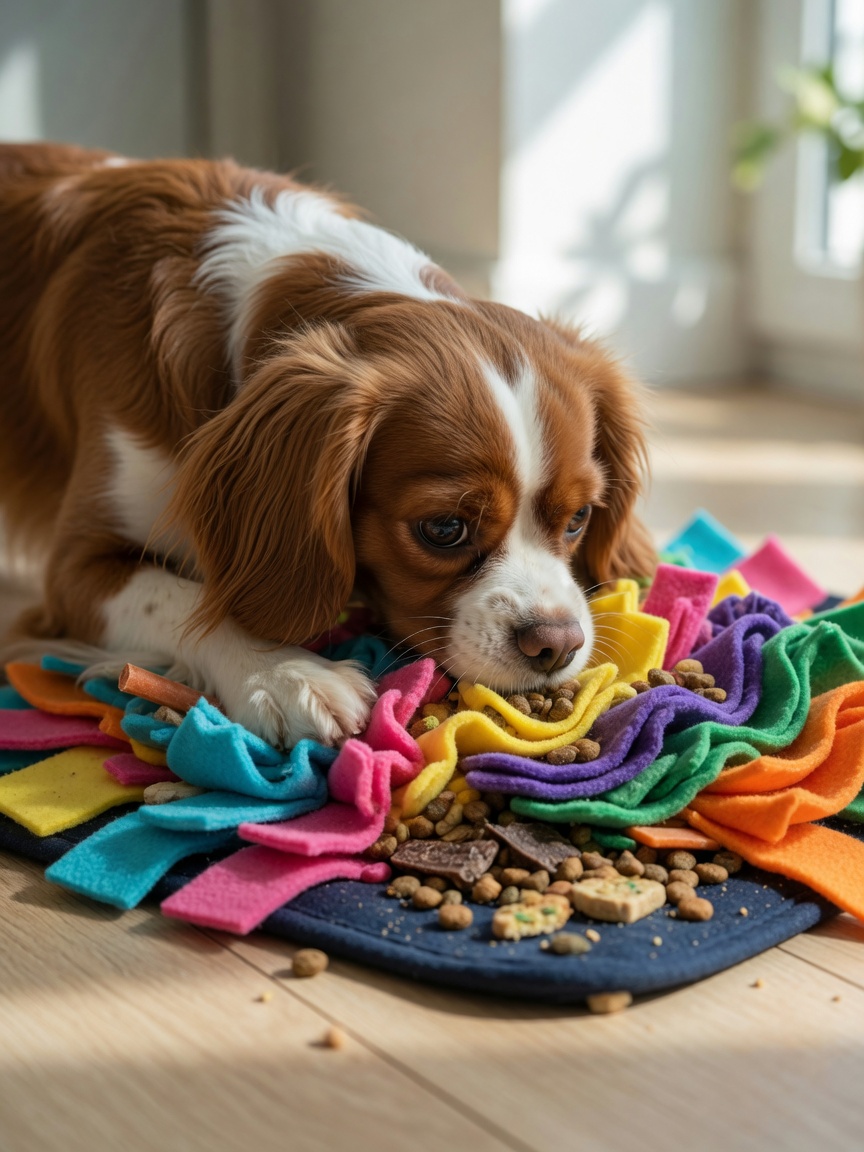
Feeding time is one of the easiest opportunities to incorporate enrichment into a dog's daily routine. Rather than presenting food in a static bowl, consider the following options:
- KONG toys: a hollow rubber toy that can be stuffed with wet food, mashed banana, plain yoghurt, or kibble soaked in broth and then frozen, creating a long-lasting challenge
- Lick mats: flat rubber mats with textured surfaces onto which soft food is spread; licking has a naturally calming effect due to its association with slow feeding and satiety
- Snuffle mats: fabric mats with multiple layers of fleece strips in which dry kibble or treats can be hidden; encourages foraging behaviour and sustained sniffing
- Scatter feeding: simply scattering dry kibble across a lawn or a snuffle mat so the dog has to use its nose to find each piece, turning a two-minute mealtime into a twenty-minute activity
Enrichment for Dogs Left Alone
Dogs that spend time alone benefit most from predictable, positive enrichment routines. A frozen KONG given just before an owner leaves can create a positive association with their departure and keep the dog occupied during the most anxious period of alone time. Rotating the type of enrichment offered prevents habituation and maintains the dog's interest.
It is important not to overwhelm a dog that is new to enrichment activities. Start simple, ensure success, and gradually increase complexity as the dog builds confidence and experience.
Getting Started
Introducing enrichment does not require expensive equipment. Scatter feeding, sniff walks, and hiding treats under upturned flower pots cost nothing. Begin with one or two activities and observe how your dog responds. Signs that an enrichment activity is pitched at the right level include engagement, persistence, and a relaxed, satisfied demeanour afterwards. If the dog gives up quickly, the task may be too difficult; if it is solved in seconds with no apparent effort, increase the challenge slightly.
A varied, consistent enrichment programme, tailored to the individual dog's instincts, age, and personality, is one of the most impactful things an owner can provide for their dog's long-term welfare and happiness.