

What Is a False Pregnancy in Dogs?
False pregnancy — also known as phantom pregnancy, pseudopregnancy, or pseudocyesis — is a completely normal hormonal event that can affect intact female dogs. Despite being a natural process, it can cause real and sometimes significant physical and behavioural changes that are distressing for both the dog and her owner.
Contrary to what many owners assume, false pregnancy is not a sign that something has gone wrong. It is, in fact, a consequence of how the canine reproductive cycle works — and it can occur after every season, regardless of whether the bitch was mated.
Why Does False Pregnancy Happen?
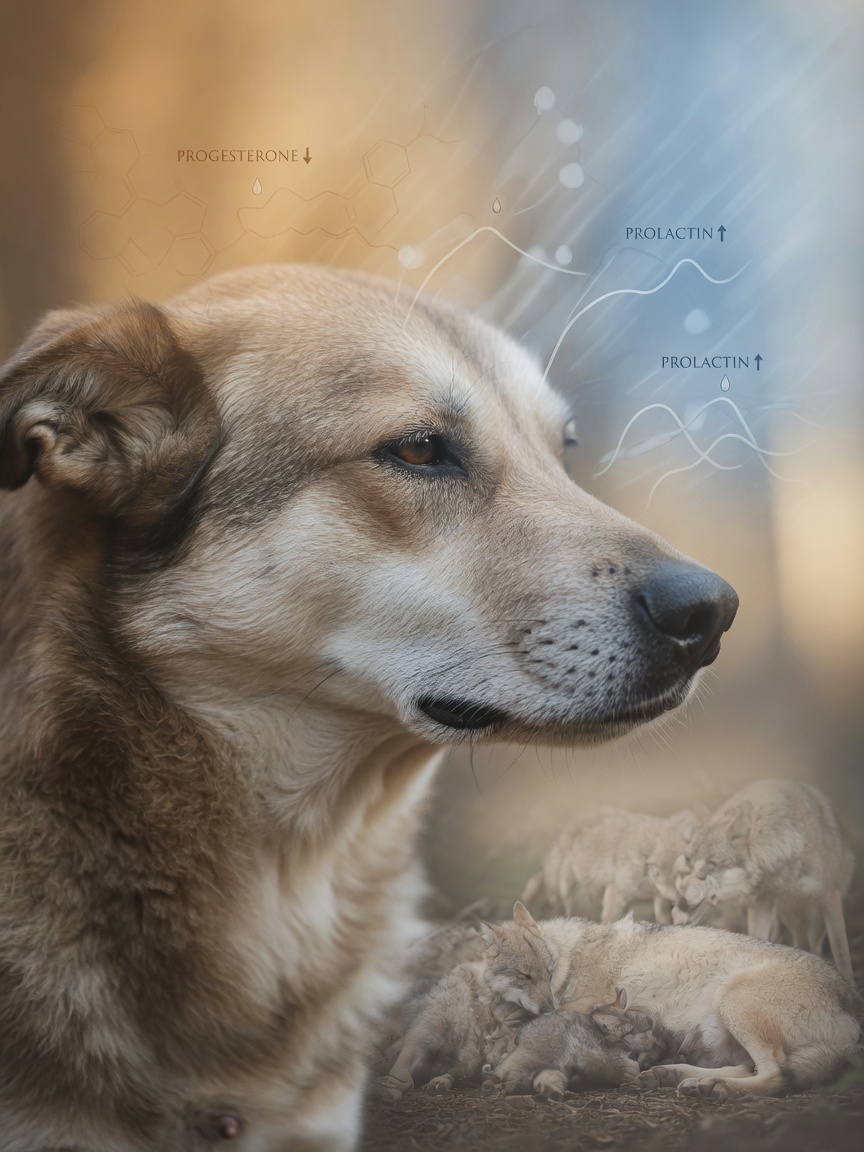
After every season, a female dog undergoes the same hormonal sequence regardless of whether mating has taken place. Progesterone levels — which rise after ovulation — fall significantly several weeks later. This drop in progesterone triggers a rise in prolactin, the hormone responsible for stimulating milk production and maternal behaviour. In dogs, this hormonal shift happens in all bitches after every cycle, but only some dogs show clinical signs.
From an evolutionary perspective, this pattern makes sense. In wild canid packs such as wolves, all females undergo this hormonal shift after the alpha female gives birth. This means that non-breeding females may produce milk and exhibit maternal behaviour, effectively making them capable wet nurses for the pack's pups. This evolutionary adaptation has persisted in domestic dogs, even though most now live in settings where it serves no purpose.
Signs of False Pregnancy
False pregnancy typically develops four to nine weeks after the end of a season. Signs vary considerably in severity between individual dogs and between different episodes in the same dog. Common signs include:
- Mammary gland enlargement and milk production — the glands become swollen and may produce actual milk or a clear watery discharge.
- Nesting behaviour — the dog may become preoccupied with creating a nest using blankets, bedding, or soft furnishings.
- Mothering inanimate objects — many bitches adopt soft toys, shoes, or other objects and treat them as surrogate puppies, carrying them carefully and becoming protective of them.
- Restlessness and anxiety, particularly around the nest area.
- Lethargy and reduced activity.
- Reduced appetite or occasional vomiting.
- Increased affection towards owners in some dogs, or withdrawal and irritability in others.
- Abdominal distension in some cases, giving the visual impression of pregnancy.
How Long Does False Pregnancy Last?
In most dogs, false pregnancy resolves on its own within two to four weeks without any treatment. Mild cases may go almost unnoticed. However, some dogs experience severe episodes with significant distress, and in these cases veterinary support is appropriate.
Managing False Pregnancy at Home

For mild to moderate cases, there are several practical steps you can take to help your dog through a false pregnancy:
- Remove objects she is mothering gently and with minimal fuss, replacing them with distracting activities. Avoid simply taking her surrogate puppies away without redirection, as this can increase distress rather than reduce it.
- Increase exercise and mental stimulation to reduce her focus on nesting behaviour.
- Apply cold or cool compresses to the mammary glands to reduce swelling and discomfort.
- Do not milk the glands or allow them to be suckled — stimulating the glands signals the body to produce more milk, prolonging the episode.
- Do not bandage the mammary glands, as this can cause discomfort and may increase stimulation of milk production.
When to See a Vet
Not all cases of false pregnancy can be managed at home. You should contact your vet if:
- The mammary glands become hot, hard, red, or painful — this may indicate mastitis, a bacterial infection of the mammary tissue. Mastitis requires antibiotic treatment and veterinary attention.
- Your dog is severely distressed, refusing to eat, or showing signs of significant anxiety that is not improving.
- The episode persists beyond four to five weeks without resolution.
- You are unsure whether your dog is actually pregnant, particularly if she had access to an intact male.
Veterinary Treatment for False Pregnancy
For severe cases, your vet may prescribe cabergoline, a drug that reduces prolactin levels, thereby shortening the duration of false pregnancy and reducing milk production. Cabergoline is effective in most dogs and is generally well tolerated, though some dogs experience mild nausea. Treatment typically lasts around five to seven days.
Mastitis, if present, is treated with a course of antibiotics appropriate for the bacteria involved. Your vet will advise on managing the affected glands at home during treatment.
Will False Pregnancy Happen Again?
In almost all cases, yes. If your dog experiences a false pregnancy after one season, she is likely to do so again after subsequent seasons. Some dogs experience progressively more severe episodes over time. This is worth bearing in mind when planning your dog's long-term care.
The Link Between False Pregnancy and Mammary Tumours
There is evidence that repeated episodes of false pregnancy, and the associated cyclical hormonal stimulation of mammary tissue, are associated with an increased risk of developing mammary tumours over a dog's lifetime. This is an additional consideration when discussing spaying with your vet.
Is Spaying the Right Solution?
For dogs who experience recurrent or severe false pregnancies, spaying is the most effective long-term solution. Removing the ovaries eliminates the hormonal cycle entirely, preventing further episodes.
However, the timing of spaying is important. Spaying during an active false pregnancy can worsen and prolong the symptoms, as the hormonal withdrawal effect of removing the ovaries may intensify the prolactin-driven changes already underway. It is generally recommended to wait until the false pregnancy has fully resolved before proceeding with surgery. Your vet will advise on the best timing for your individual dog.
A Final Note
False pregnancy can be unsettling to witness, particularly for first-time dog owners. Seeing your dog nurse a stuffed toy with apparent conviction or produce milk without having been near a male dog can be confusing and worrying. Knowing that this is a normal hormonal event — not an illness, not a sign of distress about being childless, and not something your dog has chosen — can help you respond calmly and supportively. With the right management, most dogs come through false pregnancies without lasting effects.