
Fleas Across Europe: The Scale of the Problem
Fleas are the most prevalent ectoparasite affecting dogs and cats across Europe, and they are significantly more common than many owners realise. The European Scientific Counsel Companion Animal Parasites (ESCCAP) — the continent's leading authority on companion animal parasite management — addresses flea control specifically in its Guideline 1 (GL1) on ectoparasites. ESCCAP GL1 makes clear that effective flea control requires understanding the parasite's life cycle, treating the environment as well as the animal, and adapting approach based on regional risk.
The species responsible for the vast majority of flea infestations in European dogs and cats is Ctenocephalides felis, the cat flea. Despite the name, this species parasitises dogs as readily as cats and is the dominant flea species across essentially the entire continent. Ctenocephalides canis, the dog flea, is present but comparatively uncommon in most European countries.
The Flea Life Cycle: Why Treating the Pet Is Not Enough
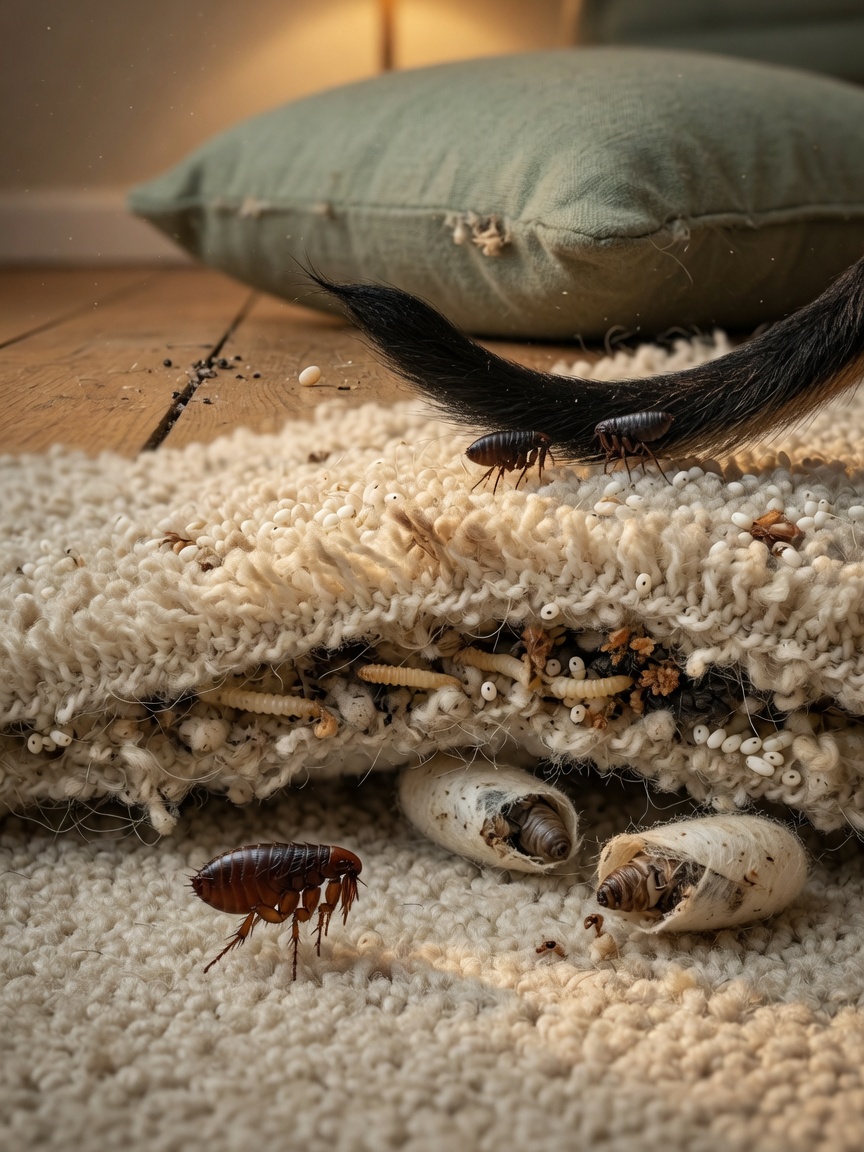
This is the piece of information most likely to explain why flea treatments fail when owners feel they have done everything right. The adult fleas visible on your dog represent only around 5% of the total flea population in an infested environment. The remaining 95% — eggs, larvae, and pupae — are distributed throughout your home: in carpets, soft furnishings, bedding, floor cracks, and cushions.
A female flea lays up to 50 eggs per day. These eggs fall off the pet wherever it moves through the house, creating a distributed reservoir of developing fleas. Larvae develop in carpeting and bedding, feeding on adult flea faeces (which consists of partially digested blood) before spinning a cocoon and entering the pupal stage. Pupae are remarkably resistant to insecticides and can remain dormant for months, hatching in response to vibration, warmth, and carbon dioxide — in other words, the presence of a host animal or a person walking through the room.
If you treat your dog but not your home, re-infestation from the environment is essentially inevitable. ESCCAP GL1 emphasises this point explicitly: integrated flea control must address both the animal and the domestic environment.
Regional Prevalence: Mediterranean Versus Northern Europe
Flea risk is not uniform across Europe, and where you live significantly affects the level of year-round protection your dog requires.
Southern and Mediterranean Europe
In Spain, Portugal, Italy, Greece, southern France, and similar climates, flea populations can remain active year-round. Warm winters do not provide the cold-temperature interruption that limits flea activity in northern regions. Dogs in Mediterranean areas should be on continuous, uninterrupted flea prevention throughout the year without seasonal breaks. The risk of indoor infestations establishing and persisting is also higher in these regions, as central heating in winter combined with mild outdoor temperatures creates ideal conditions for flea development at all life stages.
Northern and Central Europe
In countries such as Germany, the Netherlands, Scandinavia, and the UK, flea populations are more markedly seasonal, with peak activity from spring through autumn. However, ESCCAP GL1 notes that indoor central heating has extended the effective flea season considerably even in northern Europe — a warm, carpeted home can support flea development year-round regardless of outdoor temperatures. Year-round prevention is therefore increasingly recommended even in northern regions, particularly for dogs that have previously had an infestation or live in multi-pet households.
Recognising Fleas: The Flea Dirt Test
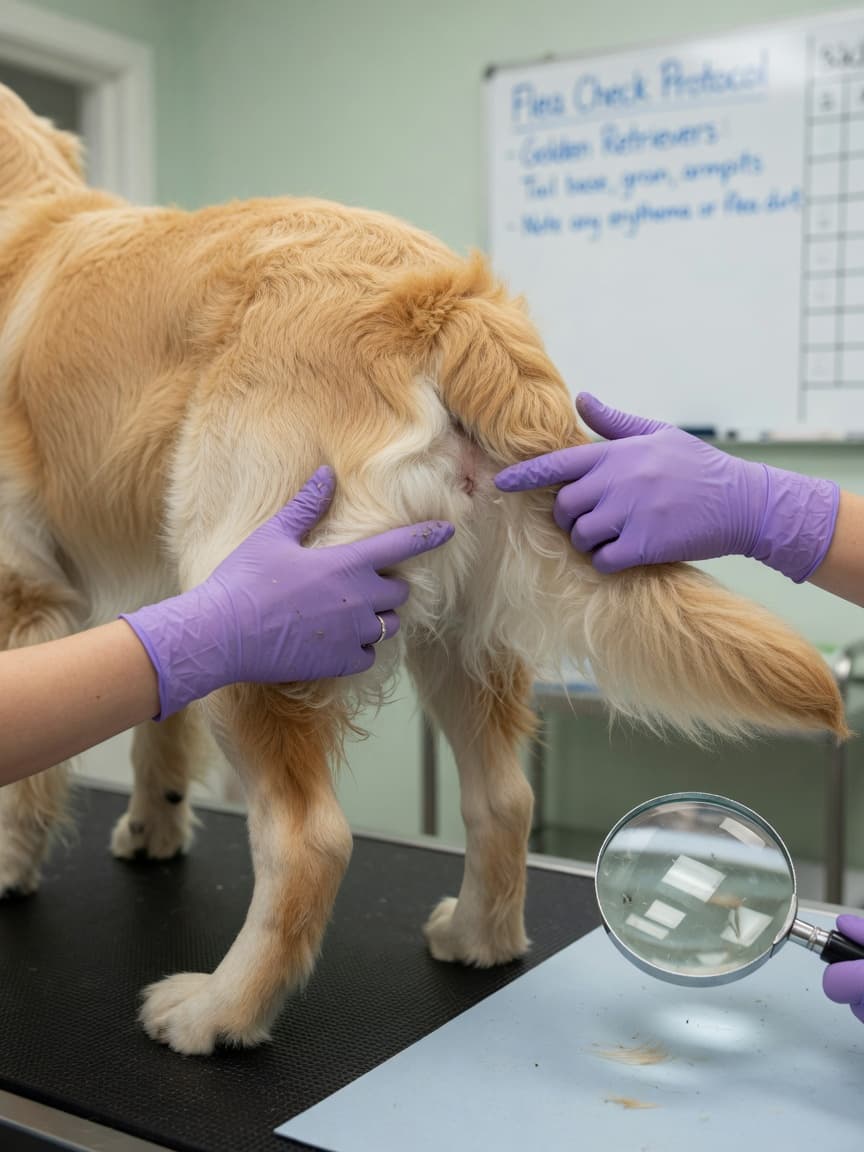
Fleas move quickly and may not be easy to spot on a dog's coat, particularly on dark-furred animals. The most reliable quick test is to check for flea dirt — the dark specks of flea faeces found in the coat, particularly around the base of the tail, the groin, and the belly.
To confirm that dark specks are flea dirt and not ordinary dirt, place some on a damp piece of white paper or tissue. Flea dirt contains digested blood and will dissolve into a reddish-brown stain. Ordinary soil or debris does not. Other signs of flea infestation include excessive scratching (particularly around the back end and tail base), hair loss, and small red bite marks on the skin. Some dogs develop flea allergy dermatitis — an allergic reaction to flea saliva — which causes intense itching from even a small number of bites.
Treatment Options
Spot-On Treatments
Spot-on treatments, applied to the skin at the back of the neck, are one of the most widely used flea control products in Europe. They typically contain active ingredients such as fipronil, imidacloprid, selamectin, or indoxacarb. Most provide a month of protection. Quality spot-on products from established veterinary brands are available from Zooplus, including prescription-strength and over-the-counter options, making it straightforward to maintain monthly treatment without repeated veterinary visits for routine preventatives.
Oral Treatments
Oral flea treatments, available in chewable tablet form, have become increasingly popular in recent years. Products containing afoxolaner, fluralaner, or sarolaner are prescription medications in most EU countries and are prescribed by veterinarians. They are highly effective and remove concerns about the product being washed off or a dog swimming after application. Some oral products combine flea and tick protection in a single monthly or quarterly dose.
Flea Collars
Modern flea collars, such as those containing flumethrin and imidacloprid, have significantly better efficacy than older collar designs. Some provide up to eight months of continuous protection. They are a practical option for dogs whose owners find monthly applications difficult to maintain, though they are generally less suitable for very active dogs that swim frequently.
Treating the Home
Treating the home environment is not optional if an infestation has been established. The approach involves several steps:
- Wash all pet bedding, blankets, and soft furnishings the pet has contact with at 60 degrees Celsius or above — this temperature kills eggs, larvae, and adults
- Vacuum all carpets, sofas, and soft furnishings thoroughly, paying particular attention to corners, skirting boards, and beneath furniture where larvae concentrate; dispose of the vacuum bag or empty the canister outside immediately
- Apply a household insecticide spray containing an adulticide and an insect growth regulator (IGR) — the IGR disrupts flea development and addresses the pupal stage that adulticides cannot reach
- Repeat vacuuming regularly for several weeks after treatment to remove newly hatched adults before they can breed
Household flea sprays are available from Zooplus alongside a wide range of spot-on treatments and collars for dogs. Treating all pets in the household simultaneously is essential — treating one animal while leaving another untreated simply allows the cycle to continue.
Safe Products in Households with Cats
Dog flea products and cat safety is a critical area where errors can be fatal. Several flea treatment compounds that are safe for dogs are highly toxic to cats. Permethrin, in particular, is widely used in dog spot-on products and is acutely toxic to cats — even indirect exposure from a recently treated dog sleeping in contact with a cat can cause permethrin toxicity. Always read product labelling carefully, and if you have both dogs and cats, discuss product choice with your veterinarian to ensure the products you use are safe for your entire household.
How Long Does Treatment Take to Work?
Most quality spot-on and oral treatments kill adult fleas within 24 to 48 hours of application. However, if an environmental infestation has been established, you may continue to see newly hatched fleas jumping onto your dog for several weeks after beginning treatment. This does not mean the product is failing — it reflects the size of the environmental reservoir. Consistent use of a product alongside thorough environmental treatment will resolve an established infestation over the course of four to twelve weeks, depending on its severity. Stopping treatment prematurely is the most common cause of recurrence.