
Dog Hot Spots: What They Are, Causes & Fast Treatment
What Is a Hot Spot?
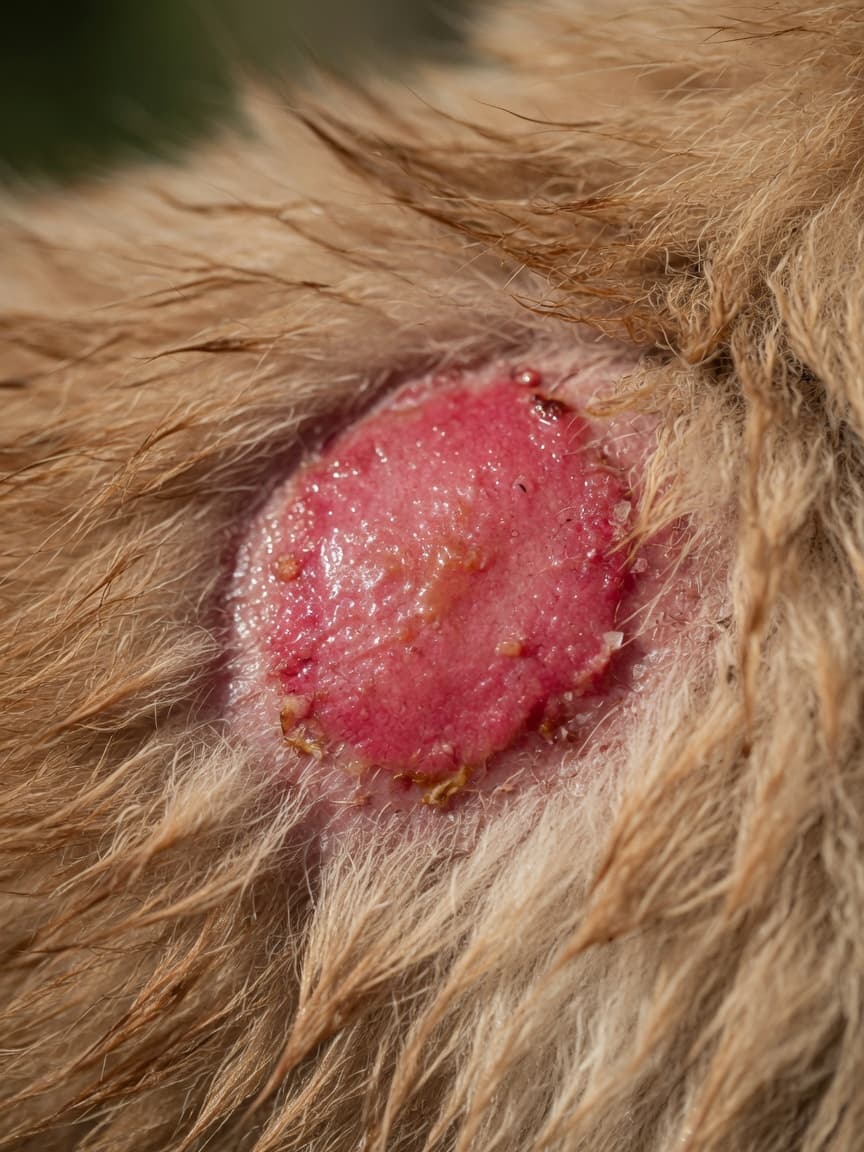
A hot spot — known clinically as acute moist dermatitis or pyotraumatic dermatitis — is a rapidly developing area of raw, inflamed, infected skin. The lesion typically appears as a moist, red, hairless patch that may ooze serum or pus. Hot spots are painful and intensely itchy, which drives the dog to lick, chew, and scratch the area obsessively, creating a self-reinforcing cycle of damage and infection that can make a small irritation into a serious wound within a single afternoon.
Hot spots are surface infections involving the superficial layers of the skin. The bacteria most commonly isolated from these lesions are Staphylococcus pseudintermedius and Pseudomonas species — both normal skin residents that proliferate rapidly when the skin barrier is broken and the environment becomes warm and moist. Unlike deeper skin infections (furunculosis or cellulitis), true hot spots affect only the epidermis, which is why prompt, aggressive surface treatment can resolve most cases without systemic antibiotics.
Common Triggers
Hot spots do not appear spontaneously. Something initiates the itch-scratch cycle, and identifying the trigger is essential to preventing recurrence.
Allergies
Environmental allergies (atopic dermatitis) and food allergies are the leading underlying cause of recurrent hot spots. The allergic dog has chronically itchy skin that is one scratch away from a surface wound. Dogs with atopy commonly develop hot spots on the face, ears, and paws — areas they can reach easily. If your dog has more than one or two hot spots per year, allergy evaluation should be part of the conversation with your vet.
Moisture Trapped Under the Coat
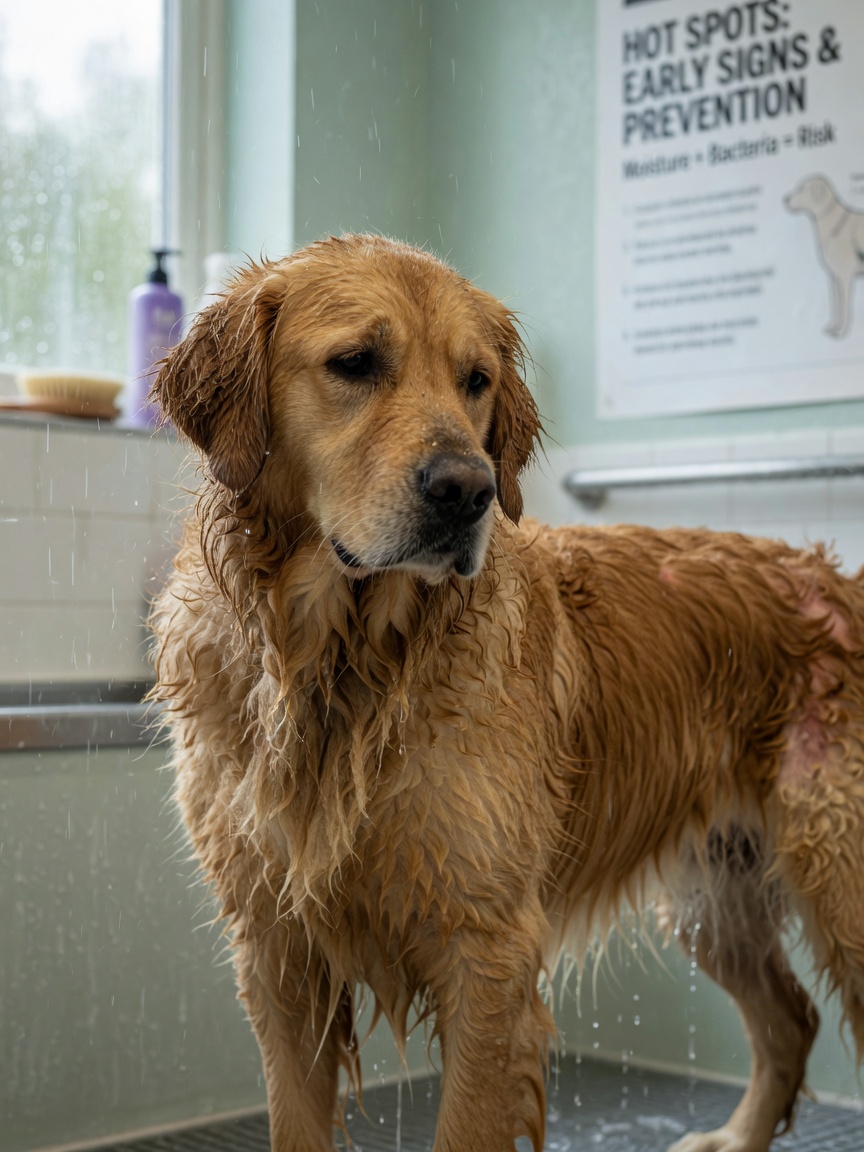
Dense or double-coated breeds — Golden Retrievers, German Shepherds, Rottweilers, and Saint Bernards — are disproportionately represented in hot spot cases. When these dogs swim, get caught in the rain, or are bathed without being dried thoroughly, moisture becomes trapped against the skin. The warm, damp microenvironment is ideal for bacterial proliferation. This is why hot spots in these breeds often appear along the back, rump, and neck — areas where the undercoat is thickest and dries slowest.
Flea Bites and Flea Allergy Dermatitis
A single flea bite at the base of the tail can trigger a hot spot in a flea-allergic dog within minutes. Flea allergy dermatitis (FAD) is one of the most common skin conditions in dogs worldwide, and the rump and tail-base region is the classic location for FAD-associated hot spots. If you find a hot spot in this area, check your dog's flea prevention status immediately and inspect for flea dirt (dark specks that turn red when dampened).
Boredom, Anxiety, and Compulsive Licking
Dogs that are under-stimulated, anxious, or experiencing separation distress may lick or chew at a particular area repeatedly, eventually breaking the skin and inducing a hot spot. These psychogenic cases are sometimes called "lick granulomas" when they occur on the lower legs, though any location can be affected. Recurrent hot spots in the absence of obvious skin disease warrant a behavioural assessment.
Ear Infections and Anal Gland Problems
Pain or irritation from an ear infection can prompt a dog to scratch repeatedly at the side of its face and neck, introducing bacteria into the skin. Similarly, full or impacted anal glands cause scooting and licking around the rear, which can initiate hot spots near the base of the tail. Treating the source reliably prevents these secondary lesions.
How to Identify a Hot Spot
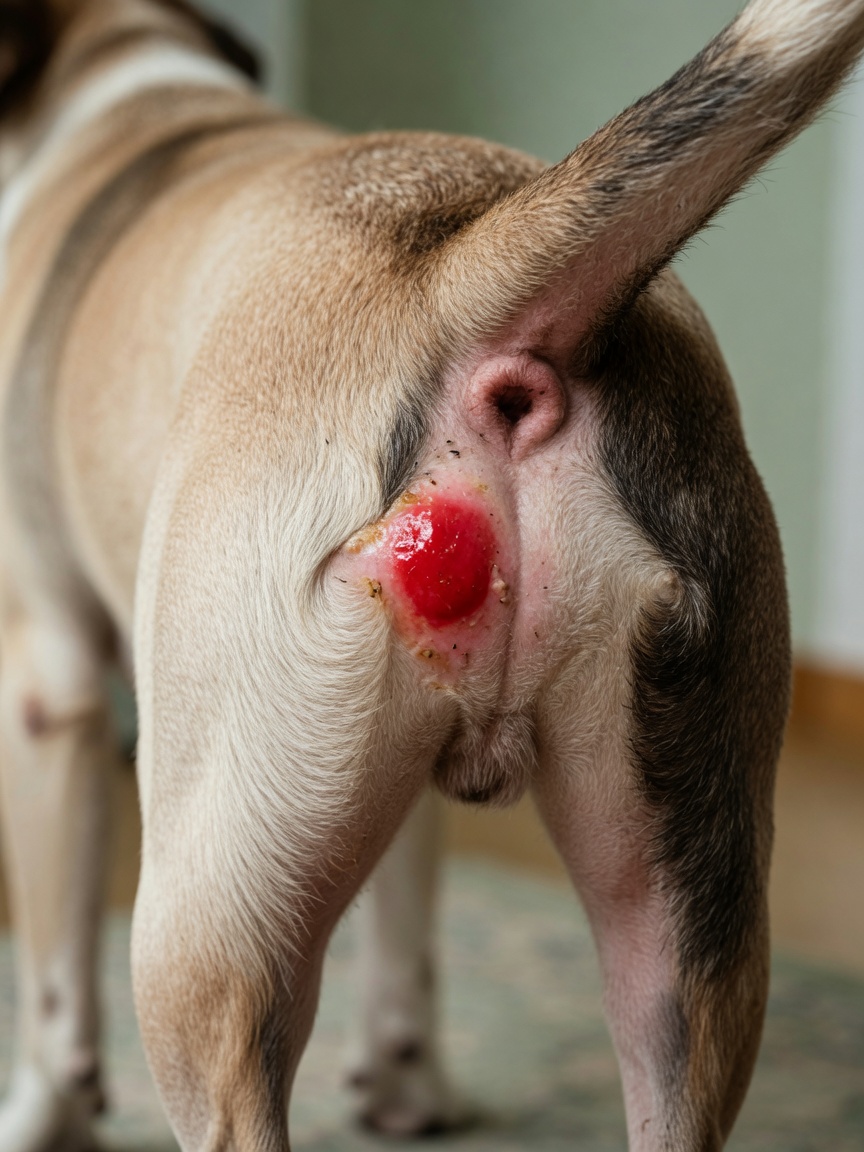
Hot spots have a characteristic appearance that distinguishes them from other skin conditions. Look for:
- A clearly demarcated, moist, red patch — often circular or oval
- Hair loss over the affected area (or matted, damp fur covering it in early stages)
- A wet, shiny surface that may crust over with dried discharge
- Surrounding skin that looks normal — unlike mange-dogs-treatment" title="mange-dogs-treatment" title="mange-dogs-treatment" title="Mange in Dogs: Types, Symptoms & Treatment Options">Mange in Dogs: Types, Symptoms & Treatment Options">Mange in Dogs: Types, Symptoms & Treatment Options">mange or ringworm, which often show diffuse scaling
- Intense local pain — the dog may snap or cry when the area is touched
Part the fur carefully across the entire back and flanks at bath time; small hot spots are easily hidden beneath a thick coat and may not be discovered until they are already substantial.
Home Treatment for Mild Hot Spots
Small, fresh hot spots (smaller than a 50-cent coin, not deeply infected) can often be managed at home with the following steps:
Step 1: Clip the Fur
Using blunt-nosed scissors or a pet clipper, carefully remove the hair from the hot spot and at least 2–3 centimetres of surrounding skin. This is the single most important step — it exposes the wound to air, allows topical treatments to reach the skin, and interrupts the warm, moist environment bacteria need to multiply. Work slowly and gently; the skin is very sensitive.
Step 2: Clean the Area
Gently cleanse the lesion with a dilute chlorhexidine solution (0.05% — available at pharmacies and pet shops) or a mild, non-irritating wound wash. Pat dry with clean gauze. Do not rub. Never use hydrogen peroxide, iodine solutions at full concentration, or alcohol — these damage granulation tissue and delay healing.
Step 3: Apply a Topical Treatment
A veterinary-formulated topical spray or gel containing hydrocortisone and an antimicrobial (such as chlorhexidine or mupirocin) will reduce inflammation and suppress bacterial growth. Apply a thin layer two to three times daily. Keep the area dry between applications.
Step 4: Prevent Self-Trauma with an E-Collar
An Elizabethan collar (cone) is non-negotiable. Without it, the dog will return to licking the moment you look away, undoing every treatment step. Soft fabric e-collars are more comfortable for dogs and equally effective for hot spots on the body, though a rigid cone may be necessary for lesions the dog can reach around a soft one. The collar must stay on continuously until the hot spot is fully healed — typically 7–14 days.
When to See a Vet
Seek veterinary attention promptly if:
- The hot spot is larger than a 50-cent coin or is spreading rapidly
- There is pus, a foul smell, or visible tissue damage beyond the skin surface
- The dog is running a fever, lethargic, or refusing food
- Home treatment has shown no improvement after 48 hours
- This is a recurrent problem (more than two per year)
Vets typically treat severe hot spots with oral antibiotics (a 2–3 week course), a short-acting corticosteroid to break the itch cycle, and sometimes a sedating antihistamine to reduce self-trauma while the skin heals. If recurrence is the concern, your vet may recommend allergy testing, dietary trials, or a referral to a veterinary dermatologist.
- Hot spots are rapidly spreading surface infections triggered by licking, scratching, or biting — the itch-scratch cycle must be interrupted immediately.
- Dense-coated breeds and dogs with allergies or flea infestations are most at risk.
- Clipping the hair around the lesion and keeping it dry is the most critical first step in home treatment.
- Always use an e-collar — without it, treatment will fail regardless of what topical you apply.
- Avoid hydrogen peroxide and alcohol; use dilute chlorhexidine for cleaning instead.
- Recurrent hot spots indicate an unresolved underlying cause — allergies, parasites, or behavioural issues — that requires veterinary investigation.
References
Holm BR, et al. (2004). A prospective study of the clinical findings, treatment and histopathology of 44 cases of pyotraumatic dermatitis. Veterinary Dermatology. PubMed
Zur G, et al. (2002). Canine atopic dermatitis: a retrospective study of 169 cases examined at the University of California, Davis, 1992–1998. Veterinary Dermatology. PubMed