
Dog Ownership in France: Everything You Need to Know
France is home to approximately 7.5 million dogs, making it one of Europe's largest pet-owning nations. French law on dog ownership is thorough and, in places, quite strict — particularly regarding dangerous breeds. Understanding the national identification system, the two-category dangerous dog classification, and your obligations as an owner will ensure you stay on the right side of the law and keep your community safe.
Mandatory Identification: Microchip or Tattoo
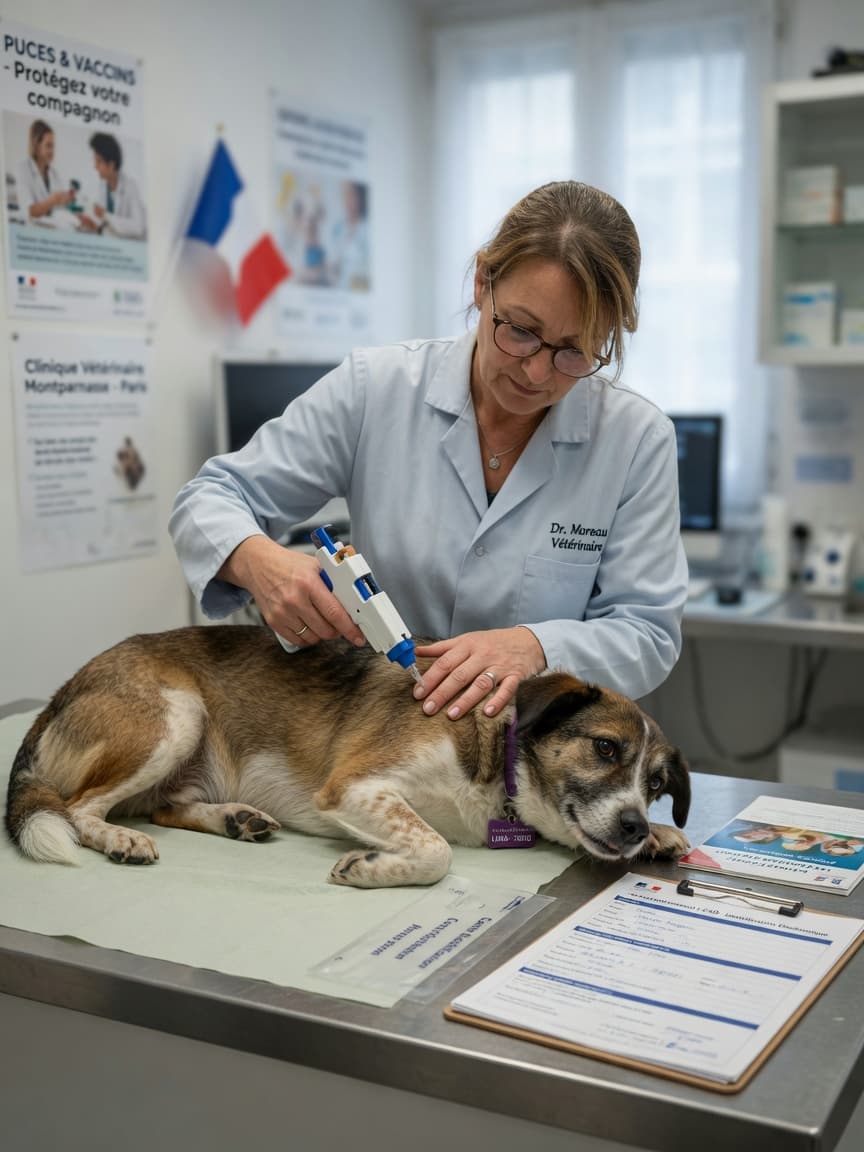
Unlike many EU countries, France still accepts two forms of permanent identification for dogs: a microchip (transpondeur électronique) conforming to ISO standard 11784/11785, or a tattoo applied in the ear or inner thigh. However, microchipping is now by far the most common method and is required for any dog born after 6 January 1999. Tattoos applied before that date remain legally valid but cannot be used for newly identified animals.
Once identified, your dog must be registered on the I-CAD (Identification des Carnivores Domestiques) national register. I-CAD is the official French database administered under the authority of the Société Centrale Canine. Registration is completed by your veterinarian at the time of microchipping and costs are typically included in the procedure fee. You can consult or update your dog's record via the I-CAD website (i-cad.fr). Failure to identify and register your dog is a fourth-class offence (contravention de 4ème classe) carrying fines of up to €750.
Rabies Vaccination: Required for International Travel
Metropolitan France (mainland and Corsica) is rabies-free, so rabies vaccination is not legally required for domestic ownership. However, it is mandatory for travel to and from non-EU countries, and some French overseas territories have different requirements. For standard EU travel, your dog will need a valid EU Pet Passport with a current rabies vaccination recorded. The vaccine must have been administered at least 21 days before the dog first crosses an international border (for initial vaccinations). Booster requirements vary by brand — typically every one to three years.
The 1st and 2nd Category Dangerous Dog System
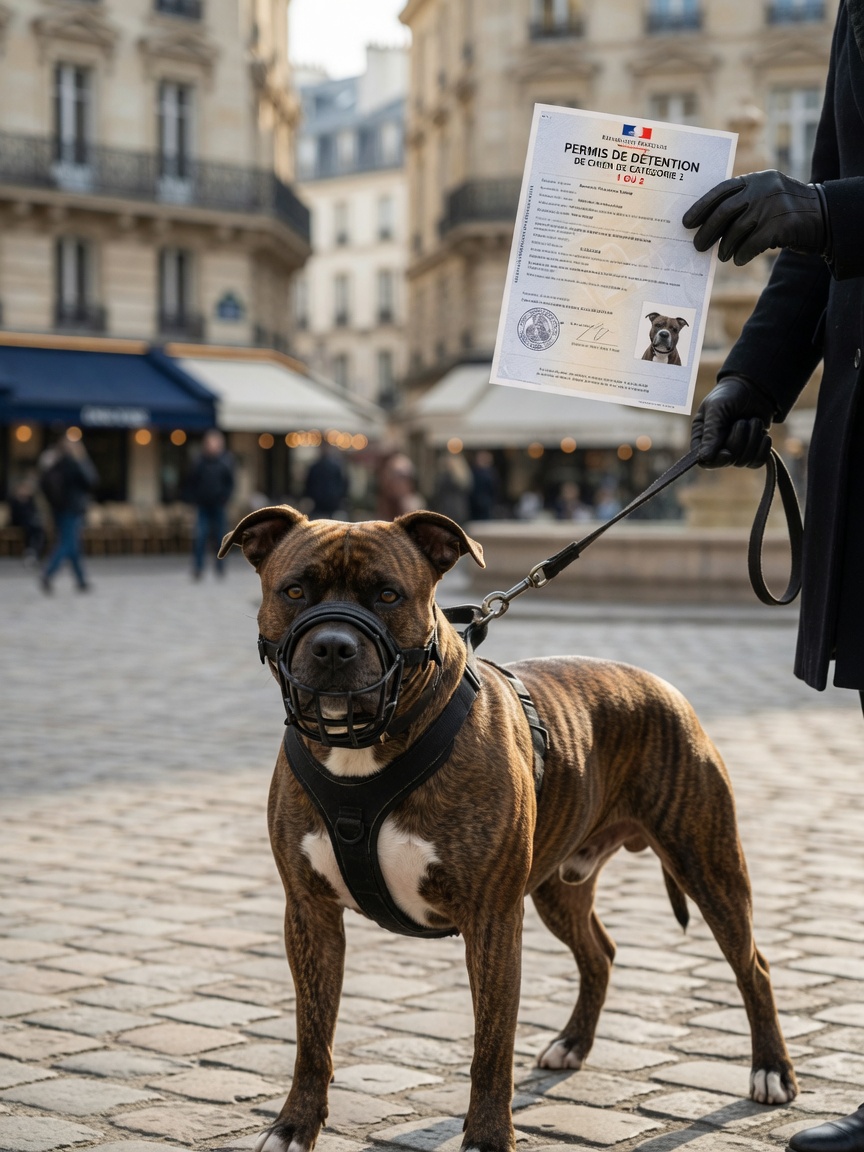
France's Loi du 6 janvier 1999 created a two-category system for dogs considered to present a risk to public safety. This remains one of the most referenced pieces of animal legislation in the country.
Category 1: Attack Dogs
Category 1 covers dogs bred for attack, broadly described as resembling recognised fighting breeds without being pedigree-registered. This typically includes dogs that look like Pit Bull Terriers, Boerboels, and Tosas without papers. Category 1 dogs face severe restrictions:
- They cannot be imported into France or acquired (bought, given, or born after the law came into force)
- They must be sterilised (neutered/spayed)
- They must be muzzled and kept on a lead in all public spaces, including streets, parks, and public transport
- They cannot be owned by minors, individuals with criminal convictions, or those who have been stripped of their civil rights
- In practice, Category 1 dogs are effectively banned from public life and no new specimens can legally enter the ownership pool
Category 2: Guard and Defence Dogs
Category 2 includes pedigree-registered dogs of certain breeds and those resembling them. Recognised pedigree breeds in this category include the American Staffordshire Terrier (Amstaff), Rottweiler, and Tosa. Owners of Category 2 dogs must:
- Keep the dog muzzled and on a lead (maximum 1.5 metres) in all public spaces
- Obtain a formal certificate of aptitude (permis de détention) from their local mayor's office — this requires attending a compulsory training session on responsible ownership
- Ensure the dog has passed a behavioural assessment (évaluation comportementale) carried out by a veterinarian
- Hold a valid dog liability insurance policy
The permis de détention must be renewed every five years and is non-transferable. It is attached to the individual owner, not the dog.
Dog Liability Insurance
Third-party dog liability insurance (responsabilité civile) is not universally mandatory in France for all dog owners. However, it is compulsory for Category 1 and Category 2 dog owners, and many home insurance (assurance habitation) policies in France automatically include basic third-party cover for pets — worth checking your policy. For those without automatic home insurance cover, standalone dog liability policies start at around €30–60 per year. Given that a dog bite claim can run into thousands of euros in France, insurance is strongly recommended for all owners regardless of breed.
Apartment and Shared Building Rules
French condominium law (copropriété) allows building regulations (règlement de copropriété) to restrict animals in common areas, but since the Loi Molle of 1970 (Article 10), landlords and building regulations cannot entirely prohibit tenants from keeping pets in private dwellings. Domestic animals (as opposed to dangerous or exotic species) must be tolerated. That said, persistent noise or nuisance caused by a dog — especially barking — can lead to formal complaints and legal proceedings under local public nuisance rules (troubles anormaux de voisinage).
Finding a Vet in France
Veterinary professionals in France are regulated by the Ordre National des Vétérinaires (ONV), which maintains a public directory of all practising vets. You can search by postcode at veterinaire.fr. France has a well-developed veterinary infrastructure, with private clinics in almost every small town and specialist referral centres in major cities.
Average consultation fees range from €30 to €70 for a standard appointment at a private clinic in a provincial town, rising to €50–90 in Paris and other major cities. Annual vaccinations against core diseases (distemper, parvovirus, hepatitis, leptospirosis) typically cost €60–100 per year. Emergency and out-of-hours care can be significantly more expensive.
Pet insurance (assurance santé animale) is widely available in France and increasingly common. Monthly premiums for comprehensive cover typically range from €20 to €60 depending on breed, age, and level of cover. Santévet and Dalma are among the better-known French pet insurance providers.
Summary: Your Key Obligations as a Dog Owner in France
- Have your dog microchipped (or tattooed if pre-1999) and registered on I-CAD
- Obtain an EU Pet Passport and rabies vaccination before any international travel
- If you own a Category 1 or Category 2 dog, obtain the permis de détention from your local mairie
- Muzzle and leash Category 1 and 2 dogs in all public spaces
- Hold liability insurance if required (and strongly recommended for all owners)
- Respect building regulations regarding common areas while knowing your rights in private dwellings
French dog ownership law rewards responsible guardianship. With the correct paperwork in place and a good relationship with your local veterinarian, owning a dog in France is a genuinely rewarding experience in a country that, despite its strict rules, has a deep affection for its canine companions.