
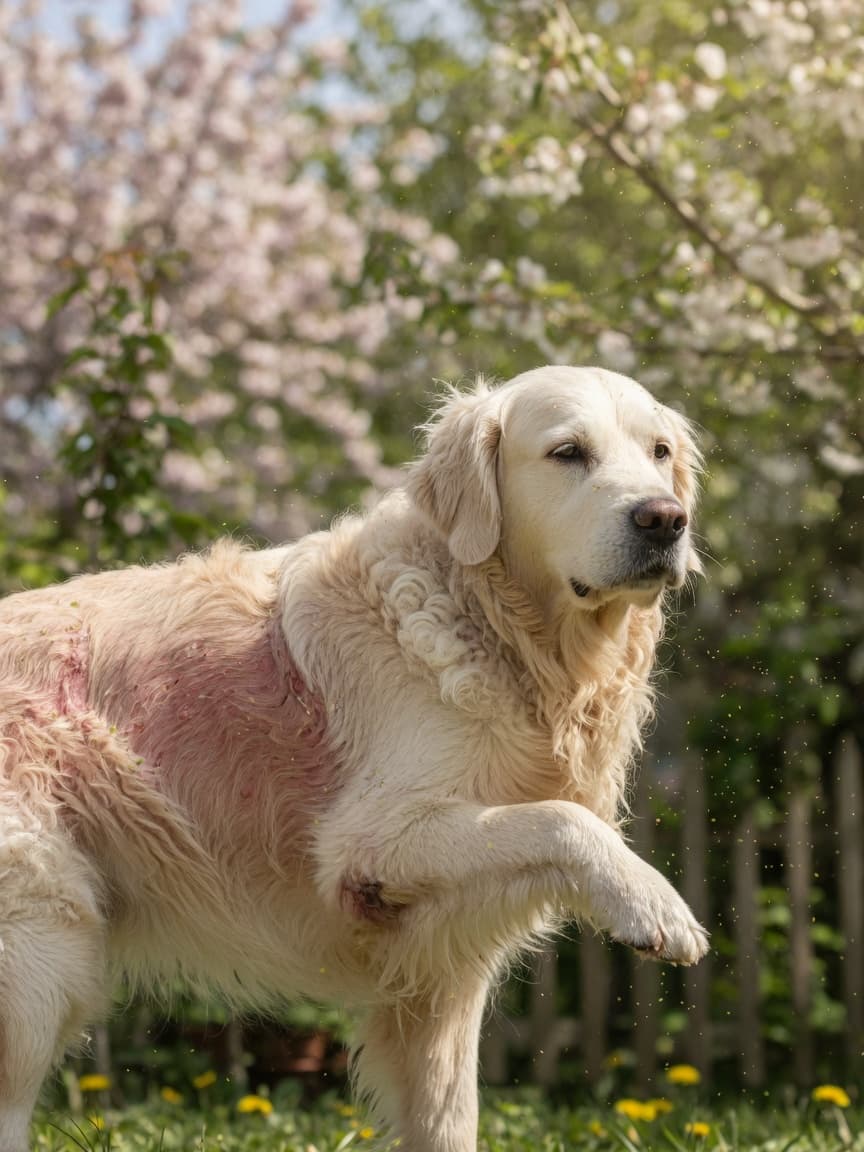
Seasonal Allergies in Dogs: Pollen, Mold & What to Do
Every spring and summer, veterinary clinics see a surge in dogs presented for itching, paw licking, red skin, and ear problems. In many of these cases, the culprit is environmental allergens — pollen, mould spores, and dust mites triggering a chronic inflammatory skin condition called canine atopic dermatitis. If your dog seems miserable at certain times of year and the problem isn't fleas or food, seasonal allergies may be the answer.
What Is Canine Atopic Dermatitis?
Atopic dermatitis (atopy) is a genetically predisposed inflammatory skin disease in which the immune system overreacts to environmental allergens that penetrate or contact the skin. It is one of the most common conditions seen in veterinary dermatology, affecting an estimated 10–15% of dogs.
Breeds with higher susceptibility include West Highland White Terriers, Golden Retrievers, Labrador Retrievers, Boxers, Bulldogs, German Shepherds, and Cocker Spaniels — though any dog can be affected.
Atopic Dermatitis vs Food Allergy
Distinguishing atopy from food allergy is important because the treatment approach differs. Key differences:
- Seasonality: Atopy often worsens at specific times of year; food allergy tends to be year-round.
- Location: Atopy typically affects the paws, face, ears, belly, and groin. Food allergy can affect similar areas but often also involves the perianal region.
- Response to steroids: Atopy generally responds (at least initially) to corticosteroids; food allergy typically does not.
- Diagnosis: Food allergy requires a strict 8–12 week dietary elimination trial with a hydrolysed or novel protein diet. Atopy is diagnosed via skin or blood allergy testing.
Allergens by Season

Spring: Tree Pollen
Tree pollens — birch, oak, ash, cedar, and alder — are the dominant allergens from late winter through spring. Dogs who worsen in March–May and improve in midsummer are often reacting to tree pollen. Pollen counts peak on warm, dry, windy days; symptoms tend to be less severe on rainy days when pollen is grounded.
Summer: Grass Pollen
Grass pollen season runs from late spring through midsummer (May–August in temperate climates). Timothy grass, ryegrass, and Bermuda grass are common culprits. Dogs who run through grass and then lick their paws intensively afterwards are absorbing and reacting to pollen directly through the skin. This is a hallmark of atopic paw involvement.
Autumn: Mould Spores and Weed Pollen
Damp autumn weather creates ideal conditions for mould growth in fallen leaves, compost, and soil. Dogs who love to snuffle through leaf piles may have significantly worsened symptoms in September–November. Ragweed pollen is also a major autumn allergen in many regions. Some dogs are perennially itchy due to dust mite allergy, which doesn't follow a seasonal pattern but often worsens in winter when dogs spend more time indoors.
Diagnosis: Allergy Testing
If you suspect seasonal allergies, the first step is a veterinary consultation to rule out other causes (fleas, sarcoptic mange, food allergy, contact dermatitis). If atopy is suspected, your vet may refer to a veterinary dermatologist for:
- Intradermal skin testing: The gold standard — small amounts of allergens are injected under the skin to identify specific reactions.
- Serum allergy testing: A blood test measuring allergen-specific IgE. Less invasive but slightly less accurate than intradermal testing.
Identifying the specific allergens enables targeted allergen immunotherapy (desensitisation injections or sublingual drops), which is the only treatment that addresses the underlying immune response rather than just suppressing symptoms.
Practical Management Strategies

Paw Washing
After every outdoor walk during high-pollen season, rinse your dog's paws with cool water or use a damp cloth to remove surface pollen. This simple step can significantly reduce the allergen load being licked into the body. A paw wash station (a cup of water with a silicone scrubber) at the door makes the habit easy to maintain.
Antihistamines
Antihistamines (cetirizine, loratadine, chlorphenamine) are generally less effective in dogs than in humans for controlling atopic itch, but they can provide mild relief in mildly affected dogs and are safe for long-term use. Always confirm the correct dose with your vet before use, as some formulations contain xylitol or other additives that are toxic-to-dogs" title="toxic-to-dogs" title="Is Aloe Vera Toxic to Dogs?">Is Aloe Vera Toxic to Dogs?">toxic to dogs.
Omega-3 Fatty Acids
EPA and DHA (found in fish oil and marine oils) have well-documented anti-inflammatory effects on the skin and can reduce the severity of atopic symptoms when supplemented consistently. They work by modulating the inflammatory pathway and supporting the skin barrier — the same compromised barrier that allows allergens to penetrate in atopic dogs. A therapeutic dose is typically 50–100mg EPA+DHA per kg of body weight per day.
Skin support from the inside out: HolistaPet offers omega-3 rich supplements and skin support formulas specifically designed for dogs with sensitive skin and seasonal flare-ups. A consistent supplement routine through allergy season can make a noticeable difference.
When to See a Vet: Secondary Infections
Chronic scratching, rubbing, and licking damage the skin barrier and create entry points for bacteria (most commonly Staphylococcus pseudintermedius) and yeast (Malassezia pachydermatis). Secondary skin and ear infections are among the most common complications of poorly controlled atopy and require antibiotic or antifungal treatment — anti-itch medication alone will not resolve them.
Signs of secondary infection include: hot, thickened, or darkened skin; an unpleasant odour; discharge from the ears; head shaking; and sudden worsening of itch despite ongoing management. Do not delay veterinary care for these signs.
For further reading, see the AVMA's guide to allergies in dogs and VCA's detailed atopy overview.
Key Takeaways
- Seasonal allergies in dogs manifest primarily as itchy skin, not sneezing — paws, ears, belly, and face are most affected.
- Tree pollen peaks in spring, grass pollen in summer, and mould spores in autumn.
- Distinguish atopy from food allergy — they require different diagnostic approaches and treatments.
- Paw washing after walks reduces allergen load significantly.
- Omega-3 fatty acids support the skin barrier and reduce inflammation — supplement consistently through allergy season.
- Secondary infections require veterinary treatment; don't ignore worsening skin odour or discharge.
References
1. Olivry T, et al. "Treatment of canine atopic dermatitis: 2015 updated guidelines from the International Committee on Allergic Diseases of Animals." BMC Veterinary Research. PMID: 26123042
2. Bauer JE. "Therapeutic use of fish oils in companion animals." Journal of the American Veterinary Medical Association. PMID: 21916759