
Why Dog Skin Allergies Are So Common
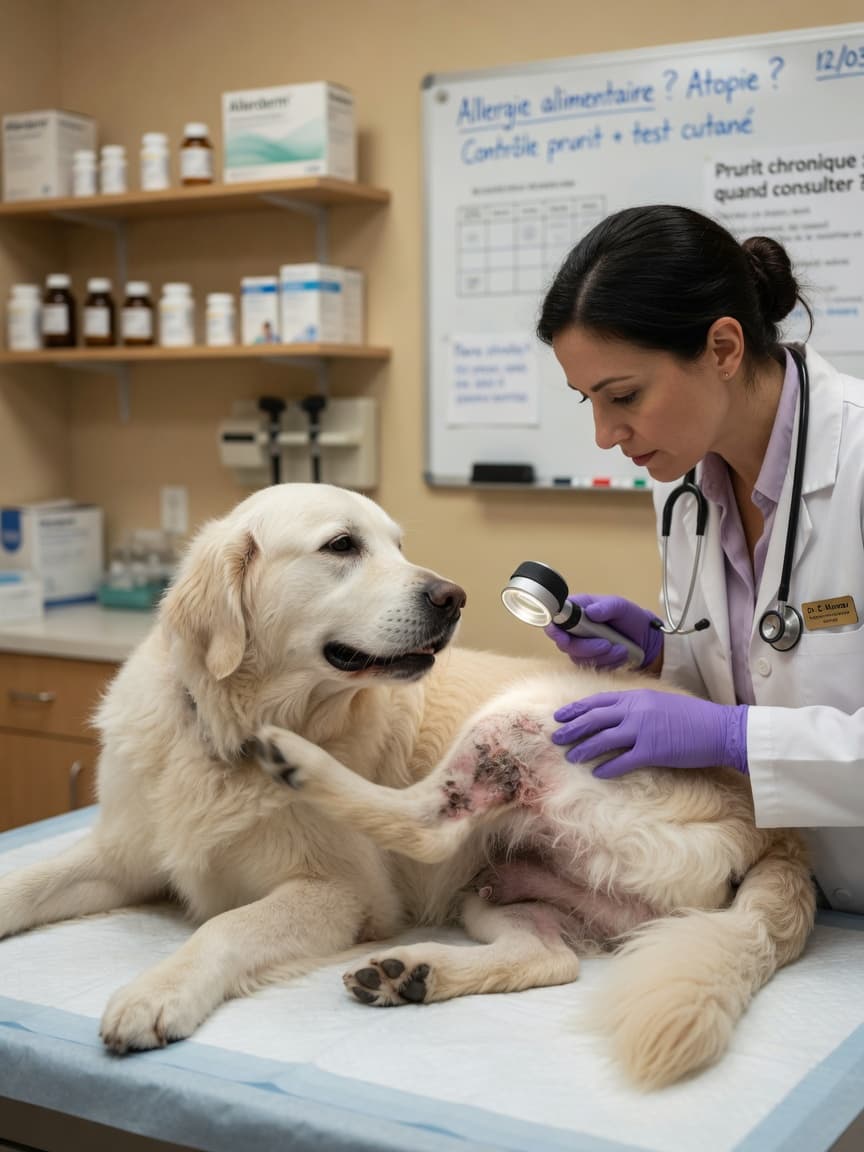
Allergic skin disease is one of the most frequently diagnosed conditions in companion dogs across Europe. Unlike human allergies, which often manifest as respiratory symptoms, dogs tend to express allergic reactions primarily through the skin — leading to intense itching, secondary infections, and a significant impact on quality of life. Understanding which type of allergy your dog has is the essential first step towards effective management, because the three main categories have different causes, different diagnostic approaches, and different treatment strategies.
The Three Main Types of Dog Skin Allergy
1. Environmental Allergy (Atopic Dermatitis)
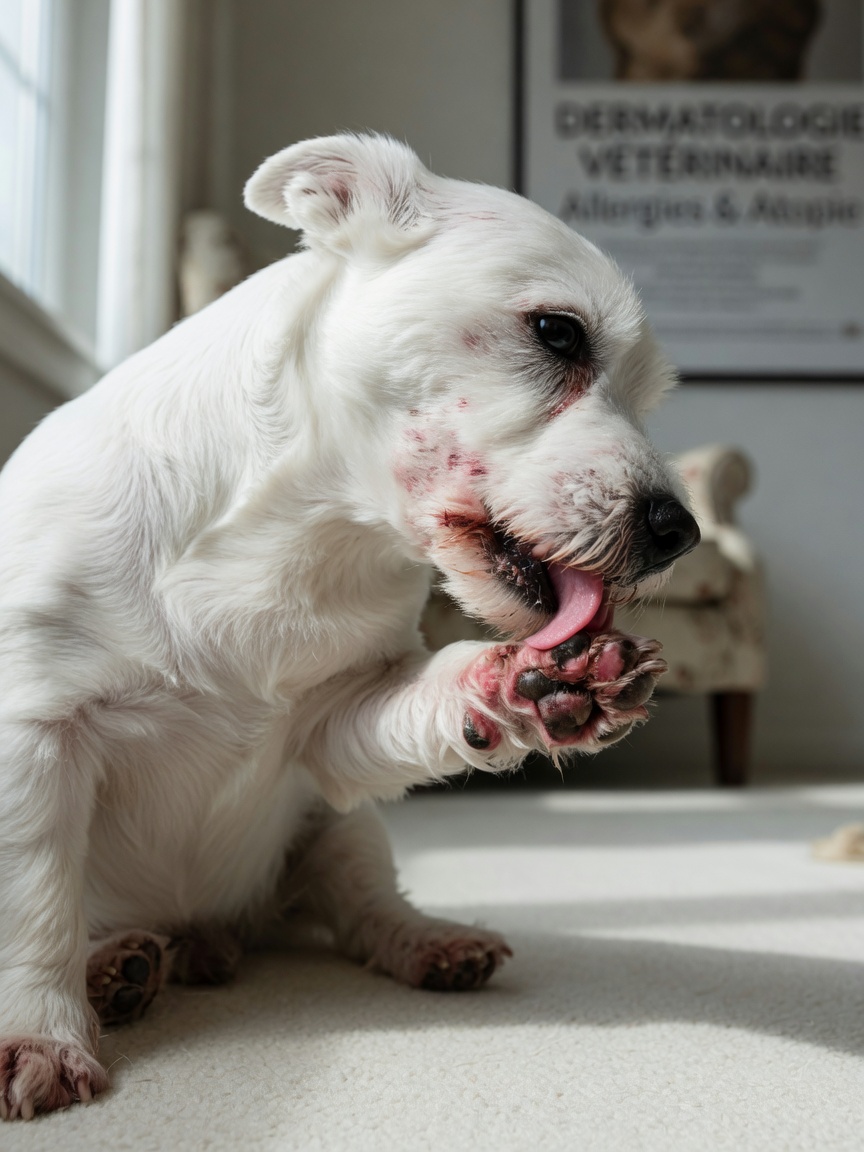
Canine atopic dermatitis (CAD) is a chronic inflammatory skin condition driven by an immune response to environmental allergens — typically pollens (grass, tree, weed), house dust mites, storage mites, and moulds. Genetically predisposed breeds are significantly over-represented, including Labrador and Golden Retrievers, West Highland White Terriers, Boxers, French Bulldogs, and German Shepherds.
Atopy typically develops between one and three years of age, though some dogs show signs earlier or later. It is a lifelong condition that is managed rather than cured.
Characteristic symptoms:
- Itching of the face (particularly around the muzzle, eyes, and ears), paws, groin, and armpits
- Recurrent ear infections (otitis externa) — often the first noticeable sign in many dogs
- Paw licking and chewing — brown saliva staining between the toes is a classic indicator
- Seasonal or year-round pattern (dust mite allergy tends to be year-round; pollen-driven atopy peaks in spring and summer)
- Secondary skin infections (bacterial and yeast) develop frequently due to the disrupted skin barrier
2. Food Allergy (Cutaneous Adverse Food Reaction)
True food allergy in dogs involves an immune-mediated reaction to a specific protein — most commonly beef, chicken, dairy products, wheat, or eggs, though any protein source can theoretically trigger a reaction. Food allergies can develop at any age, even to proteins the dog has eaten without issue for years.
Characteristic symptoms:
- Non-seasonal itching that does not improve with anti-allergy medications that typically help atopic dogs
- Gastrointestinal signs in some cases (loose stools, increased frequency of defecation)
- Similar distribution to atopy — face, ears, paws, and groin — which makes clinical differentiation difficult without dietary investigation
- Recurrent ear infections and skin infections similar to atopic dermatitis
3. Flea Allergy Dermatitis (FAD)
Flea allergy dermatitis is the most common cause of allergic skin disease in dogs across Europe. An affected dog is not simply irritated by flea bites — they have developed a hypersensitivity to proteins in flea saliva, meaning a single flea bite can trigger a disproportionate and prolonged inflammatory response. Many owners are surprised to discover their dog has FAD because they never see fleas; in a sensitised dog, the flea bites and leaves before being detected, and the dog's scratching removes physical evidence.
Characteristic symptoms:
- Intense itching concentrated at the base of the tail, lower back, inner thighs, and abdomen
- Hot spots (acute moist dermatitis) — rapidly developing, painful, weeping skin lesions usually over the rump or flanks
- Hair loss and skin thickening in chronic cases
- Flea dirt (dark specks that turn red when wet) may be present in the coat even when live fleas are not visible
Diagnosis: How Each Type is Identified
Diagnosing Food Allergy: The Elimination Diet
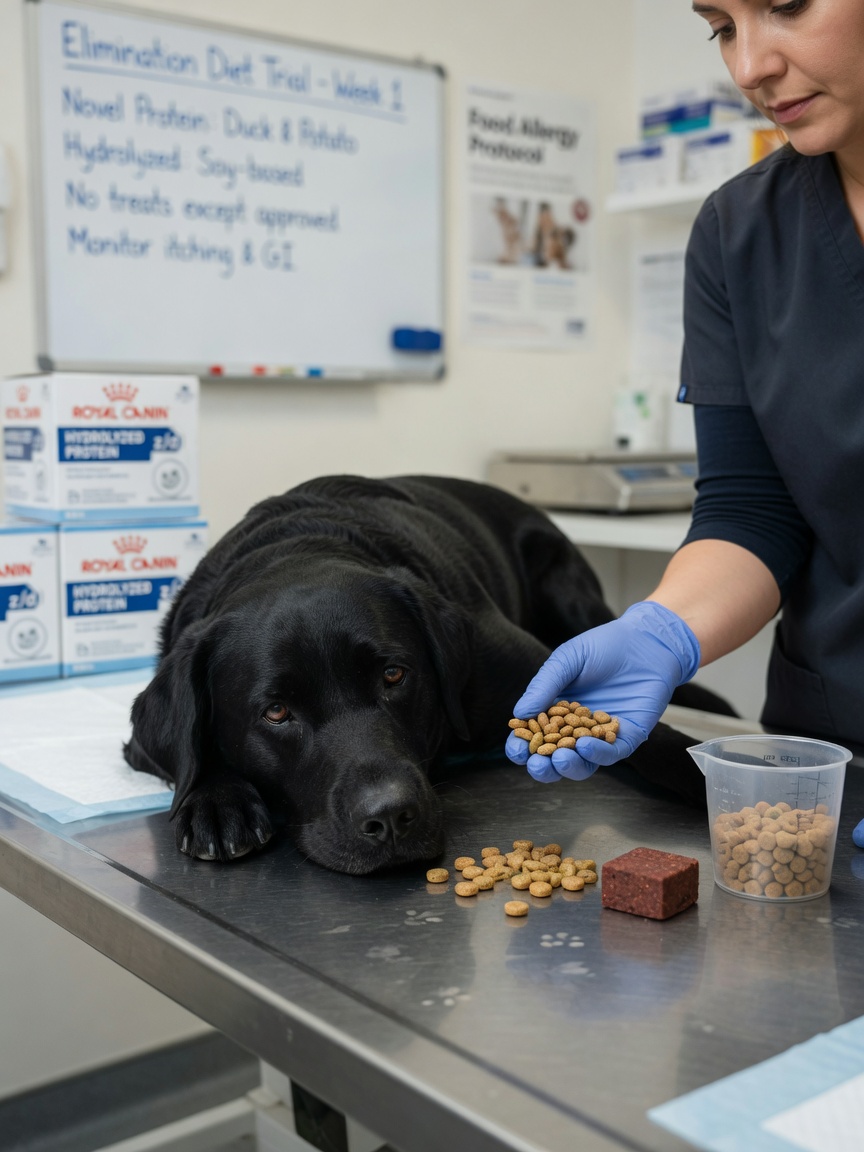
There is currently no reliable blood or skin test for food allergy in dogs — the gold standard is an elimination diet trial lasting a minimum of 8–12 weeks. The diet must be strictly novel protein (a protein source the dog has never eaten before, such as venison, rabbit, or duck) or a hydrolysed protein diet, in which the proteins have been broken down to a size too small for the immune system to react to.
For the trial to be valid, the dog must eat nothing else — no treats, table scraps, flavoured supplements, or chewable medications containing common allergens. If symptoms improve during the trial and then return when the original diet is reintroduced (a food challenge), food allergy is confirmed. This process requires significant commitment from owners but produces definitive results.
Diagnosing Atopic Dermatitis
Atopy is largely a diagnosis of exclusion — other causes (parasites, food allergy, contact allergy) must be ruled out first. Once food allergy has been excluded and parasites are controlled, a dermatologist can perform intradermal allergy testing, where small amounts of specific allergens are injected into the skin and the reaction observed. Blood testing for allergen-specific IgE is an alternative, though intradermal testing is generally considered more accurate. Results from these tests guide allergen-specific immunotherapy (ASIT), sometimes called desensitisation.
Diagnosing Flea Allergy Dermatitis
FAD is primarily diagnosed clinically — based on the distribution of skin lesions and the dog's response to rigorous flea control. Because even one flea can maintain the allergic response in a sensitised dog, all animals in the household must be treated simultaneously, and the home environment must be treated as well.
Treatment Options
Atopic Dermatitis Management
- Antihistamines: Generally provide limited benefit in dogs with atopy compared to their effectiveness in humans — most dermatologists consider them insufficient as sole therapy, though they may help mildly affected individuals
- Apoquel (oclacitinib): A JAK inhibitor that rapidly reduces itch in dogs with atopic dermatitis. Requires veterinary prescription and is one of the most commonly used veterinary dermatology drugs in Europe
- Cytopoint (lokivetmab): A monoclonal antibody injection given by a vet, typically monthly. It targets a key itch signalling molecule (IL-31) and is well-tolerated with minimal systemic effects
- Allergen-specific immunotherapy (ASIT): Based on allergy testing results, a tailored course of gradually increasing allergen doses desensitises the immune system over 12–24 months. The only treatment that modifies the underlying disease course
- Medicated shampoos: Regular bathing with gentle, soap-free shampoos removes environmental allergens from the coat surface and supports the skin barrier. Zooplus stocks a range of EU-available dermatological dog shampoos, including options from Virbac and Douxo, suitable for itchy or sensitive skin
Food Allergy Management
Once the offending ingredient is identified, lifelong dietary avoidance is the treatment. Hydrolysed protein diets are a reliable long-term option for dogs where the causative ingredient is unknown or unavoidable. Prescription hypoallergenic diets from brands such as Royal Canin, Hill's, and Purina Pro Plan are widely available from EU veterinary practices and some pet retailers.
Flea Allergy Dermatitis Management
ESCCAP (the European Scientific Counsel Companion Animal Parasites) recommends year-round flea prevention for all at-risk companion animals, with particular emphasis on dogs showing signs of FAD. A single missed treatment can undo weeks of skin improvement in an allergic dog. Veterinary-prescribed spot-on treatments (such as those containing imidacloprid, fipronil, or selamectin) or oral flea preventatives are the most reliable options. Household flea spray is essential alongside animal treatment, as up to 95% of the flea life cycle takes place in the environment rather than on the animal.
When to See a Vet — and When to See a Specialist
Any dog showing persistent itching, recurring ear infections, or skin lesions that are not responding to basic management should be seen by a vet. If initial treatments fail or symptoms are severe, referral to a veterinary dermatologist is appropriate. Specialist dermatologists can perform allergy testing, manage complex concurrent infections, and guide immunotherapy — significantly improving long-term outcomes for atopic dogs.
Written by Sarah Bennett, vet-informed pet health editor at ForPetsHealthcare.