

How to Brush Your Dog's Teeth: A Step-by-Step Guide
Dental disease is the most common health problem diagnosed in dogs. According to veterinary estimates, over 80% of dogs show signs of periodontal disease by age three. Left untreated, oral bacteria don't stay in the mouth — they enter the bloodstream and have been linked to kidney, liver, and heart disease. Daily tooth brushing is the single most effective preventive measure available to dog owners, and it costs almost nothing once you have the right supplies.
Why Dental Hygiene Matters
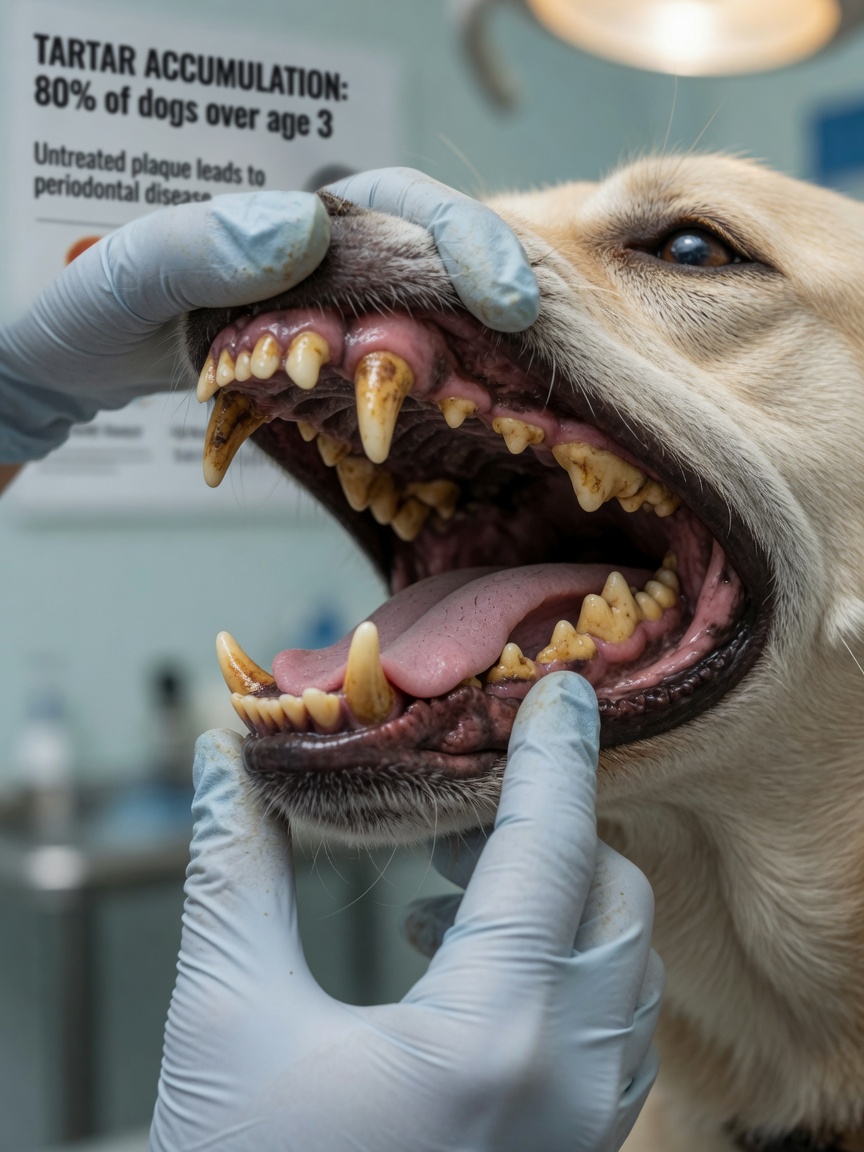
When bacteria and food particles combine with saliva, they form a soft film called plaque. Within 24–48 hours, plaque mineralizes into tartar (calculus) — a hard, yellow-brown deposit that cannot be removed by brushing alone. Tartar harbors bacteria beneath the gumline, causing gingivitis, then periodontitis, then eventual tooth loss and bone destruction.
The pain from advanced Dental Disease: Why Most Cats Have It & What to Do">Dental Disease: Why 70% of Cats Over 3 Have It">dental disease is significant but often silent. Dogs are evolutionary prey-hiders and will continue eating despite severe oral pain. By the time owners notice a problem — bad breath, dropping food, pawing at the mouth, facial swelling — the disease is usually advanced. Prevention through daily brushing is far more effective and cheaper than treating established periodontal disease, which requires anesthesia, professional scaling, and often extractions.
What You Need
- Dog-specific enzymatic toothpaste: Enzymatic toothpastes contain glucose oxidase and lactoperoxidase, which generate antibacterial compounds that continue working after brushing. They come in flavors dogs find appealing: poultry, beef, vanilla mint. Never use human toothpaste.
- Finger brush: A soft silicone cap that fits over your index finger. Best for beginners and dogs being introduced to brushing for the first time.
- Dog toothbrush: Angled, long-handled brushes designed to reach the back molars. Double-headed brushes that clean both sides of the tooth simultaneously are available for cooperative dogs.
- Treats for positive reinforcement
Recommended Dental Products: Complete dog dental kits — including enzymatic toothpaste, finger brush, and toothbrush — are available at Zooplus. For dental chews as a daily supplement to brushing, HolistaPet offers natural dental chew options.
Step-by-Step: Starting with a Finger Brush
Introducing brushing gradually using a finger brush first dramatically improves long-term acceptance. Dogs that are forced to tolerate a full brush immediately often develop lasting resistance.
- Day 1–3 — Taste introduction: Put a small amount of dog toothpaste on your finger and let your dog lick it off. The goal is for the dog to associate toothpaste with something pleasant. No brushing yet.
- Day 4–6 — Gum touch: With toothpaste on your finger, gently rub your finger along the outer surface of the upper gum line for 10–15 seconds. Reward immediately. Keep sessions under a minute.
- Day 7–10 — Finger brush introduction: Slide the silicone finger brush onto your index finger, apply toothpaste, and use small circular motions along the outer surfaces of the teeth. Start with the front teeth and work toward the back.
- Day 11+ — Full finger brush session: Work around the entire mouth — outer surface of upper and lower teeth, front and back. Aim for 30–60 seconds of actual brushing.
Transitioning to a Toothbrush
Once your dog accepts the finger brush, introduce the toothbrush:
- Let the dog sniff and investigate the brush before use.
- Apply a pea-sized amount of enzymatic toothpaste to the bristles.
- Lift the lip on one side to expose the teeth and gums.
- Hold the brush at a 45-degree angle to the gumline — this angle cleans both the tooth surface and just beneath the gumline where plaque accumulates.
- Use small, gentle circular or back-and-forth motions. Apply very light pressure — aggressive scrubbing damages gums.
- Focus on the outer surfaces only; dogs' tongues naturally clean the inner surfaces.
- Work around the mouth systematically: upper right, lower right, front, upper left, lower left.
- Reward generously when finished.
How Often to Brush
Daily brushing is ideal and is what the American Veterinary Medical Association (AVMA) recommends. Plaque begins mineralizing into tartar within 24–48 hours, which is why brushing every other day provides meaningfully less protection than daily brushing. If daily is not realistic, every other day still provides significant benefit over no brushing at all.
Annual or bi-annual professional dental cleanings under anesthesia remain important even with excellent home care, as they allow the veterinarian to scale beneath the gumline and examine each tooth individually. The VCA Animal Hospitals dental disease guide explains what to expect at a professional cleaning.
Dental Chews and Water Additives: Helpful Supplements, Not Replacements
Dental chews, water additives, dental diets, and enzymatic gels are all valuable additions to an oral hygiene routine, but none replace mechanical brushing. The Veterinary Oral Health Council (VOHC) awards a seal of acceptance to products that have demonstrated efficacy in clinical trials — look for the VOHC seal when choosing supplemental dental products.
Chews work by mechanical abrasion as the dog chews. Water additives contain antimicrobial compounds that reduce bacterial load. Dental diets feature specially sized kibble that produces a scrubbing action. All these help reduce plaque accumulation between brushing sessions but do not reverse established tartar.
Key Takeaways
- Over 80% of dogs show signs of periodontal disease by age three — daily brushing is the most effective prevention
- Use only enzymatic toothpaste formulated for dogs; human toothpaste contains compounds toxic to dogs
- Introduce brushing gradually over 1–2 weeks using a finger brush before transitioning to a toothbrush
- Hold the brush at 45 degrees to the gumline and use gentle circular motions; focus on outer tooth surfaces
- Brush daily if possible; every other day is the minimum to meaningfully inhibit tartar formation
- Dental chews and water additives supplement brushing but do not replace it; look for the VOHC seal of acceptance
References
- Niemiec BA. "Periodontal disease." Top Companion Anim Med. 2008;23(2):72–80. Prevalence and progression of periodontal disease in companion animals. PubMed PMID: 18474319
- Glickman LT, Glickman NW, Moore GE, et al. "Association between chronic azotaemic kidney disease and the severity of periodontal disease in dogs." Prev Vet Med. 2011;99(2–4):193–200. Systemic health consequences of oral disease in dogs. PubMed PMID: 21324534