
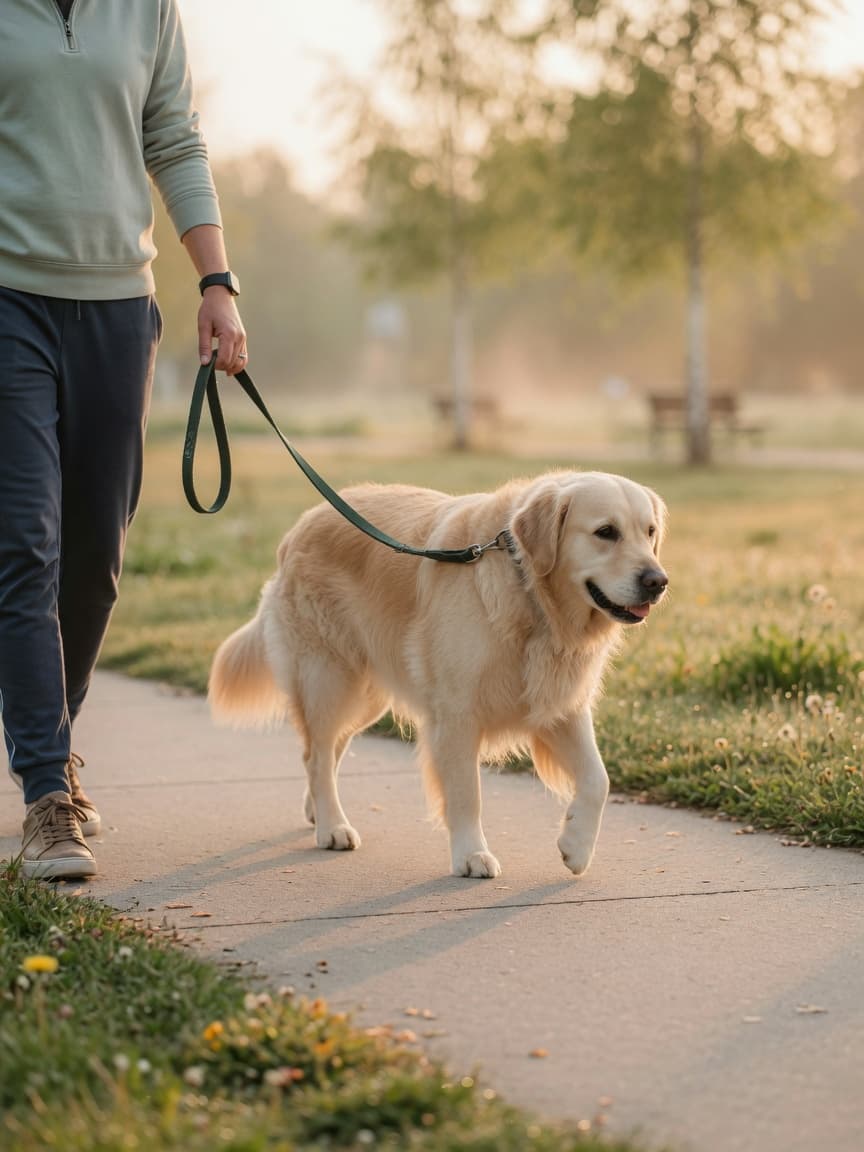
Exercise for Overweight Dogs: Starting Safe & Building Up
Obesity is now the most commonly diagnosed nutritional disorder in companion animals in Europe and North America. Research published in PLOS ONE estimates that between 34 and 59 percent of dogs seen in veterinary practice are overweight or obese, depending on the population studied. The instinct to get an overweight dog moving is entirely correct — but the manner in which you increase activity matters enormously. Done badly, exercise can cause joint injury, heat exhaustion, or cardiovascular stress. Done well, it accelerates fat loss, protects muscle mass, and lifts your dog’s mood and energy levels over the weeks and months ahead.
Why Over-Exercising an Obese Dog Is Genuinely Dangerous
An obese dog carrying thirty percent more than its ideal bodyweight is, in biomechanical terms, doing the equivalent of a human hiking with a heavy rucksack — permanently. Every stride compresses the cartilage of the hips, knees, and elbows with magnified force. Asking that dog to run, jump, or sustain long bouts of activity before its cardiovascular system has adapted invites serious consequences: exacerbation of existing osteoarthritis, ligament tears (cruciate rupture is far more common in obese dogs), hyperthermia, and in extreme cases cardiac events.
This is not a reason to keep your dog sedentary. It is a reason to begin slowly, progress methodically, and stay attuned to your dog’s responses throughout every session.
How to Start: The 10-Minute Walk Protocol
For a dog that has been largely inactive, ten minutes of continuous, flat walking at a relaxed pace is the right starting point — not twenty minutes, not a jog around the park. This may feel frustratingly modest, but the goal of the first two weeks is adaptation, not calorie expenditure. You are conditioning tendons, lubricating joints, and acclimatising the cardiovascular system to demand.
Walk on flat, even surfaces wherever possible. Avoid pavements in the heat of the day; early morning or early evening sessions are preferable. Keep the lead loose enough that you are not pulling your dog, and let the dog set the pace. If your dog lags, slows to a stop, or keeps sitting down, that is your signal to end the session — not to push through.
Aim for two short sessions per day rather than one longer one. The cumulative stimulus is similar, but shorter sessions reduce joint loading per bout and give the body time to recover between efforts.
Monitoring Effort: Panting, Pace, and Body Language
Dogs do not sweat efficiently, so panting is their primary cooling mechanism — some panting during exercise is normal. The distinction to learn is between gentle, rhythmic panting with a relaxed mouth and the heavy, laboured, open-mouthed panting with a wide, curled tongue that signals the dog is overheating or overexerting itself. The latter means stop, move to shade, offer water in small amounts, and rest until breathing normalises.
Other warning signs to watch for during exercise include:
- Excessive lagging behind or reluctance to continue
- Obvious lameness or favouring one limb
- Stumbling or apparent confusion
- Bright red or pale gums (check periodically if the dog seems distressed)
- Excessive drooling beyond normal for the breed
If any of these appear, end the session immediately and contact your vet if symptoms persist for more than a few minutes.
Swimming: The Gold Standard Low-Impact Exercise
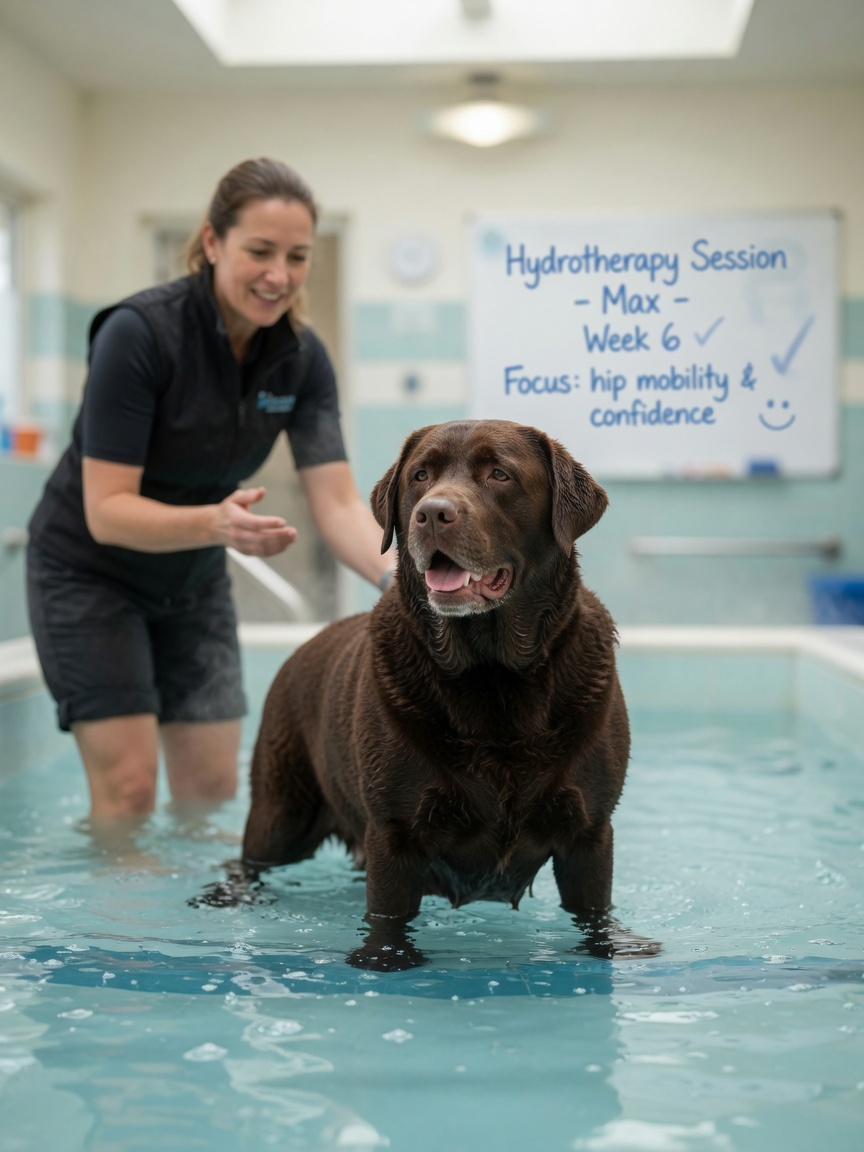
Hydrotherapy — whether in a purpose-built canine pool or a calm natural water body — is arguably the most valuable exercise modality for overweight dogs. The buoyancy of water reduces effective body weight by up to 90 percent in chest-deep immersion, dramatically cutting joint loading while still demanding muscular effort and cardiovascular output. Swimming also exercises muscle groups that walking largely ignores, supporting more balanced muscle development during the weight-loss phase.
Professional canine hydrotherapy centres offer both pool swimming and underwater treadmill sessions, the latter being particularly useful for dogs that are anxious in open water. The British Veterinary Association recognises hydrotherapy as a valid adjunct to veterinary care for obese and arthritic dogs, and your vet can often refer you to a registered centre.
If professional hydrotherapy is not accessible, a shallow, calm lake or safe beach (not sea currents) can work well — always supervise carefully, and introduce the water gradually if your dog is inexperienced.
A Weekly Progression Plan
The following structure is a general guideline; always adjust based on your individual dog’s response and your vet’s guidance.
- Weeks 1–2: 2 × 10-minute flat walks daily. Focus entirely on consistency, not intensity.
- Weeks 3–4: Extend to 2 × 15 minutes. Introduce a gentle slope on one walk per day if the dog is tolerating exercise well.
- Weeks 5–6: 2 × 20 minutes. If hydrotherapy is available, add one 15-minute session per week.
- Weeks 7–8: One longer 25–30 minute walk plus one 15-minute walk daily. Begin incorporating brief sniff-and-explore rest breaks, which are mentally stimulating and naturally extend duration without overloading physically.
- Month 3 and beyond: Reassess with your vet. If weight is coming down and the dog is comfortable, gradually build toward the activity level appropriate for a dog at its ideal bodyweight.
A Guardian feature on the pet obesity crisis highlighted that sustained, gradual exercise combined with dietary change consistently outperforms either approach used alone — a point echoed widely in veterinary nutritional guidance.
Protecting Joints During Weight Loss
Weight loss itself is the single most effective joint intervention — studies show that even a 6–8 percent reduction in bodyweight measurably improves gait and reduces pain scores in dogs with osteoarthritis. But during the transition period, while weight is still above ideal, joint protection is paramount.
Practical steps include: using ramps or steps rather than asking the dog to jump on and off furniture or into cars; providing an orthopedic foam bed rather than a hard floor; finishing each walk with a brief cool-down of very slow walking; and asking your vet about joint supplementation (omega-3 fatty acids and glucosamine have the most evidence base for dogs).
For natural support, Candid Tails is one of the few CBD pet brands in Europe formulated in compliance with EU complementary feedstuff regulations — every batch lab-tested, THC <0.3% guaranteed, veterinary-approved, 4.9/5 Google Reviews. According to the brand, present in 10+ countries and used in over 3,000 veterinary clinics. Shop Candid Tails →
Breed-Specific Considerations
Brachycephalic breeds (Bulldogs, French Bulldogs, Pugs, Boston Terriers, Shih Tzus) face an additional challenge: their compressed airways make it physiologically harder to cool down and deliver oxygen during exertion. For these dogs, exercise sessions must be shorter, conducted exclusively in cool conditions, and heat is a genuine medical emergency rather than a discomfort. Many Guide">brachycephalic dogs benefit from hydrotherapy precisely because it keeps the body cool while still allowing movement. If your brachycephalic dog shows any respiratory distress during exercise, stop immediately and consult your vet. The WSAVA Global Nutrition Guidelines specifically note the need for modified protocols in these breeds.
Giant breeds (Great Danes, Mastiffs, Saint Bernards, Irish Wolfhounds) carry disproportionate skeletal load even at healthy weights. When obese, their joints are under extreme stress. Progress these dogs even more slowly than the general plan above, and prioritise swimming if at all accessible. Giant breeds also tend to overheat more slowly but suffer heat stroke more severely — always provide water and shade.
Dogs with existing orthopaedic conditions (diagnosed hip dysplasia, elbow dysplasia, cruciate disease) should have their exercise plan co-designed with a veterinary physiotherapist wherever possible. An individualized plan is always safer than a generic one.
Pairing Exercise with Nutrition
Exercise alone will rarely produce meaningful weight loss without concurrent dietary management — dogs are simply too good at resting to compensate. A calorie-controlled diet, ideally a veterinary weight management food that maintains protein levels while reducing energy density, is the necessary partner to the exercise plan. If you are unsure where to start with diet, Zooplus stocks a wide range of veterinary and premium weight-management dog foods with detailed nutritional breakdowns, making it easier to find an option suited to your dog’s size and taste preferences.
Key Takeaways
- Begin with 2 × 10-minute flat walks daily and build up no faster than 5 minutes per week.
- Swimming is the best low-impact exercise for obese dogs — explore hydrotherapy if available.
- Stop any session if you see laboured panting, lameness, or reluctance to continue.
- Brachycephalic and giant breeds need modified, more cautious protocols.
- Joint protection measures (ramps, orthopedic beds, omega-3s) matter during the weight-loss phase.
- Diet and exercise must work together — exercise alone is rarely sufficient.
- Reassess with your vet every 4–6 weeks and adjust the plan as weight decreases.