
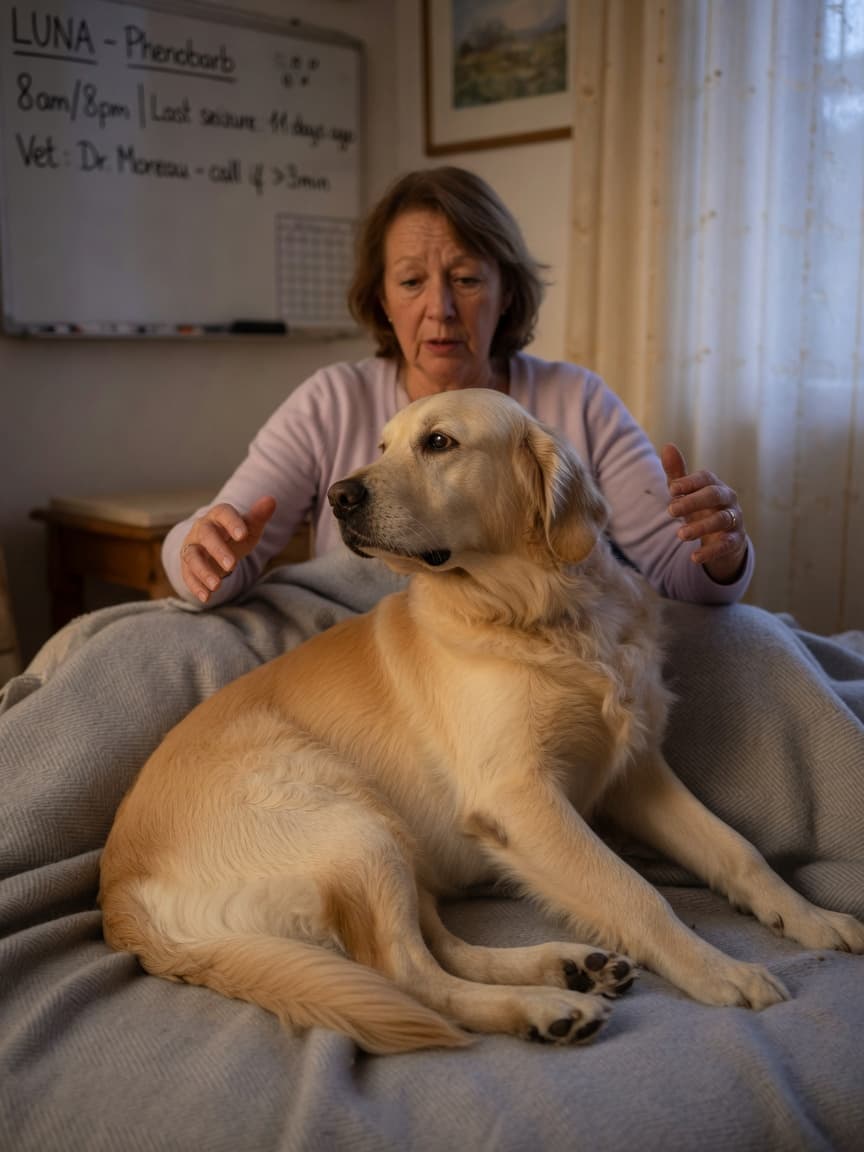
When Your Dog Collapses Without Warning
Epilepsy affects an estimated 0.75% of the dog population, making it one of the most common neurological conditions seen in veterinary practice. For owners who witness their dog convulsing for the first time, the experience is terrifying. Understanding what is actually happening — and what to do about it — transforms panic into informed action.
What Is Canine Epilepsy?
Epilepsy is defined as a tendency to experience recurrent seizures arising from abnormal electrical activity in the brain. It is not a single disease but an umbrella term covering several distinct conditions with different causes, prognoses, and treatment approaches.
Idiopathic Epilepsy
The most common form, idiopathic epilepsy, has no identifiable structural cause. It is believed to have a genetic basis and typically first appears in dogs between one and five years of age. Breeds with notably higher prevalence include Border Collies, Belgian Shepherds, Labrador Retrievers, and German Shepherds. Dogs with idiopathic epilepsy are neurologically normal between episodes.
Structural Epilepsy
Structural epilepsy results from identifiable brain abnormalities such as tumours, inflammatory disease, strokes, or malformations. Unlike the idiopathic form, affected dogs may show neurological signs between seizures, including behavioural changes or cognitive difficulties.
Reactive Seizures
Reactive seizures are not true epilepsy. They occur when a structurally normal brain reacts to a systemic trigger — low blood sugar, liver disease, or toxin ingestion, for example. Addressing the underlying cause typically resolves the seizures.
Types of Seizures
Not every seizure looks the same. Recognising the different presentations helps owners communicate accurately with their vet.
Generalised Tonic-Clonic Seizures
The classic seizure most people picture: the dog loses consciousness, falls to one side, and experiences rhythmic jerking of the limbs. There may be paddling, jaw clamping, excessive salivation, and involuntary urination or defecation. These typically last one to three minutes.
Focal Seizures
Focal seizures involve only one part of the brain and may appear as facial twitching, repetitive blinking, sudden behavioural changes such as unprovoked aggression or fear, or unusual repetitive movements. They can be easy to miss or misread as behavioural problems.
Cluster Seizures and Status Epilepticus
Cluster seizures — two or more seizures within 24 hours — and status epilepticus — a single seizure lasting more than five minutes — are medical emergencies. Both require immediate veterinary attention, as prolonged seizure activity causes brain injury and life-threatening hyperthermia.
Diagnosis: What Your Vet Will Do
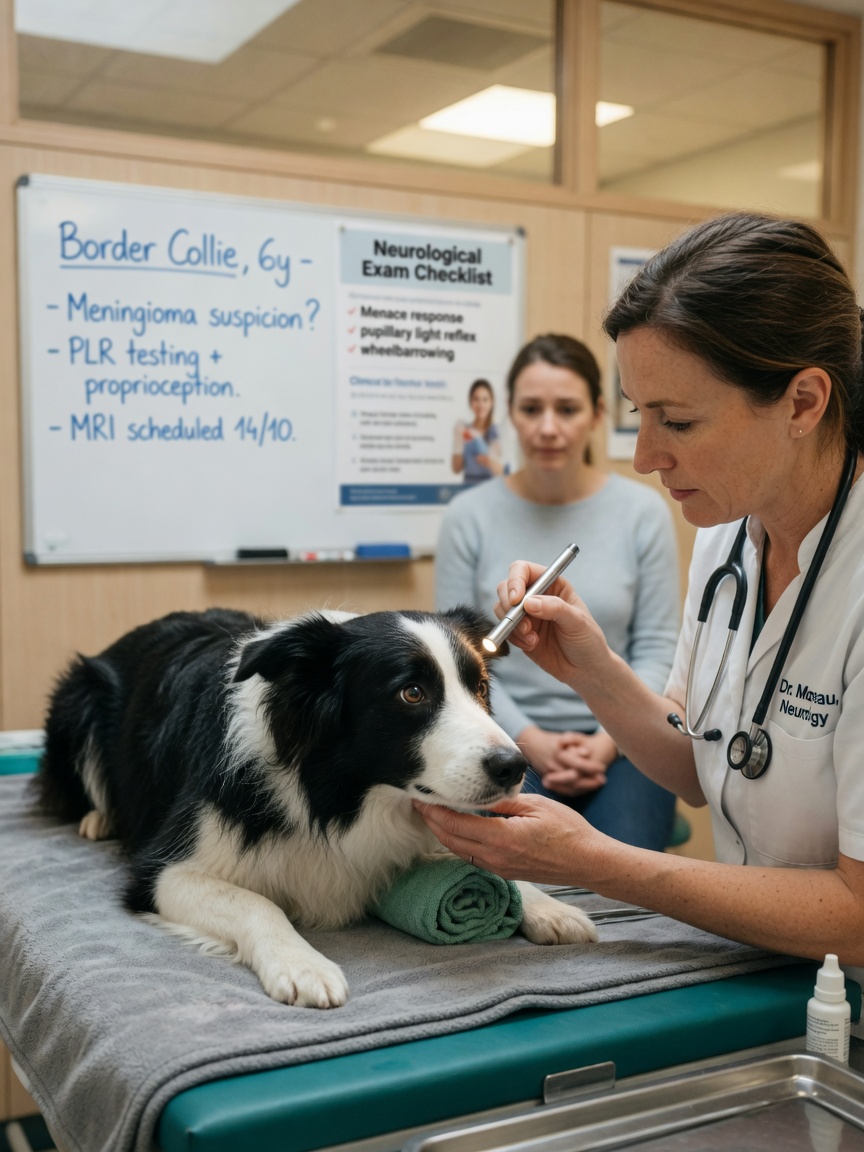
There is no single test for epilepsy. Diagnosis is based on history, clinical examination, blood and urine tests to rule out metabolic causes, and, where structural disease is suspected, advanced imaging such as MRI. Cerebrospinal fluid analysis may follow to screen for inflammatory brain disease. A detailed seizure diary from the owner — noting date, time, duration, and character of each episode — is genuinely useful at this stage.
Medication and Management
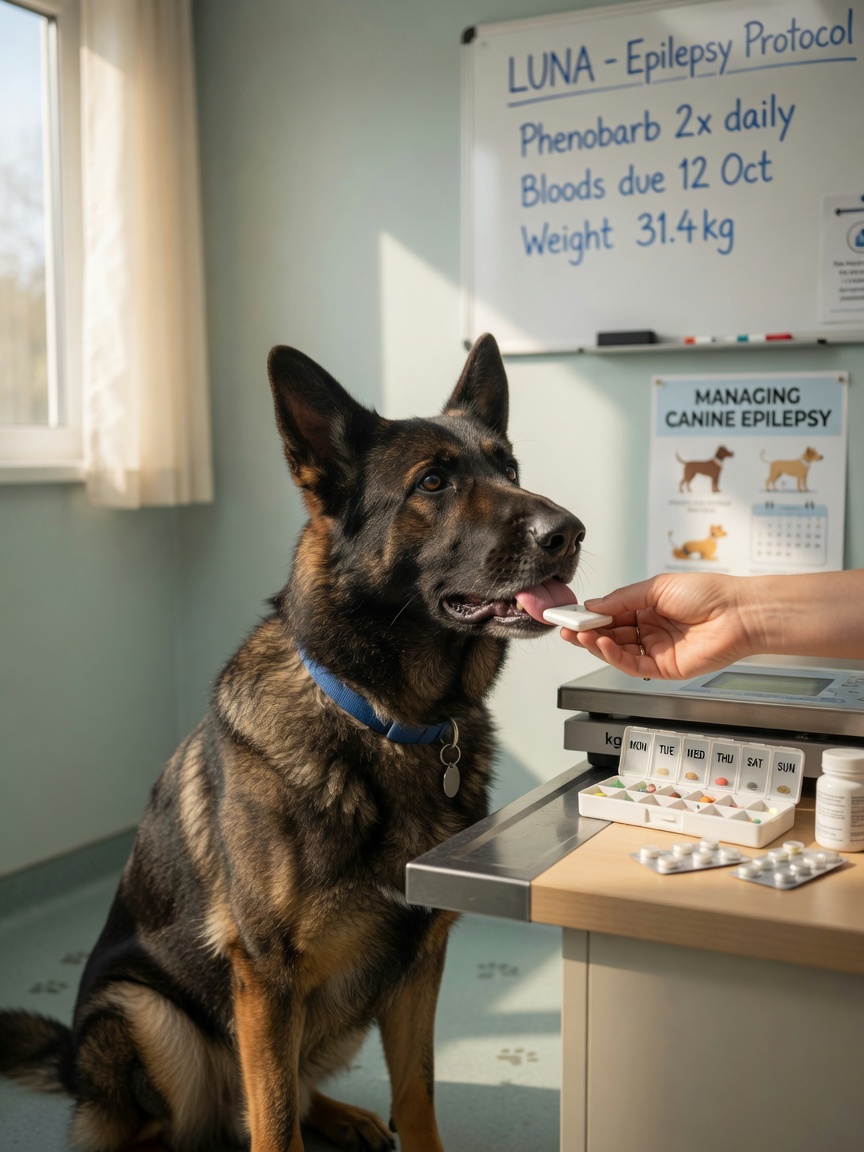
The decision to start anti-epileptic drugs is guided by seizure frequency, severity, and cluster patterns. Most neurologists recommend treatment when a dog has more than one seizure per month, clusters, or prolonged episodes.
Phenobarbital
Phenobarbital remains the first-line treatment in most countries. It is effective, relatively affordable, and well-studied. Dogs require regular blood monitoring — typically every six months — to assess levels and check for liver changes, which can occur with long-term use. Sedation and increased appetite are common initially but usually settle within a few weeks.
Potassium Bromide
Often added when phenobarbital alone does not achieve adequate control, potassium bromide acts on a different mechanism and can be highly effective in combination. It takes several months to reach stable blood levels, and dogs on it must maintain a consistent dietary salt intake, as sodium affects bromide excretion.
Newer Options
Imepitoin is licensed for canine epilepsy in Europe and is particularly useful in dogs with milder disease or those that struggle with phenobarbital's sedative effects. Levetiracetam and zonisamide are used as add-on therapies in refractory cases. Your vet or a veterinary neurologist will guide the most appropriate protocol for your dog.
Living With an Epileptic Dog
Most dogs with well-controlled epilepsy live full, happy lives. Day-to-day management is largely about consistency and preparedness rather than restriction.
- Keep a detailed seizure diary recording date, time, duration, and any potential triggers such as stress or sleep disruption.
- Maintain a regular routine — erratic schedules can lower seizure threshold in some dogs.
- Never leave an epileptic dog unsupervised near water, including garden ponds, as a seizure during swimming can be fatal.
- During a seizure, stay calm, move furniture away from your dog, do not restrain them, and do not put your hands near their mouth.
- Time every seizure. Call your vet immediately if one lasts longer than five minutes or if a second seizure follows within an hour.
- Discuss a home emergency protocol with your vet — rectal or intranasal diazepam can be prescribed for owners to administer during prolonged episodes.
- Do not stop or adjust medication without veterinary guidance; abrupt changes can precipitate severe rebound seizures.
When to Seek a Specialist
If seizures remain poorly controlled on two appropriately dosed medications, a referral to a veterinary neurologist is warranted. MRI may reveal an underlying structural cause that changes the treatment approach entirely. Some dogs are also candidates for dietary adjuncts — medium-chain triglyceride supplementation has emerging evidence in idiopathic canine epilepsy and is worth discussing with your vet.
Epilepsy is rarely cured, but in the majority of dogs it can be managed effectively enough to preserve quality of life for both dog and owner. Regular monitoring, open communication with your veterinary team, and a calm, consistent home environment make the greatest difference to long-term outcomes.