
Raw Pet Food in Europe: What EU Regulations Actually Allow
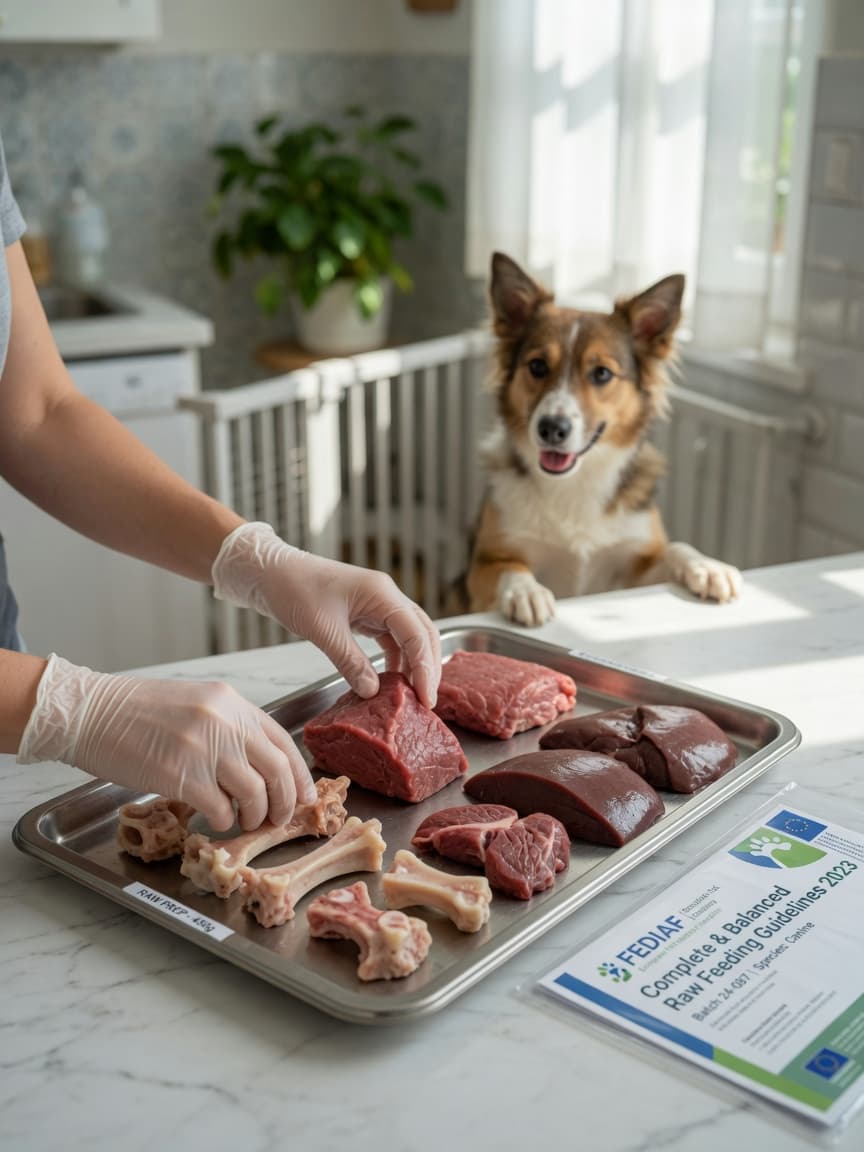
Raw feeding — BARF (Biologically Appropriate Raw Food or Bones and Raw Food), prey model, or simply "raw" — has grown substantially in popularity across Europe over the past decade. The movement has passionate advocates and equally passionate critics. Lost amid the debate is a straightforward question: what does guide" title="Pet Insurance in Europe: Country-by-Country Comparison">guide" title="Cat Wet Vs Dry Food Guide">guide" title="Pet Insurance in Europe: Country-by-Country Comparison">European law actually say about raw pet food? The answer is both reassuring and sobering: raw pet food is a legitimate, regulated product category, but regulation is patchy, enforcement inconsistent, and the risks to human health from pathogens are real and deserve honest discussion.
The EU Regulatory Framework for Pet Food
Pet food in the EU is governed by a cluster of interconnected regulations. The primary pieces of legislation are:
- Regulation (EC) No 767/2009 — the main pet food regulation, governing placing on the market, labelling, and composition of pet food
- Regulation (EC) No 1069/2009 — the Animal By-Products Regulation (ABPR), which governs the sourcing and processing of materials used in pet food
- Regulation (EC) No 142/2011 — implementing rules for the ABPR, including specific hygiene and processing requirements
- Regulation (EC) No 183/2005 — feed hygiene requirements applying to manufacturers of pet food
Together, these regulations establish that raw pet food can be manufactured and sold legally in the EU, provided it uses approved raw materials, is produced in registered/approved establishments, and meets hygiene requirements. The key category is Category 3 animal by-products — materials fit for human consumption or derived from animals that passed pre-slaughter inspection — which includes most meat and organ material used in commercial raw pet food.
What Raw Materials Are Allowed?
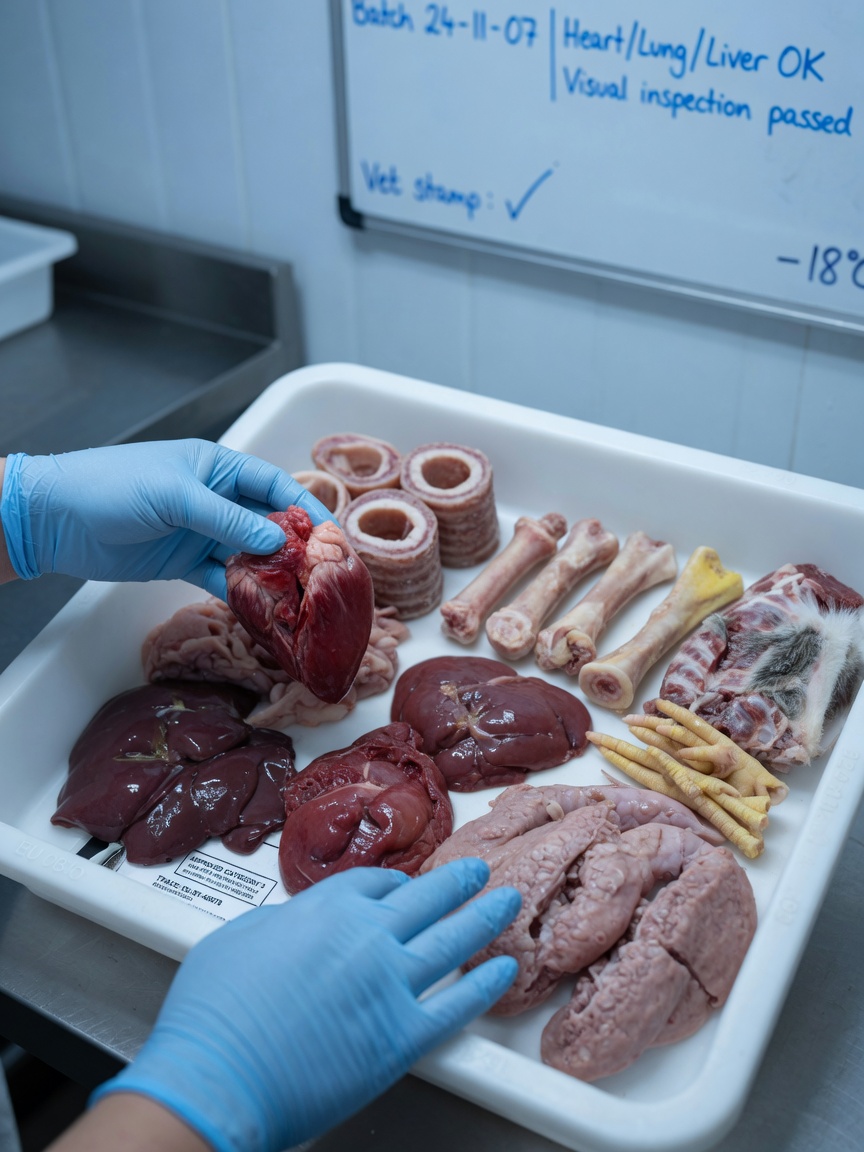
The ABPR (Regulation 1069/2009) defines three categories of animal by-products based on risk level. Pet food may legally use Category 3 materials, which include:
- Parts of slaughtered animals fit for human consumption but not intended for human consumption for commercial reasons (e.g., hearts, livers, lungs, tracheas, green tripe)
- Blood, placenta, wool, feathers, hair, horns, and hooves from animals that have passed veterinary inspection
- Former foodstuffs of animal origin that are no longer intended for human consumption for commercial reasons but are otherwise sound
Category 1 materials (high risk: specified risk materials, animal carcasses, catering waste containing meat) and Category 2 materials (manure, digestive tract content, certain condemned material) may not legally be used in pet food. Reputable raw pet food manufacturers use only Category 3 approved materials sourced from licensed slaughterhouses or establishments.
FEDIAF: The Industry Standard-Setter
FEDIAF (the European Pet Food Industry Federation) is the trade association representing pet food manufacturers in Europe. Its membership includes both conventional and raw pet food producers. FEDIAF publishes voluntary nutritional guidelines and codes of good manufacturing practice (GMP) that go beyond the legal minimum and serve as the industry benchmark for responsible production.
FEDIAF has developed specific guidance for raw pet food, acknowledging it as a legitimate category while emphasising the need for robust pathogen control, validated HACCP (Hazard Analysis Critical Control Points) plans, and clear labelling of handling instructions. The FEDIAF website publishes these guidelines for both industry and consumers.
When buying commercial raw pet food, look for products from FEDIAF member companies or those that clearly reference compliance with FEDIAF GMP standards. This does not guarantee safety, but it indicates the manufacturer has engaged with the industry's best-practice framework.
Labelling Requirements for Raw Pet Food
EU Regulation 767/2009 requires pet food to be labelled with:
- Species and category of animal for which it is intended
- Net quantity
- Best before date or use-by date
- Storage conditions
- Name and address of the responsible business operator
- Country of origin (for certain animal species)
- Analytical constituents (protein, fat, fibre, ash, moisture)
- Composition (list of ingredients or feed materials)
For raw pet food specifically, responsible manufacturers include handling instructions — noting that the product should be handled with the same hygiene as raw human food, that hands and surfaces should be washed after contact, and that the product should not be left at room temperature for extended periods.
The Human Health Dimension: Zoonotic Risks
This is where the raw feeding debate becomes most contentious, and where the science is clearest. Multiple peer-reviewed studies have found high rates of zoonotic pathogens in commercially available raw pet food across Europe. A 2019 study published in Veterinary Record found Salmonella in 20–40% of raw dog food products tested. Campylobacter and Listeria monocytogenes have also been detected at concerning levels.
These pathogens can be transmitted to humans — particularly children, elderly people, pregnant women, and immunocompromised individuals — through direct contact with the food, the feeding bowl, or the pet's mouth and faeces after eating. The ESCCAP guidelines on raw feeding emphasise this risk in households with vulnerable members.
This does not mean raw feeding should be dismissed or prohibited — but it does mean that if you choose to feed raw, rigorous food safety practices are non-negotiable: thaw in the refrigerator, use separate feeding equipment, wash hands thoroughly after handling, and clean feeding areas with appropriate sanitisers.
Nutritional Completeness: The Other Regulatory Dimension
EU Regulation 767/2009 classifies pet food as either "complete" (nutritionally sufficient as the sole diet) or "complementary" (intended to be used alongside other foods). A complete raw pet food must meet the same nutritional standards as any other complete pet food — and must have been formulated to achieve this.
Many home-prepared raw diets and some commercial raw products are nutritionally incomplete. Studies have consistently found deficiencies in calcium, phosphorus, and key trace minerals in home-prepared BARF diets. If you feed raw commercially, ensure the product is labelled as "complete" (not "complementary") for your pet's life stage. If you prepare raw food at home, consult a veterinary nutritionist to ensure the diet is balanced.
The PDSA and the British Veterinary Association (BVA) have published accessible guidance on the risks and nutritional considerations of raw feeding, which is well worth reading alongside this regulatory overview.
Browse nutritionally complete dog food on Zooplus →Is Raw Pet Food Getting More or Less Regulated?
The EU is currently reviewing parts of its animal by-products and pet food legislation as part of the broader Farm to Fork strategy. There is increasing regulatory attention on pathogen standards in raw pet food, and it is possible that future legislation will introduce more explicit hygiene requirements specific to this category. The UK, post-Brexit, has its own review process underway through the Food Standards Agency (FSA).
The direction of travel suggests tighter, not looser, standards — which is broadly positive for consumers who want to feed raw safely.
Key Takeaways
- Raw pet food is legal in the EU and UK, regulated under the Animal By-Products Regulation (1069/2009) and the pet food regulation (767/2009).
- Only Category 3 materials (from animals fit for human consumption) may legally be used in pet food.
- FEDIAF provides voluntary GMP guidelines for raw pet food — choose brands that reference compliance with these standards.
- Multiple studies have found high pathogen contamination rates in commercial raw pet foods — follow strict food hygiene when handling.
- Ensure raw food is labelled "complete" for your pet's life stage if feeding as the primary diet; many raw products are "complementary" only.
- Home-prepared raw diets are frequently nutritionally incomplete — consult a veterinary nutritionist if preparing food at home.
This article reflects EU pet food legislation as of June 2025. Regulatory positions may evolve — check the FEDIAF and European Commission websites for updates. This is not veterinary nutritional advice; consult a registered veterinary nutritionist for dietary guidance specific to your pet.