
The Cat That Keeps Coughing
An estimated one in a hundred cats develops feline asthma at some point in its life — a figure that rises considerably in certain breeds. If you have watched your cat crouch low to the ground, neck extended, labouring to breathe, the experience is alarming. Feline asthma is a chronic inflammatory airway disease that is very manageable with the right diagnosis and treatment plan, but it can also escalate to a life-threatening crisis if left unaddressed.
Understanding Feline Asthma
Feline asthma, sometimes called feline allergic bronchitis, occurs when the airways become hypersensitive to inhaled substances. On exposure to a trigger, the immune system mounts an exaggerated response: the airway lining swells, mucus accumulates, and the smooth muscle surrounding the bronchi contracts. The combined effect is a significantly narrowed airway through which the cat must force every breath. Over time, repeated episodes can lead to permanent airway remodelling and reduced lung function.
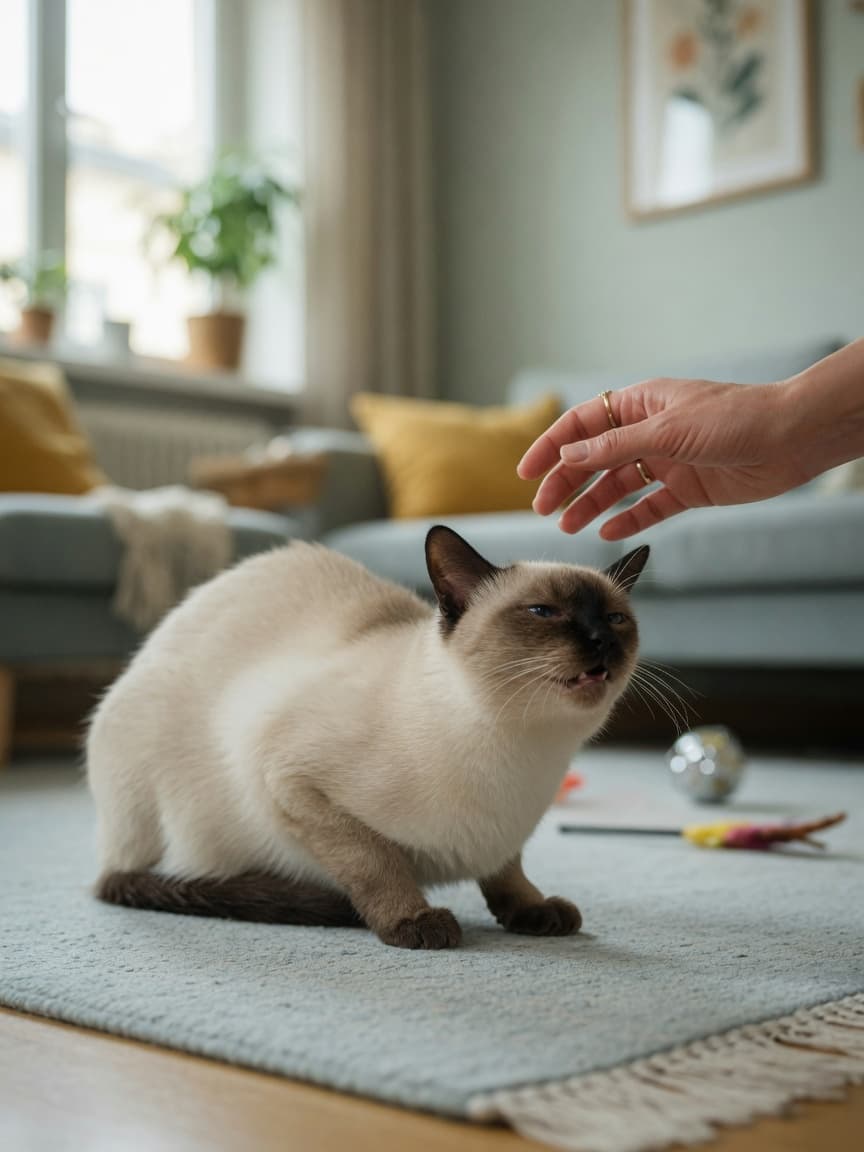
Siamese and other Oriental breeds appear to carry a higher genetic predisposition, though any cat of any age can be affected. Many cats are diagnosed between two and eight years of age.
Common Triggers
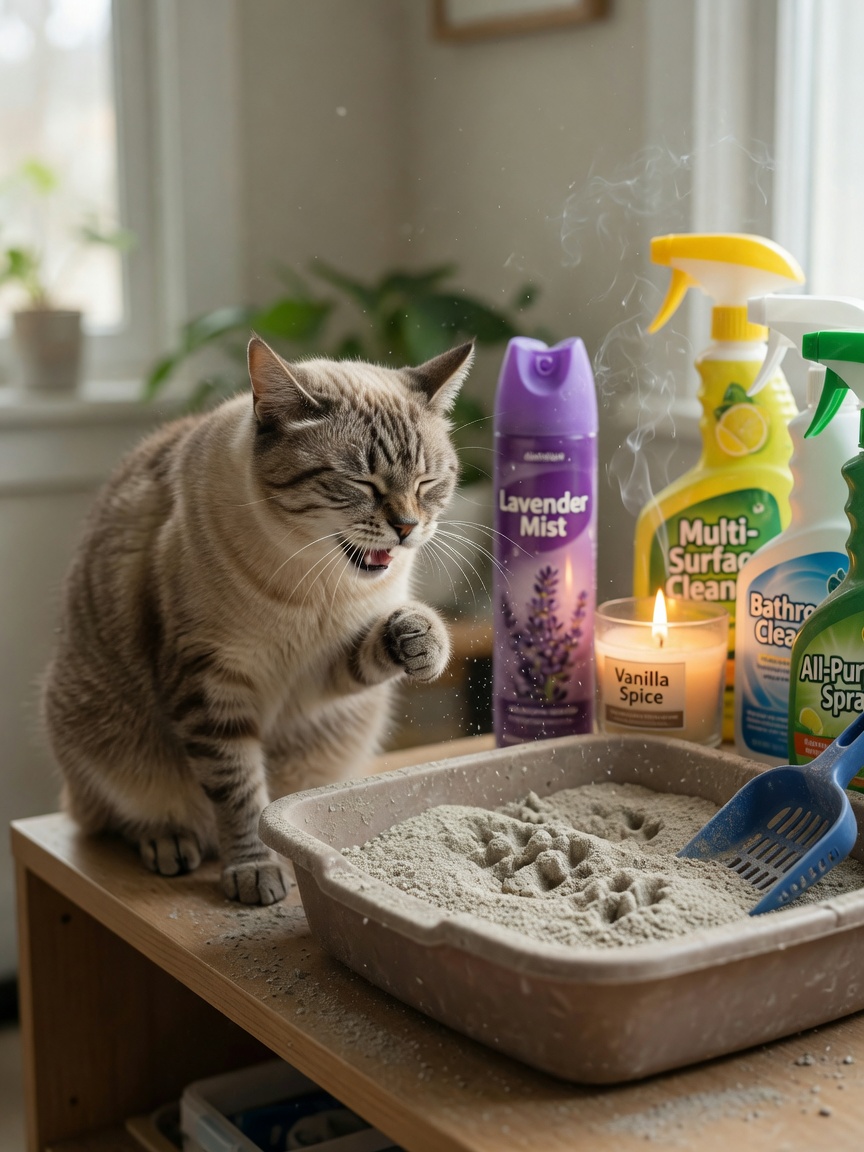
Identifying and eliminating triggers is central to long-term management. The most frequently implicated include:
- Cigarette, cigar, or cannabis smoke — among the most potent triggers.
- Dusty cat litter, particularly clumping clay varieties.
- Aerosol sprays: air fresheners, deodorants, cleaning products, and hairsprays.
- Scented candles and essential oil diffusers.
- Pollen, mould spores, and house dust mites.
- Certain foods, though dietary triggers are less common than inhaled ones.
- Cold air or sudden changes in temperature.
In many cats, no single trigger is identified; instead, a combination of low-level exposures accumulates to provoke symptoms.
Recognising Symptoms
Feline asthma can look deceptively like hairball retching, which means it is frequently overlooked or misidentified at home. Key distinctions and symptoms to know:
During a Mild to Moderate Episode
- Persistent dry cough, often with a low crouch and extended neck.
- Wheezing or high-pitched noise during exhalation.
- Rapid or laboured breathing at rest.
- Increased respiratory rate (above 40 breaths per minute in a resting cat warrants urgent evaluation).
During a Severe Episode (Acute Crisis)
- Open-mouth breathing — rare in cats and always a serious sign.
- Blue or grey tinge to the gums or tongue.
- Extreme agitation or, conversely, sudden collapse.
An acute asthma crisis is a veterinary emergency. Do not wait to see whether the cat improves on its own.
Diagnosis
There is no single definitive test for feline asthma; diagnosis relies on a combination of clinical signs, imaging, and ruling out other conditions. Your vet will likely recommend chest X-rays, which can reveal the characteristic over-inflation of the lungs and thickening of the airway walls. A bronchoscopy with bronchoalveolar lavage (airway wash) allows direct examination of the airways and analysis of inflammatory cells — a high proportion of eosinophils supports an asthma diagnosis. Blood tests and a faecal screen help exclude parasitic causes of respiratory signs, such as lungworm.
Treatment and Long-Term Management
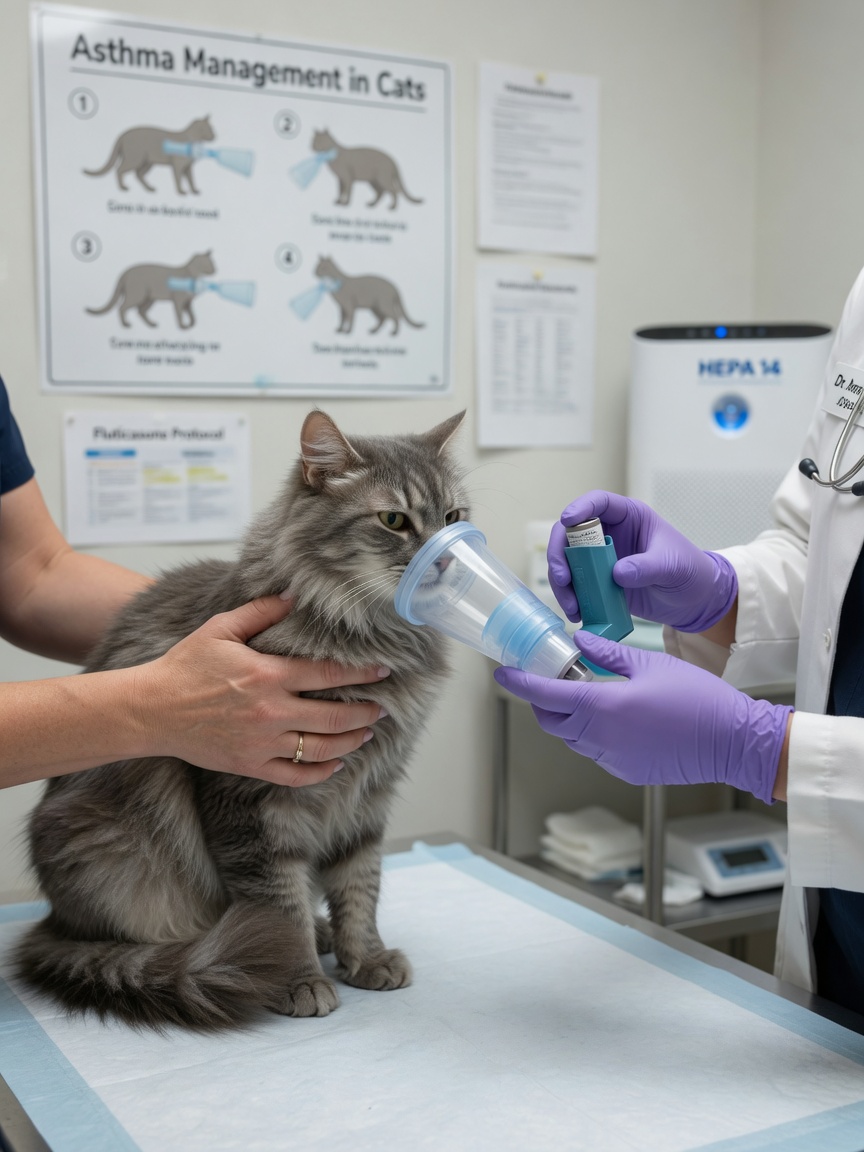
Treatment typically involves two categories of medication: controllers that reduce ongoing airway inflammation, and relievers that act rapidly during an acute episode.
Controller Medications
Corticosteroids are the mainstay of long-term control. They are given either by injection at intervals, orally as daily tablets, or — increasingly preferred — by inhalation through a specially designed feline spacer device. Inhaled steroids deliver medication directly to the airways at lower doses, reducing systemic side effects over the long term. Some cats also benefit from inhaled bronchodilators used regularly to keep the airways open.
Reliever Medications
A short-acting bronchodilator inhaler used with a spacer can be administered at the start of an acute episode while transporting the cat to a vet. Many vets recommend that owners of asthmatic cats keep one at home for exactly this purpose. Discuss this option with your veterinary team.
Environmental Modifications
- Switch to a low-dust, unscented, non-clumping litter such as silica or paper-based varieties.
- Eliminate all aerosols from rooms the cat uses.
- Wash bedding regularly at high temperatures to reduce dust mites.
- Use a HEPA air purifier in rooms where the cat sleeps.
- Ensure the home is well ventilated without exposing the cat to cold draughts.
- Do not smoke anywhere indoors.
Living Well with a Feline Asthmatic
Cats with well-controlled asthma can live long, active, comfortable lives. Regular veterinary check-ups — at minimum every six months — allow treatment to be adjusted as the disease evolves. Owners should monitor resting respiratory rate at home: most veterinary practices now recommend counting breaths per minute once a week in a sleeping cat and recording the result. A sustained rise from the cat's normal baseline is an early warning sign worth reporting before it becomes a crisis.
Work closely with your vet to find the lowest effective medication dose that keeps your cat comfortable. With consistent trigger avoidance and appropriate medication, the outlook for most asthmatic cats is genuinely good.