
Flying with a Pet: Cabin vs Cargo & How to Prepare
Cabin vs Cargo: Understanding the Difference
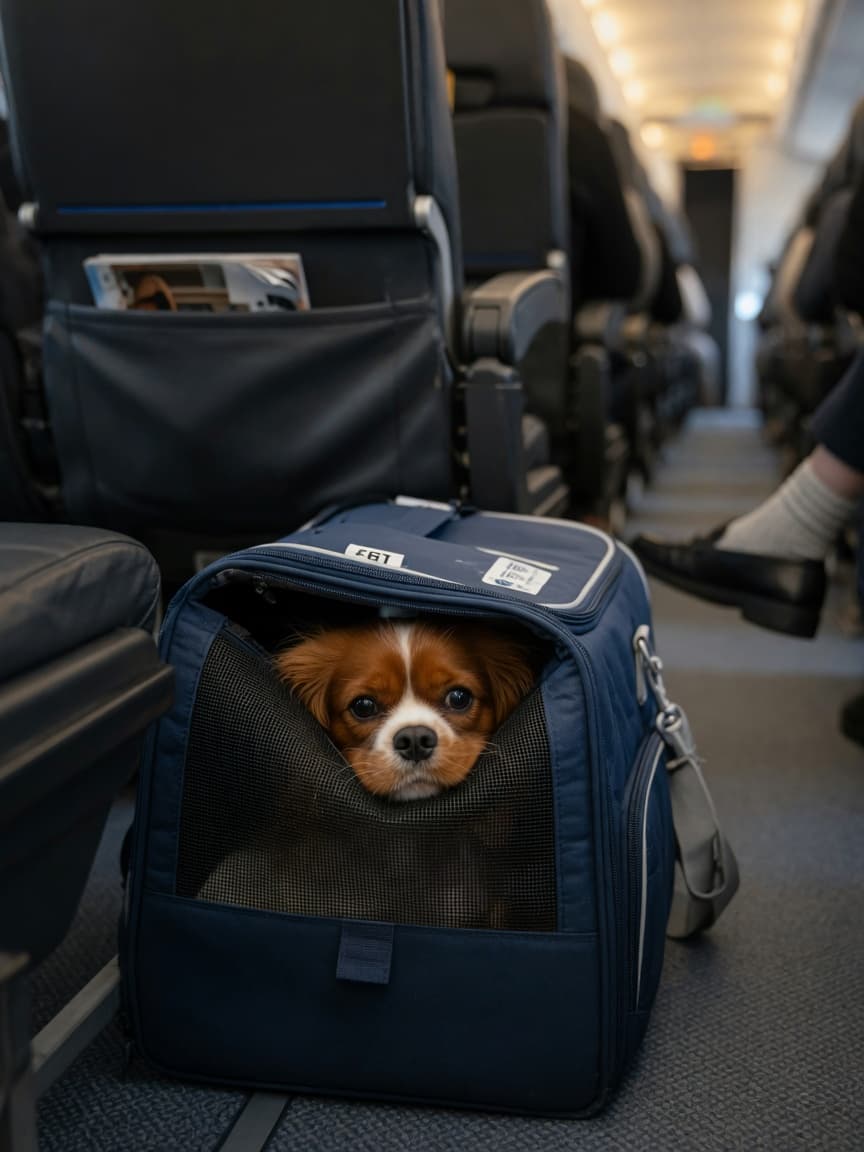
The decision about where your pet travels on a flight is usually not a choice — it is determined by your pet's size and weight. Most major airlines allow small pets to travel in the cabin in an approved carrier stowed under the seat in front of you. Larger pets must travel as checked baggage in the cargo hold, or as manifest cargo on a separate freight flight. Understanding the distinction — and the risks associated with each option — is essential before you book.
Cabin Travel: Eligibility and Size Limits
Cabin travel is available only for pets that fit comfortably in an airline-approved carrier that can be stowed under the seat. Typical restrictions include:
- Combined weight limit: Most US carriers set a combined pet-plus-carrier limit of 20 lbs (approximately 9 kg). European carriers vary, with some setting limits as low as 8 kg total. Check the specific airline's policy.
- Carrier dimensions: The carrier must fit under the seat in front of you — typically around 45 x 28 x 25 cm (18 x 11 x 10 inches), though this varies by aircraft type and airline. Always measure against the specific route and aircraft, not general guidelines.
- Number of pets per cabin: Most airlines limit the total number of in-cabin pets per flight to four to eight. Reserve your pet's spot — usually for a fee of $95–$125 each way — at the same time you book your ticket. These spots fill quickly.
- Species: Dogs and cats are most widely accepted. Exotic pets, birds, and reptiles are restricted or banned on most commercial flights.
- Breed restrictions: French Bulldog, Pug & Bulldog Guide">French Bulldog, Pug & Bulldog Guide">French Bulldog, Pug & Bulldog Guide">French Bulldog, Pug & Bulldog Guide">Brachycephalic (flat-faced) breeds — French bulldogs, pugs, Persian cats — are restricted or banned from cabin travel on most major airlines due to elevated risk of respiratory distress during flight.
Cargo Travel: Risks and When It's Unavoidable
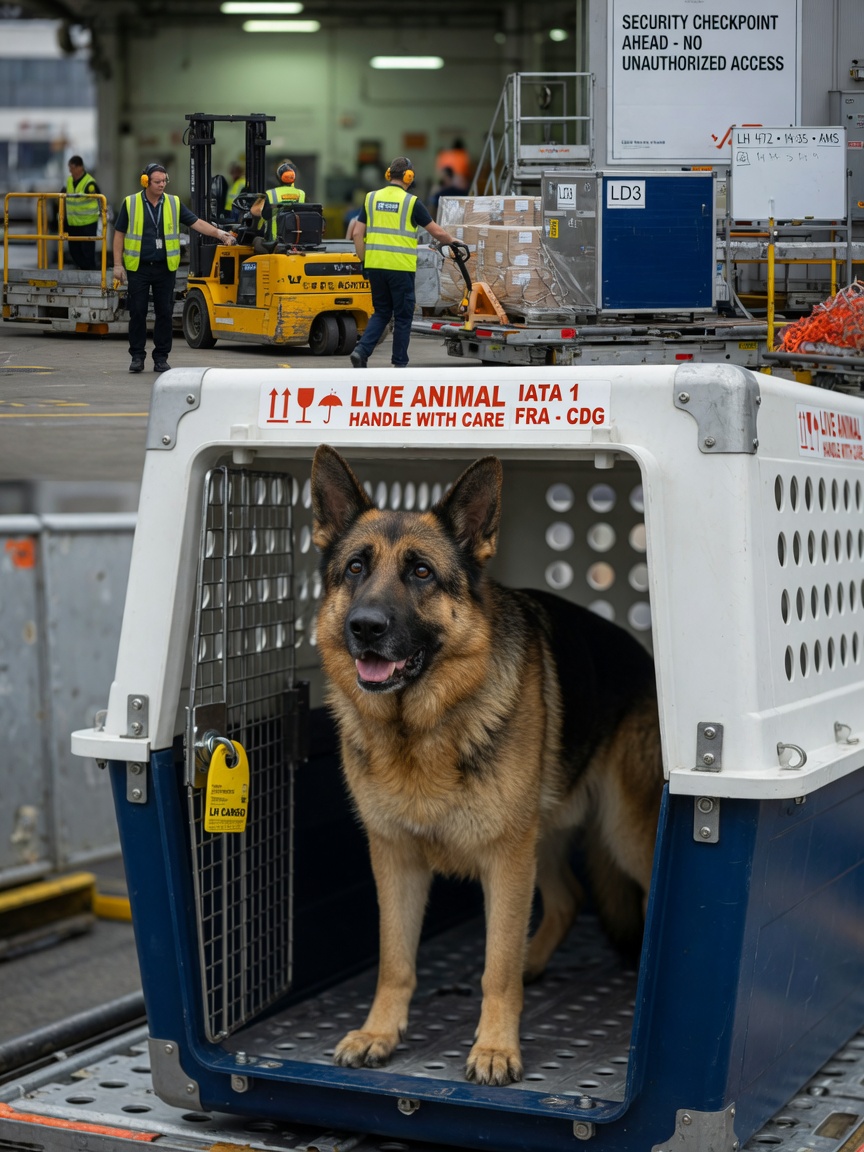
Cargo travel carries genuinely higher risks than cabin travel. The cargo hold is pressurised and temperature-controlled on modern commercial aircraft, but it is not monitored by flight crew in real time, loading and transfer processes can be stressful and rough, and extreme weather at departure or arrival airports can create Dangerous">dangerous-dog-toys" title="10 Dog Toys That Are Actually dangerous-dog-toys" title="10 Dog Toys That Are Actually Dangerous">Dangerous (And What to Use Instead)">Dangerous (And What to Use Instead)">dangerous temperature conditions during ground handling.
Documented risks of cargo travel include:
- Heat stroke or hypothermia during tarmac delays
- Injury from carrier being dropped or improperly stowed
- Stress-induced respiratory crisis, especially in brachycephalic breeds
- Escapes during transfers (rare but documented)
Most airlines publish their pet incident reports annually — reviewing these for your carrier of choice is worthwhile before placing a pet in cargo. The AVMA's guidance on flying with pets strongly recommends considering cargo travel only when there is no alternative.
If cargo is unavoidable, fly non-stop, book the first morning flight in summer (coolest tarmac temperatures) or a midday flight in winter, and avoid holiday periods when handling volumes are highest and delays most likely.
IATA-Approved Carrier Requirements
For cargo travel, the International Air Transport Association (IATA) sets minimum standards for pet containers. An IATA-compliant carrier must:
- Be large enough for the pet to stand, turn around, and lie down naturally
- Have a solid, leak-proof floor with absorbent bedding
- Have ventilation on at least three sides (four sides for international travel)
- Have secure latches that cannot be accidentally opened
- Have food and water containers accessible from outside the carrier
- Display "Live Animal" labels on top and at least one side, with directional arrows
- Include a feeding and watering schedule attached to the outside
The IATA Live Animals Regulations are updated annually — confirm you are referencing the current edition for your travel year.
Travel with confidence in the right carrier. Zooplus stocks IATA-approved pet carriers for both cabin and cargo travel, with clear size specifications and ventilation ratings. Choosing the right carrier before your booking is confirmed saves costly last-minute replacements at the airport.
Shop IATA-approved carriers at Zooplus →Health Certificate Requirements
A USDA-accredited veterinary health certificate is required by virtually all airlines and for all international pet travel. Key points:
- Health certificates are typically valid for only 10 days from the date of issue — plan your vet appointment accordingly.
- For international travel, the certificate may need to be endorsed by the USDA APHIS (in the US) or the relevant national authority — this adds 2–5 business days and must be factored into your timeline.
- Some destinations require the health certificate to be translated into the destination country's language.
- Your pet must be current on rabies vaccination; some destinations require a rabies titre test showing adequate antibody levels, which must be done well in advance (the EU requires titre testing at least 30 days after vaccination).
Tips for the Airport and Flight
Before You Leave Home
- Withhold food for four hours before departure but allow water until two hours before.
- Exercise your dog well before departure — a tired dog settles more easily.
- Spray Feliway (for cats) or a calming pheromone spray inside the carrier 30 minutes before loading.
- Do not sedate your pet without veterinary guidance — sedation at altitude can cause respiratory complications, particularly in brachycephalic breeds. Discuss options with your vet.
- Freeze water in the carrier's water dish — it will not spill during boarding but will be available as it melts during the flight.
At the Airport
- Arrive early — checking in with a pet takes longer than standard check-in.
- Your pet will need to be removed from their carrier and hand-carried through security while the carrier goes through the X-ray machine. Have a secure collar and leash on your pet in advance.
- Use the airline's designated pet relief areas before boarding, not the general terminal area.
- Inform flight attendants that you have a pet in the cabin — they should know in case of an emergency.
During the Flight
- Keep the carrier under the seat for the duration — your pet should not be placed in the overhead bin under any circumstances.
- Do not open the carrier during the flight except in a genuine emergency.
- Talk quietly to your pet through the carrier mesh if they seem distressed — your voice is genuinely calming.
Key Takeaways
- Cabin travel is only available for pets under the airline's combined weight limit (typically 9–20 lbs depending on carrier); book the pet spot at the same time as your ticket.
- Cargo travel carries higher risk — if unavoidable, fly non-stop and choose timing that avoids extreme temperatures during ground handling.
- Brachycephalic breeds (pugs, French bulldogs, Persians) are restricted or banned from both cabin and cargo on most airlines.
- IATA-approved carriers are required for cargo; measure against your specific aircraft's under-seat dimensions for cabin travel.
- Health certificates are valid for only 10 days — schedule your vet appointment accordingly, and factor in USDA endorsement time for international travel.
- Do not sedate pets for air travel without veterinary guidance — sedation can cause respiratory complications at altitude.
- Freeze water in cargo carriers; arrive early; keep carrier under the seat throughout the cabin flight.
References
- Hawkins MG, Pascoe PJ. "Anesthesia, analgesia, and sedation of small mammals." Ferrets, Rabbits, and Rodents: Clinical Medicine and Surgery. 2012:429–492. PubMed 22020423
- Mellor DJ, Beausoleil NJ, Littlewood KE, McLean AN, McGreevy PD, Jones B, Wilkins C. "The 2020 Five Domains Model: Including Human–Animal Interactions in Assessments of Animal Welfare." Animals. 2020;10(10):1870. PubMed 33066335