
Your Garden May Be Your Pet's Greatest Hazard
A 2023 report from the ASPCA Animal Poison Control Centre recorded over 400,000 calls in a single year, with garden-related exposures accounting for a significant portion. Many pet owners invest considerable effort in creating beautiful outdoor spaces without realising they have planted hazards at nose height for a curious dog or cat. Knowing which plants and garden products to avoid — and what symptoms indicate exposure — can make the difference between a close call and a tragedy.
Toxic Flowering Plants
Some of the most common ornamental garden flowers are among the most dangerous to pets. Severity varies, but all warrant immediate attention if ingested.
Lilies
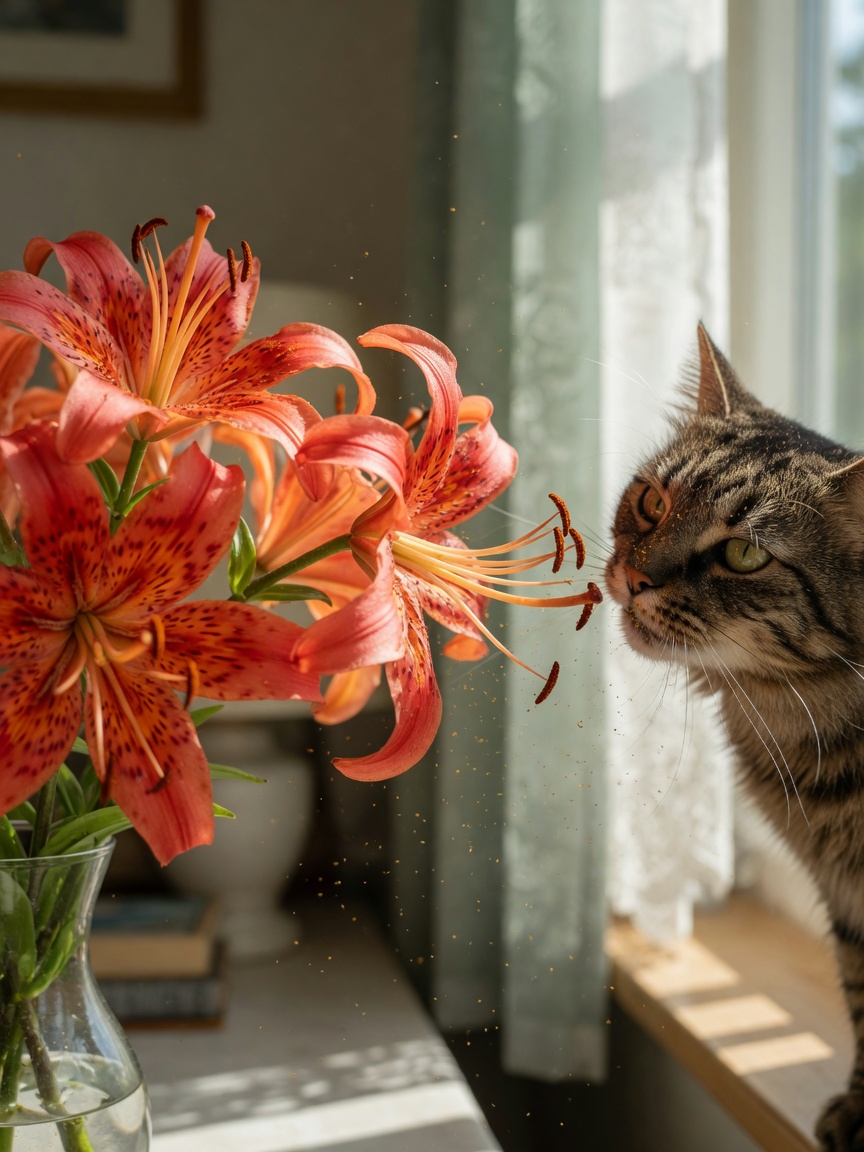
True lilies — including Easter lily, Tiger lily, and Asiatic lily — are acutely toxic to cats. Even small amounts of pollen, water from a vase, or a single leaf can trigger acute kidney failure within 24 to 72 hours. Dogs are far less sensitive but can still experience gastrointestinal upset. If you keep cats, lilies should not be in your garden or home at all.
Foxglove and Digitalis
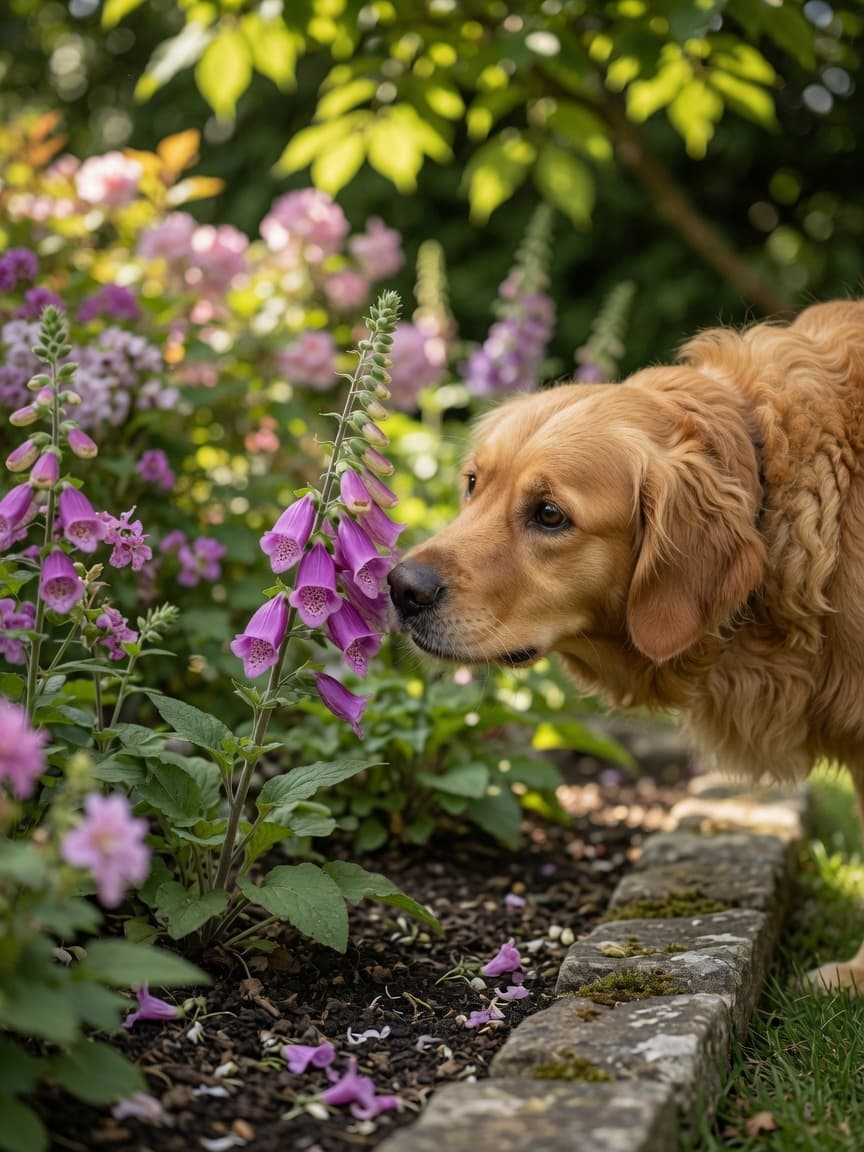
Foxglove contains cardiac glycosides that disrupt heart rhythm. Ingestion can cause vomiting, bradycardia, and collapse in both dogs and cats. Because it self-seeds readily and grows tall, pets may encounter it without owners noticing.
Rhododendron and Azalea
These popular shrubs contain grayanotoxins, which interfere with sodium channels in cell membranes. Symptoms include drooling, vomiting, weakness, low blood pressure, and in serious cases, heart arrhythmia. Even small quantities of leaves or flowers can cause significant illness.
Bulbs: A Hidden Danger Beneath the Soil
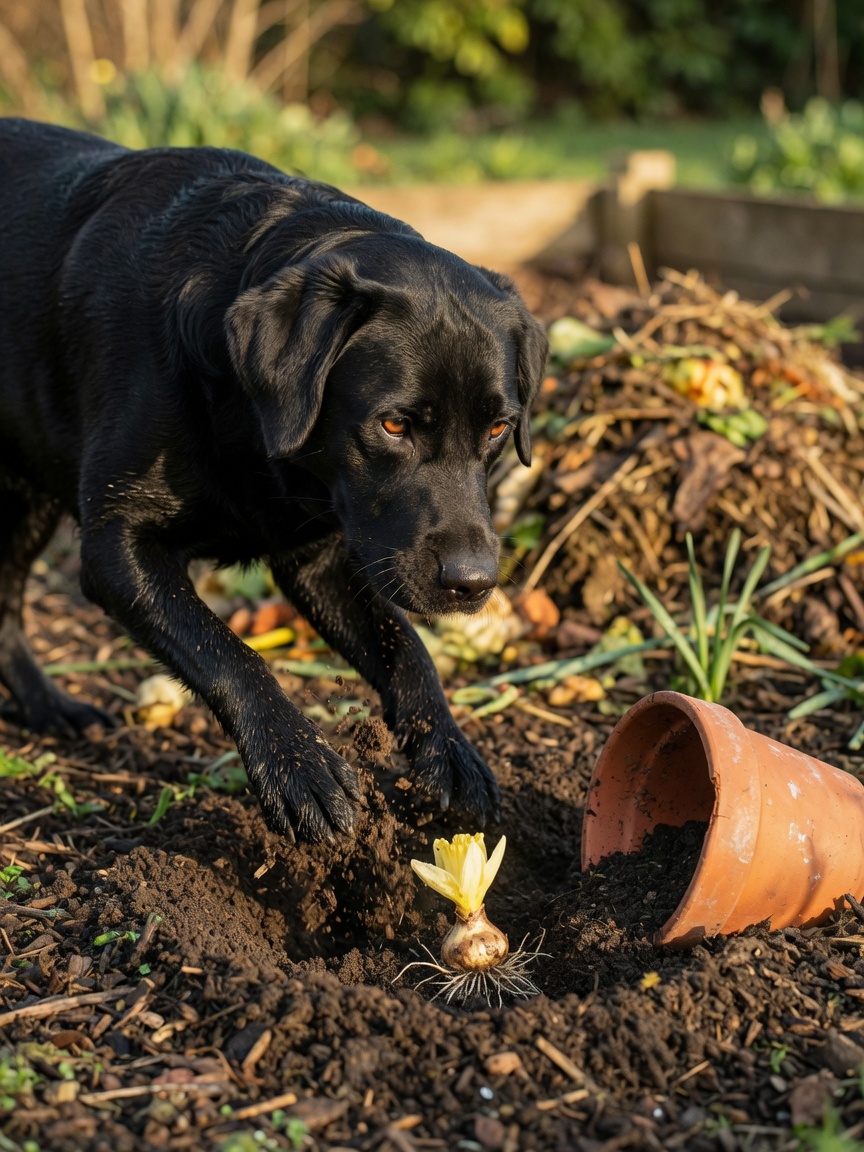
Many gardeners plant bulbs seasonally without considering that digging dogs may unearth them. Tulip and hyacinth bulbs contain allergenic lactones, which cause intense gastrointestinal irritation. Daffodil and narcissus bulbs are more dangerous still — they contain lycorine, an alkaloid that induces severe vomiting, low blood pressure, tremors, and cardiac arrhythmias. Autumn crocus (Colchicum autumnale) is particularly hazardous: it contains colchicine, which can cause multi-organ failure and is often fatal if not treated promptly.
Garden Products and Chemicals
Slug Pellets
Traditional metaldehyde-based slug pellets are extremely dangerous. Ingestion causes rapid-onset neurological symptoms including muscle tremors, hyperthermia, and seizures. Metaldehyde was banned for garden use in Great Britain in 2022, but older stocks may still be in sheds. Ferric phosphate alternatives are considered lower risk but should still be kept away from pets.
Fertilisers and Composts
Organic fertilisers — especially bone meal, blood meal, and fish emulsions — are highly attractive to dogs. Large ingestion can cause vomiting, diarrhoea, and in some cases pancreatitis. Certain composts contain mould that produces tremorgenic mycotoxins, which cause rapid-onset seizures. Always store composts in sealed bins and fence off compost heaps.
Pesticides and Herbicides
Organophosphate insecticides are acutely toxic to both cats and dogs, affecting the nervous system by inhibiting acetylcholinesterase. Glyphosate-based herbicides are of lower acute toxicity but can still cause significant gastrointestinal irritation. Avoid allowing pets onto treated lawns until fully dry, and follow label guidance on re-entry intervals.
Trees and Shrubs to Watch
Yew (Taxus baccata) is one of the most dangerous plants in UK gardens. The entire plant — bark, leaves, and seeds — contains taxine alkaloids, which cause cardiac arrest with startling speed. Symptoms may appear within hours of ingestion, and death can follow rapidly without emergency intervention. Wisteria seeds and pods cause vomiting and collapse. Laburnum seeds contain cytisine, a toxic alkaloid that can cause convulsions. If these trees are present in your garden, ensure pets cannot access fallen material.
Aquatic and Shade Garden Hazards
Water features can harbour blue-green algae (cyanobacteria), particularly in warm weather. Ingestion of contaminated water can cause liver failure and neurological toxicity within minutes to hours. Symptoms include vomiting, collapse, seizures, and jaundice. Shade-loving plants such as Lily of the Valley contain cardiac glycosides similar to foxglove, making them equally dangerous despite their delicate appearance.
What to Do If You Suspect Garden Toxin Exposure
- Remove your pet from the area immediately and prevent further contact.
- Do not induce vomiting unless specifically directed to do so by a veterinarian.
- Collect a sample or photograph of the plant or product if it can be done safely.
- Contact your vet or the Animal Poison Line (in the UK: 01202 509000) without delay.
- Note the time of exposure and any symptoms observed.
- Bring packaging or the plant name with you to the clinic — identification speeds treatment.
The best protection is a proactive audit of your outdoor space. Walk your garden from a pet's perspective, identify everything present, and consult your vet if you are unsure whether a plant is safe. Many toxic species can be replaced with pet-friendly alternatives without sacrificing aesthetics.