
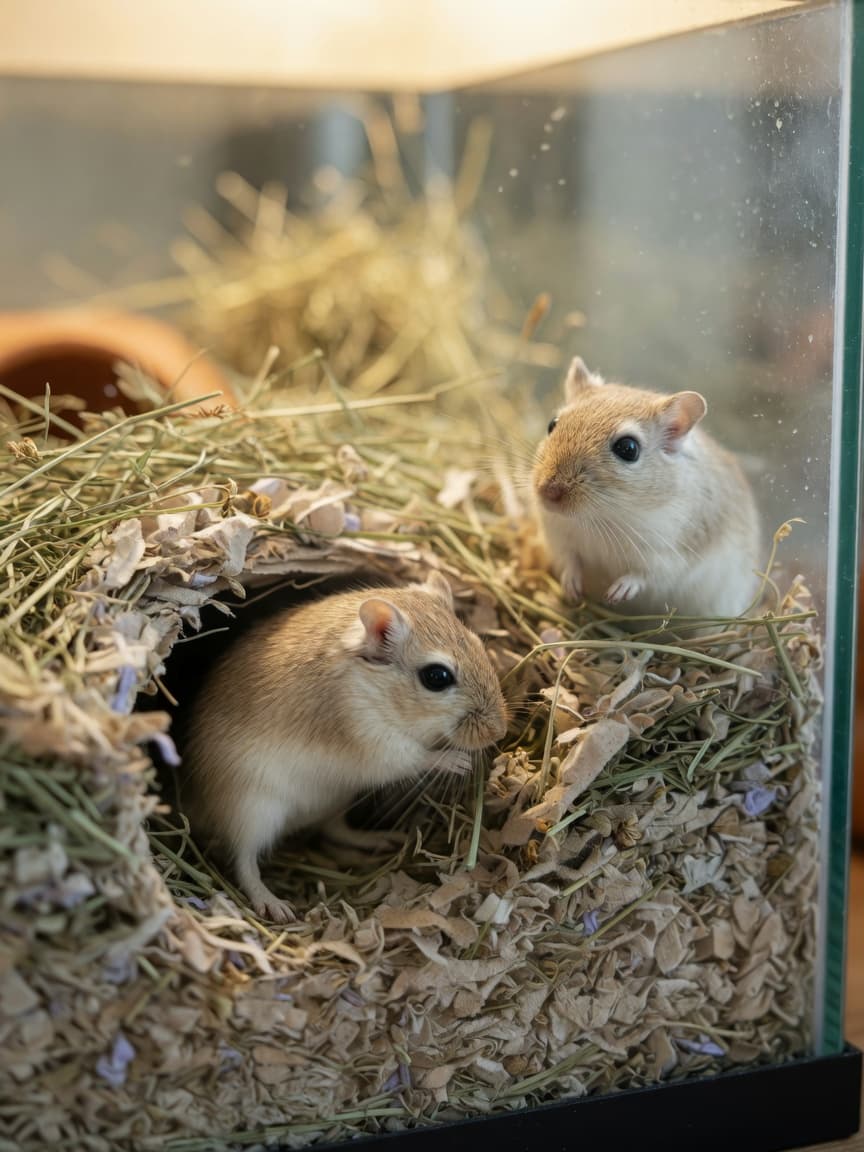
Understanding Gerbils as Pets
The Mongolian gerbil, known scientifically as Meriones unguiculatus, is one of the most popular small pet mammals in Europe. Originally from the semi-arid steppes of Mongolia and northern China, gerbils are naturally curious, active, and highly social animals. They have been kept as pets since the 1960s and are now widely bred domestically across Europe. Gerbils are not listed under CITES, so there are no trade restrictions on captive-bred pet gerbils within Europe, though welfare regulations apply in all EU member states and the United Kingdom.
Gerbils live for approximately three to five years, making them a medium-term commitment compared to many other small pets. They are diurnal to crepuscular in behaviour, meaning they are active at various points during the day and evening rather than strictly nocturnal. This makes them more rewarding to observe and interact with than purely nocturnal species.
Social Requirements: Gerbils Must Not Live Alone
This point cannot be overstated. Gerbils are highly social animals that live in family groups in the wild. A gerbil kept alone will experience chronic social stress, which is associated with reduced lifespan, stereotypic behaviours, and poor overall welfare. Gerbils must always be kept in pairs or small groups. Same-sex pairs work well when littermates are kept together from a young age. A lone surviving gerbil that has lost its companion will need to be introduced to a new partner through a careful bonding process — see below for more on this.
Neutered males and females can also be kept together but this requires access to a vet experienced in small rodent procedures. Most gerbil owners opt for same-sex pairs to avoid the complexity and cost of neutering and the risk of unwanted litters.
Housing: Space and Depth Are Both Essential
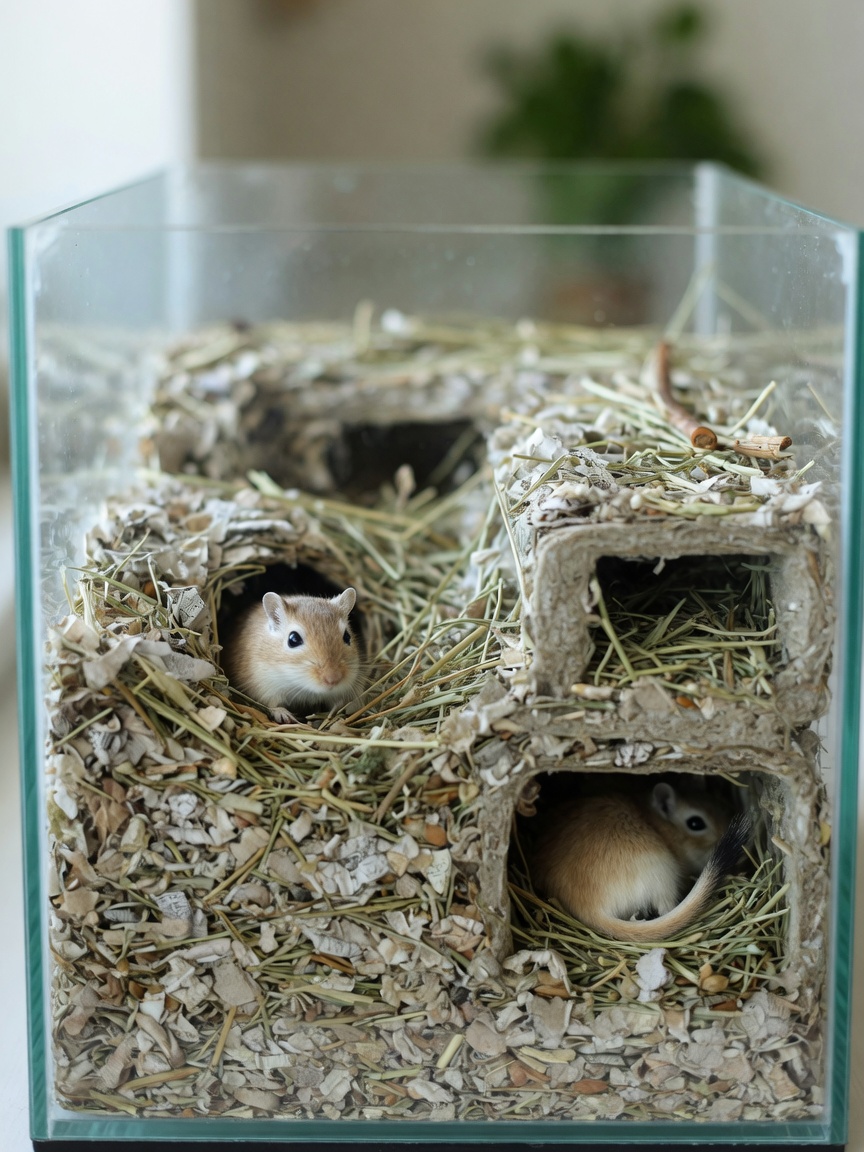
Gerbils are natural burrowers. In the wild they dig extensive tunnel networks for shelter, sleeping, and raising young. Without the ability to burrow in captivity, gerbils cannot express this fundamental behaviour and will be chronically stressed. The German Tierarztliche Vereinigung fur Tierschutz (TVT) recommends a minimum floor space of 0.5 square metres per pair of gerbils, with bedding depth of at least 30 centimetres to allow burrowing. Glass terrariums are the most popular and appropriate housing choice because they retain deep bedding without scatter, provide good visibility, and prevent drafts.
Wire cages are generally less suitable for gerbils because deep bedding cannot be maintained adequately, gerbils tend to scatter bedding constantly through wire bars, and the limited depth prevents burrowing. If a wire cage must be used, add a deep wooden insert base to increase bedding capacity.
Bedding and Nesting Materials
Safe bedding materials for gerbils include paper-based substrates such as Carefresh, hemp bedding, and a mixture of peat or coco fibre combined with hay to create a tunnellable substrate. Avoid cedar and pine shavings due to the harmful aromatic compounds they release. Providing meadow hay throughout the enclosure serves both as tunnelling material and as a foraging medium. Additional soft nesting materials such as unscented paper tissue allow gerbils to construct their sleeping nest, which is a natural and important behaviour. The bedding should be replaced partially on a rolling basis to maintain hygiene without entirely disrupting the scent environment, which gerbils rely on for familiarity and security.
Diet: What Gerbils Should Eat
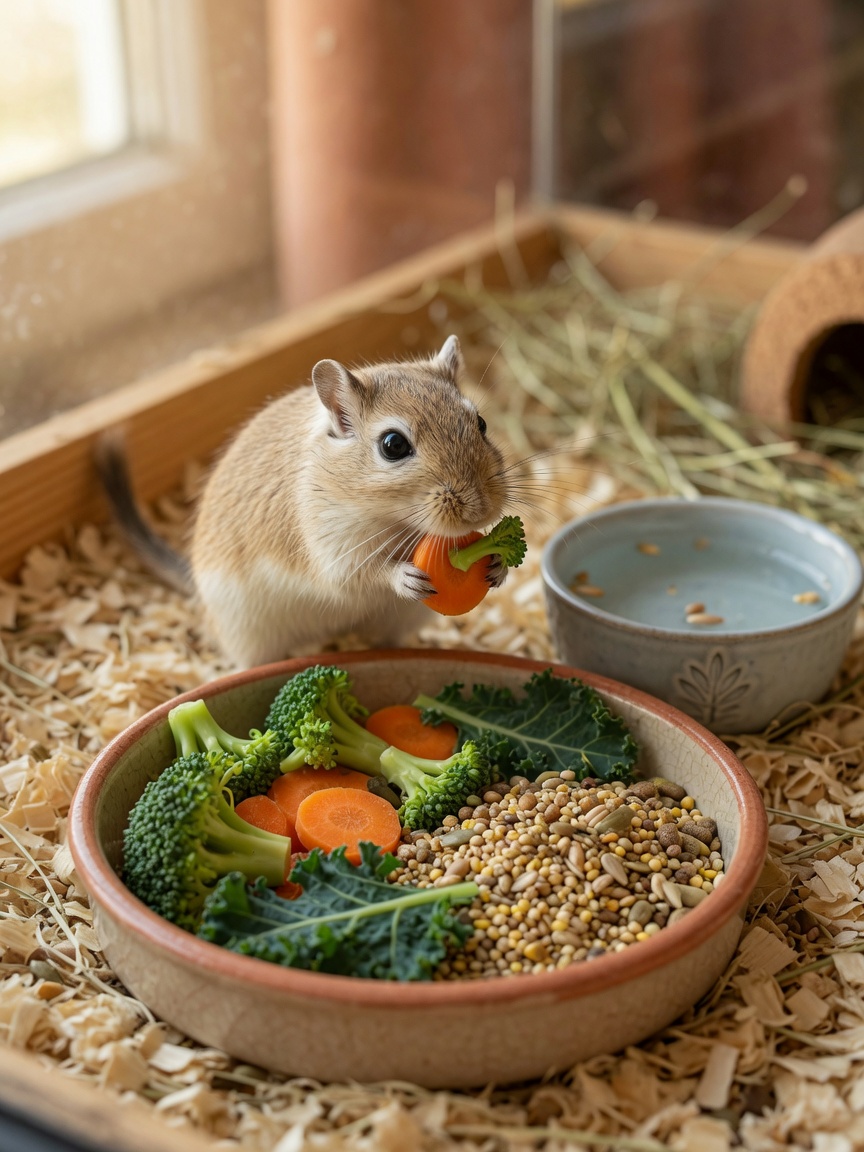
A good gerbil diet is built around a high-quality commercial gerbil or hamster mix that includes a variety of grains, seeds, and dried plant material. Gerbils are naturally adapted to a relatively dry diet with low water content, as they evolved in semi-arid environments, but they still require access to fresh water at all times via a sipper bottle or heavy ceramic bowl. Supplement the dry mix with small amounts of fresh vegetables several times weekly. Suitable options include:
- Broccoli, carrot, and cucumber in small quantities
- Dark leafy greens such as kale and rocket
- Small amounts of herbs such as parsley and coriander
Fruit should be limited due to its sugar content. A small piece of apple or pear without seeds can be offered occasionally. Mealworms or a small amount of boiled egg can provide protein variety. Avoid feeding processed human foods, sugary snacks, or anything containing artificial additives.
Sand Bath and Enrichment
Gerbils benefit greatly from access to a sand bath. Use chinchilla sand, not dust, which is too fine and can cause respiratory irritation. A sand bath allows gerbils to groom their coat naturally, keeping it clean and reducing excess oils. Offer the sand bath a few times per week in a separate container. Enrichment should also include wooden chews, tunnels, cardboard tubes, and an exercise wheel. The wheel must have a solid running surface to prevent injury, and should be sized appropriately — at least 17 to 20 centimetres in diameter for most gerbil breeds.
Common Health Issues in Gerbils
Seizures are one of the most alarming and also one of the most common health issues seen in pet gerbils. Up to a third of Mongolian gerbils are believed to be prone to epileptiform seizures. These typically first appear between two and six months of age and are often triggered by handling or sudden environmental changes. The seizures usually last only a few seconds to a couple of minutes and most gerbils recover fully. In most cases the seizures are idiopathic and considered to cause the animal limited long-term harm, though frequent or severe episodes should be assessed by an exotic vet. Allow a seizing gerbil to complete the episode in a safe, padded space without interference.
Tyzzer's disease is a serious bacterial infection caused by Clostridium piliforme that affects the liver and intestines. It can cause sudden death in affected animals and may spread between gerbils in the same enclosure. Good hygiene and avoiding stress are the primary preventative measures.
Tumours become more common as gerbils age, particularly scent gland tumours on the abdomen. These appear as growths near the orange-tinted gland in the centre of the belly. Any lump or change in the gland's appearance should be examined by a vet. Dental overgrowth and dehydration are also concerns, particularly in older individuals.
What to Do When a Gerbil Dies
The death of one gerbil in a bonded pair leaves the surviving gerbil in a state of acute social deprivation. A surviving gerbil should not be left alone for longer than necessary. The process of introducing a new companion is known as the split cage method: a tank is divided by a fine mesh barrier so the two gerbils can smell, see, and partially interact without direct contact. The barrier is removed for brief supervised sessions, and the partition is reinstated if any aggression occurs. This process typically takes one to two weeks but some pairs take longer. An ECZM exotic mammal specialist or experienced exotic vet can advise if the introduction is not progressing safely.
Handling and Socialisation
Gerbils that are handled regularly from a young age tend to be calm and curious with their owners. Begin handling sessions when the gerbil has had time to settle into its enclosure, usually after about a week. Cup the gerbil gently in both hands rather than gripping, and handle close to a low surface to reduce the risk of injury if the animal jumps. Gerbils rarely bite unless frightened or handled very roughly, making them suitable companions for older children who are supervised during interaction.