
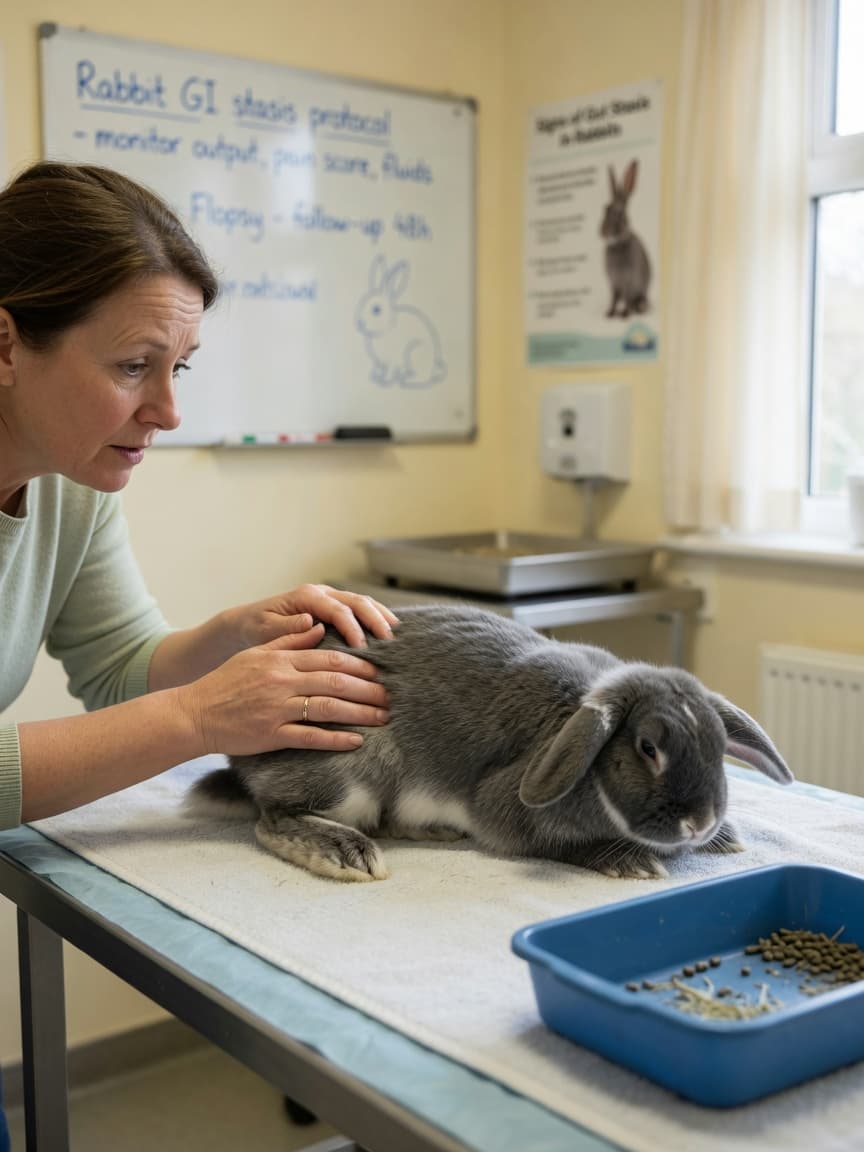
When a Quiet Rabbit Becomes a Medical Crisis
A rabbit that stops eating for just 12 hours is already in danger. Gastrointestinal stasis — commonly called GI stasis — is one of the leading causes of death in domestic rabbits, yet many owners do not recognise it until it is critically advanced. Unlike dogs or cats, rabbits cannot vomit, which means anything that disrupts their digestive system has nowhere to go but worse.
Understanding GI stasis is not optional knowledge for rabbit owners. It is essential.
What Is GI Stasis?
GI stasis occurs when the normal movement of food through the rabbit's digestive tract slows dramatically or stops entirely. The gastrointestinal system of a rabbit is designed to process a continuous flow of high-fibre material. When that flow halts, the consequences cascade quickly.
Gas builds up in the gut, causing painful bloating. Harmful bacteria begin to proliferate. The rabbit feels pain, stops eating, becomes lethargic, and may grind its teeth — a sign of significant discomfort. Without intervention, organ failure can follow within 24 to 48 hours.
Causes: What Puts a Rabbit at Risk
Dietary Triggers
The most common cause is insufficient dietary fibre. Hay should make up approximately 80 per cent of a rabbit's diet. When owners rely too heavily on pellets, fruit, or vegetables, the gut loses the mechanical stimulation it needs to keep moving. A sudden change in diet can also trigger stasis.
Stress and Environment
Stress is a surprisingly powerful trigger. Moving house, the arrival of a new pet, loud noises, or even a change in routine can cause enough physiological stress to slow gut motility. Rabbits are prey animals with sensitive nervous systems, and chronic low-level stress takes a measurable toll on digestive function.
Pain and Underlying Illness
Any source of pain — dental problems, urinary issues, arthritis — can cause a rabbit to stop eating, which then triggers stasis as a secondary condition. This is why GI stasis is sometimes a symptom as much as a diagnosis.
Hairballs and Blockages
Unlike cats, healthy rabbits on high-fibre diets pass ingested fur without issue. However, when gut motility is already slow, fur can accumulate and contribute to blockages. True intestinal blockages are more serious than stasis and require urgent veterinary imaging to distinguish.
Recognising the Signs Early
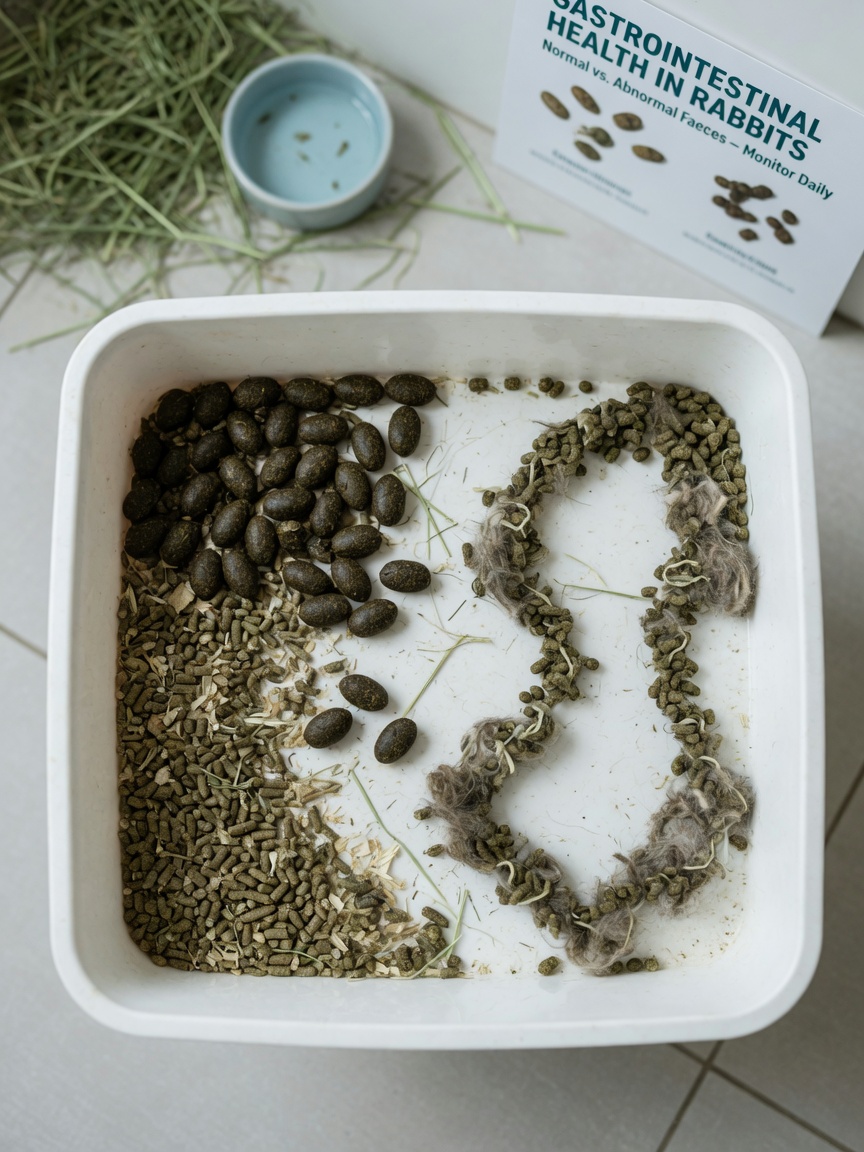
Time is the critical variable in GI stasis. The earlier you identify it, the better the outcome. Watch for the following:
- Reduced or absent appetite, particularly a refusal to eat hay
- Fewer or no droppings in the litter tray
- Droppings that appear small, misshapen, or strung together with fur
- A hunched posture or reluctance to move
- Teeth grinding (bruxism), which indicates pain
- A visibly swollen or hard abdomen
- Lethargy or hiding behaviour unusual for that rabbit
If your rabbit has not produced droppings within four to six hours and is not eating, treat this as an emergency. Do not wait until morning.
What to Do If You Suspect GI Stasis
Seek Veterinary Care Immediately
GI stasis is not a condition you can manage confidently at home. A vet will assess gut sounds with a stethoscope, palpate the abdomen, and may recommend X-rays to rule out a true blockage. Treatment typically involves fluid therapy to rehydrate the gut contents, pain relief, gut motility drugs such as metoclopramide or cisapride, and assisted feeding with a syringe if the rabbit will not eat independently.
Supportive Care at Home
If you are awaiting a vet appointment and the rabbit is not showing signs of severe pain or bloating, gentle abdominal massage and encouraging movement can help stimulate the gut. Keeping the rabbit warm also matters — hypothermia is a risk in a rabbit that has stopped eating. Offer fresh hay continuously and ensure access to water.
Do not give human pain medications or attempt to force-feed without veterinary guidance. Both can cause serious harm.
Prevention: Building a Gut-Healthy Life
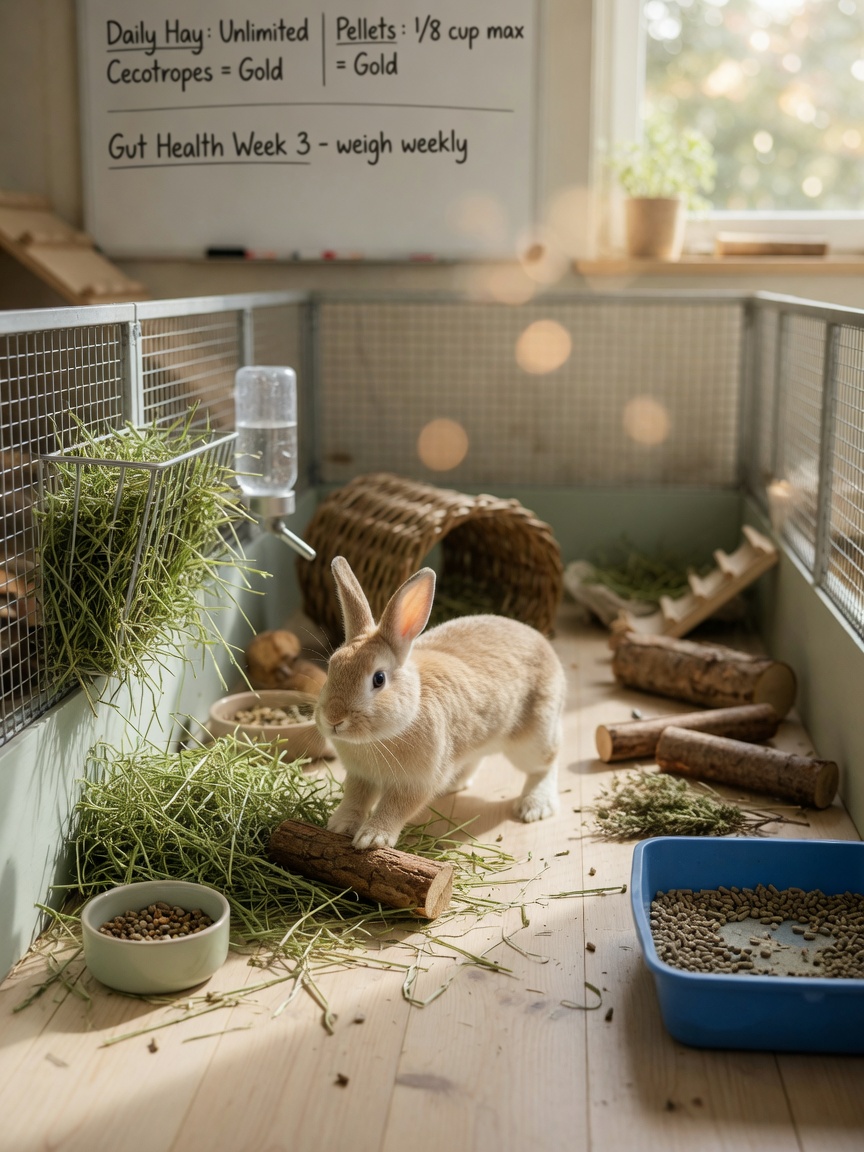
The good news is that GI stasis is largely preventable through consistent husbandry.
- Provide unlimited access to fresh timothy hay or orchard grass at all times
- Limit pellets to a small, measured daily portion appropriate for body weight
- Introduce new foods gradually to avoid digestive disruption
- Ensure daily exercise — a rabbit confined to a small cage has poor gut motility
- Minimise environmental stressors where possible
- Schedule annual veterinary health checks to catch underlying conditions early
- Monitor litter tray output daily — it is one of the most reliable health indicators available to you
Key Takeaways for Every Rabbit Owner
GI stasis kills rabbits that might otherwise have been saved, and it does so because owners did not recognise the signs or delayed seeking help. A rabbit that is quiet, not eating, and not producing droppings is not simply having a slow day — it may be hours into a life-threatening crisis.
Learn your rabbit's normal behaviour, check the litter tray daily, keep hay as the dietary cornerstone, and know the location of your nearest rabbit-savvy emergency vet before you ever need it. These simple steps are the difference between an emergency avoided and one survived.
If you are at all uncertain about your rabbit's health, consult a veterinarian without delay. Early intervention is the single most important factor in GI stasis survival.