

Grain-Free Dog Food & DCM: What the FDA Investigation Found
If your dog is currently eating a grain-free diet and you notice symptoms such as decreased energy, difficulty breathing, coughing, or a distended abdomen, contact your veterinarian promptly. These can be signs of dilated cardiomyopathy (DCM), a serious but often treatable heart condition. This article presents a balanced overview of the ongoing scientific debate — it is not a substitute for veterinary advice.
In July 2018, the U.S. Food and Drug Administration (FDA) issued an alert that sent shockwaves through the pet food industry: the agency had begun investigating a possible link between grain-free dog diets and an uptick in dilated cardiomyopathy (DCM) — a life-threatening heart condition in which the heart muscle weakens and the chambers enlarge, impairing the ability to pump blood. What followed was one of the most closely watched, debated, and ultimately inconclusive regulatory investigations in pet nutrition history. Here is what we actually know, what remains uncertain, and how to think about it as a dog owner.
What Is DCM and Why Does It Matter?

Dilated cardiomyopathy is the second most common heart disease in dogs after myxomatous mitral valve disease. It has long been recognized as a genetic condition in large and giant breeds — Doberman Pinschers, Great Danes, Boxers, and Irish Wolfhounds are particularly predisposed. What concerned the FDA was a different pattern: DCM appearing in breeds not genetically predisposed to it, including Golden Retrievers, Labrador Retrievers, Whippets, and smaller mixed-breed dogs.
Between January 2014 and April 2019, the FDA received 524 reports of DCM in dogs. Of those, 515 had diet information available — and 91% were eating grain-free diets. That is a striking correlation, but correlation, as every scientist knows, is not causation.
The FDA's 2019 Investigation: What It Actually Said
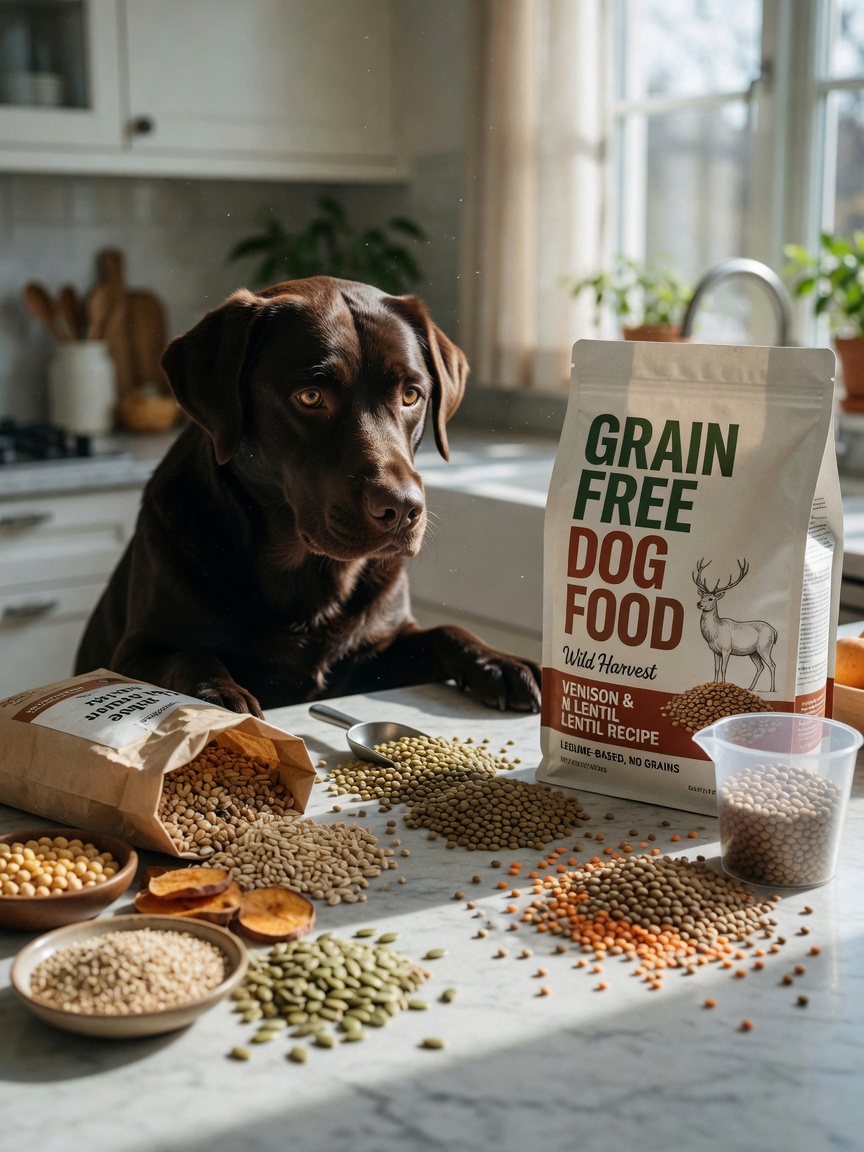
The FDA's June 2019 update on canine DCM named 16 pet food brands most frequently appearing in reports, the majority of which featured peas, lentils, other legumes, or potatoes as primary ingredients. The agency explicitly stated it had not established a causal relationship and that the investigation was ongoing. The working hypotheses included:
- Taurine deficiency or impaired synthesis — taurine is an amino acid essential for cardiac muscle function. Some legume-heavy diets may interfere with taurine absorption or biosynthesis, though the mechanism remains unclear.
- Ingredient-level interactions — certain legume compounds (phytates, lectins, fiber fractions) may bind minerals or affect amino acid bioavailability.
- Overall dietary pattern — grain-free diets often substitute grains with high levels of peas and lentils, shifting the amino acid profile of the entire diet.
- Reporting bias — grain-free diets had grown from a niche to roughly 40% of the premium pet food market by 2018, meaning more dogs were eating them and thus more DCM cases would be expected simply from greater market penetration.
The FDA's investigation was notable for what it did not find: a single specific toxin, pathogen, or clearly deficient nutrient. The case reports also relied on voluntary reporting by veterinarians and owners, which is inherently incomplete and subject to selection bias. Breeds at genetic risk were well-represented in the data, raising questions about whether diet or genetics (or both) were driving the signal.
The 2023 Morris Animal Foundation Study: Complicating the Picture
A landmark 2023 study from the Morris Animal Foundation's Golden Retriever & Cancer: Prevention, Early Detection & The Morris Study">Golden Retriever Health Problems">Golden Retriever Health Problems">Golden Retriever Breed Guide">Golden Retriever Shedding Guide">Golden Retriever & Cancer: Prevention, Early Detection & The Morris Study">Golden Retriever Breed Guide">Golden Retriever & Cancer: Prevention, Early Detection & The Morris Study">Golden Retriever Health Problems">Golden Retriever Lifetime Study — one of the largest prospective companion animal health studies ever conducted — significantly complicated the grain-free DCM narrative. Researchers analyzed data from over 2,500 Golden Retrievers enrolled since puppyhood, comparing cardiac outcomes across diet types.
The study found that while Golden Retrievers eating grain-free diets did show higher rates of certain cardiac abnormalities in earlier cross-sectional analyses, the longitudinal data revealed a more complex picture. Taurine status, body condition score, and total dietary protein content emerged as potentially important variables — and the relationship between grain-free feeding and DCM weakened substantially when these factors were controlled for. The authors called for further prospective, controlled research rather than blanket dietary recommendations.
This echoes a broader concern raised by independent veterinary cardiologists: the original FDA case reports were not collected under controlled conditions, breed-specific genetic predispositions were not always accounted for, and the dramatic growth in grain-free diet sales means the dataset may simply reflect what most premium-diet owners were feeding — not a true dietary risk signal.
Where the Science Stands Today
As of 2026, the FDA has not concluded its investigation with a definitive causal finding, nor has it issued a recall or regulatory action against grain-free diets. The agency's investigation page remains active but has not been updated with a final determination. Several peer-reviewed cardiology teams — including groups at UC Davis, Tufts, and North Carolina State University — continue to study the question.
Key points of current scientific consensus:
- A causal link between grain-free diets and DCM has not been established.
- Taurine status is worth monitoring in breeds known to be susceptible (Golden Retrievers, American Cocker Spaniels).
- Diet quality, protein source, and overall nutritional completeness matter more than the presence or absence of grains per se.
- Dogs on grain-free diets are not necessarily at elevated risk, particularly if the diet meets AAFCO standards and is manufactured by a company with robust quality-control processes.
The American Kennel Club's nutrition guidance on grain-free diets reflects a similarly measured stance, recommending owner discussion with veterinarians rather than immediate dietary changes.
Practical Guidance for Dog Owners
The grain-free DCM story illustrates why pet nutrition decisions should be evidence-based and personalized rather than trend-driven. Here is a reasonable framework:
- If your dog has no cardiac symptoms and thrives on its current grain-free diet, there is no established evidence requiring an immediate switch. Monitor for symptoms and discuss at your next veterinary visit.
- If your dog is a breed with known genetic DCM risk (Doberman, Boxer, Great Dane, Golden Retriever Health: Cancer Risk, Joints & Nutrition">Golden Retriever, American Cocker Spaniel), ask your vet about baseline cardiac screening and taurine level testing.
- If your dog shows any cardiac symptoms — fatigue, exercise intolerance, coughing, or labored breathing — see a veterinarian urgently regardless of diet.
- When choosing any diet, prioritize brands that conduct feeding trials, publish AAFCO nutritional adequacy statements, and employ veterinary nutritionists in their formulation process.
Looking for AAFCO-certified complete diets with transparent ingredient sourcing? Zooplus stocks a wide range of premium dog foods — including grain-inclusive options for owners who want to diversify their dog's diet. Explore premium dog food options at Zooplus →
Key Takeaways
- The FDA began investigating a possible grain-free diet / DCM link in 2018 after noticing DCM in breeds not genetically predisposed to it.
- 91% of DCM reports filed with the FDA between 2014–2019 involved dogs eating grain-free diets — but reporting bias and market share growth complicate that figure.
- The FDA has never established a definitive causal link, nor issued a recall of grain-free products.
- A 2023 Morris Animal Foundation study found the relationship is more complex than early reports suggested, with taurine status and breed genetics playing important roles.
- Dogs at genetic risk for DCM should be monitored with veterinary cardiac screening regardless of diet type.
- Diet quality, AAFCO compliance, and feeding-trial data matter more than the grain-free label itself.
References
- Adin D, et al. "Echocardiographic phenotype of canine dilated cardiomyopathy differs based on diet type." J Vet Cardiol. 2019;21:1–9. PubMed PMID 30712919
- Ontiveros ES, et al. "Prospective evaluation of taurine deficiency and cardiac function in large-breed dogs eating novel protein or grain-free diets." J Am Vet Med Assoc. 2020;256(5):574–583. PubMed PMID 32053037