
Great Dane Health Problems: What Every Owner Needs to Know
The Great Dane (FCI No. 235) is one of the most magnificent breeds in existence — a true Apollo of dogs, combining elegance with extraordinary size. Registered under the FCI Group 2, these gentle giants can reach 80 cm at the shoulder and weigh over 70 kg, and that sheer scale is both their defining characteristic and the root of their most serious health challenges. If you share your life with a Great Dane, understanding the conditions that most commonly affect this breed is not optional — it is essential.
This guide covers the key health problems Great Danes face, the warning signs to watch for, the preventive measures worth taking, and the nutritional strategy that gives puppies the best possible start.
Gastric Dilatation-Volvulus (GDV): The Most Urgent Threat
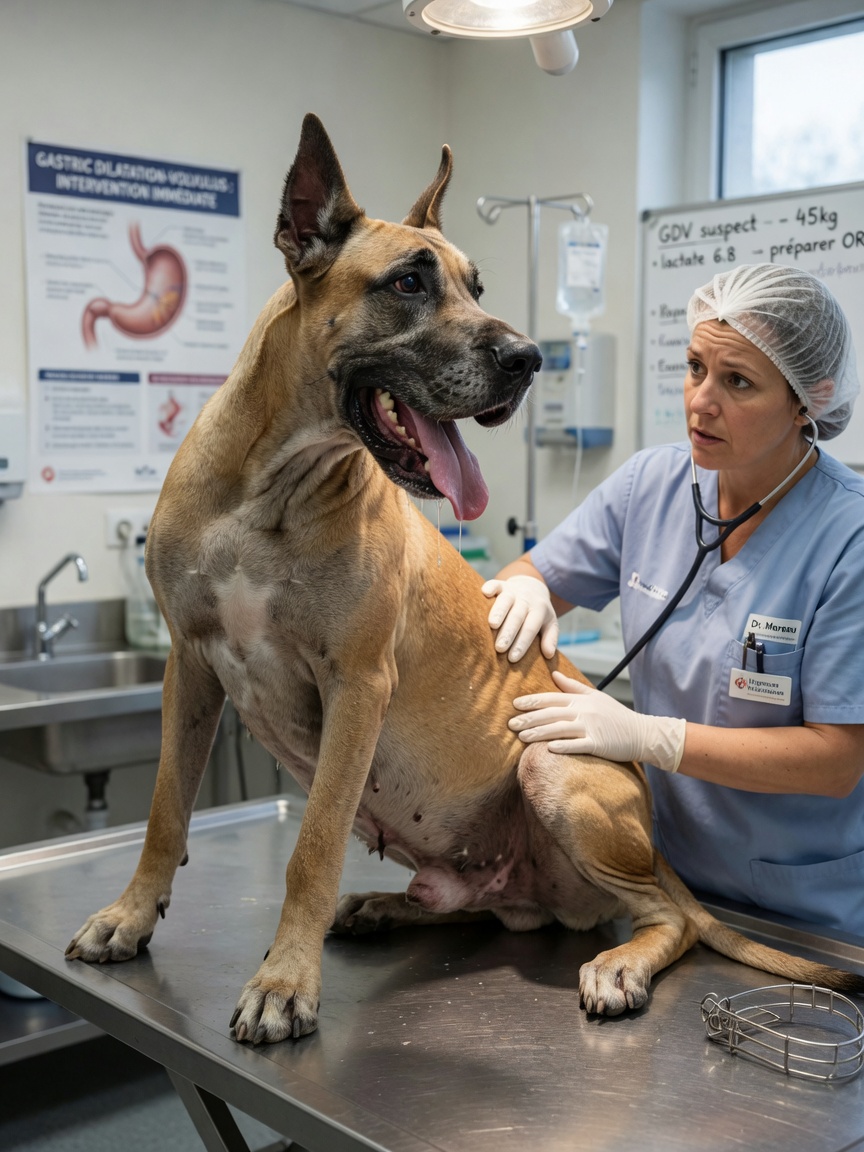
GDV — commonly called bloat — is the single greatest killer of Great Danes. The stomach fills with gas and, in the worst cases, rotates on its axis, cutting off blood supply to surrounding organs. Without emergency surgery, a dog can die within hours. Great Danes have one of the highest GDV incidence rates of any breed.
Emergency Warning Signs
- Distended, hard abdomen that looks visibly swollen
- Unproductive retching or attempts to vomit with nothing coming up
- Restlessness, pacing, or obvious distress
- Pale or white gums
- Rapid, shallow breathing and weakness
- Collapse
If you observe any combination of these signs, treat it as a veterinary emergency and go to the nearest clinic immediately. Time is the critical factor — every minute matters.
Prophylactic Gastropexy
Many veterinary surgeons now recommend a prophylactic gastropexy for Great Danes: a procedure that permanently tacks the stomach to the abdominal wall, preventing rotation. It does not prevent the stomach from filling with gas, but it eliminates the volvulus component, which is what makes GDV fatal. This procedure is often performed at the time of neutering and is strongly worth discussing with your vet before your dog reaches adulthood.
To reduce everyday GDV risk, feed two or three smaller meals per day rather than one large one, avoid vigorous exercise for at least an hour after eating, and use a slow-feeder bowl to prevent your dog from gulping air.
Dilated Cardiomyopathy (DCM)
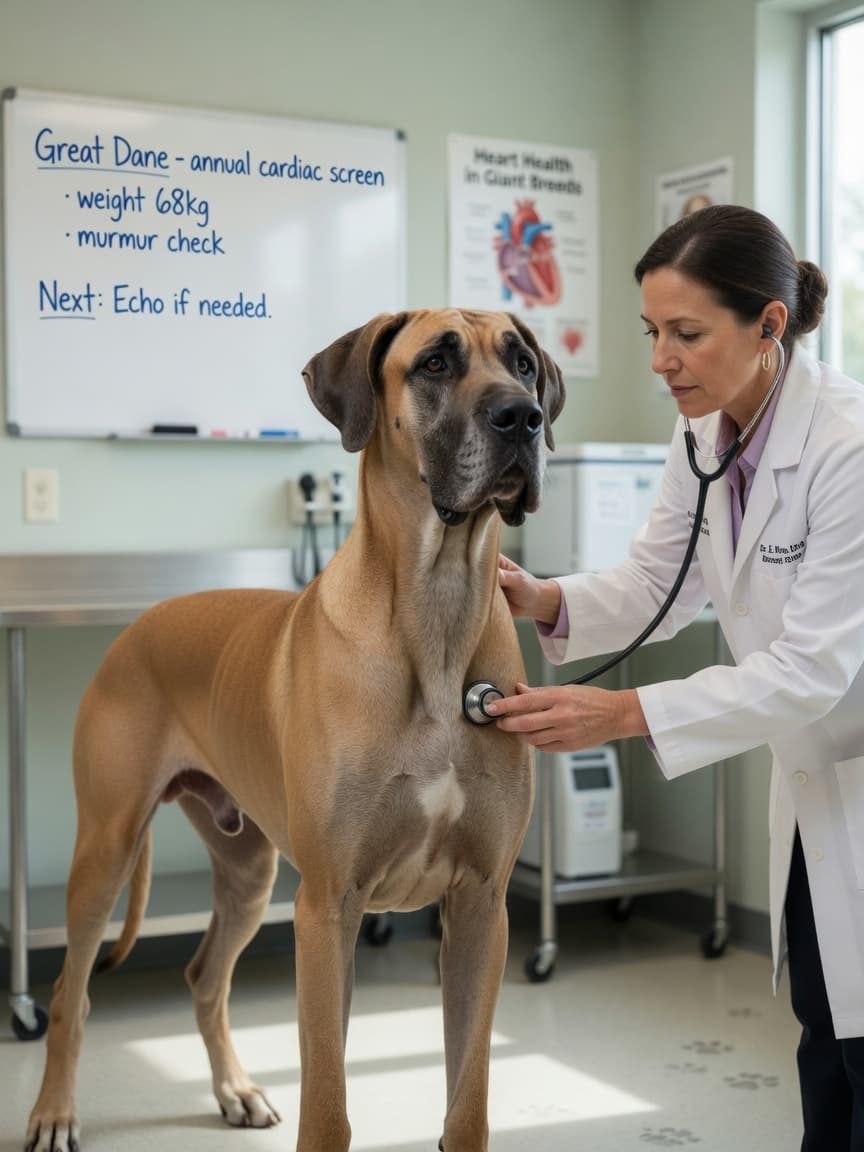
Great Danes are one of the breeds with the highest predisposition to dilated cardiomyopathy, a condition in which the heart muscle weakens and the chambers enlarge, reducing the heart's ability to pump blood efficiently. DCM can progress silently for months before any obvious symptoms appear, which makes routine cardiac screening vital.
Signs that may indicate cardiac disease include exercise intolerance, coughing (especially at night), laboured breathing, fainting episodes, or a sudden drop in energy levels. Annual cardiac auscultation by your vet, combined with echocardiography every one to two years from middle age onwards, gives the best chance of catching DCM early when medication can meaningfully improve quality and length of life.
Osteosarcoma: Bone Cancer Risk
Giant breeds carry a significantly elevated risk of osteosarcoma, an aggressive primary bone cancer that most frequently affects the limbs near the shoulder, wrist, or knee. Great Danes are among the most affected breeds. The average age of onset is between six and eight years, though it can occur earlier.
Early signs include persistent lameness that does not resolve with rest, localised swelling around a limb joint, and pain on palpation of the affected bone. Any lameness lasting more than a week in an adult Great Dane should be investigated promptly with X-rays. Osteosarcoma is unfortunately often diagnosed at an advanced stage, so owner vigilance and a low threshold for investigation genuinely improve outcomes.
Hypertrophic Osteodystrophy (HOD) in Puppies
Hypertrophic osteodystrophy is a painful developmental bone condition that predominantly affects fast-growing, large and giant breed puppies between two and eight months of age. In Great Dane puppies, HOD can present as sudden lameness, swollen and warm joints (particularly the wrists), fever, and marked reluctance to bear weight.
The exact cause is not fully understood, but diet almost certainly plays a role. Excessive calcium, phosphorus, or overall energy intake during the growth phase can accelerate bone growth beyond what the developing skeletal structures can safely support. Puppies showing signs of HOD require veterinary assessment and pain management, and their diet must be reviewed immediately.
Hypothyroidism
Hypothyroidism — underactivity of the thyroid gland — is more common in Great Danes than in many other breeds. The thyroid hormones regulate metabolism, and when production falls, a wide range of systems are affected. Typical signs include unexplained weight gain despite normal appetite, lethargy, a dull or thinning coat, recurrent skin infections, and heat-seeking behaviour.
Diagnosis is made via a blood panel measuring thyroid hormone levels, and the condition is managed with daily oral supplementation of synthetic thyroid hormone (levothyroxine). Once stabilised, most dogs respond very well and enjoy a normal quality of life. Annual thyroid screening is a sensible inclusion in your Great Dane's routine bloodwork from around four years of age.
Giant Breed Puppy Nutrition: Getting It Right From the Start
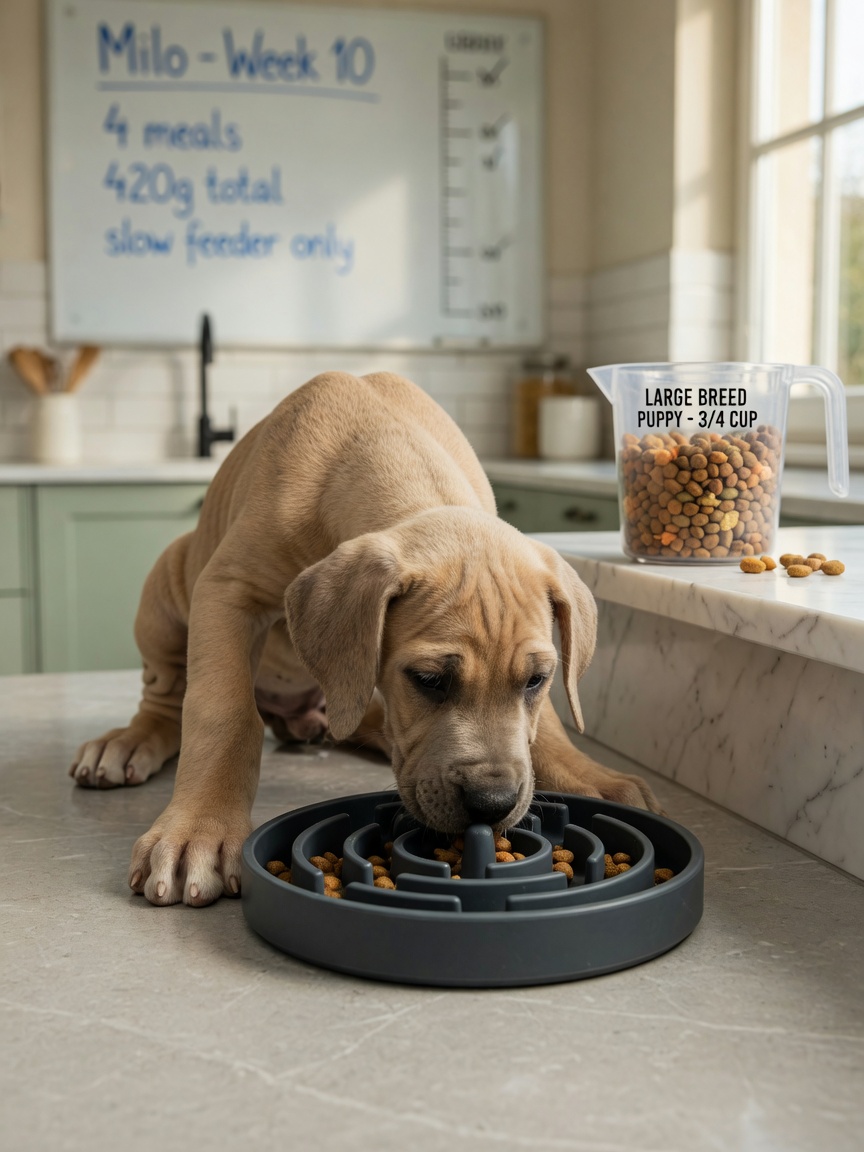
Perhaps no single factor influences the long-term health of a Great Dane more than what they are fed as a puppy. Giant breeds have a prolonged growth period — skeletal development continues until 18 to 24 months — and getting the balance of calcium, phosphorus, and total energy intake wrong during this window is a direct contributor to HOD, osteochondrosis, and other developmental orthopaedic diseases.
The key principles of giant breed puppy nutrition are:
- Use a diet specifically formulated for large or giant breed puppies — not a generic puppy food, which is typically too calorie-dense and has an incorrect mineral profile
- Calcium content should be between 1.0% and 1.8% of dry matter, and the calcium-to-phosphorus ratio should remain close to 1.2:1 to 1.4:1
- Avoid calcium supplementation unless specifically instructed by a vet — excess calcium from supplements is a common and preventable mistake
- Feed to maintain a lean body condition score; Great Dane puppies should never look plump
- Divide daily rations into three meals until six months, then two meals for life
Royal Canin Giant Puppy is one of the most widely recommended options for Great Dane puppies, formulated specifically to support controlled skeletal development with an appropriate energy density and mineral balance. It is readily available on Zooplus, often with bulk-buy options that suit the volumes a Great Dane puppy goes through. Transition your puppy to an adult giant breed food at around 18 to 24 months, guided by your vet.
DNA Testing: Know Your Dog's Genetic Profile
Genetic testing has become an invaluable tool for responsible Great Dane ownership and breeding. Laboklin, a leading veterinary genetics laboratory operating across Europe, offers a range of DNA tests relevant to this breed. Testing can screen for inherited conditions before they become clinical problems, inform breeding decisions, and provide peace of mind.
Tests worth discussing with your vet or breeder in the context of Great Danes include panels for cardiac disease predisposition, thyroid autoimmune conditions, and von Willebrand disease. Laboklin accepts samples directly from breeders and owners, and results are typically returned within two to three weeks. If you are purchasing a Great Dane puppy, asking the breeder for evidence of health testing on both parents is a basic but important safeguard.
Building a Preventive Health Plan
Great Danes have a shorter average lifespan than smaller breeds — typically eight to ten years — which makes proactive health management all the more important. A sensible annual health schedule for an adult Great Dane should include:
- Full physical examination with cardiac auscultation every 12 months
- Echocardiogram every one to two years from age four onwards
- Thyroid panel included in routine bloodwork from age four
- Orthopaedic assessment if any lameness or gait change is observed
- Weight and body condition score monitoring at every visit
- Discussion of gastropexy if not yet performed
The Great Dane is a breed that rewards attentive ownership. Their needs are considerable, but the bond they offer in return — calm, devoted, and deeply affectionate — makes the commitment entirely worthwhile. With the right diet, regular screening, and a vet you trust, your Great Dane can live the longest, healthiest life their genetics allow.