

What Is a Hot Spot?
A hot spot — medically termed acute moist dermatitis — is a localised area of inflamed, infected skin that appears suddenly and spreads rapidly. The lesion is typically moist, red, raw and painful, with a clearly defined border where healthy skin meets the affected area. Hair is usually matted over the lesion or has fallen away, revealing weeping, ulcerated tissue beneath.
Hot spots are self-perpetuating: the dog scratches, licks or chews the area because it is irritated or itchy, causing further damage to the skin barrier, which allows bacteria — most commonly Staphylococcus pseudintermedius — to proliferate, causing more inflammation and more itching. Without intervention, a lesion that begins as a small patch can spread dramatically within hours.
Which Dogs Are Most Prone?
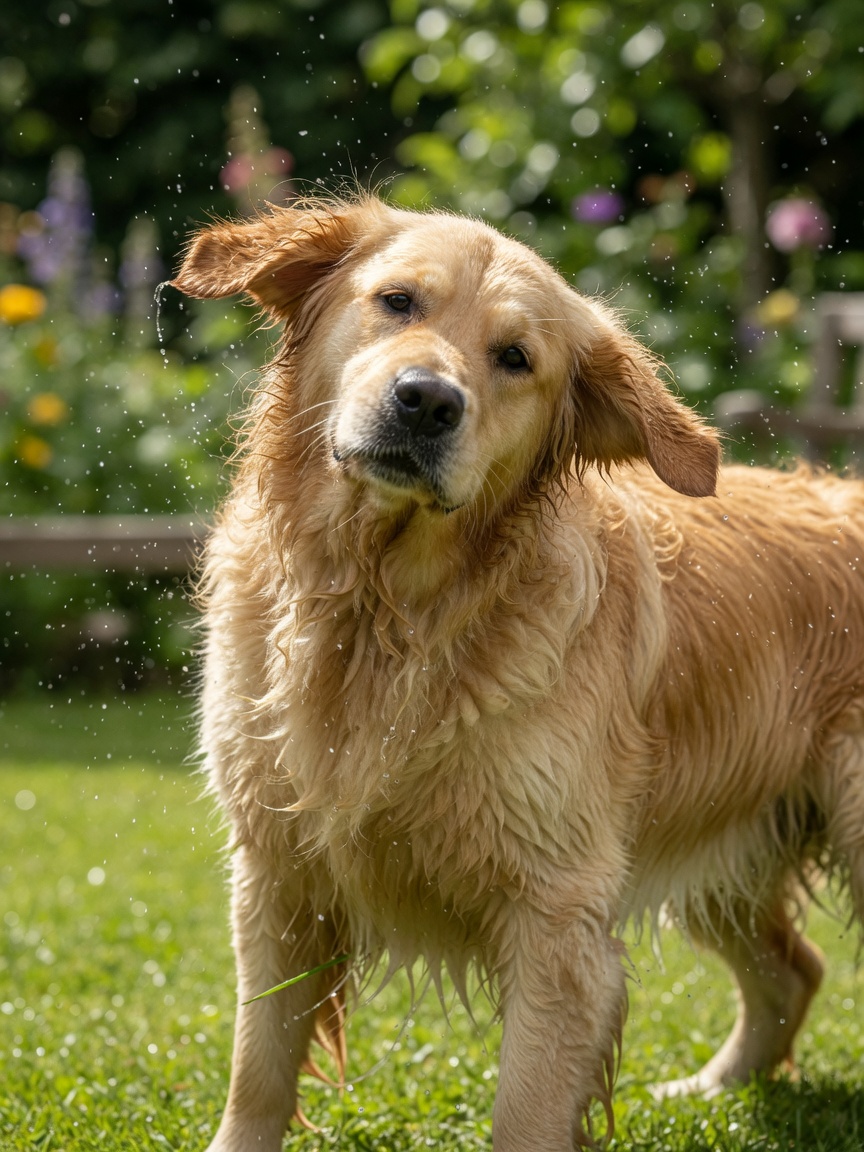
Whilst any dog can develop a hot spot, certain breeds are significantly over-represented in veterinary clinics. Labrador Retrievers, Golden Retrievers and German Shepherds are among the most commonly affected. This is thought to be due to a combination of factors: dense, moisture-retaining coats, a genetic predisposition to allergic skin disease and, in the case of retrievers, a tendency to swim or get wet.
Dogs with long or thick double coats are particularly vulnerable because moisture becomes trapped close to the skin after swimming, bathing or rain, creating the warm, moist environment in which bacteria thrive. Hot spots are more prevalent in summer months for this reason, though they can occur year-round.
What Causes Hot Spots?
Hot spots do not arise from nowhere — there is always an initiating trigger. Understanding the underlying cause is the single most important factor in preventing recurrence.
Flea Allergy Dermatitis
In the UK, flea allergy dermatitis is one of the most common triggers for hot spots, particularly over the rump and tail base. A dog with flea allergy can develop intense pruritus from even a single flea bite, leading to vigorous scratching and biting that rapidly traumatises the skin. Many owners are surprised to find fleas implicated because they may not see them — dogs with flea allergy groom so aggressively that they remove the evidence.
Underlying Allergic Skin Disease
Atopic dermatitis (environmental allergy) and food allergy both cause chronic pruritus that predisposes dogs to developing hot spots. Dogs with poorly controlled underlying allergy tend to develop recurrent hot spots, often in the same locations. If a dog has more than one or two episodes per year, an allergic workup is warranted.
Moisture and Poor Coat Management
Dogs that swim frequently, are bathed without being thoroughly dried, or live in humid environments are at elevated risk. Moisture becomes trapped under the coat, macerating the skin and allowing bacterial overgrowth. Matted or dirty coats compound this risk further.
Ear Infections and Anal Gland Disease
A hot spot near the ear or on the side of the face or neck may be secondary to an ear infection — the dog scratches at the ear and traumatises the adjacent skin. Similarly, anal gland impaction can cause dogs to focus obsessively on their hindquarters, triggering lesions in that region.
Behavioural Causes
Stress, boredom and compulsive licking can all initiate or perpetuate hot spots, particularly in working breeds kept in under-stimulating environments. These cases may require behavioural intervention alongside dermatological treatment.
Treating a Hot Spot
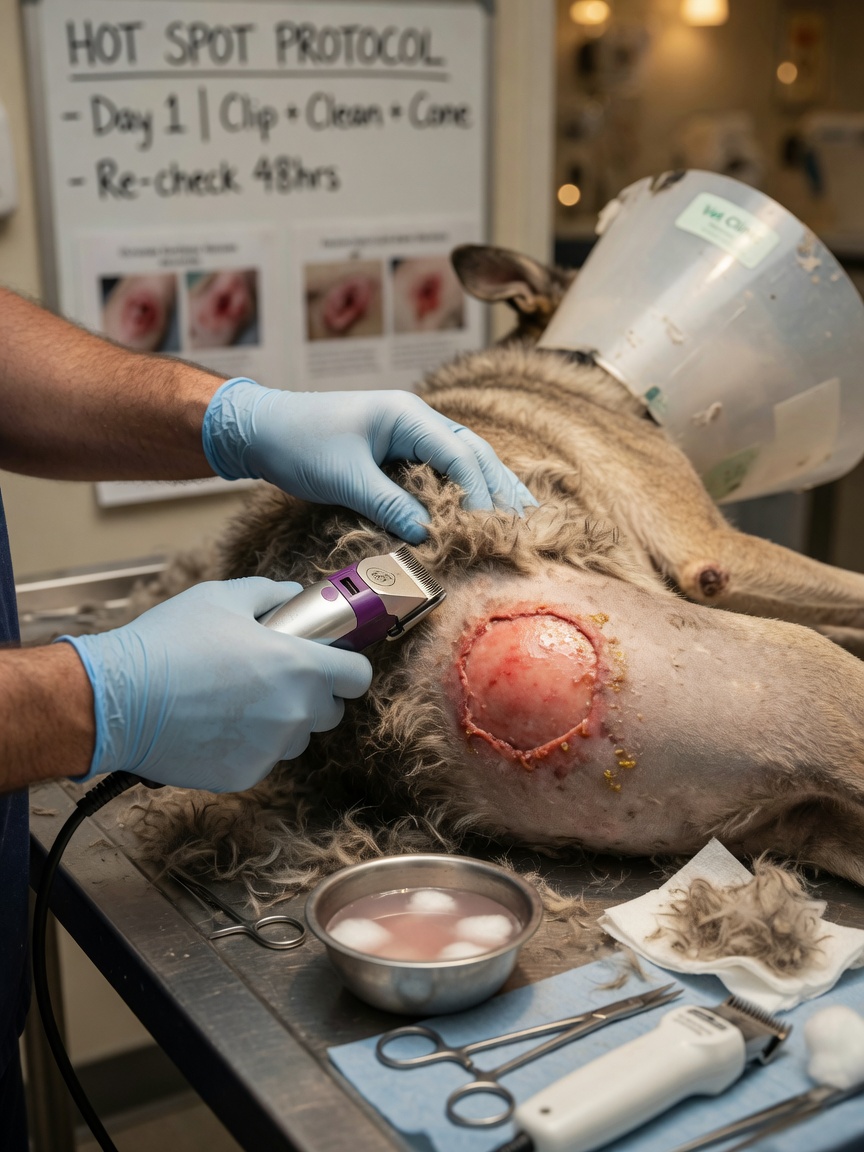
Hot spots are painful, and many dogs will require sedation or at least a muzzle during examination and initial treatment. Attempting to clean a raw, weeping lesion on an unsedated dog in discomfort can result in bites and an incomplete job.
Clip the Area
The hair over and around the lesion should be clipped away to expose the full extent of the wound, allow air circulation and enable topical treatment to reach the affected skin. This step is non-negotiable — leaving hair over a hot spot traps moisture and bacteria, worsening the condition. The lesion is almost always larger than it appears from the surface.
Cleanse the Wound
Once clipped, the lesion should be gently cleaned with a dilute chlorhexidine solution or saline to remove discharge and debris. Harsh antiseptics such as undiluted hydrogen peroxide or iodine solutions should be avoided as they damage healing tissue.
Cortisone and Antibiotics
A short course of corticosteroids (such as prednisolone) is often prescribed to break the itch-scratch cycle and reduce inflammation rapidly. Topical corticosteroid sprays can be used on mild lesions. If secondary bacterial infection is significant, a course of antibiotics is required — ideally selected based on the type of bacteria present, as antibiotic resistance in skin bacteria is an increasing concern.
The Elizabethan Collar
A properly fitting E-collar (the cone of shame) is essential during treatment. Without it, the dog will continue to lick and chew the lesion the moment your back is turned, undoing every aspect of treatment. Do not be tempted to remove it when the lesion looks better — maintain it until the skin has fully re-epithelialised.
Never Cover a Hot Spot
It may be tempting to bandage or cover a raw lesion, but covering a hot spot traps moisture and heat, creating ideal conditions for bacterial proliferation. Hot spots need air exposure to heal. Keep the area clean and dry, and resist covering it.
Addressing the Underlying Cause
Treating the hot spot itself is only half the job. Without identifying and managing the underlying trigger, recurrence is almost certain. If fleas are involved, all pets in the household must receive effective flea treatment and the home environment must be treated. If allergy is suspected, a veterinary dermatology referral and an elimination diet trial may be appropriate. Dogs with persistent moisture problems may benefit from a shorter clip during warm months.
Recurrent hot spots should never be accepted as simply part of a dog's life. They are painful, they spread rapidly and they signal that something underlying is not being adequately controlled. With the right investigation and management, most dogs with hot spot-prone skin can be managed effectively and comfortably.
When to See Your Vet
Mild, early hot spots can sometimes be managed at home with careful clipping, cleaning and topical antiseptic spray, but most benefit from veterinary attention. If the lesion is large, spreading quickly, very painful or accompanied by lethargy, fever or loss of appetite, seek veterinary care the same day. Deep infections can involve the underlying tissue and may require more aggressive treatment than a surface hot spot.