
From Fine to Furious in Twenty-Four Hours
Few skin problems escalate as dramatically as a hot spot. A dog that was scratching at their ear yesterday has today revealed a weeping, matted, intensely angry patch of skin the size of your palm — and they will not let you anywhere near it. Acute moist dermatitis, the formal name for what most dog owners know as hot spots, can appear and spread within hours. Understanding the cycle driving them is key to stopping them fast and keeping them from returning.
What Is a Hot Spot?
A hot spot is a localised area of acute, moist, superficial bacterial skin infection. It develops when a dog focuses intense self-trauma — licking, chewing, or scratching — on one area, disrupting the skin barrier and creating warm, moist conditions that allow opportunistic skin bacteria, most commonly Staphylococcus pseudintermedius, to proliferate rapidly. The infection triggers more itch, which drives more self-trauma, which worsens the infection. Without intervention, this self-perpetuating cycle can cause lesions to double in size within a day.
Hot spots are most common in thick- or long-coated breeds — Golden Retrievers, Labrador Retrievers, German Shepherd Dogs, and Saint Bernards among them — and occur most frequently in warm, humid weather. The underlying trigger that starts the scratching is often identifiable and worth finding to prevent recurrence.
What Sets Them Off?
A hot spot is always secondary to something that provoked the initial scratching or licking. Common triggers include flea bites (especially in flea-allergic dogs), otitis externa (ear infection) causing facial or neck hot spots from ear-scratching, other underlying allergies, contact irritants, clipper burn, moisture trapped under a heavy coat after swimming or bathing, and anal gland discomfort causing tail-base lesions. Identifying the trigger is not optional — a dog treated for the hot spot without addressing the cause will almost certainly develop another.
Recognising a Hot Spot
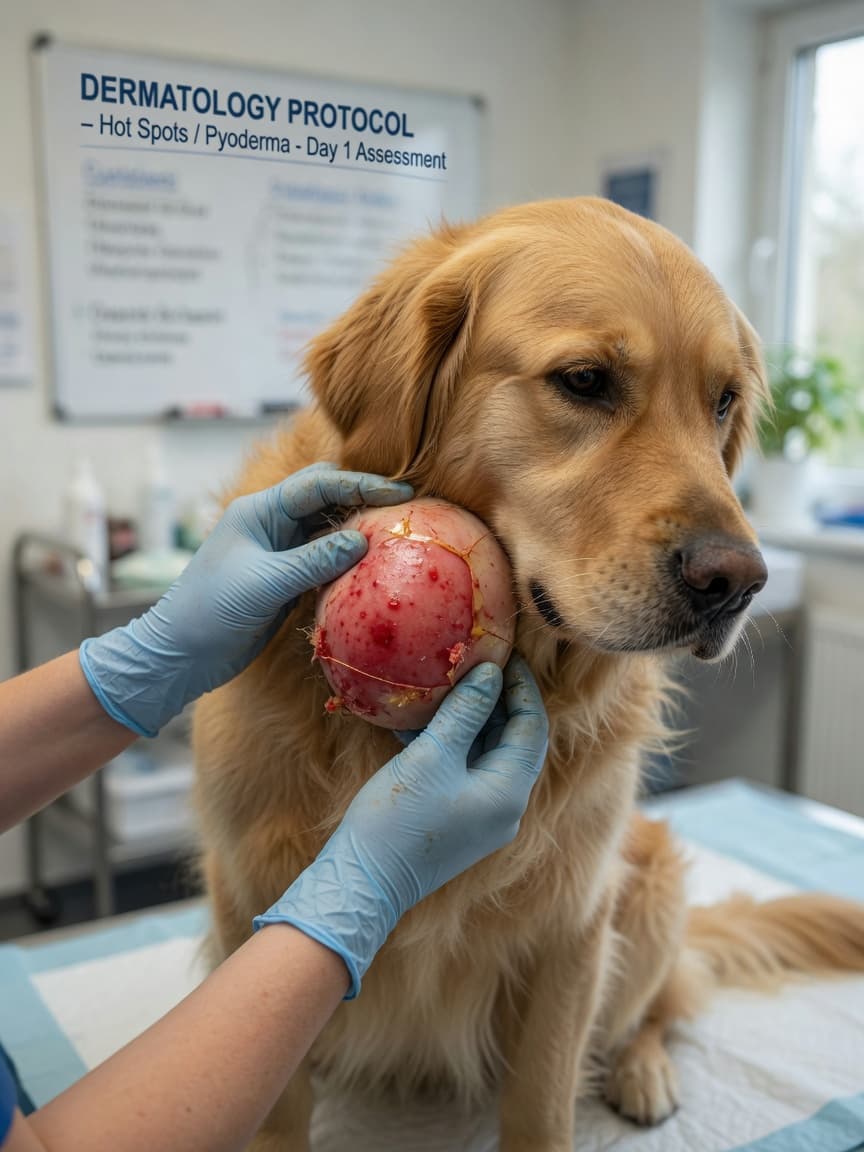
Hot spots present as clearly demarcated, bright red, moist, often oozing lesions with matted fur over and around them. They are painful as well as itchy, and dogs will frequently resist examination. The skin surface may appear ulcerated in severe cases. Unlike deeper skin infections (furunculosis) or ringworm, hot spots are superficial and typically have sharply defined edges.
They are most commonly found on the cheek and neck (often below a chronically infected ear), at the base of the tail (often related to flea allergy or anal gland problems), and on the limbs or flanks. The speed of onset — often overnight — is one of their most distinguishing features.
Treating a Hot Spot
Clipping and Cleaning
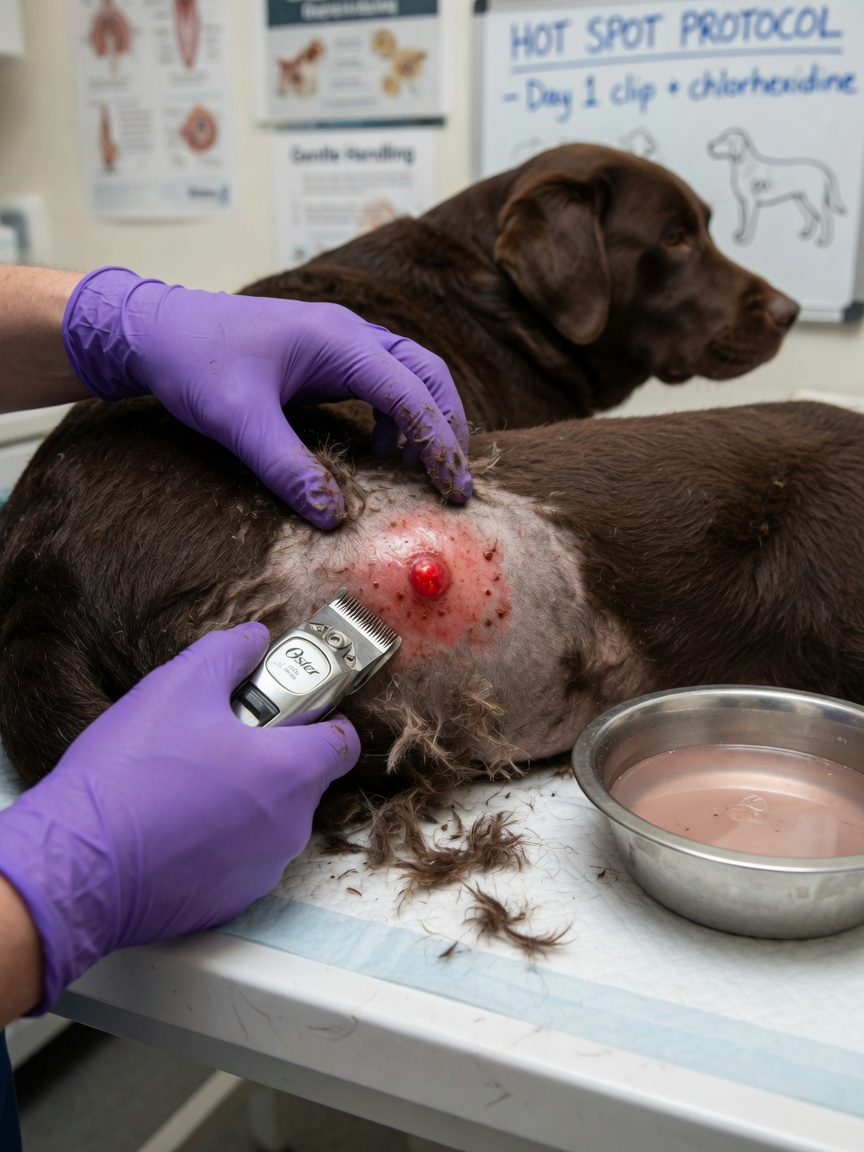
The most important first step is careful clipping of the hair around and over the lesion to allow air to reach the skin and enable proper topical treatment. Attempting to treat through matted, moist fur is ineffective. The clipped area should extend at least two to three centimetres beyond the visible lesion edge. The area is then gently cleaned with a dilute antiseptic solution — chlorhexidine is the most commonly used and evidence-supported option. This step alone causes significant discomfort, and many dogs require veterinary sedation to allow adequate treatment of large or painful lesions.
Topical and Systemic Treatment
Following cleaning, veterinary-prescribed topical antibacterial and anti-inflammatory preparations are applied to reduce bacterial load and break the itch-scratch cycle. For moderate to severe lesions, a short course of oral corticosteroids is usually necessary to bring rapid relief; the inflammation driving self-trauma must be controlled or healing will not occur. Systemic antibiotics are prescribed when lesions are large, deep, or fail to respond to topical therapy alone. Most uncomplicated hot spots respond well within five to seven days of appropriate treatment.
Preventing Further Self-Trauma
An Elizabethan collar (cone) or an appropriate recovery suit is essential throughout treatment. Even brief access to the lesion can undo a day of healing. Dogs often resent these devices, but they are non-negotiable for recovery.
Preventing Hot Spots from Recurring
Prevention hinges on two things: managing the underlying trigger and maintaining coat and skin condition. Year-round veterinary-grade flea prevention eliminates the most common precipitating cause. Ears should be checked and cleaned regularly in predisposed breeds. Dogs with known allergies benefit from structured allergy management plans drawn up with their veterinarian.
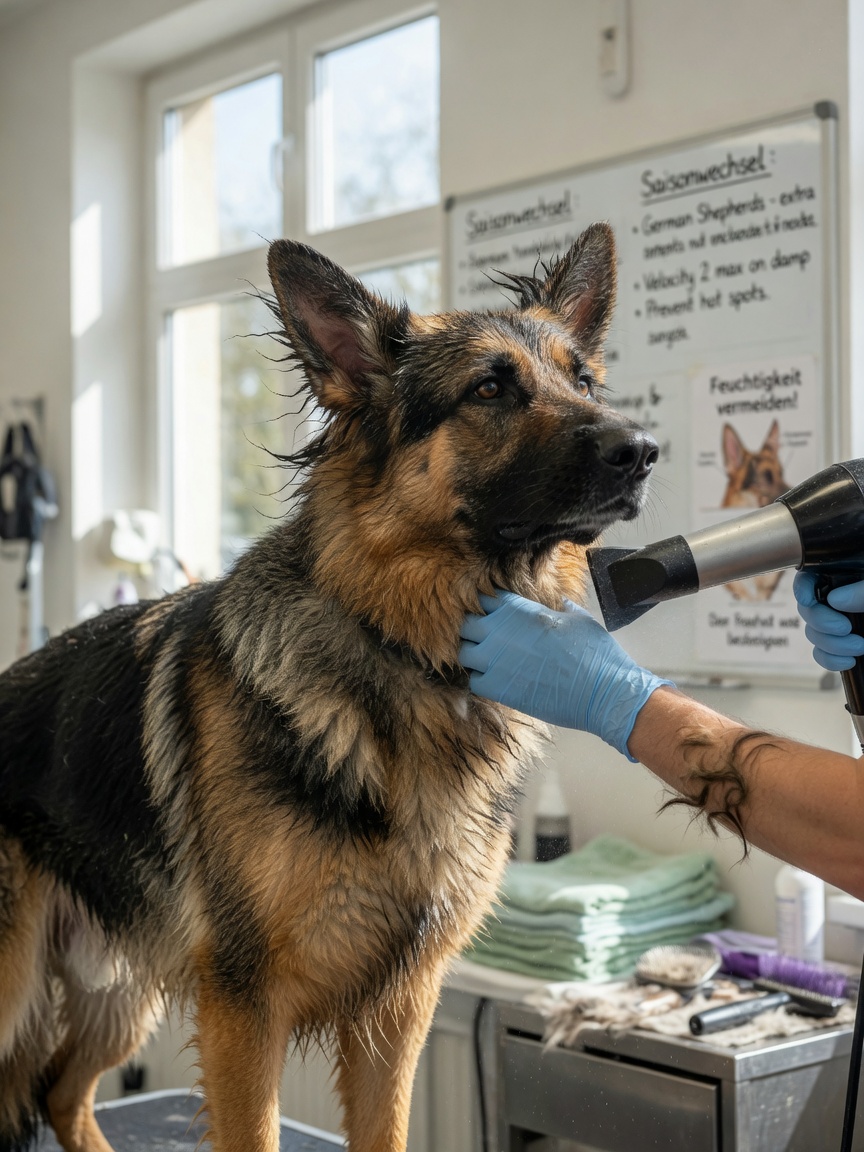
Coat management matters significantly for thick- and long-coated breeds. Professional grooming, particularly during seasonal coat changes, reduces the moisture-trapping that promotes hot spot formation. After swimming or bathing, thorough drying — especially in neck, ear, and flank areas — is important. Dogs that swim frequently may benefit from a shorter clip during summer months.
Skin health supplements including omega-3 fatty acids support barrier function and may help reduce the frequency of flares in allergic individuals. A balanced, complete diet is the foundation of any skin health programme.
When to See a Vet Immediately
Not every hot spot needs emergency treatment, but several signs warrant same-day veterinary assessment: lesions larger than five centimetres, rapid spread since first noticed, lesions near the eyes, evidence of deep infection such as swelling, nodules, or pain on palpation, or a dog in severe distress. Deeper pyoderma can mimic hot spots and requires different management — a veterinarian needs to assess lesions that do not respond within forty-eight to seventy-two hours of initial treatment.
Quick Reference: Hot Spot Management
- Clip and clean the area immediately — treating through wet, matted fur is ineffective.
- Use veterinary-prescribed topical antibacterial treatment and an Elizabethan collar to prevent self-trauma.
- Most cases require short-term anti-inflammatory therapy to break the itch-scratch cycle.
- Always investigate and address the underlying trigger — flea allergy, ear infection, and other allergies are the most common culprits.
- Keep dense coats well-groomed and dry, especially in warm weather and after swimming.
- Seek same-day veterinary attention for large, rapidly spreading, or painful lesions.
- Year-round, veterinary-recommended flea prevention is the single most effective preventive measure for dogs prone to hot spots.