

How Big Do St. Bernards Get? Average Weight & Growth Chart — Dogster
St. Bernards are among the largest dog breeds in the world, and their impressive size is one of their most distinctive characteristics. These gentle giants can weigh anywhere from 55 to 110 kg (120 to 240 lbs), with some males exceeding these ranges. If you're considering bringing a St. Bernard into your home or already share your life with one, understanding their growth patterns and final size is essential for proper care, nutrition, and space planning.
Understanding St. Bernard Size Standards
St. Bernards are classified as giant breed dogs by the Kennel Club. The breed standard describes males as typically standing 70-90 cm (28-35 inches) at the shoulder, whilst females are slightly smaller at 65-80 cm (26-31 inches). However, height measurements alone don't tell the complete story, as these dogs are remarkably muscular and heavily boned.
The average weight for adult male St. Bernards ranges from 64 to 82 kg (140 to 180 lbs), with females typically weighing between 55 and 73 kg (120 to 160 lbs). It's not uncommon for large males to exceed 90 kg (200 lbs), particularly if they have exceptional bone density and muscle mass.
Growth Timeline and Development Stages

St. Bernards grow at an impressive pace during their first two years of life. Understanding these developmental stages helps you provide appropriate nutrition and exercise.
- Birth to 3 months: Rapid growth phase; puppies may gain 1-2 kg weekly
- 3 to 6 months: Continued rapid growth; skeletal development accelerates
- 6 to 12 months: Growth rate slows slightly; dogs reach approximately 80-90% of their adult size
- 12 to 18 months: Final growth phase; chest broadens and muscles develop
- 18 to 24 months: Most St. Bernards reach their full adult size, though some continue filling out until 3 years
Factors Influencing Growth and Size
Several variables affect how large your St. Bernard will ultimately become:
- Genetics: Parental size is the strongest predictor of adult size
- Nutrition: Proper diet during growth phases is crucial; deficiencies can stunt development
- Spaying and neutering: Timing of these procedures can influence growth patterns and final size
- Health conditions: Illnesses during critical growth periods may affect maximum potential size
- Exercise levels: Appropriate activity supports healthy skeletal development
Nutritional Requirements for Growing St. Bernards
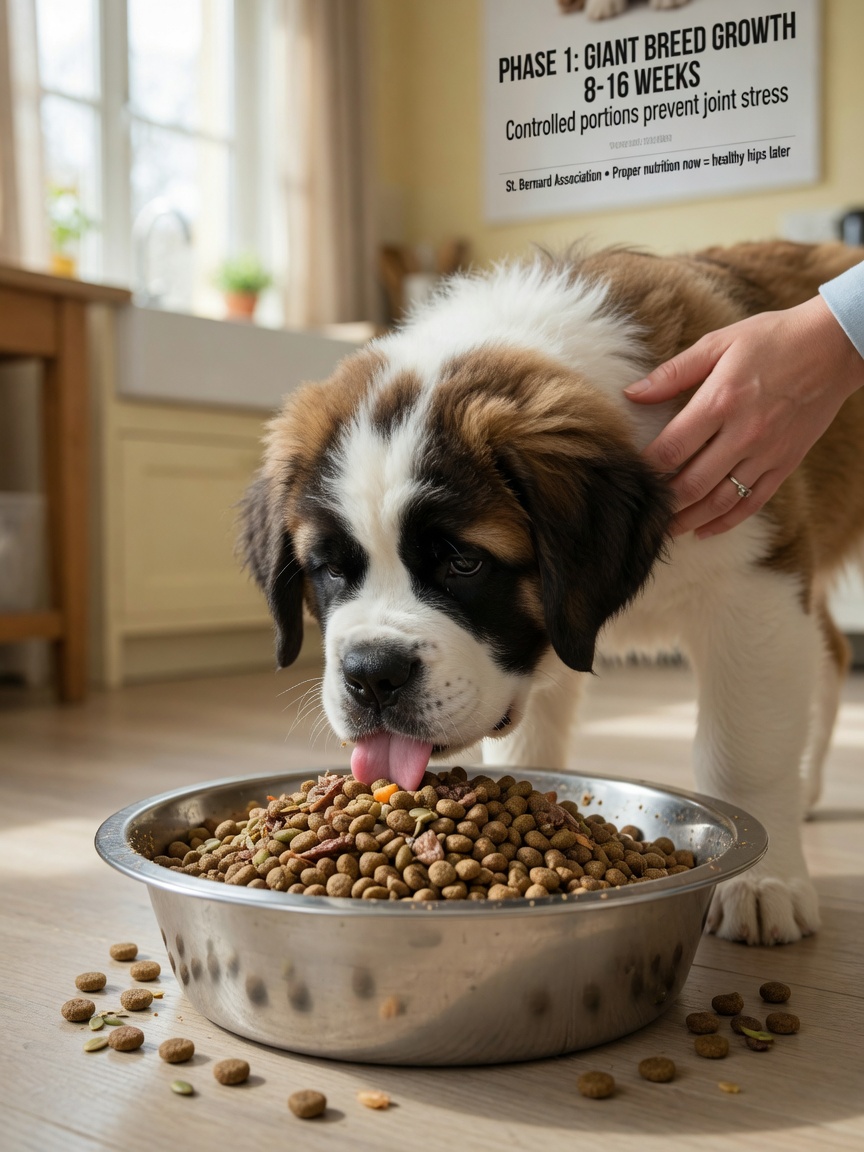
Giant breed puppies require carefully balanced nutrition to support their rapid growth without causing skeletal problems. Feed high-quality puppy food formulated specifically for large or giant breeds, as these contain appropriate calcium and phosphorus ratios.
Growing St. Bernards need approximately 1,400-1,800 calories daily during their first year, increasing as they grow. Divide meals into three portions until six months old, then transition to two meals daily. Avoid high-energy or adult formulas, as excessive calories can promote too-rapid growth and joint stress.
Health Considerations for Large Dogs
Giant breeds like St. Bernards face unique health challenges related to their size. Hip dysplasia, elbow dysplasia, and heart conditions are more prevalent in larger dogs. Ensure your puppy comes from health-tested parents with clear hip and elbow scores. Regular veterinary check-ups during the growth period are essential for monitoring development and identifying potential issues early.
Key Takeaways for St. Bernard Owners
St. Bernards are truly giant companions that will significantly impact your living space and daily routine. Most reach their full adult size between 18 and 24 months, though they may continue maturing until three years old. Providing appropriate nutrition, controlled exercise, and regular veterinary care during their growth phase sets the foundation for a healthy, long life. Remember that each dog is unique—whilst breed standards provide guidelines, your individual St. Bernard may vary slightly in final size. The investment in quality care during these crucial developmental years pays dividends in your dog's long-term health and wellbeing.