
How Often Should You Worm Your Cat in Europe?
Worming cats is one of the most frequently overlooked aspects of feline healthcare, yet it carries genuine implications for both your pet's wellbeing and human health. The European Scientific Counsel Companion Animal Parasites (ESCCAP) provides science-based guidance on worming frequency, and the key principle is simple: your cat's lifestyle determines how often treatment is needed.
ESCCAP GL1: The Foundation for Cat Worming
ESCCAP Guideline 1 (GL1) covers intestinal worm control in both dogs and cats. For adult cats, the baseline recommendation is a minimum of four treatments per year — once every three months — against roundworms, primarily Toxocara cati. However, this is a floor that applies to genuinely low-risk cats. Many cats, particularly those with outdoor access, should be treated far more frequently.
Indoor Versus Outdoor Risk Stratification
The single biggest factor in determining your cat's worming frequency is whether it goes outdoors — and what it does there.
- Strictly indoor cats with no hunting behaviour: Four times per year (every three months) is generally considered adequate. However, indoor cats can still be exposed through contaminated soil on shoes, insects brought indoors, or prey left by another pet.
- Outdoor cats with limited hunting: Every one to three months, depending on the level of outdoor access and the local wildlife population.
- Active hunting cats: Monthly worming is strongly recommended by ESCCAP. Cats that regularly hunt rodents are at very high risk of tapeworm infection, particularly Taenia taeniaeformis, which is acquired directly from infected rodents. No amount of vigilance on your part will reliably prevent a determined hunter from ingesting prey.
The Zoonotic Risk: Toxocara cati and Children

Toxocara cati is a roundworm that poses a genuine zoonotic risk to humans. Children are most vulnerable, particularly those who play in sandpits or gardens where cats defecate. Infection in humans can cause visceral larva migrans — where larvae migrate through body tissues — and ocular larva migrans, which in rare cases leads to visual impairment.
If there are children under five in your household, or if your cat has access to areas used by children, monthly worming is the responsible choice regardless of whether your cat hunts.
Echinococcus multilocularis in Cats
The fox tapeworm (Echinococcus multilocularis) is primarily a concern in dogs, but cats can also act as accidental hosts. The risk is lower in cats than in dogs because the parasite develops less efficiently in the feline host. Nevertheless, cats in endemic areas — Switzerland, Austria, southern Germany, the Balkans, and parts of France — that hunt rodents should be treated with a praziquantel-containing product monthly.
It is important to note that not all cat worming products cover tapeworms. Always check that your chosen product contains praziquantel if tapeworm risk exists for your cat.
Tapeworms From Rodents: Taenia taeniaeformis
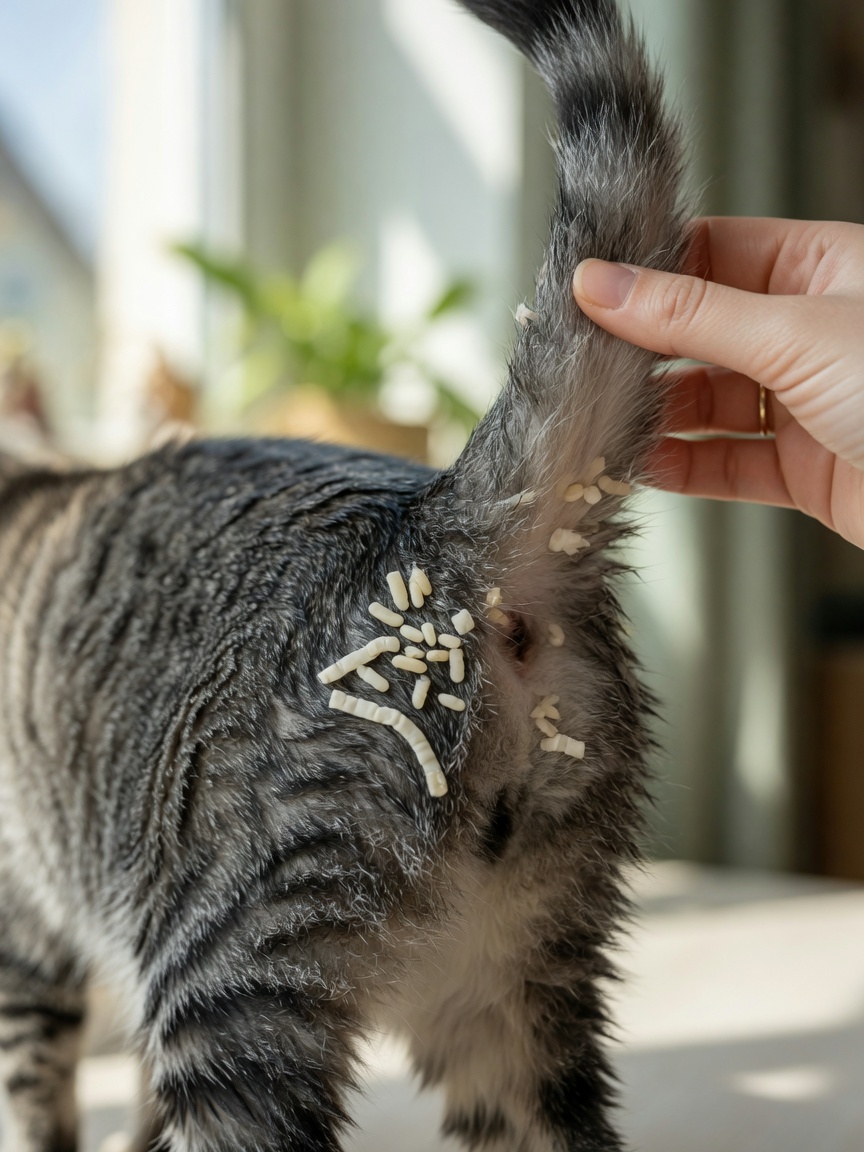
Taenia taeniaeformis is the most common tapeworm in cats across Europe. Cats acquire it by eating infected rodents, making hunters particularly vulnerable. For cats that hunt regularly, quarterly treatment is the absolute minimum; monthly is preferred. You may notice tapeworm segments — small, white, grain-like objects — around your cat's tail or in the litter tray. These are a clear sign that treatment is overdue.
Kitten Worming Protocol
Kittens are highly susceptible to worm infection, particularly via the mother's milk. The ESCCAP kitten protocol mirrors that recommended for puppies:
- Worm every two weeks from two weeks of age until twelve weeks of age.
- Then worm monthly from twelve weeks to six months of age.
- The nursing queen should be treated at the same time as the kittens.
- After six months, transition to the adult protocol appropriate for your cat's lifestyle.
Starting kittens on a proper worming schedule early is one of the most important things a new owner can do for long-term health.
Recommended Products for Cats in Europe
Several licensed anthelmintics are available for cats across Europe:
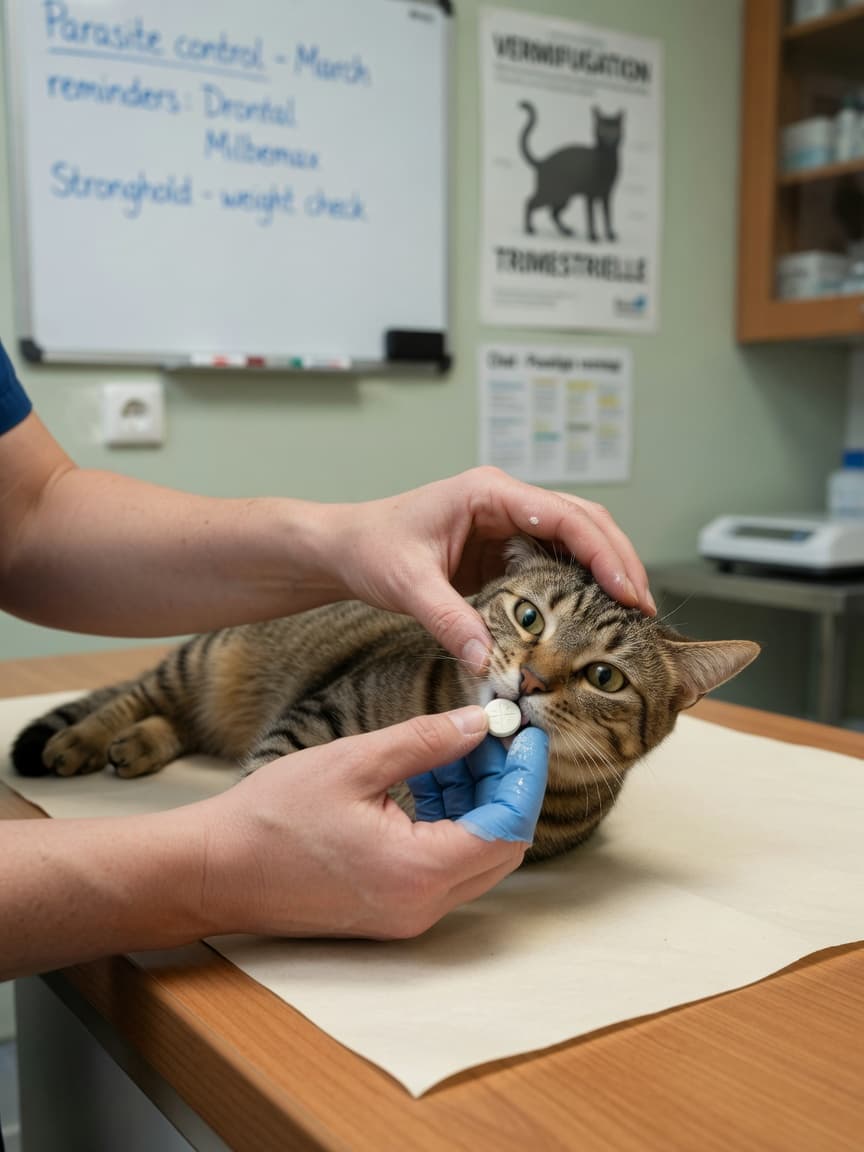
- Milbemax cats (milbemycin oxime + praziquantel): Available in tablet form, covering roundworms, hookworms, and tapeworms including Taenia species. Widely prescribed by European vets.
- Drontal cats (pyrantel + praziquantel): A tablet-based broad-spectrum wormer covering roundworms and tapeworms. Suitable for adult cats and available in many European countries.
- Profender spot-on (emodepside + praziquantel): An excellent choice for cats that resist tablets. Applied to the skin at the back of the neck, it covers roundworms, hookworms, and tapeworms. Particularly useful for cats that are difficult to pill.
All of these products are available through veterinary practices, and some formulations can be purchased through online retailers such as Zooplus, depending on your country's prescription regulations. If you struggle to administer tablets to your cat, ask your vet about the spot-on alternatives.
Worming and Flea Control: The Connection
One easily overlooked point: the flea tapeworm Dipylidium caninum is acquired when cats (or dogs) ingest an infected flea during grooming. If your cat has fleas, it almost certainly has this tapeworm too. Effective flea control is therefore an integral part of tapeworm prevention. Treating worms without also addressing fleas means reinfection is likely within weeks.
Summary: ESCCAP-Based Worming Frequency for Cats
- Indoor, non-hunting cats: minimum four times per year
- Outdoor cats with some hunting: every one to three months
- Active hunters: monthly
- Cats in households with young children: monthly
- Cats in Echinococcus-endemic areas (Switzerland, Austria, Germany, Balkans): monthly with praziquantel-containing product
- Kittens: every two weeks to twelve weeks, then monthly to six months
The key is honest risk assessment. Speak to your vet about your cat's specific lifestyle and your local parasite pressure. A tailored programme is always more effective than a generic one — and it helps protect your whole family, not just your pet.
Written by Sarah Bennett, animal health writer at ForPetsHealthcare.