
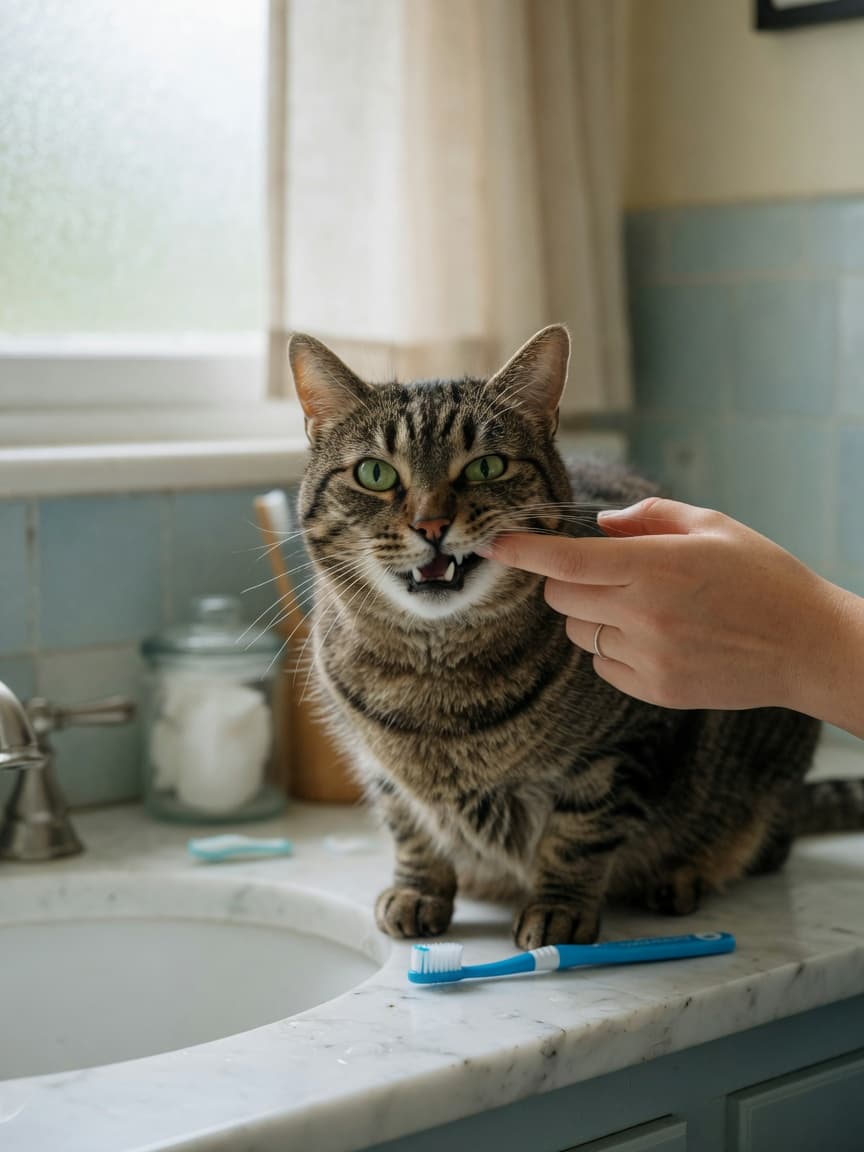
Most Cats Have Dental Disease by Age Three
Studies consistently show that the majority of cats show signs of periodontal disease by the time they reach three years of age. Left unaddressed, dental disease is not merely a mouth problem — bacteria from inflamed gums can enter the bloodstream and affect the kidneys, heart, and liver. Toothbrushing is the single most effective home intervention available, yet it is one of the least practised. The reason is almost always the same: owners try to introduce it too quickly and give up after the first battle.
Set Realistic Expectations
Very few cats accept a toothbrush from day one. The process of introducing toothbrushing correctly takes two to four weeks of consistent, short sessions. The payoff is a cat that tolerates — and in many cases actively accepts — daily brushing. Rushing this process is counterproductive. A cat who has learned to associate the toothbrush with stress will be harder to work with at every subsequent attempt.
What You Need
- A toothbrush designed for cats — finger brushes or small-headed brushes with angled handles both work well.
- Toothpaste formulated specifically for cats. Human toothpaste contains fluoride and xylitol, both of which are toxic to cats. Never use it.
- Patience and a quiet environment.
- High-value treats your cat actively seeks out.
The Introduction Phase: Weeks One and Two
Days One to Three: Touch and Reward
Begin with no equipment at all. Simply touch the outside of your cat's lips briefly while they are calm and relaxed, then immediately offer a treat. Repeat two to three times per day. The goal is to build a positive association with mouth handling before anything else happens.
Days Four to Seven: Introducing the Paste
Place a small amount of cat toothpaste on your fingertip and allow your cat to lick it off. Most cats find enzymatic cat toothpastes palatable — common flavours include poultry and malt. This step familiarises them with the taste without any brushing action.
Days Eight to Fourteen: Finger on the Teeth
With toothpaste on your finger, gently rub the outside surfaces of the upper canine teeth and the cheek teeth. Keep sessions to 15 to 20 seconds and end before your cat shows any sign of agitation. Reward calmly afterwards.
Introducing the Brush: Weeks Three and Four
Once your cat is comfortable with finger contact, introduce the toothbrush by letting them sniff and lick it with toothpaste applied. Over the following days, begin using the brush to touch the same teeth you were previously touching with your finger. Use small circular or back-and-forth movements along the gumline, keeping the brush at a 45-degree angle to the tooth surface.
Focus initially on the outside surfaces of the teeth — this is where periodontal disease begins, and cats rarely tolerate the brush being placed inside the mouth. The outside surfaces are also where brushing has the greatest impact, so do not be discouraged if the inner surfaces remain inaccessible.
Maintaining a Routine
Daily brushing produces the best results — plaque mineralises into tartar within 24 to 48 hours on unbrrushed surfaces. If daily brushing isn't achievable, aim for a minimum of three to four times per week. Choose a consistent time of day, ideally when your cat is naturally calm, such as after a meal or in the early evening. A brief session done consistently is more valuable than a longer session done sporadically.
Even with excellent home care, your cat should receive a veterinary dental examination at least once a year. Your vet can identify disease developing below the gumline — something no amount of brushing can address. For cats with pre-existing dental disease, professional cleaning under anaesthetic may be needed before a home programme can be effective.
Practical Summary
- Never use human toothpaste — it is toxic to cats.
- Introduce brushing over two to four weeks in short, positive sessions.
- Begin with touch and reward before introducing any equipment.
- Focus on the outside surfaces of the upper teeth — this is where disease begins.
- Aim for daily brushing; a minimum of three to four times per week is beneficial.
- End each session before your cat shows frustration — short and positive beats long and stressful.
- Book an annual veterinary dental check regardless of your home care routine.
- If your cat shows signs of existing dental pain — drooling, dropping food, pawing at the mouth — see your vet before starting any brushing programme.