
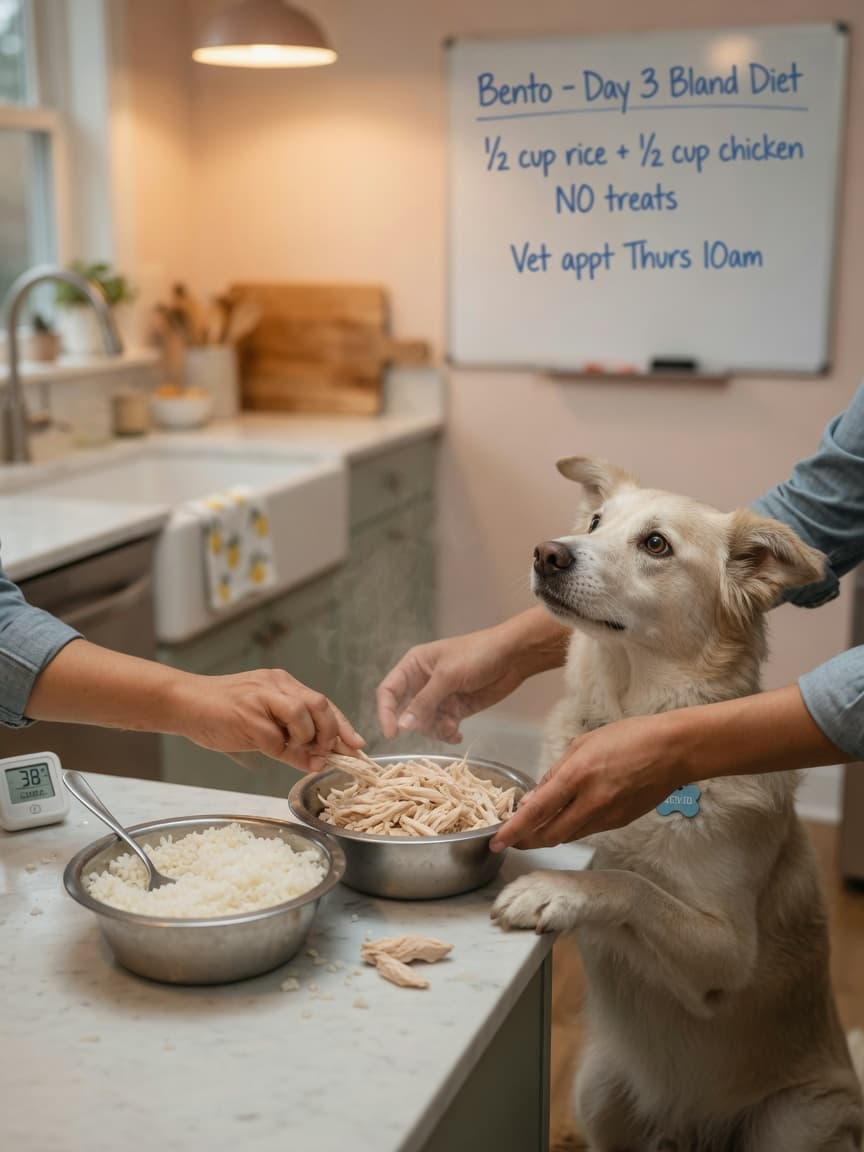
How to Cook Chicken & Rice for Dogs: Vet-Approved Bland Diet
When your beloved dog is suffering from digestive upset, vomiting, or diarrhoea, a simple home-cooked meal of chicken and rice can work wonders. This timeless combination has long been the go-to recommendation from veterinarians across Europe and beyond, offering easily digestible nutrition whilst giving your dog's stomach a much-needed rest. In this guide, we'll walk you through everything you need to know about preparing this healing meal safely and effectively for your furry friend.
Why Chicken and Rice Is the Perfect Bland Diet
Chicken and rice is considered the gold standard bland diet for dogs because both ingredients are gentle on the digestive system. Chicken provides high-quality, easily digestible protein without excessive fat, whilst rice offers simple carbohydrates that don't strain an upset stomach. Together, they deliver essential nutrients without triggering further gastrointestinal distress.
This diet is particularly beneficial for dogs recovering from:
- Acute gastroenteritis (stomach inflammation)
- Diarrhoea or loose stools
- Vomiting episodes
- Post-surgical recovery
- Dietary indiscretions (eating something they shouldn't)
Step-by-Step Preparation Guide
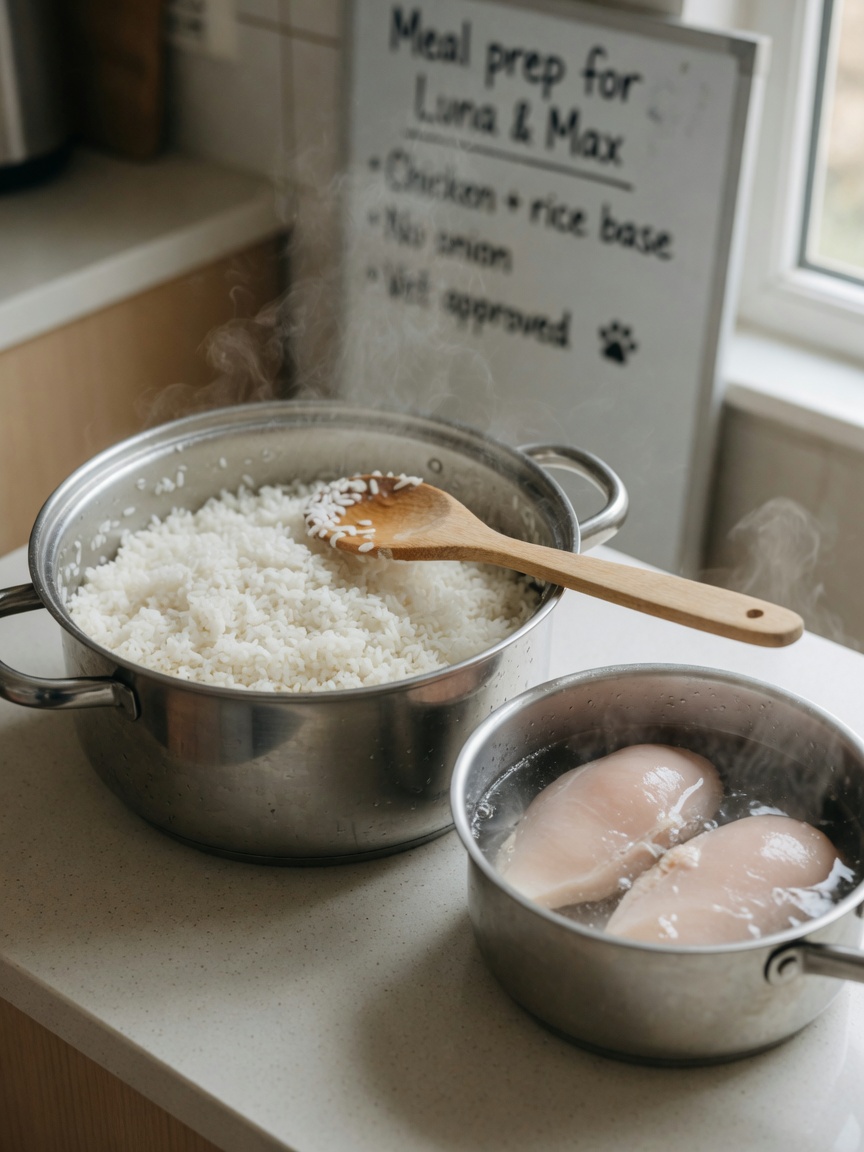
What You'll Need:
- Skinless, boneless chicken breasts
- White rice (long-grain works best)
- Water
- A large pot with a lid
Basic Recipe (for a medium-sized dog, approximately 25kg):
- Rinse one cup of white rice thoroughly under cold water to remove excess starch
- Place the rice in a large pot and add three cups of water
- Bring to a boil, then reduce heat to low and cover
- Simmer for 15-20 minutes until rice is completely soft and absorbs all water
- Meanwhile, place two chicken breasts in a separate pot with enough water to cover them
- Boil the chicken for 12-15 minutes until fully cooked (internal temperature reaches 75°C)
- Allow the chicken to cool, then shred or dice into small, manageable pieces
- Combine the cooked chicken and rice, mixing thoroughly
- Cool completely before serving to your dog
Essential Preparation Tips
Never add seasoning. Salt, garlic, onions, and other common kitchen seasonings are harmful to dogs and must be completely avoided. Cook chicken and rice plainly, with water only.
Use skinless chicken. The skin contains excess fat, which can irritate an already-sensitive stomach. Always remove skin before cooking.
Choose white rice over brown. White rice is more easily digestible and moves through the system faster, making it ideal for dogs with active gastric distress.
Cool completely. Never serve hot food to your dog, as it can cause additional stomach upset or mouth burns.
Feeding Guidelines and Portions
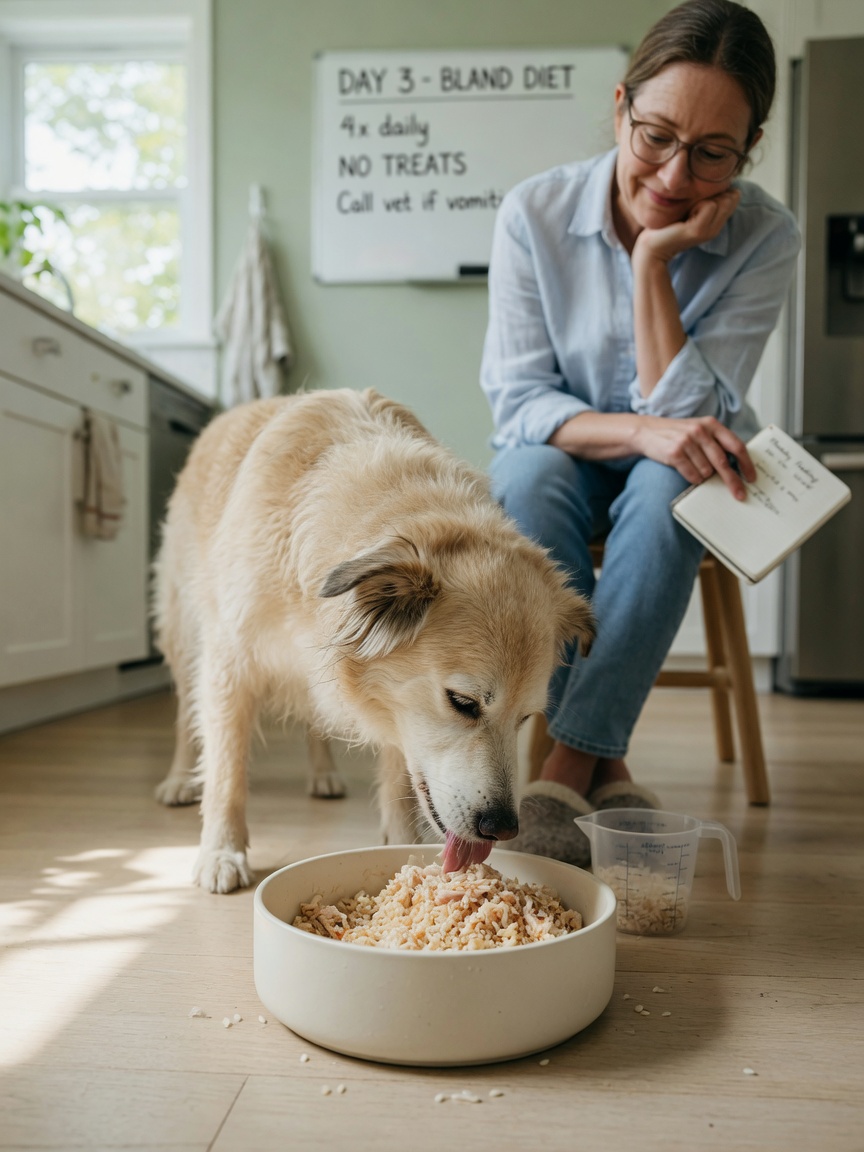
The appropriate amount depends on your dog's size and the reason for the bland diet. Generally, follow these guidelines:
- Small dogs (under 10kg): ¼ to ½ cup per meal
- Medium dogs (10-25kg): ½ to 1 cup per meal
- Large dogs (over 25kg): 1 to 2 cups per meal
Feed smaller, more frequent meals (three to four times daily) rather than one large meal. This approach aids digestion and allows you to monitor your dog's response more carefully.
Storage and Safety
Store cooked chicken and rice in airtight containers in the refrigerator for up to three days. For longer storage, freeze in individual portions for up to three months. Thaw in the refrigerator before serving.
Always check that the mixture has reached room temperature before offering it to your dog, and discard any uneaten portions after 30 minutes to prevent bacterial growth.
When to Return to Normal Diet
Most dogs can transition back to their regular diet after 5-7 days of improvement. Gradually reintroduce their usual food by mixing increasing amounts with the chicken and rice over three to five days. However, always consult your veterinarian before making dietary changes, especially if symptoms persist.
Key Takeaways
Homemade chicken and rice is a safe, effective, and economical option for supporting your dog through temporary digestive troubles. Remember to keep ingredients plain, maintain proper portions, and monitor your dog's progress closely. If symptoms worsen or don't improve within 48 hours, contact your vet promptly, as persistent digestive issues may require professional evaluation and intervention.