
How to Culture Amphipods and Copepods (for Aquarium Owners)
If you're keeping seahorses, pipefish, or other finicky marine fish, you've likely discovered that frozen foods simply won't cut it. Amphipods and copepods are nutritional powerhouses that mimic the natural diet these species would encounter in the wild. Rather than purchasing expensive live cultures monthly, culturing your own at home is surprisingly straightforward, cost-effective, and rewarding. This guide will walk you through establishing thriving populations of these essential live foods in your home aquarium setup.
Why Culture Amphipods and Copepods?
Amphipods and copepods are small crustaceans that form a crucial part of the marine food chain. Unlike larger prey items, these tiny organisms provide excellent nutrition without overwhelming delicate fish species. They're particularly valuable for seahorses, mandarin fish, and newly settled corals that require constant grazing opportunities. Additionally, culturing your own eliminates the risk of introducing parasites or diseases from external sources, and they cost significantly less than purchasing pre-cultured specimens regularly.
Setting Up Your Culture Tank
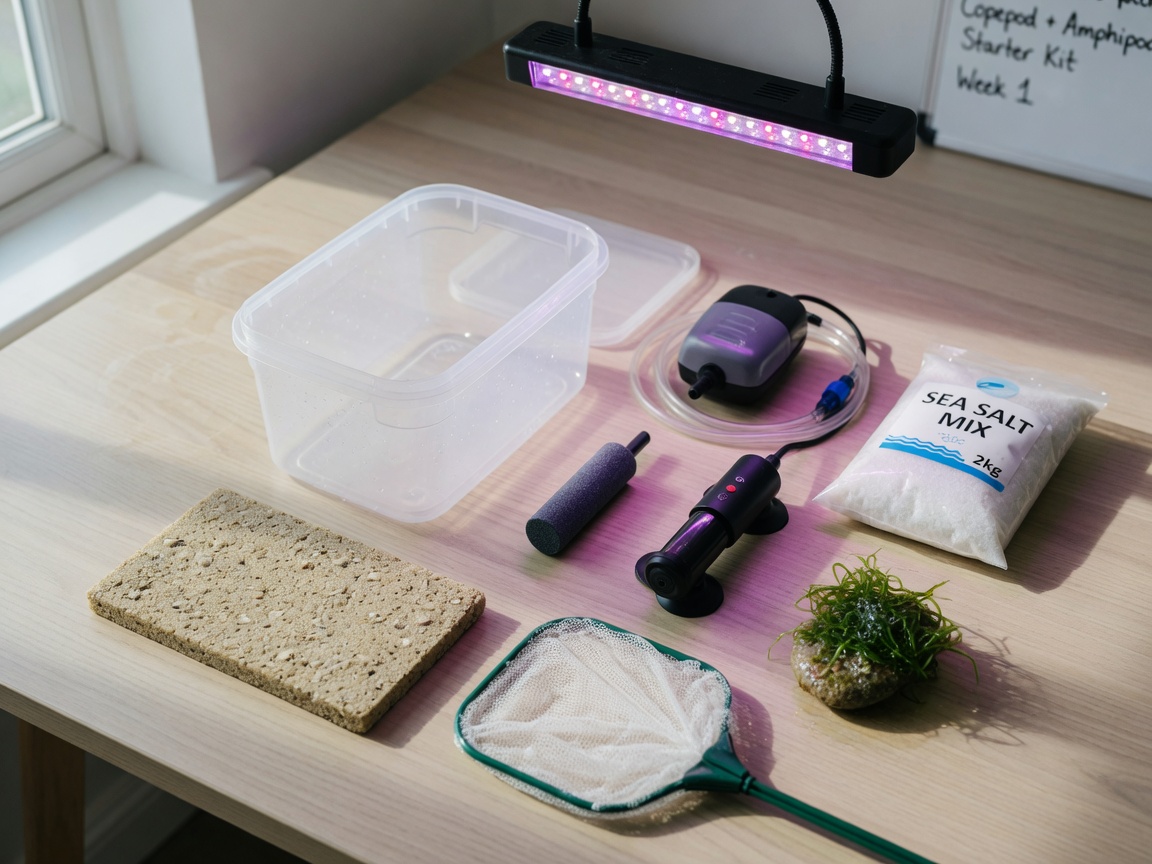
You'll need minimal equipment to begin culturing successfully:
- A dedicated container (5-10 litres works well for beginners)
- An air stone or gentle air pump for aeration
- A heater to maintain 22-25°C
- Natural or artificial lighting on a 12-hour cycle
- Sea salt mix and dechlorinated water
- Live rock, macroalgae, or a sponge as substrate
Unlike main display tanks, culture systems don't require sophisticated filtration. The key is maintaining reasonable water quality through partial water changes (20-25% weekly) rather than relying on biological filtration. This approach actually works better, as aggressive filtration removes valuable food particles that sustain your cultures.
Culturing Copepods: The Grazer's Gold Standard
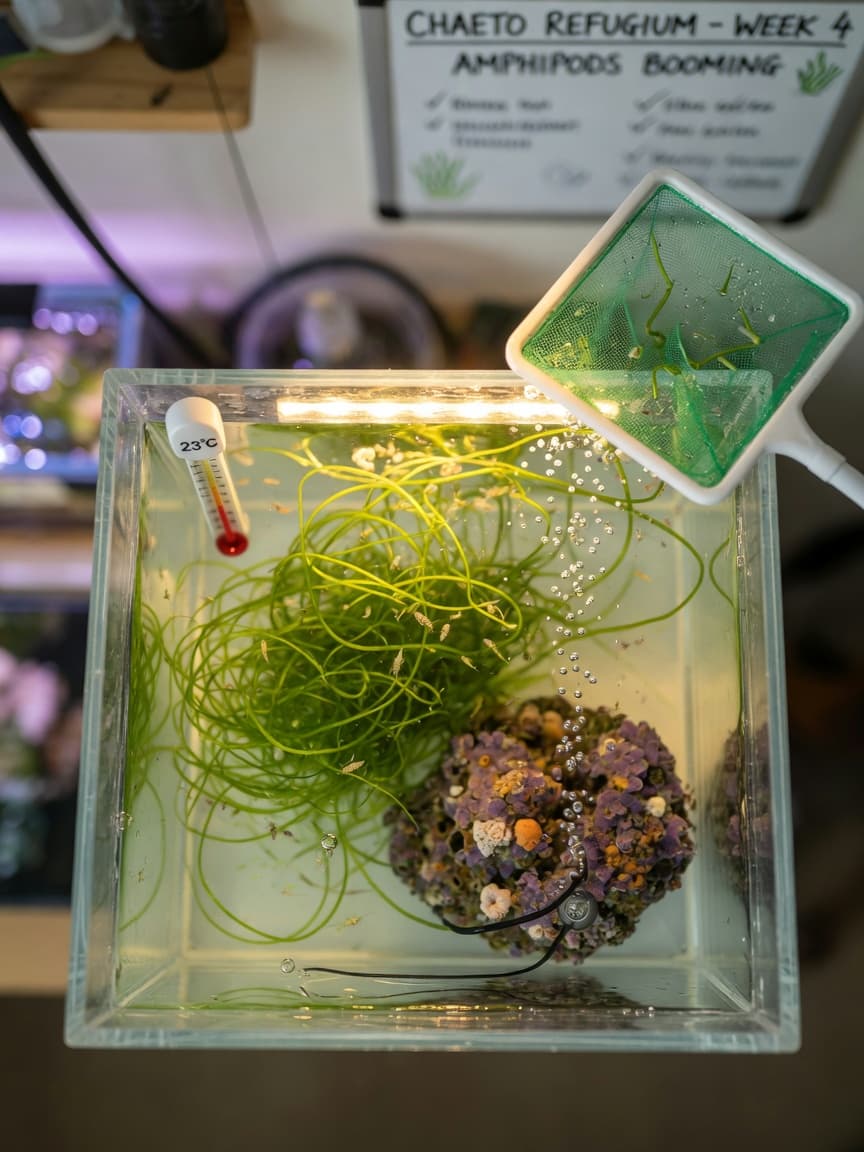
Copepods thrive on detritus, microalgae, and decaying organic matter. To establish a thriving population:
- Introduce your starter culture to prepared saltwater
- Add macroalgae like Chaetomorpha or Ulva to provide grazing surfaces and food
- Allow lights to run 12-16 hours daily to encourage algae growth
- Feed sparingly with dried spirulina or phytoplankton supplements twice weekly
- Maintain water temperature between 22-25°C
- Perform 25% water changes every 7-10 days
Copepod populations double rapidly under ideal conditions. Within 4-6 weeks, you'll have sufficient numbers to start harvesting. Use a fine mesh net or turkey baster to collect specimens without disrupting the entire culture.
Culturing Amphipods: Building a Hardy Colony
Amphipods are scavengers that consume detritus, algae, and decaying matter. They're hardier than copepods and tolerate slightly varied conditions:
- Establish in similar containers with live rock or PVC piping as shelter
- Provide crushed algae wafers or dried seaweed as supplementary food
- Include protein-rich foods occasionally (small dried fish food amounts)
- Maintain temperatures between 18-24°C
- Ensure excellent aeration—amphipods demand oxygen-rich water
- Perform 30% water changes fortnightly
Amphipod colonies establish more slowly than copepod cultures, typically requiring 6-8 weeks before significant harvesting. However, once established, they're remarkably stable and productive.
Harvesting and Feeding Your Fish
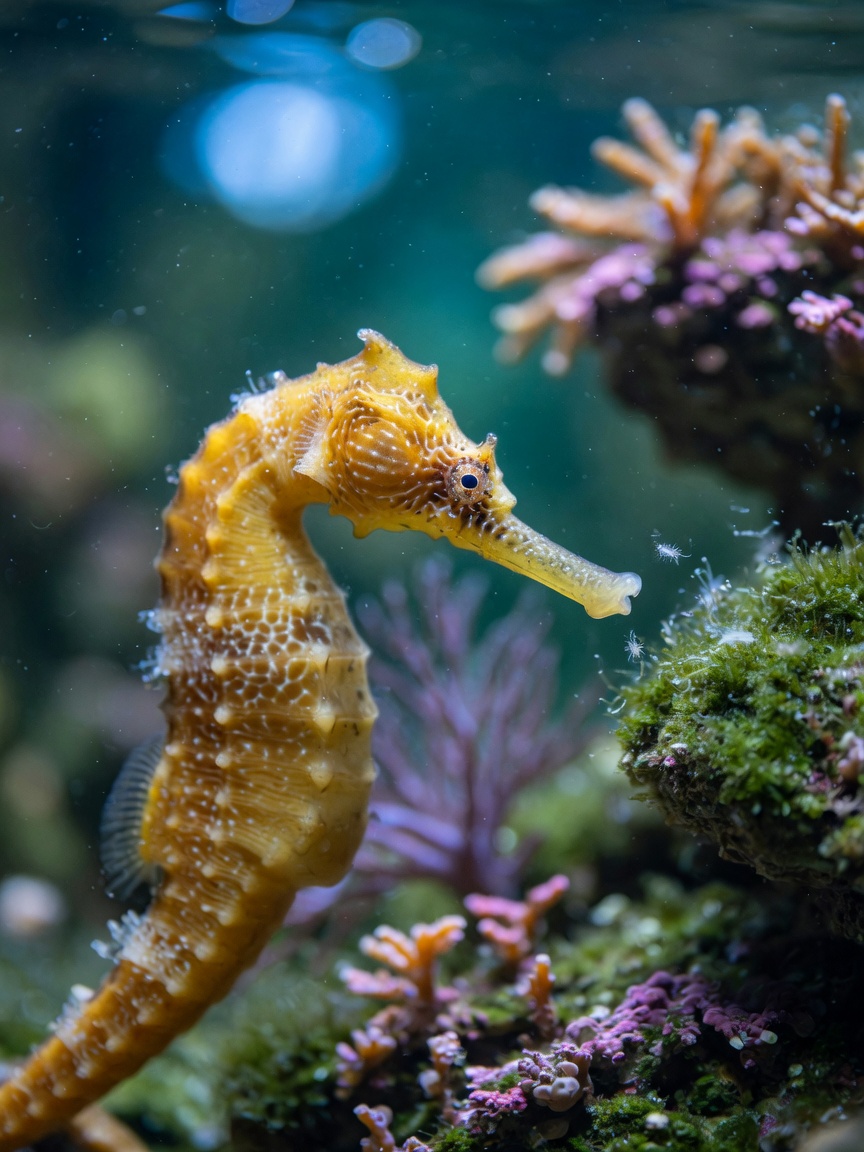
Use a fine mesh net or siphon to collect organisms directly into your display tank. Most fish will hunt these naturally. Harvest regularly but avoid removing more than 10-15% of your population weekly—this maintains sustainable culture productivity. If populations crash, the culture is likely underfed or experiencing poor water quality.
Key Takeaways
Culturing amphipods and copepods represents an investment in your fish's health and longevity. Start small, monitor water parameters weekly, and adjust feeding accordingly. Within two months, you'll have reliable live food sources that support natural feeding behaviours and dramatically improve your fish's nutrition. These thriving cultures become an enjoyable, educational component of your aquarium hobby whilst saving money and ensuring your most demanding fish species flourish.
```