
Why Hydration Matters More Than Most Owners Realise
Cats are notoriously indifferent drinkers, and for many owners this seems like nothing more than a quirky personality trait. In reality, chronic low water intake is one of the most clinically significant dietary issues in domestic cats. It contributes directly to concentrated urine, which in turn raises the risk of crystal formation, bladder inflammation, and — in worst cases — life-threatening urethral obstruction. Getting more fluid into your cat is not a minor lifestyle upgrade. For many cats, it is a genuine health intervention.
Understanding Why Cats Drink So Little
The first step toward solving the problem is understanding why it exists. Domestic cats descended from desert-dwelling ancestors who obtained the vast majority of their moisture through prey consumption. Wild felids eating small rodents and birds take in roughly 70 percent of their daily water requirement through food. Their bodies adapted to concentrate urine efficiently and tolerate mild dehydration without triggering strong thirst signals.
This evolutionary legacy means that a cat fed a dry kibble diet — which provides only 6 to 10 percent moisture — is operating in a state of chronic relative dehydration that its body simply does not signal as urgently as a human or dog would experience it. The cat is not being stubborn. Its thirst drive is genuinely less responsive than ours, and this is a mismatch between evolutionary design and the modern domestic feeding environment.
Start With Food: The Highest-Impact Change
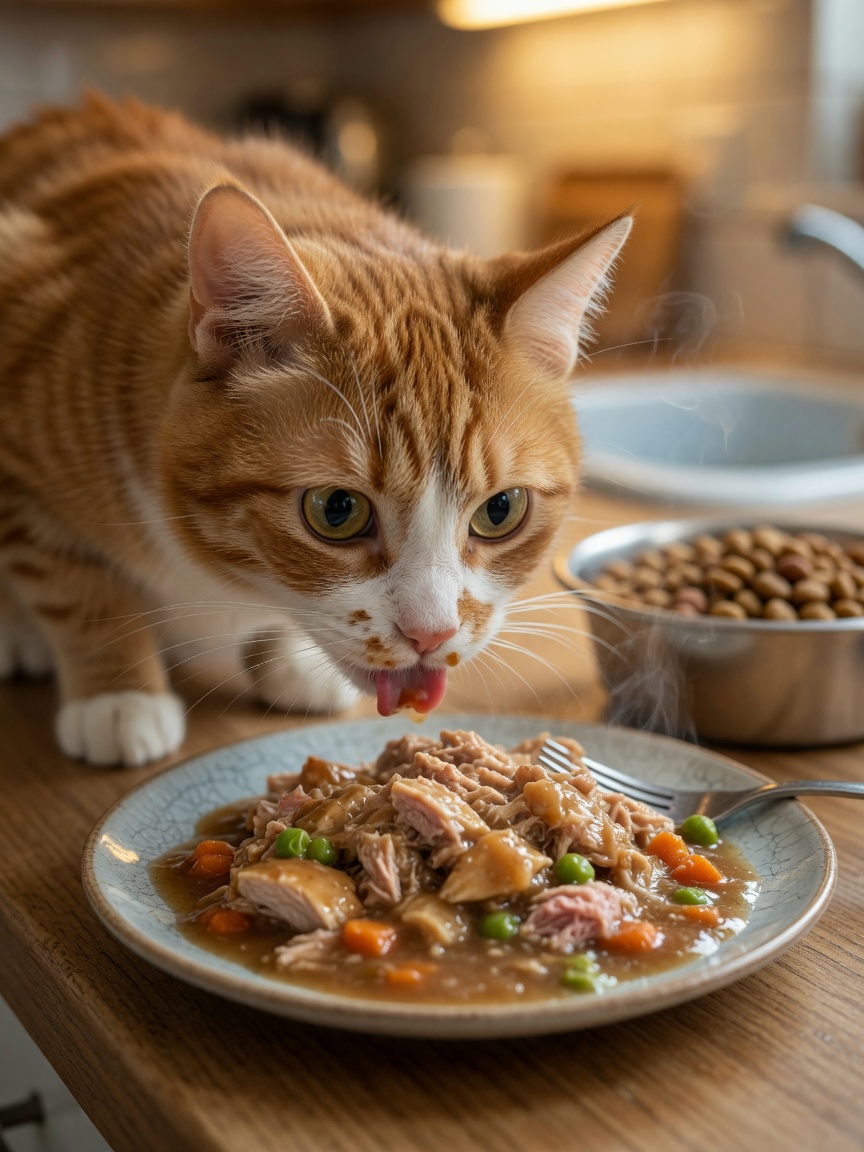
Before adjusting water bowls or buying fountains, consider that the single most effective way to increase a cat's daily water intake is to change what they eat. Switching from dry food to wet food can increase total daily fluid consumption by 50 to 80 millilitres or more, depending on the cat's size and the specific foods involved. This is a substantially larger increase than most cats will achieve by drinking more from a bowl.
For cats resistant to wet food, a gradual transition is usually necessary. Begin by adding a small spoonful of wet food alongside the existing dry portion. Over two to four weeks, incrementally increase the wet proportion and reduce the dry. Warming the wet food slightly — to just below body temperature — enhances the aroma and can coax reluctant cats into trying it. Different textures matter too: some cats strongly prefer pate, while others will only accept chunks in jelly or gravy.
Water Bowl Placement and Design
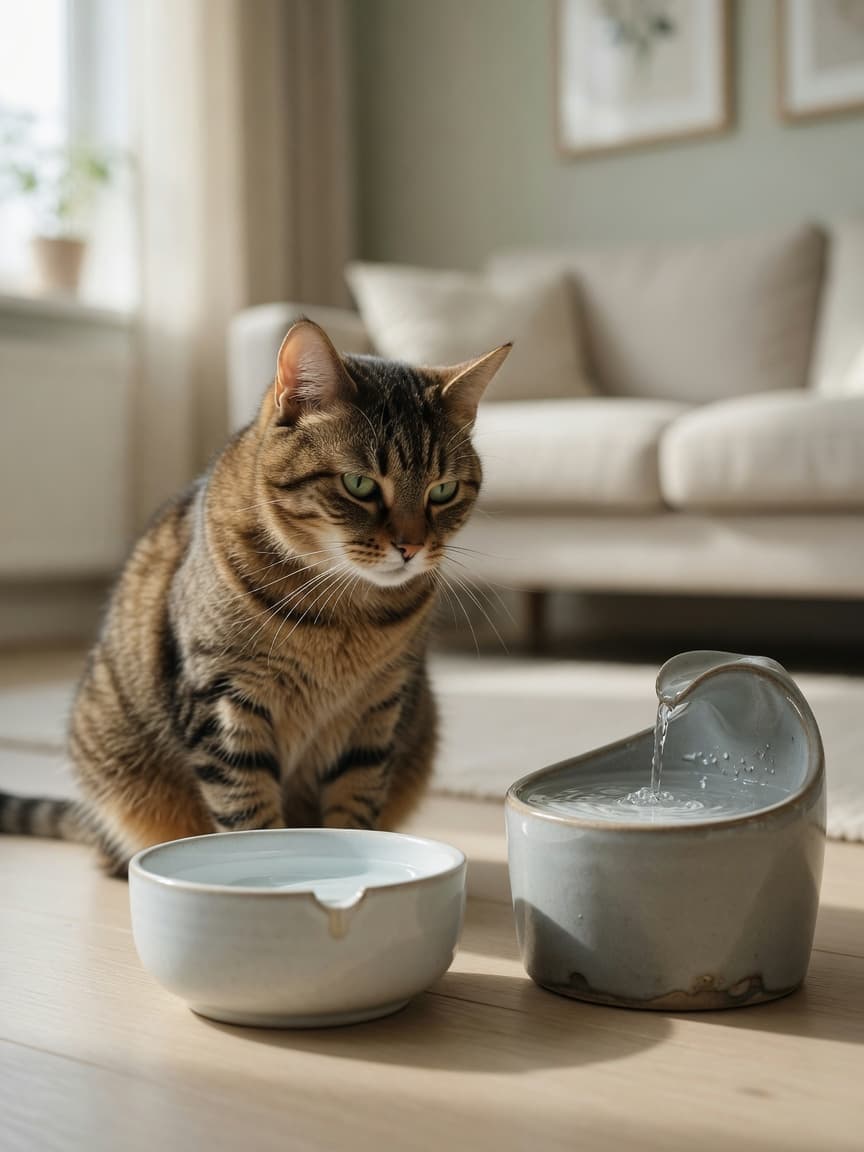
Many cats have strong preferences about how and where they drink, and ignoring these preferences means leaving easy wins on the table. Research into cat drinking behaviour has identified several consistent patterns:
- Cats generally prefer water sources positioned away from their food bowl — in the wild, water found near a carcass may be contaminated, and this instinct persists in domestic cats
- Wide, shallow bowls reduce whisker contact with the sides, which many cats find uncomfortable (a phenomenon sometimes called whisker fatigue or whisker stress)
- Cats often drink more from ceramic or glass bowls than plastic ones, possibly due to taste differences or the fact that plastic can harbour odours
- Multiple water stations around the home increase total daily intake by providing access in areas the cat spends time
Placing a water bowl in a quiet, accessible location — not tucked in a corner next to a noisy appliance or in a high-traffic area where the cat feels exposed — also makes a practical difference. Cats that feel secure while drinking are more likely to visit the water source regularly.
Water Fountains: Do They Actually Work?
Cat water fountains have become popular in recent years, and for a substantial proportion of cats, they genuinely do increase drinking frequency. The movement of water appeals to the predatory instinct of many cats — a still puddle may signal stagnant, potentially unsafe water, while moving water suggests a fresh source. Observations in both shelter and home settings have documented increased drinking behaviour in cats offered flowing water compared to a static bowl.
Not every cat responds to a fountain, however, and some cats are indifferent or even suspicious of them initially. If you are considering one, introduce it gradually alongside the existing static bowl rather than replacing it immediately. Give the cat at least two weeks to adjust before concluding it will not help. Fountains require regular cleaning — at minimum every two to three days — and filter replacement as per manufacturer guidance, since neglected fountains can accumulate biofilm and bacteria that may deter drinking.
Flavouring Water: A Practical Trick
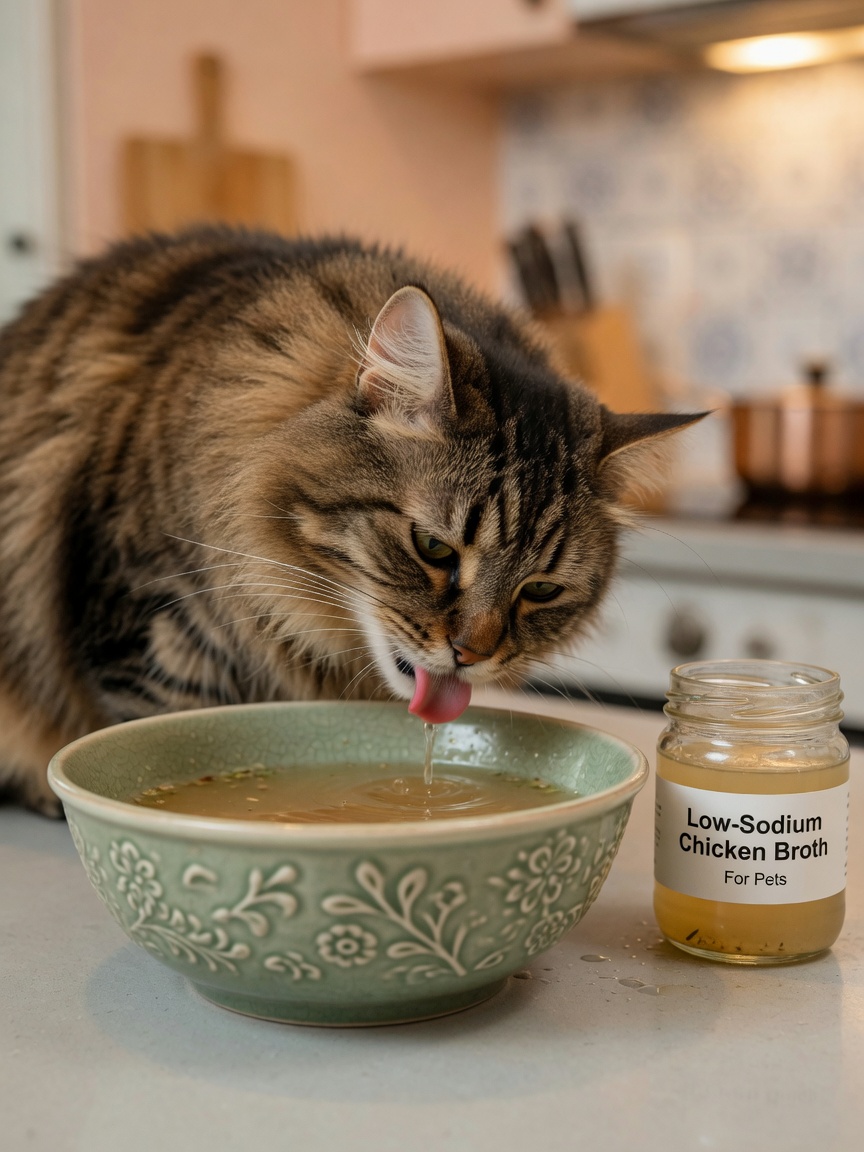
For cats that persistently ignore water bowls regardless of placement or design, adding a small amount of flavour can make the difference. Low-sodium chicken broth or tuna water (from canned tuna packed in water, not brine or oil) can be added to water in small quantities. Some cats will drink enthusiastically from a bowl they previously ignored once a teaspoon or two of flavoured liquid has been added.
This approach is not nutritionally hazardous in the quantities used, but do check that any broth used contains no onion, garlic, leeks, or chives, all of which are toxic to cats. Commercially available cat broths and hydration supplements are a cleaner option if you prefer not to worry about ingredient lists.
Ice Cubes and Temperature
Some cats show interest in drinking from bowls containing ice cubes, particularly in warm weather. The novelty of the ice and the slightly cooled water can attract cats that otherwise walk past their water bowl without a second glance. Others strongly prefer water at room temperature. Experiment with both to find what your individual cat responds to.
Water temperature preference appears to be individual rather than species-wide. If your cat only drinks from the dripping bathroom tap, that is useful information — it suggests they may respond well to a fountain providing cool, moving water.
Monitoring Whether It Is Working
Tracking whether your interventions are making a difference can be done in a few practical ways. Observe the litter tray — well-hydrated cats produce lighter-coloured, less strongly scented urine. Clumping litter makes it easier to assess urine volume and frequency. A noticeable increase in the size and frequency of urine clumps in the tray is a positive indicator.
If your cat has an established history of urinary problems, periodic urinalysis at the vet allows objective monitoring of urine specific gravity, which directly reflects hydration status. A specific gravity consistently below 1.040 in a cat previously producing very concentrated urine suggests the interventions are having a meaningful effect. Small changes compounded consistently over time are what shift long-term urinary health outcomes in cats.