
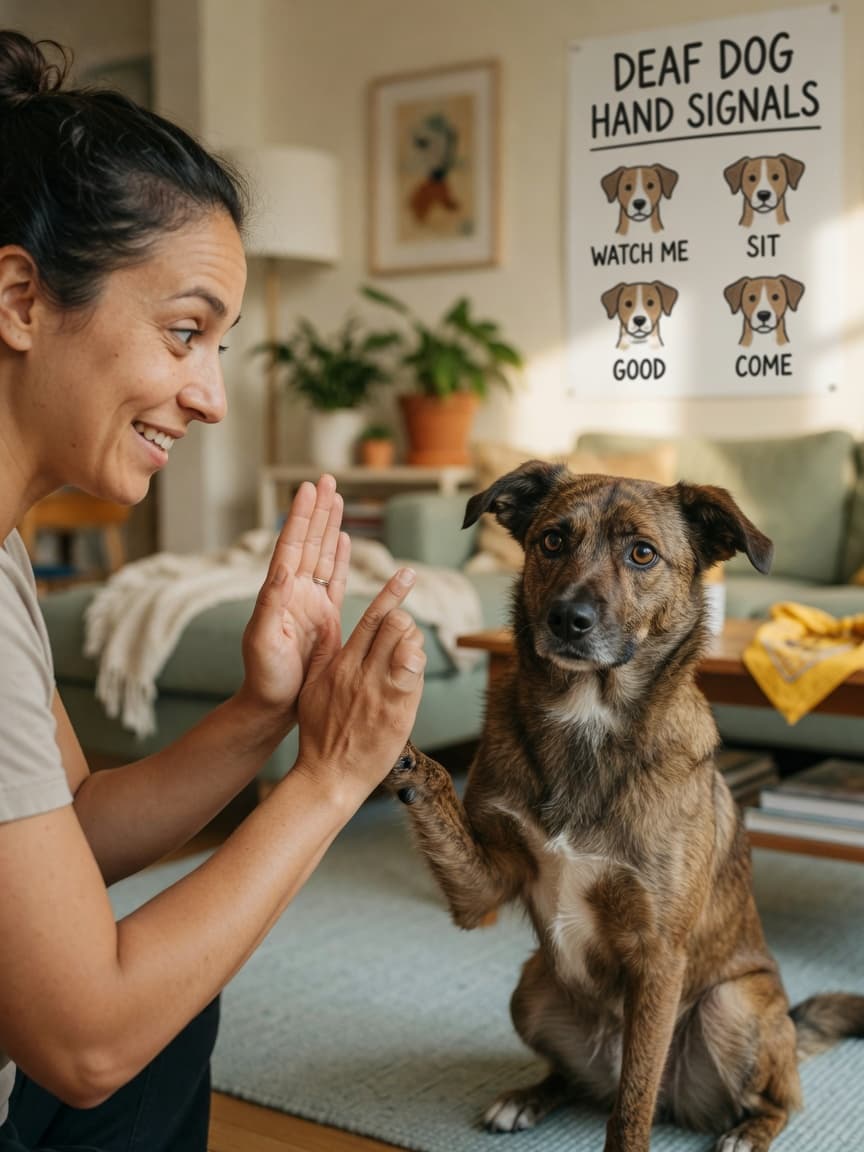
How to Train a Deaf Dog or Hearing-Impaired Dog
Training a deaf or hearing-impaired dog may seem daunting, but with patience, consistency, and the right techniques, you'll discover that these wonderful companions are just as trainable—and eager to please—as their hearing counterparts. Deafness doesn't diminish a dog's intelligence, motivation, or capacity to learn. In fact, many deaf dogs thrive with positive reinforcement training and visual communication methods that strengthen the bond between you and your pet.
Understanding Canine Deafness
Deafness in dogs can be congenital (present from birth) or acquired later in life due to age, illness, or injury. Certain breeds, particularly those with white coats like Dalmatians and Bull Terriers, have a higher predisposition to congenital deafness. Before beginning training, confirm your dog's hearing status with your vet, as some dogs experience partial hearing loss and may benefit from different approaches.
Establishing Visual Communication Signals
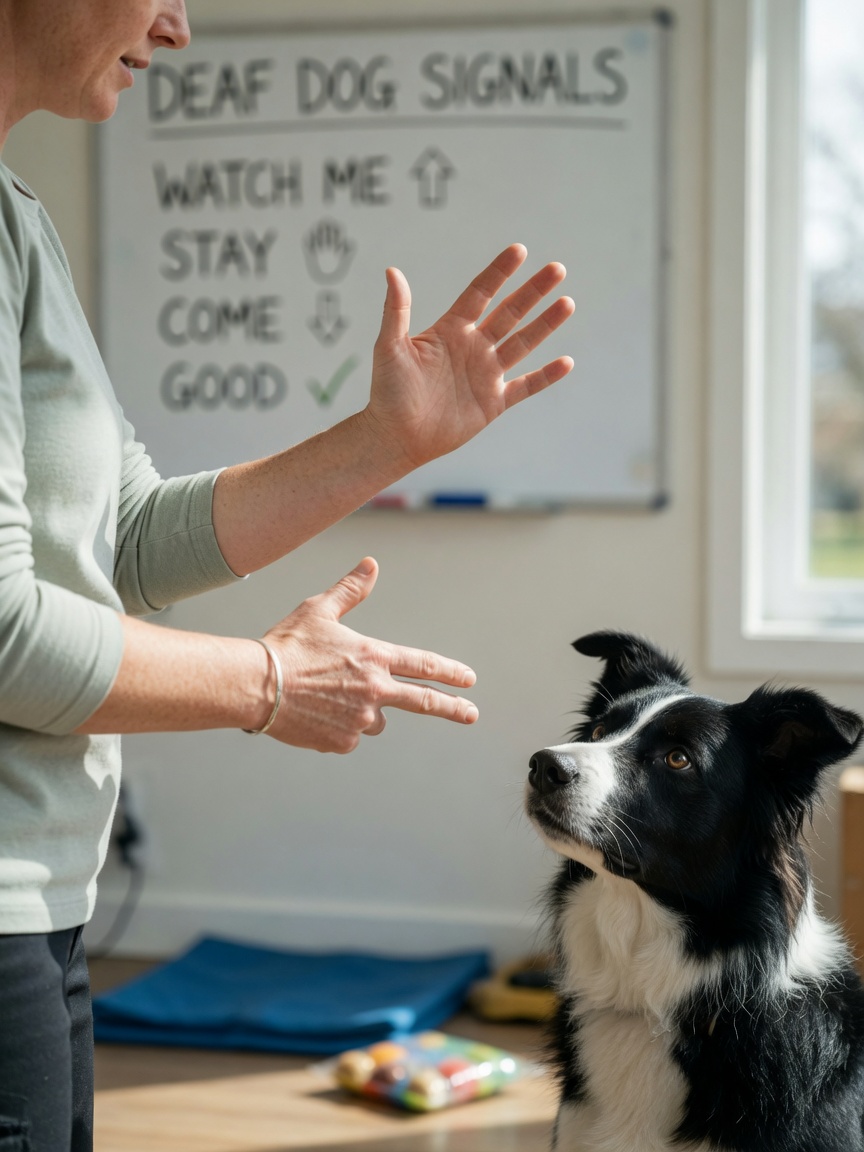
The foundation of training a deaf dog is replacing auditory cues with clear visual signals. Your dog will learn to watch your movements and hand gestures, making eye contact and body language absolutely central to your communication.
- Hand signals: Develop distinct, consistent hand signals for each command. Use large, deliberate movements so your dog can easily distinguish between different signals.
- Facial expressions: Combine hand signals with exaggerated facial expressions. A smile encourages positive behaviour; a stern expression indicates correction.
- Body positioning: Use your entire body to communicate. Step closer for urgency; step back to give space or indicate "go away".
- Consistent placement: Always use signals in the same location relative to your body so your dog knows where to look.
Positive Reinforcement Training Techniques
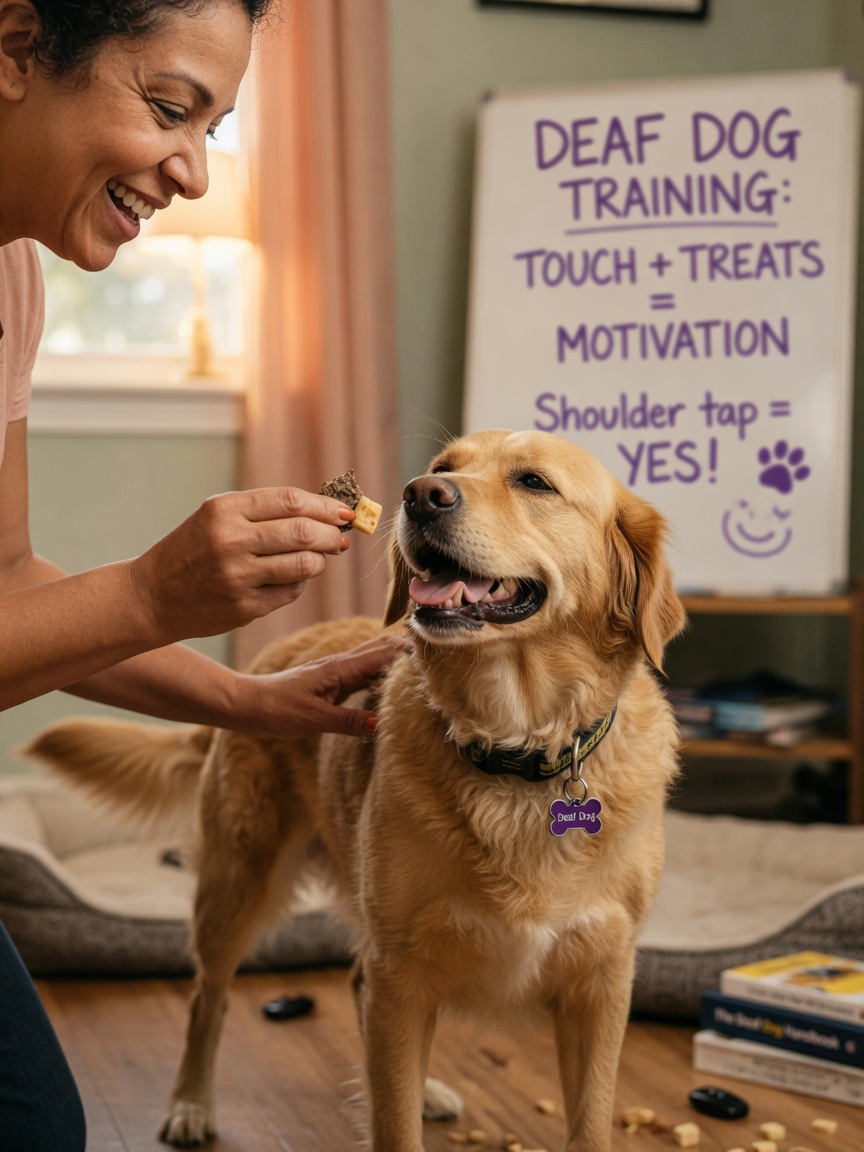
Deaf dogs respond exceptionally well to positive reinforcement. Since you cannot use verbal praise alone, tactile and food rewards become primary motivators.
- Touch rewards: Gently tap your dog's shoulder, chest, or give enthusiastic pats when they perform correctly. Many deaf dogs find this tactile feedback highly rewarding.
- Treat rewards: Use high-value treats your dog loves. Consistency with timing is crucial—reward within one second of the correct behaviour.
- Vibration alerts: Some trainers use a vibration collar (not for shock, but gentle vibration) to get the dog's attention before giving a command. Always pair this with positive rewards.
- Clicker training: A silent vibrating clicker can mark the exact moment your dog performs the desired behaviour, followed immediately by a reward.
Teaching Basic Commands
Start with simple, single-step commands before progressing to complex behaviours. "Sit" is an excellent first command because it's easy to lure and reward.
- Get your dog's attention first—wave your hand, tap gently, or use a flashlight.
- Once you have eye contact, show your signal for "sit" (typically an upward hand motion).
- Lure their bottom down with a treat if needed.
- Reward immediately and enthusiastically.
- Repeat 5-10 times daily in short sessions for consistent learning.
Safety Considerations
Deaf dogs require extra attention to safety, particularly regarding recall and awareness of hazards:
- Always keep your deaf dog on a lead or secure fence when outdoors.
- Teach a "watch me" command so your dog maintains eye contact during walks.
- Consider a collar or harness with bright colours or reflective materials for visibility.
- Alert guests and visitors about your dog's deafness to prevent startling.
Key Takeaways for Success
Training a deaf dog requires dedication, but the rewards are immeasurable. Stay patient, use consistent visual signals, prioritise positive reinforcement, and celebrate small victories. Your deaf dog is entirely capable of learning commands, building a strong relationship with you, and living a full, happy life. Remember, their deafness is simply a difference—not a disability that should limit their potential or your bond.
```