

How to Train Your Dog to Stop Begging
If your beloved canine companion turns into a persistent beggar every time you sit down to eat, you're not alone. Dogs begging at the table is one of the most common behavioural challenges UK pet owners face. The good news? With consistency, patience, and the right techniques, you can teach your dog that mealtimes aren't about soliciting food from your plate. This comprehensive guide will help you understand why dogs beg and provide practical strategies to put an end to this frustrating behaviour once and for all.
Understanding Why Dogs Beg
Before addressing the solution, it's important to understand the root cause of begging behaviour. Dogs beg because it works—or at least, it has worked in the past. Even a single occasion where your dog receives food from the table reinforces the behaviour and teaches them that persistence pays off. Additionally, dogs are naturally drawn to human food due to its aromatic appeal and the social reward of your attention.
From your dog's perspective, begging is a learned behaviour that has delivered results. Your dog isn't being naughty; they're simply responding logically to past experiences.
The Foundation: Never Reward Begging
The most crucial step in stopping begging is ensuring no one in your household rewards the behaviour. This means:
- Never giving your dog food from your plate, regardless of how appealing their puppy-dog eyes are
- Avoiding hand-feeding your dog at mealtimes, even with "healthy" scraps
- Not responding to begging with attention—this includes talking to or petting your dog whilst they're begging, as attention is itself a reward
- Educating family members and visitors about this crucial rule
Consistency is absolutely essential. A single slip-up can significantly delay your progress, as it resets the extinction process and teaches your dog that persistence sometimes pays off.
Create a Designated Dog Space During Meals
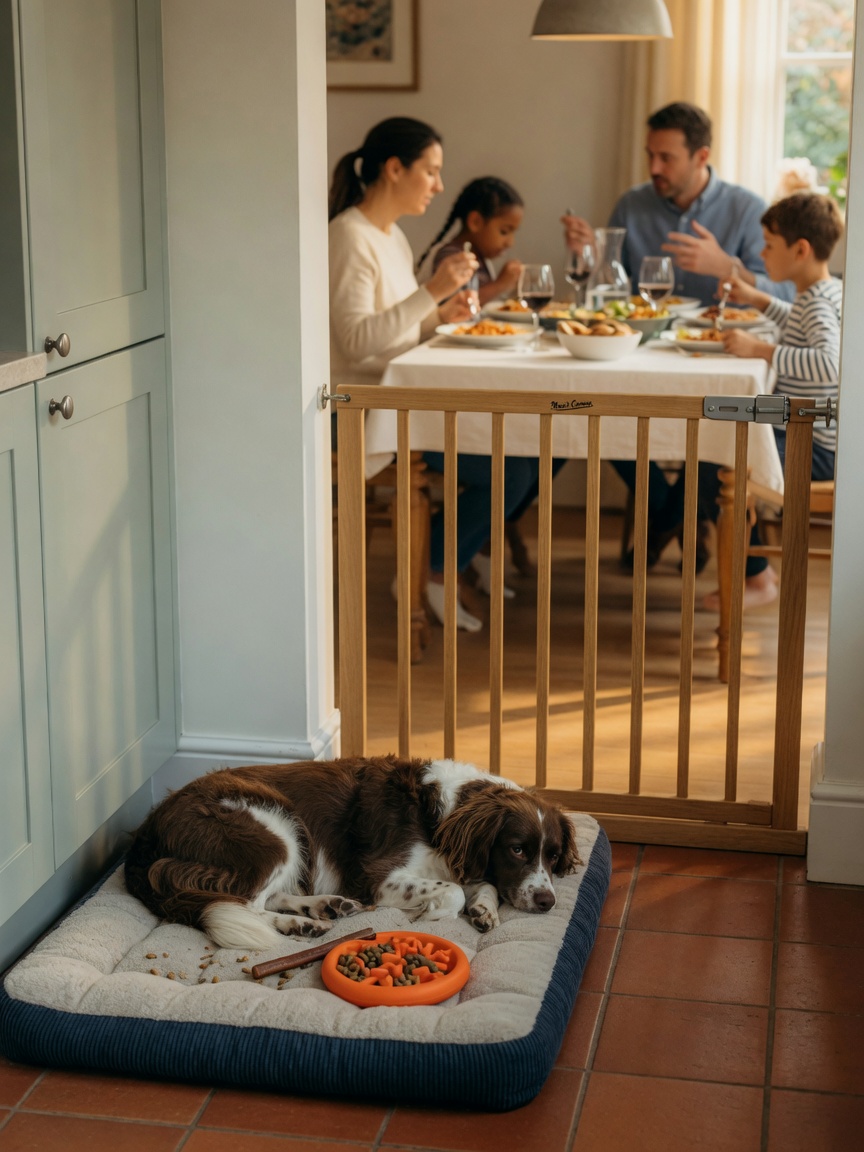
One of the most effective strategies is establishing a specific area where your dog should be during your mealtimes. This might be their bed in another room, a crate, or a designated corner away from the dining table. Start by introducing this location during non-meal times so your dog associates it with positive experiences.
During meals, guide your dog to this space using a calm, matter-of-fact tone. You can make the space more appealing by:
- Offering a long-lasting chew toy or puzzle feeder
- Providing a comfortable bed or blanket
- Using a baby gate to create a gentle physical boundary
- Rewarding your dog for settling in their space with praise once you've finished eating
Train the "Place" Command
Teaching your dog a reliable "place" or "bed" command gives you a positive tool to redirect their attention during mealtimes. Here's how to develop this skill:
- Show your dog to their designated spot using a treat
- Say "place" clearly as they move towards it
- Reward them generously for staying on their mat or bed
- Gradually increase the duration they remain on their spot
- Practice this command during times when you're not eating to build reliability
- During mealtimes, use the command to send your dog to their space before begging can begin
With consistent practice over several weeks, most dogs learn to automatically move to their place when you sit down to eat.
What Not to Do
Several well-intentioned approaches can actually worsen begging behaviour:
- Don't scold or punish: This draws attention to your dog and may increase begging through negative reinforcement
- Don't give "just a tiny bit": Any food reward, no matter how small, reinforces begging
- Don't feed your dog immediately before your meal: A well-fed dog is less motivated to beg
- Don't make eye contact during begging: This counts as interaction and can reward the behaviour
Key Takeaways
Stopping dog begging requires patience, consistency, and a unified household approach. Remember that you're not being cruel by refusing to share your food—you're actually protecting your dog's health and wellbeing, as human food is often high in salt, fat, and calories that can lead to obesity and digestive upset. By implementing these strategies and remaining committed over 4-6 weeks, you'll enjoy peaceful mealtimes and a dog who respects boundaries around food. Every member of your household must follow the same approach, so discuss these techniques with family members and visitors before beginning your training journey.
```